
Why Do Hiring Managers Ask About Your Weaknesses? The Real Reasons
Key takeaways
- The question is a test of self-awareness, honesty, and coachability, not a confession booth.
- Hiring managers also scan for red flags and whether you take ownership of your own growth.
- A strong answer names a real weakness, shows what you are doing about it, and ties it to results.

A candidate sits across the desk during a job interview. Photograph: Wikimedia Commons / CC BY 2.0 contributor
"What is your greatest weakness? " feels like a trap. Candidates hear it as an invitation to hand the interviewer a reason not to hire them.
Hiring managers hear something different: they hear whether the person across the desk understands themselves.
This article explains why hiring managers ask about your weaknesses, including what the question reveals about self-awareness, coachability, and role fit. It covers what good and bad answers signal, and how to prepare an honest answer that strengthens your candidacy instead of sinking it.
The real purpose: a self-awareness signal
The dominant reason interviewers ask this question is self-awareness. Anyone can recite strengths from a resume. Describing a genuine weakness requires looking inward, and that capacity predicts how a person handles feedback, conflict, and change on the job.
Career guidance outlets consistently name the same three attributes the question evaluates: self-awareness, coachability, and role fit. A candidate who can identify a real area for improvement and explain how they have addressed it signals reliability and maturity. InspireAmbitions puts it plainly: evasive answers like "I work too hard" raise red flags because they feel rehearsed and avoidant.
Jobstreet's career advice guide frames the answer as a window into how candidates handle challenges, how well they understand themselves, and whether they are actively working to improve. The guide lists self-awareness, honesty, team compatibility, and potential for improvement as the four things the answer reveals.
There is also a character test built in. National workplace expert Lynn Taylor told Business Insider that the underlying question translates to: "Is there anything I'm missing that could eliminate you from the running? " The question, she said, is designed first to test your mettle and second, your character.
Career coach Ryan Kahn, founder of The Hired Group, added that this kind of questioning reveals whether a candidate has a mindset of continual improvement.

A young candidate answers interview questions. Photograph: Wikimedia Commons / CC BY-SA 2.0 contributor
What the question reveals beyond the answer itself
Interviewers listen to the content, but they also watch the delivery.
Composure under pressure. The weaknesses question is deliberately uncomfortable. How you handle a tough question shows how you handle tough situations. A calm, specific answer suggests resilience. Hemming and hawing suggests the first real challenge on the job may rattle you.
Honesty and integrity. Taylor warned that hiring managers can play answers back to references. A fabricated or dodge-heavy answer is a credibility risk, because references may tell a different story about how you actually work.
Growth trajectory. Kahn's point about continual improvement is the key. An answer that describes a weakness plus the steps taken to address it tells a story of progress. An answer that describes a weakness alone, with no plan, tells a story of stasis.
Work style and team fit. How you talk about your weaknesses hints at stress management, teamwork, and adaptability. The Knowledge Academy's interview guide notes that this helps interviewers judge whether your working style will mesh with the team and the company culture.
Role fit. If the weakness you name is a core requirement of the job, that is a legitimate concern for the employer. This is why answer choice matters: pick a real weakness, but one that is peripheral to the role's central demands.
How to build an answer that works
Strong answers share a structure: name it, own it, show the fix, show the result.
Pick a genuine, relevant weakness. The weakness should be real enough to sound honest and safe enough to not disqualify you. Good filters, per InspireAmbitions: it should not be a core competency of the job, it should be improvable with reasonable effort, and you should be able to cite real steps you have taken.
Show the action plan. A composed, specific response reveals both honesty and process. Name the weakness and immediately tie it to a clear action: training you took, a habit you changed, a system you built. Employers want evidence that you convert insight into practice.
Give a metric of improvement. Vague claims like "I'm working on it" are weak. Concrete evidence like "I now deliver project updates every Friday and my last three reviews rated communication above target" is strong. Specificity is what separates a scripted answer from a credible one.
Expect follow-ups. Interviewers often ask how you discovered the weakness, what specific steps you took, and how it would affect your work on their team. Prepare concise, evidence-based answers that show progression rather than stasis.
Avoid the classics. The cliche answers are well known and they backfire. "I'm a perfectionist" and "I work too hard" are evasive non-answers that signal you are dodging the question. A real weakness stated plainly always beats a strength wearing a disguise.
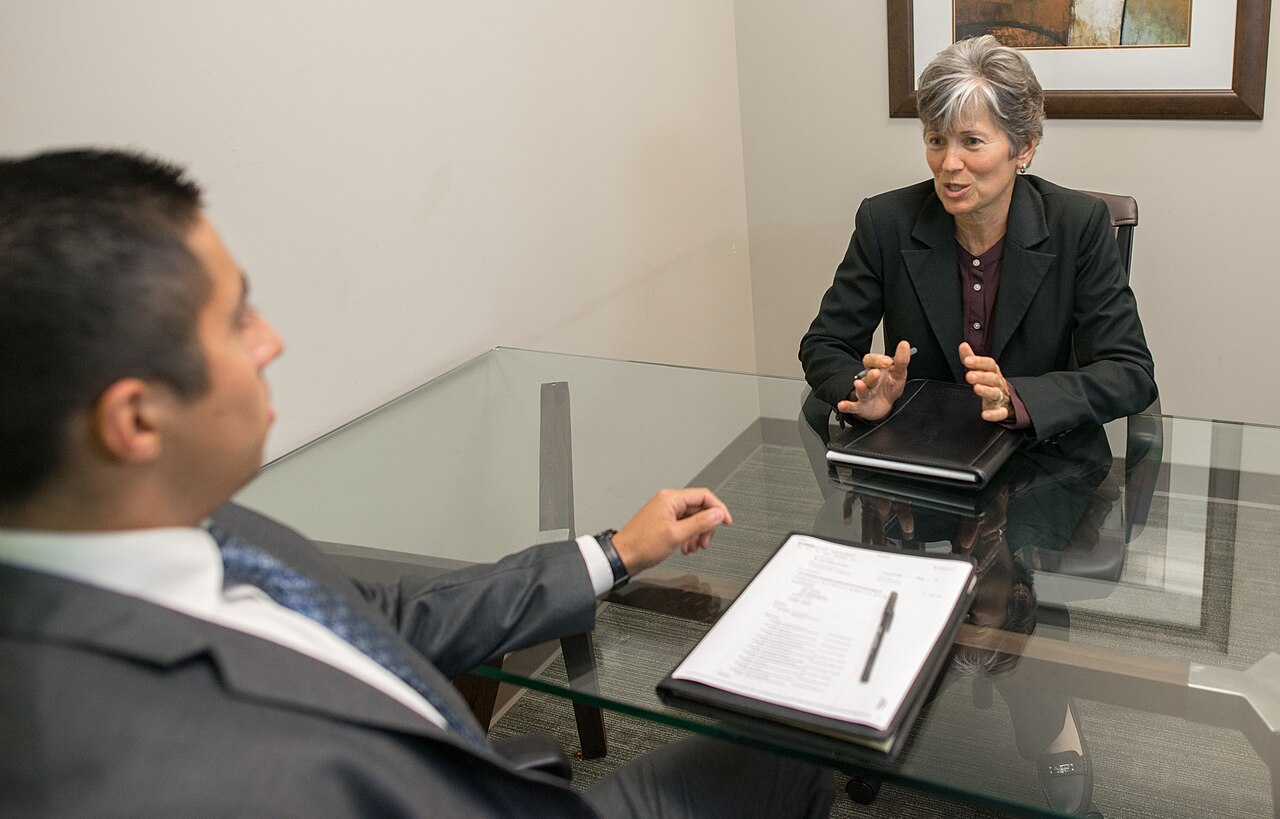
An interviewer conducts a job interview. Photograph: Amtec Photos / Wikimedia Commons
What bad answers signal
Interviewers have heard every version of this question, and they have learned to read the bad answers.
- "I don't have any real weaknesses." Signals low self-awareness and arrogance. Everyone has weaknesses; denying them is the red flag.
- "I'm too much of a perfectionist." The most famous dodge. It signals the candidate is performing rather than answering.
- Naming a core job requirement as a weakness. Saying you dislike detail work when applying for an accounting role tells the interviewer the fit is wrong.
- A weakness with no growth story. Admitting a flaw without showing effort to fix it suggests the person will not take feedback well.
- Over-sharing. A weakness that raises doubts about reliability, attendance, or temperament creates exactly the elimination reason Taylor described.
Image Credits: Wikimedia Commons / CC BY 2.0 contributor; CC BY-SA 2.0 contributor; Amtec Photos (CC BY-SA 2.0)
Is the weakness question a trick question?
Not exactly. It is not designed to catch you in a lie; it is designed to test self-awareness, honesty, and how you handle discomfort. A thoughtful, honest answer with a clear improvement story is what interviewers want.
A rehearsed dodge is what fails.
What is the best weakness to mention in an interview?
The best weakness is a real one that is not central to the job, paired with concrete steps you have taken to improve it. Examples include a past habit of over-committing before learning to prioritize, or discomfort with public speaking addressed through practice and coaching. The improvement story matters more than the weakness itself.
Should I be completely honest about my weaknesses?
Be honest, but be strategic. Honesty builds credibility, and interviewers can cross-check your answer with references. But choose a weakness that is genuine and improvable, not one that undermines your fitness for the role.
Do not volunteer flaws that create new doubts.
Why do interviewers ask about weaknesses and strengths together?
The pairing tests balance and self-knowledge. Strengths validate your fit for the role; weaknesses demonstrate honesty and self-awareness. Together they show the interviewer whether you see yourself clearly, which predicts how you will take feedback and grow.
The bottom line
Hiring managers ask about your weaknesses to learn how self-aware, honest, and coachable you are, not to collect reasons to reject you. The question also quietly screens for red flags and checks whether your growth story fits the role. Prepare a real weakness, a real plan, and real evidence of progress, and the dreaded question becomes one of the strongest moments of your interview.
Latest in Career & Jobs
- How to cope when you hate your job but cannot quit yet
- How to give a class presentation without freezing up
- How to stay motivated during long exam seasons
Subscribe to the Rive News newsletter for one practical explainer every morning.
Related stories
How to Ask for a Raise With Data, Not Emotions
Ask for a raise with market data and documented results, not emotions. Research your rate from BLS wage tables, build an evidence file, run

How to Explain a Career Gap on Your Resume Honestly
A career gap is not a red flag if you explain it honestly: give a reason, show what you did, and point forward. Recruiters reveal the exact

How to Switch Careers at 30 With No Experience in the Field
A career change at 30 means repackaging a decade of transferable skills, not starting over. Map your skills, earn one certification,