
What to do when your manager takes credit for your work
By Rive News / Research desk | Rive News / Published October 27, 2026 at 9:00 AM PKT
Key takeaways
- First sort an oversight from a pattern: a single missed name is different from repeated claiming of your work.
- Keep a dated record of what you produced, with emails, drafts, and meeting notes.
- Raise the issue privately first, with questions and facts, and make future work visible in shared updates before someone else presents it.

A staff meeting in a formal office, the kind of room where credit is often decided by who presents. Photograph: Pete Souza
Image Credits: Wikimedia Commons
When a manager takes credit for your work, the sting is not only about fairness. It is about your record. Promotions, references, and future roles all rest on what other people believe you did.
A single missed mention may be forgetfulness. A repeated pattern, where your analysis appears under someone else's name, is a different problem and needs a different response.
This article explains how to tell the two apart, how to build a record, how to raise the issue, and how to make your work visible next time.
Start by checking what actually happened
Harvard Business Review, in a 2015 guide by Amy Gallo, quotes Brian Uzzi, a professor at Northwestern University, on a common cause of missing credit. Uzzi notes that a presenter under pressure may intend to say "we" and then freeze and use "I" through the whole presentation. That is not an excuse for every case, but it is a real explanation for some.
Ask three questions before acting. Did the manager name anyone at all, or did they present the whole project as their own? Did they add real work of their own, such as reshaping the analysis, winning approval, or combining it with other inputs?
And has this happened before, or is this the first time? The answers change the response.
Rupali Gupta, talent solutions leader at Mercer Singapore, made a related point to The Straits Times. She advised employees to weigh the effort each person put in, what each colleague and manager contributed, and the outcome, because a manager's work in coordination, stakeholder buy-in, and framing is often invisible to the team. That invisible work does not justify claiming authorship, but it does explain why a manager may honestly feel they led a project.
Write down what happened while it is fresh. Note the date, the meeting, who was present, what was said, and what you produced. Do not stew for weeks before acting, Gallo advises in the same Harvard Business Review guide, because by then the incident is no longer fresh in anyone's mind and your own frustration has had time to harden into anger.
Build a paper trail before you need it
Documentation is the least dramatic step and the most useful. Keep copies of drafts with dates, emails that show you sent the work, project plans with your name on tasks, and notes from meetings where you presented an idea. Store them in a personal record you control, not only in a shared drive that someone else can edit.
The American Chemical Society's career advice column makes the same point directly: if a boss attempts to take credit again, a paper trail is what proves the idea originated with you. Its consultants also suggest developing a mentor relationship with a different supervisor, who can give a clearer read on whether the culture rewards this behaviour or whether your manager is an outlier.
A paper trail is not a weapon to brandish in the first conversation. It is insurance. If the private conversation goes well, you may never need it.
If the pattern continues and you need to speak to a skip-level manager or human resources, facts with dates carry far more weight than a general complaint.
One habit helps more than most: send a short, factual update when work lands. State what was completed, what decisions were made, and what happens next, with your name on it. That update, sent to the wider group, makes the record public in a normal, professional way.
Have the private conversation first
A private conversation is almost always the right first step. It gives the manager a chance to correct the record without losing face, and it tells you a great deal from their reaction. A manager who apologises and fixes it next time was probably careless.
A manager who gets defensive, denies plain facts, or repeats the behaviour is telling you something else.
Gallo's guide suggests asking questions rather than making accusations. Research cited in the guide finds that asking why something happened works better than stating a claim, because it shifts the burden to the other person to explain. A useful opening is simple: "I noticed the presentation did not mention my analysis.
"
"Can you help me understand how the credit was decided?" That phrasing is firm without being hostile.
Bring one or two specific examples, not a long list of grievances. State the contribution, the evidence, and the effect. For example: "I built the pricing model in the March draft, and the slide used those figures.
"
"I would like my name on the next version." Then ask for a concrete fix, such as a correction in the next meeting or your name on the shared document.
If the conversation goes badly, stay calm in the room. People judge a reaction as much as the event itself, and a composed response keeps your options open. Write down what was said straight after, while the details are clear.
Make your work visible in advance
Prevention is less satisfying than a confrontation, but it works more often. Volunteer to present your own work when you can. If your manager must present it, ask beforehand how contributions will be credited, and offer a slide or a speaking note that names the team members involved.
In team meetings, give credit to others generously. That habit builds allies, and it makes a credit-taker stand out by contrast. It also makes it harder for anyone to claim that naming contributors is unusual in your team.
Another tactic comes from the Business Insider advice summarised by Bona: keep extra research in reserve for presentation meetings, so you can answer follow-up questions with detail only the person who did the work would know. That is not a trick. It is a natural result of doing the work, and it quietly restores the link between you and the project in front of senior people.
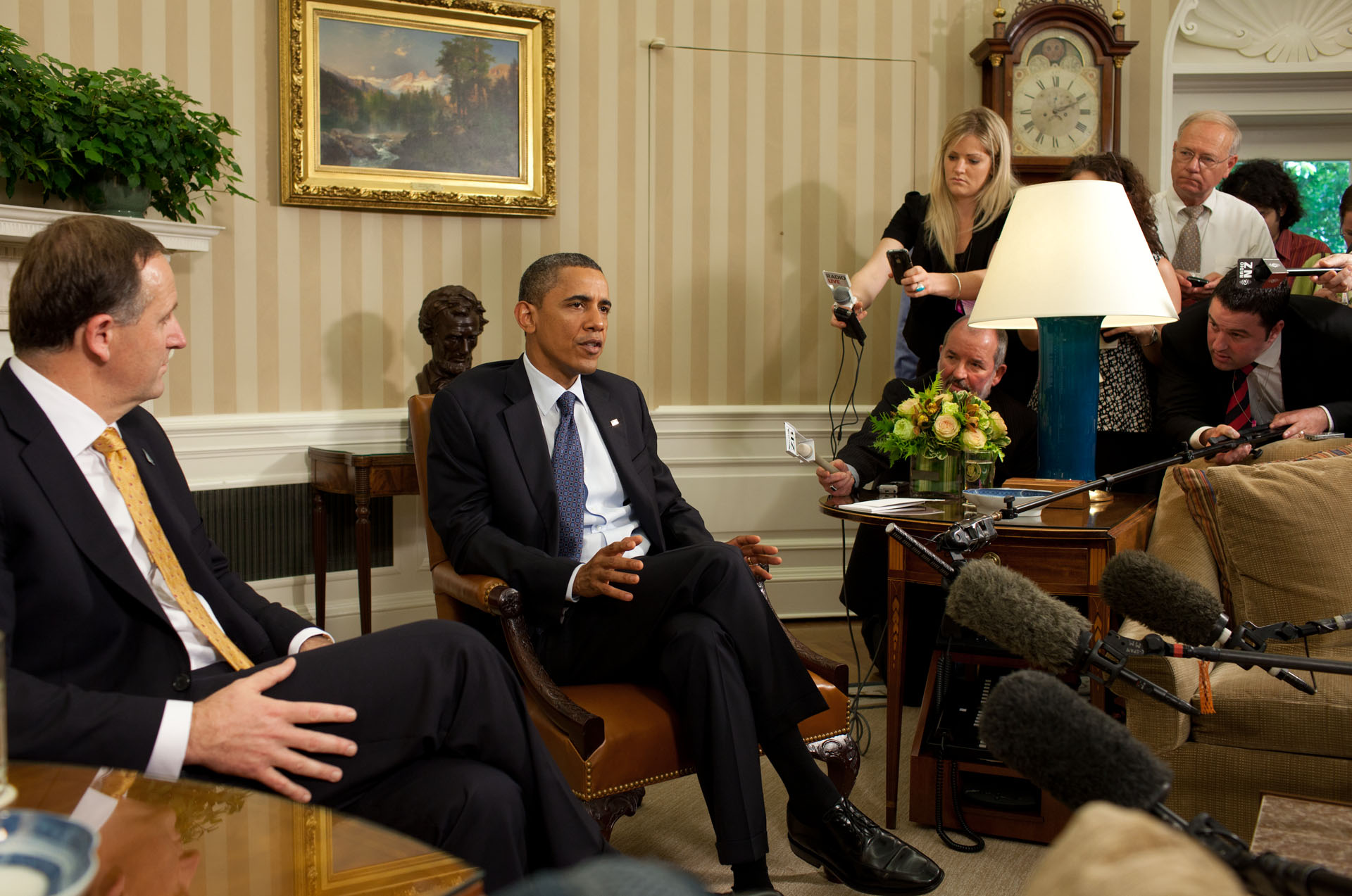
A face-to-face meeting between senior leaders, where a private conversation about credit can happen. Photograph: Pete Souza
Image Credits: Wikimedia Commons
When to escalate, and when to move on
Escalation has a place, but it should follow a failed private conversation and a clear record. Speak to a skip-level manager or to human resources with the same calm, factual approach: dates, documents, and the outcome you want. Ask what options exist in your company, because every organisation handles these disputes differently.
The American Chemical Society column offers a blunt test. If the company culture is one where credit flows up the ladder to the boss rather than to the person who did the work, and you expect acknowledgement, that company may not be the best place for you to grow. That is not a reason to quit in anger on the same day.
It is a reason to start planning, to build a mentor network elsewhere, and to judge future roles by how they treat individual credit.
There is also a case for letting a small incident go. Gallo quotes Karen Dillon, a former Harvard Business Review editor, on this point: "Making your boss shine is part of the gig." A manager who presents team work to senior leaders, while still recognising, rewarding, and promoting the people behind it, is doing a normal part of the job.
The problem is not that a manager presented your work. The problem is when presentation turns into ownership, and recognition, reward, or promotion stops following.
Frequently asked questions
Should I confront my manager in the meeting where it happens?
Usually not. A public challenge puts the manager on the defensive and can harm your standing. Note the facts, then raise it privately soon after, while the incident is still fresh.
What counts as good evidence of my contribution?
Dated drafts, emails sending the work, project plans naming your tasks, and meeting notes. A single document is useful, but a short chain of dated items is stronger.
What if my manager apologises but does it again?
That is a pattern, not an oversight. Keep the record, repeat the private conversation once with a clearer request, and then consider a skip-level manager or human resources.
The bottom line
Sort an oversight from a pattern, keep a dated record, and raise the issue privately with facts and a concrete request. Make your future work visible before someone else presents it, and escalate only with evidence if the private route fails. If the culture itself treats credit as something that always flows upward, the honest answer may be to plan a move to a team that records who did the work.
Tags: managers, workplace credit, career growth, office politics
Rive News is a research desk that writes plain-English explainers from public sources, with no fake authors or invented workplace stories.
Related
- How to deal with a difficult boss at work
- How to ask for a raise with data, not emotions
- How to build a professional network without feeling fake
- How to handle a job rejection and ask for feedback
Subscribe for one practical career explainer each week.
Standards: facts are attributed to named public sources; no legal advice is offered here.
Related stories
How to Ask for a Raise With Data, Not Emotions
Ask for a raise with market data and documented results, not emotions. Research your rate from BLS wage tables, build an evidence file, run

How to Explain a Career Gap on Your Resume Honestly
A career gap is not a red flag if you explain it honestly: give a reason, show what you did, and point forward. Recruiters reveal the exact

How to Switch Careers at 30 With No Experience in the Field
A career change at 30 means repackaging a decade of transferable skills, not starting over. Map your skills, earn one certification,