
What to Wear to a Video Interview: Colors, Fit, and Setup
Key takeaways
- Dress as formally as you would for an in-person interview at the same company. 49% of workers wear an office-friendly top on video calls, per SHRM data cited by Hays.
- Solid, neutral colors work best on camera. Bright patterns can strobe and stark white washes you out.
- Wear the full outfit, not just the top half, and tidy your background and lighting before you log on.
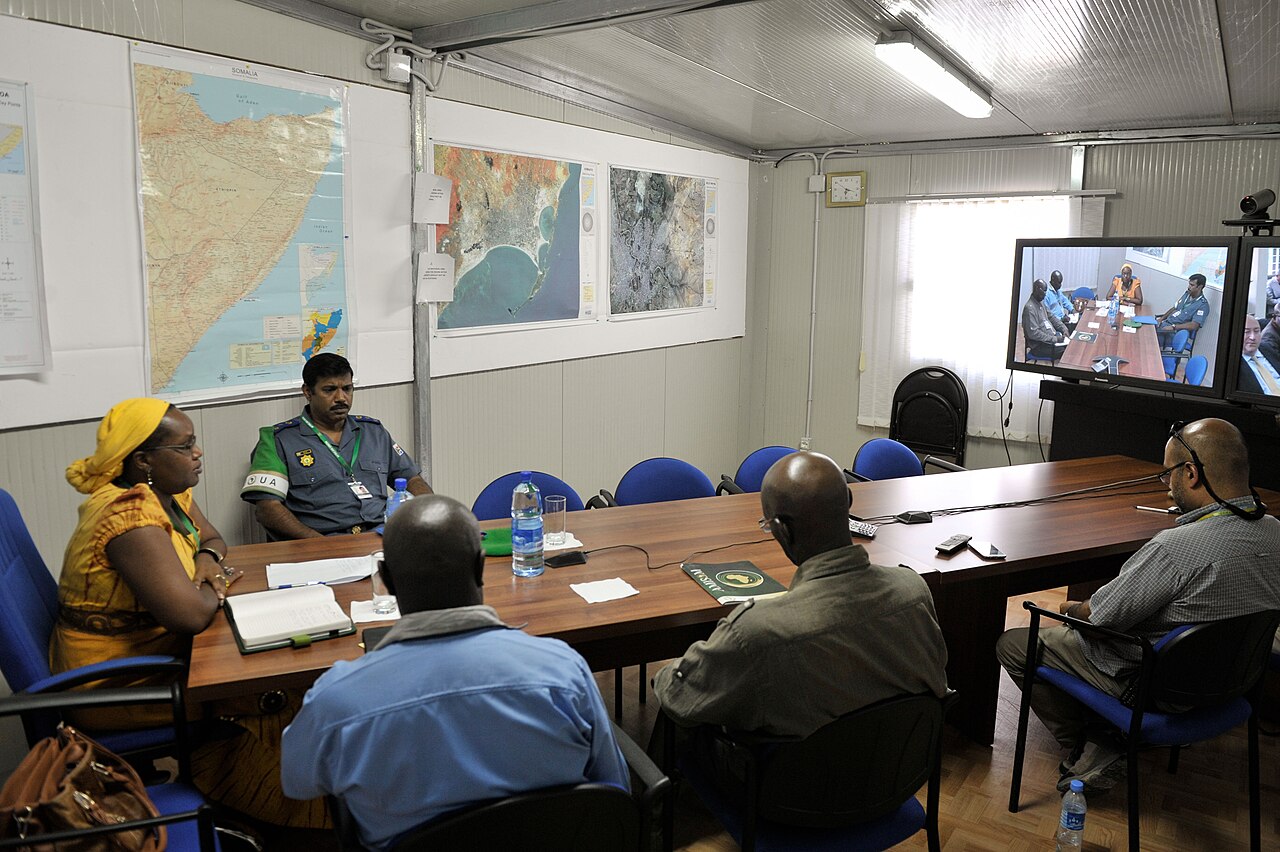
A video conference call in progress. On camera, your upper half, your background and your lighting do most of the talking. Photograph: AMISOM Public Information/Wikimedia Commons
Image Credits: Wikimedia Commons
A video interview is still a job interview. The recruiter may only see you from the chest up, but what they see shapes their first impression in seconds, and dressing well changes how you carry yourself through the conversation.
The rules are not identical to in-person interviews, because cameras punish certain colors and patterns that look fine in a room. This article explains what to wear to a video interview: how formal to go, which colors and patterns work on camera, what to do below the frame, and how to set up your space.
How formal should you go
The baseline rule from recruiters is simple: dress as you would for an in-person interview at the same company. Glassdoor's video interview guide puts it directly: even though the recruiter sees only your top half, the clothes you wear affect how you feel and perform.
That does not mean a full suit for every role. Match the company's dress norm. A finance firm expects something different from a creative agency, and when in doubt, lean slightly more formal than you think the role requires.
The data suggests many people underdress. The US Society for Human Resource Management found that 49% of employees wear an office-friendly shirt or top for video calls, but roughly one third take video calls in casual wear or exercise gear, according to figures cited by recruiter Hays.
An interview is not a routine team call. Hays warns that showing up in a zip-up fleece because you are at home can be the last impression you make on a hiring manager.
Tanya Fertil, a hiring manager who answered the question on CareerVillage, says the two biggest mistakes she sees are candidates showing up in a t-shirt, or wearing something so uncomfortable they look stiff the entire time. Her rule: professional but comfortable, so you can focus on the questions instead of the outfit.
Colors and patterns that work on camera
Cameras are pickier than human eyes. Stick to solid, neutral colors: navy, gray, soft blue, pastels, and gem tones all read well. Glassdoor specifically warns that bright patterns, stripes, and flashy jewelry can distract or even strobe on camera, creating a shimmering effect as the video compresses.
White is the other trap. A stark white shirt can wash you out on webcam, especially with bright lighting.
The Muse's interview guide makes the same point: stay away from bright designs or patterns, and be careful with white. If you love white shirts, layer one under a blazer or sweater so it is not the dominant color in the frame.
Deep black has a similar problem in reverse: it can turn into a shapeless dark mass on a low-quality webcam. Mid-tone solids are the safest choice.
Jewelry and accessories should complement the outfit without competing with it. Small studs beat dangling earrings, which catch light and move on camera. If you wear glasses, check for glare from your light source during a test call.
Career coach Erica Breuer, quoted by The Muse, adds that the setting matters as much as the clothes: check your lighting and camera angle, clear clutter from the frame, and aim for a simple background. The outfit and the room work together.

A straightforward headshot portrait. On a video call, this framing is essentially all the interviewer sees, so the top half carries the whole impression. Photograph: AlanAugustson/Wikimedia Commons
Image Credits: Wikimedia Commons
What to wear below the frame
Wear the full outfit: every major guide repeats this, and the reason is practical, not moral. Glassdoor notes that standing up unexpectedly, to grab a document or adjust a cable, is more common than people think. Pajama bottoms or shorts become a story the interviewer tells colleagues.
There is also a psychological reason. Hays points out that dressing professionally for a video interview at home helps you get into the right frame of mind. The ritual of getting fully dressed signals to your brain that this is a performance, not a casual call, and candidates who dress fully report feeling more focused and confident.
So put on the trousers, the skirt, the shoes. Nobody may see them, but you will know they are there, and that changes how you sit, speak, and answer.
Setting up your space
Your environment sends a signal before you say a word. A cluttered room, a dark silhouette, or a camera angled up your nose distracts from your answers, as Glassdoor's guide warns.
Lighting first: face a light source, positioning yourself so natural light from a window, or a lamp, sits in front of you rather than behind you. Backlighting turns you into a shadow. If window light causes glare on your camera, soften it with a curtain or switch to a lamp.
Background second: a plain wall, a bookshelf, or a tidy office space all work. Avoid beds, laundry piles, and busy posters. Virtual backgrounds can help, but only if your device renders them smoothly. A glitchy blur is worse than a plain wall.
Camera third: set it at eye level by stacking books or a box under your laptop. Low angles are unflattering and make your gaze look odd. Frame your head and shoulders with a little space above your head: too close feels cramped, too far looks disengaged.
Finally, do a dress rehearsal. Fertil recommends scheduling a video call with a friend on the same platform you will use for the interview, and asking for candid feedback on how you look and sound.
Her personal rule is worth stealing: if you keep questioning an outfit or a piece of jewelry, switch it out. If you feel great in it, that confidence comes through on camera.
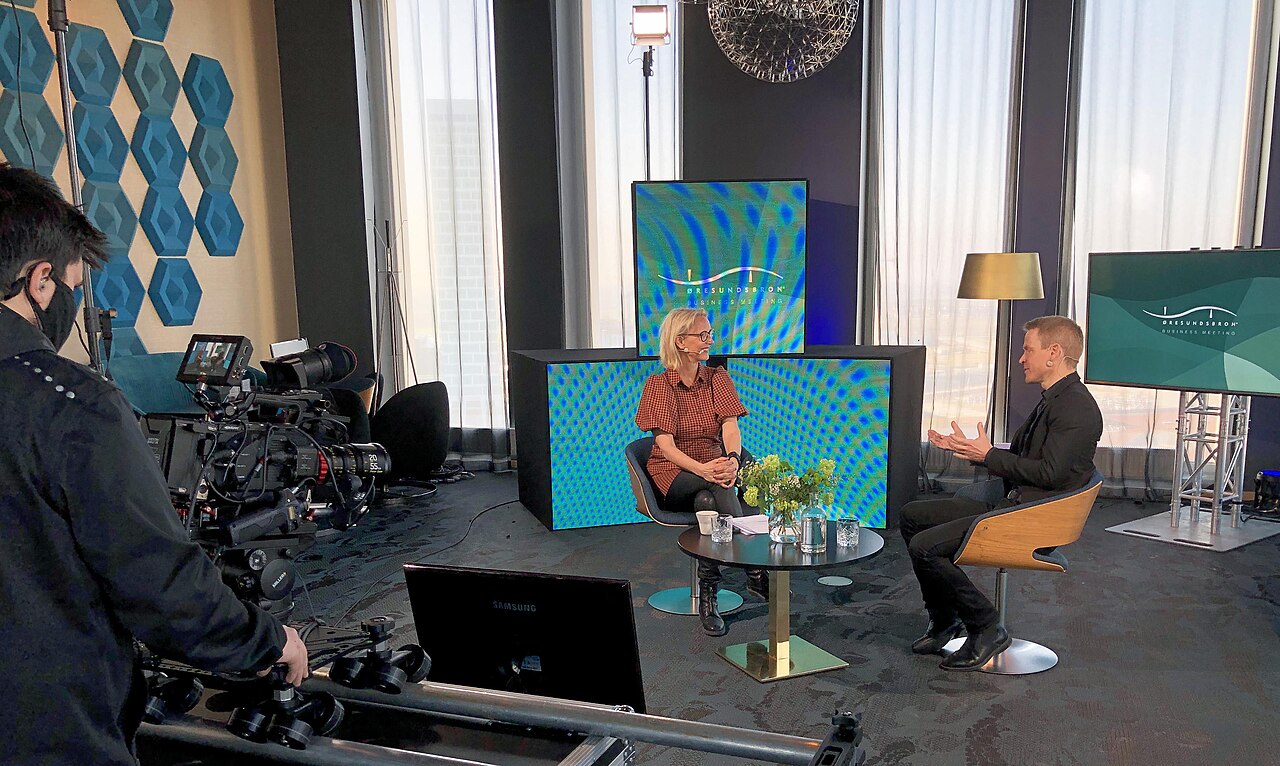
A business meeting in progress. Match your video interview outfit to the company's normal dress level. Photograph: Johan Wessman / News Oresund/Wikimedia Commons
Image Credits: Wikimedia Commons
Frequently asked questions
Can I wear a t-shirt to a video interview?
No. Hiring managers consistently name the t-shirt as one of the worst video interview mistakes. Even for casual companies, step up to a collared shirt, blouse, or neat knit top.
Are jeans okay for a video interview?
It depends on the company, but they are risky. Dark, well-fitting jeans might pass at a casual startup, but trousers or a skirt are safer. When in doubt, go one step more formal than the company's daily norm.
What colors should I avoid on camera?
Avoid stark white (it washes you out), deep black (it loses detail), neon brights, and tight stripes or small busy patterns (they strobe on video). Solid mid-tone colors are the safest bet.
Should I wear makeup for a video interview?
Keep it neutral and subtle, the same standard as an in-person interview. Webcams flatten features slightly, so a natural, polished look works better than a heavy one. The same goes for hair: neat and simple.
The bottom line
Dress like it is an in-person interview, favor solid mid-tone colors, wear the whole outfit, and fix your lighting and background before you log on. None of this is complicated, and all of it is visible in the first ten seconds.
Lay everything out the night before, run a test call, and spend the morning on your answers instead of your wardrobe. Looking the part lets you focus on the part that actually gets you hired.
Rive News's research desk covers career topics from recruiter publications and hiring guides.
Subscribe to the Rive News newsletter for one practical explainer like this every morning.
Related stories

How to Ask for a Raise With Data, Not Emotions
Ask for a raise with market data and documented results, not emotions. Research your rate from BLS wage tables, build an evidence file, run

How to Explain a Career Gap on Your Resume Honestly
A career gap is not a red flag if you explain it honestly: give a reason, show what you did, and point forward. Recruiters reveal the exact

How to Switch Careers at 30 With No Experience in the Field
A career change at 30 means repackaging a decade of transferable skills, not starting over. Map your skills, earn one certification,