
What to wear to a video job interview: complete guide
Key takeaways
- Dress for a video interview exactly as you would in person: the Society for Human Resource Management found many candidates underdress on camera, which signals low effort.
- Solid, medium-tone colors read best on webcams; avoid fine stripes, busy patterns, and bright white, which can shimmer or create glare.
- Dress fully from head to toe, not just the waist up, since you may need to stand, and test the whole outfit on camera before the call.

A gray blazer over a simple top is a safe, professional choice for a video interview.
Image Credits: Wikimedia Commons
What to wear to a video job interview is the outfit and grooming you choose for a hiring conversation held over a webcam. It matters because the camera shows less of you, which means every visible detail gets more weight. A wrinkled shirt or a distracting pattern that nobody would notice in person can dominate a small video frame.
The stakes are higher than many candidates think. Gartner surveyed 334 HR leaders and found that 86% were using virtual technologies to interview candidates, a shift that has kept video interviews central to hiring.
Yet the Society for Human Resource Management reported that many workers take video calls casually: 49% wear an office-friendly shirt or top with casual pants, and roughly one third take calls in casual wear or exercise gear, according to figures cited by Hays. An interview is not a routine call, and dressing for one like it is puts you behind.
This guide covers what to wear to a video job interview, including matching in-person formality, picking camera-friendly colors and patterns, the full-outfit rule, adjusting for your industry, and a final camera check before you log on.
Match the formality of an in-person interview
The core rule is simple: wear what you would wear if you were walking into their office. For corporate, finance, law, and government roles, that means business professional: a suit or blazer with a shirt or blouse. For tech, startups, education, and most office roles, business casual is a safe default, per guidance from Huru's interview guide.
When in doubt, go one step more formal than the company's everyday dress. It is far easier to be slightly overdressed than to look like you did not try. If you are unsure about the dress code, asking the recruiter beforehand is completely normal and shows preparation rather than weakness.
Your visible half carries the whole impression, so iron or steam the shirt, blouse, or blazer you will wear. The camera flattens fabric, and wrinkles that vanish in person show up as shadows on screen. A quick pass with an iron takes five minutes and removes a needless risk.

Dressing fully for a home video interview, blazer and all, keeps you interview-ready even off camera.
Image Credits: Wikimedia Commons
Choose colors and patterns that work on camera
Solid colors are the safest choice on a webcam. Medium tones like navy, charcoal, teal, burgundy, and soft blue stand out cleanly against most backgrounds and flatter most skin tones. They also compress well on video, so you look sharp even on a low-bandwidth call.
Avoid fine stripes, small checks, and tight herringbone. On camera these patterns shimmer and ripple, an effect called moire, which is distracting for the interviewer.
Busy prints pull attention away from your face and your answers. Solid always wins for video.
Skip bright white and neon brights too. White can blow out on camera and create glare around your face, especially with strong lighting, according to Metaintro's interview attire guide.
If you want a light shirt, pick an off-white, light blue, or pale gray instead. Dark, saturated colors are generally safer than very pale ones.
Dress fully, not just from the waist up
Dress from head to toe, not just the waist up. Just Recruitment's video interview guide recommends smart trousers and shoes too, because you might need to stand up to adjust something and end up on camera. The advice is practical, not fussy.
There is a psychological reason as well. Dressing fully puts you in interview mode.
Hays notes that dressing professionally for a video interview at home helps candidates get into the right mindset to perform. Candidates who dress the part from head to toe consistently report feeling more confident and focused.
So pick the trousers, skirt, and shoes you would wear in person. Sit down in the full outfit and check that nothing bunches, rides up, or needs adjusting. If you have to fidget with your clothes during the call, the outfit has failed its job.
Adjust for your industry
Different industries expect different levels of formality, and video does not change that. For finance, consulting, law, and sales, wear the full suit. These are client-facing worlds where conservative dress signals credibility.
For tech, startups, creative agencies, and media, business casual or smart casual works: a collared shirt or neat sweater, a blazer optional, with tailored trousers or dark jeans. Even here, avoid hoodies, graphic tees, and ripped jeans for the interview itself, even if the team wears them daily.
For healthcare, education, and customer-facing roles, aim for neat, professional, and practical. A tailored top with a cardigan or blazer in a warm, approachable color works well. Knowing how to answer the weakness question in interviews matters more than any outfit, but the right clothes make sure nothing distracts from your answers.
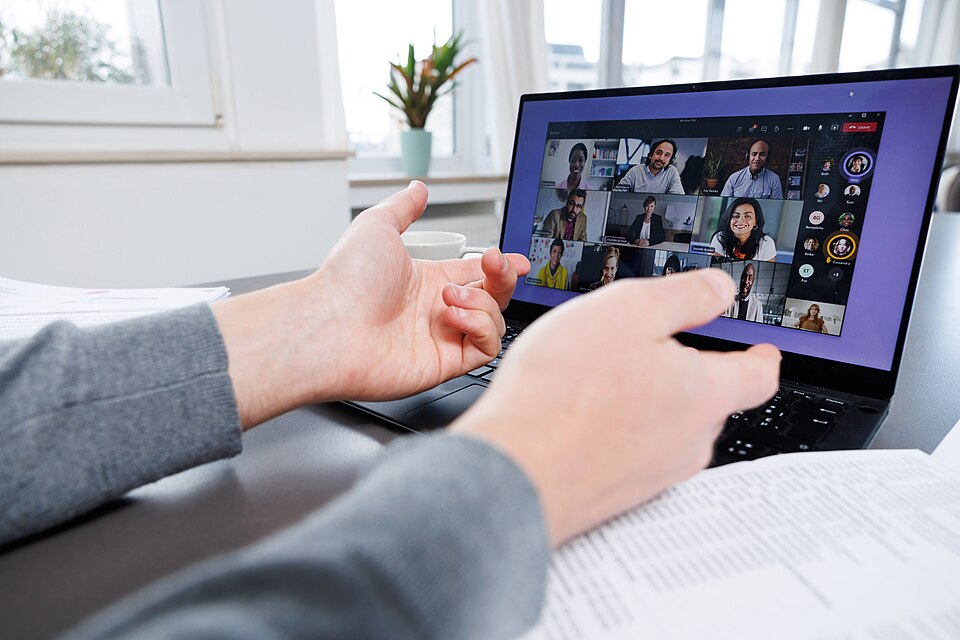
This is what the interviewer sees: a small video frame where clothing, lighting, and background all compete for attention.
Image Credits: Wikimedia Commons
Grooming, background, and the final camera check
Clothes are only part of the picture. Hair should be neat and off your face, nails clean, and jewelry small and quiet. Skip strong perfume or cologne; it is a video call, but you may meet in person later, and heavy scent never helps.
Check your background the way an interviewer will see it. A plain wall or tidy bookshelf works.
Remove anything distracting, personal, or messy from the frame. Sit facing a window or a lamp so your face is lit and not in shadow, and raise the camera to eye level with a stack of books if needed.
Finally, do a full camera rehearsal in the exact outfit, at the same time of day as the interview. Record a 30-second test clip and watch it. Check colors, patterns, lighting, and background together.
This one step catches problems that a mirror cannot, and it is the step most candidates skip. After the interview, smart questions to ask at the end of an interview will matter more than anything you wore, so save your energy for them.
Should I wear a tie or a blazer for a video interview?
Match the industry. Finance, law, and consulting: yes to both.
Tech and startups: a blazer over a collared shirt is plenty. When unsure, add the blazer; you can remove it if the tone turns out casual.
Are jeans ever acceptable for a video interview?
Only if the company's culture is clearly casual and the role is not client-facing. Even then, choose dark, well-fitted jeans with a polished top and blazer. A safe rule is to dress one step above the everyday norm.
What colors should I avoid on camera?
Avoid fine stripes, busy prints, bright white, and neon brights. White can glare, stripes can shimmer, and neon distracts. Stick to solid, medium-tone colors.
Do I need to wear shoes for a video interview?
Wear them anyway. You might stand up on camera, and dressing fully keeps you in the right mindset. It takes thirty seconds and removes one more thing to worry about.
The bottom line
What to wear to a video job interview comes down to three habits: match in-person formality, choose solid camera-friendly colors, and dress fully from head to toe. Add a rehearsal in front of your actual camera and a tidy, well-lit background, and your appearance will support your answers instead of distracting from them. With 86% of HR leaders using virtual interviews, per Gartner's survey, this is a skill worth getting right once and reusing for every role, whether you are preparing questions about a slow hiring process or getting ready to turn an internship into a full-time job.
---
Rive News is the research desk behind these guides, covering careers, education, and everyday how-tos with sourced, practical advice.
Latest in Career
- How to answer the weakness question in interviews
- How to turn an internship into a full-time job
- Smart questions to ask at the end of an interview
- Why companies take so long to reply after interviews
Subscribe for one practical career guide every morning.
Copyright 2026 Rive News. All rights reserved.
Related stories
How to Ask for a Raise With Data, Not Emotions
Ask for a raise with market data and documented results, not emotions. Research your rate from BLS wage tables, build an evidence file, run

How to Explain a Career Gap on Your Resume Honestly
A career gap is not a red flag if you explain it honestly: give a reason, show what you did, and point forward. Recruiters reveal the exact

How to Switch Careers at 30 With No Experience in the Field
A career change at 30 means repackaging a decade of transferable skills, not starting over. Map your skills, earn one certification,