
Why Bond Prices Fall When Interest Rates Rise: The Full Breakdown
Key takeaways
- A bond's coupon is fixed at issue, so when new bonds pay higher rates, old bonds must sell cheaper to compete.
- In a worked example, a 5% $1,000 bond fell to $931.99 when market yields rose to 6%, and jumped to $1,074.35 when they fell to 4%.
- The 2022 rate-hiking cycle made the Bloomberg Aggregate Bond Index fall 13.1%, its worst year since the index began in 1976.
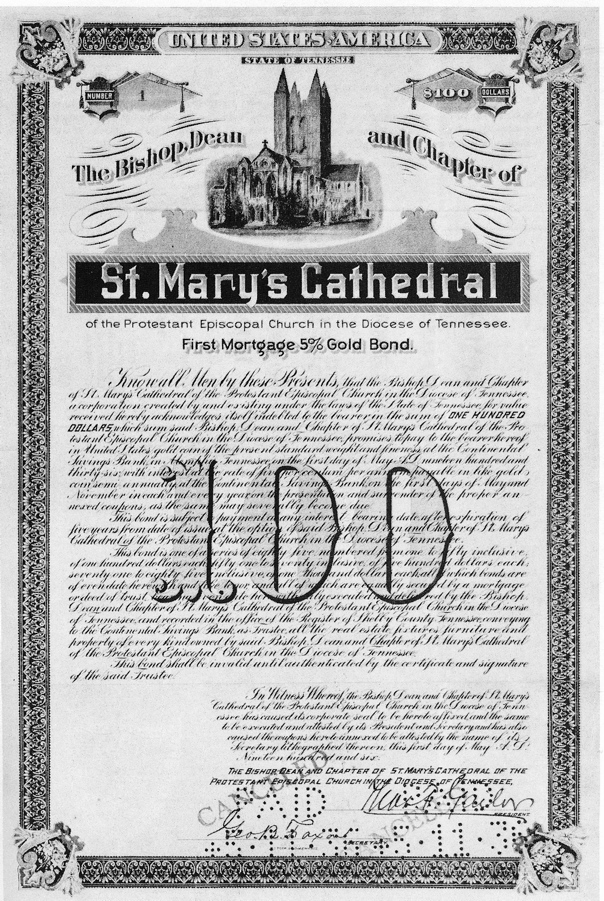
A 1906 construction bond, a fixed-rate promise of the kind whose market price moves with interest rates. Photograph: St. Mary's Cathedral / Wikimedia Commons
Image Credits: Wikimedia Commons / St. Mary's Cathedral (1906 construction bond); Austrian War Bond and Confederate bond certificate images via Wikimedia Commons contributors
Why bond prices move opposite to interest rates
When people say bond prices fall as interest rates rise, they are describing a mechanical relationship, not a mood swing in the market. A bond is a contract: the issuer promises fixed payments (coupons) and repays the face value at maturity.
Those payments never change, even when everything else in the economy does. That single fact drives everything that follows.
This article explains the inverse relationship step by step: what a bond actually is, why its price must move when rates change, a worked numerical example you can check yourself, and why longer bonds react more sharply. It also covers what happened in 2022, when rising rates produced the worst bond year on record.
What is a bond, in plain English?
A bond is an IOU sold in small pieces. A government or company borrows money from investors and promises to pay interest on a fixed schedule plus return the original amount (the face or par value) on a set date. A 5% coupon on a $1,000 face value means $50 every year, without exception, until the bond matures.
Most bonds are issued at par, meaning buyers pay 100% of face value at the start. The coupon rate is locked in at issuance and printed into the contract. After that, the bond trades in the secondary market, where its price adjusts to reflect the current interest rate environment.
That fixed coupon is the crux of the puzzle. The payment cannot rise when rates rise, and it cannot fall when rates fall. The price is the only thing free to move.
How bond prices adjust to new rates
Picture a simple comparison. You own a bond paying 3% a year. Then interest rates rise, and newly issued bonds of the same credit quality pay 5%.
Nobody will buy your bond at full price while a better contract is available for the same money.
To compete, your bond has to get cheaper. Its price falls until the total return a buyer gets from it lines up with the 5% available on new bonds. The mechanics are exactly the same when rates move the other way: your above-market coupon becomes desirable, and the price rises above face value.
The one-sentence version is this: a bond's price is whatever makes its fixed stream of payments produce the yield currently available on comparable bonds. Rates up, price down. It is arithmetic, not sentiment.
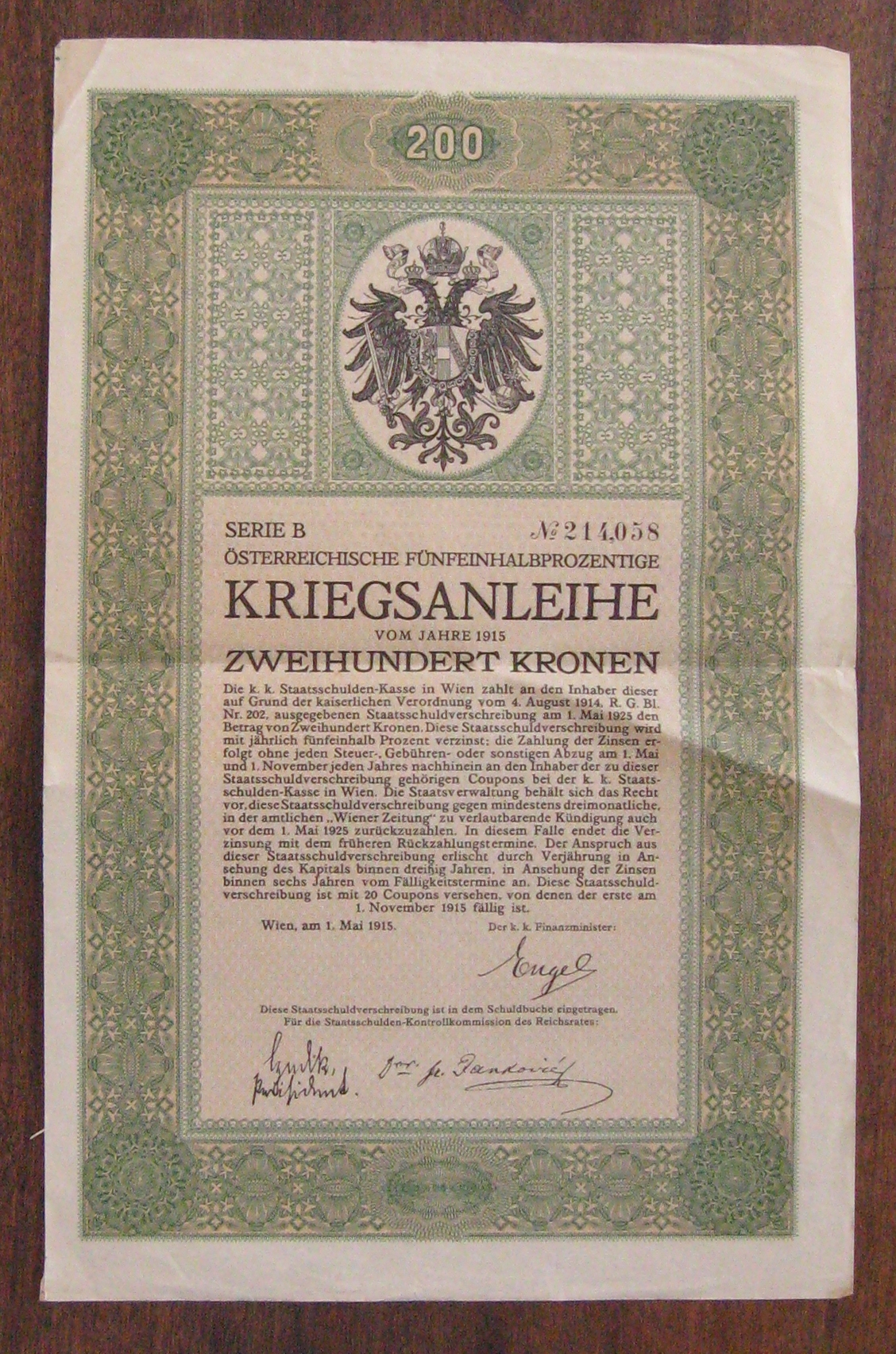
A wartime bond certificate, another fixed-rate promise that trades at market prices. Photograph: Wikimedia Commons contributor
A worked example you can check
Take a bond with a $1,000 face value, a 5% annual coupon ($50), and nine years remaining, as worked through by Long View Investing. To price it at any market yield, discount every future payment back to today at that yield and add them up.
Case one: the market yield rises to 6%. Discounting the nine $50 coupons gives $340.09, and the $1,000 principal returned in year nine is worth $591.90. Total price: $931.99. That is a 6.8% drop from the original $1,000.
Case two: the market yield falls to 4%. The same sums produce a price of $1,074.35, a 7.4% gain. Notice the asymmetry: the same one-point move produces a slightly bigger gain going down than loss going up, a mild feature of bond math called convexity.
SmartAsset gives a shorter-term illustration: a 10-year bond with a $1,000 face value and a 4% coupon ($40 a year) might fall to around $875 if new bonds pay 6%, and could rise above $1,125 if rates dropped to 2%.
The point of both examples is identical. Nobody reissued your bond.
The borrower is still paying on time and will still repay the full $1,000 at maturity. Only the market's required rate changed, and the price had to move to match it.
Why long-term bonds react more
Not all bonds move equally. The longer the maturity, the more sensitive the price is to rate changes, a concept called duration. Longer-term bonds lock in older rates for more time, so their prices respond more sharply.
A rough rule: a bond fund with a duration of 6 years loses roughly 6% of its value when rates rise by one percentage point. That is why 30-year bonds got crushed in 2022 while short-term bills barely wobbled.
Lower coupons amplify the effect too. A bond that pays almost nothing until maturity gets most of its value from the final payment, which is heavily discounted when rates rise. Zero-coupon bonds are the most sensitive of all.
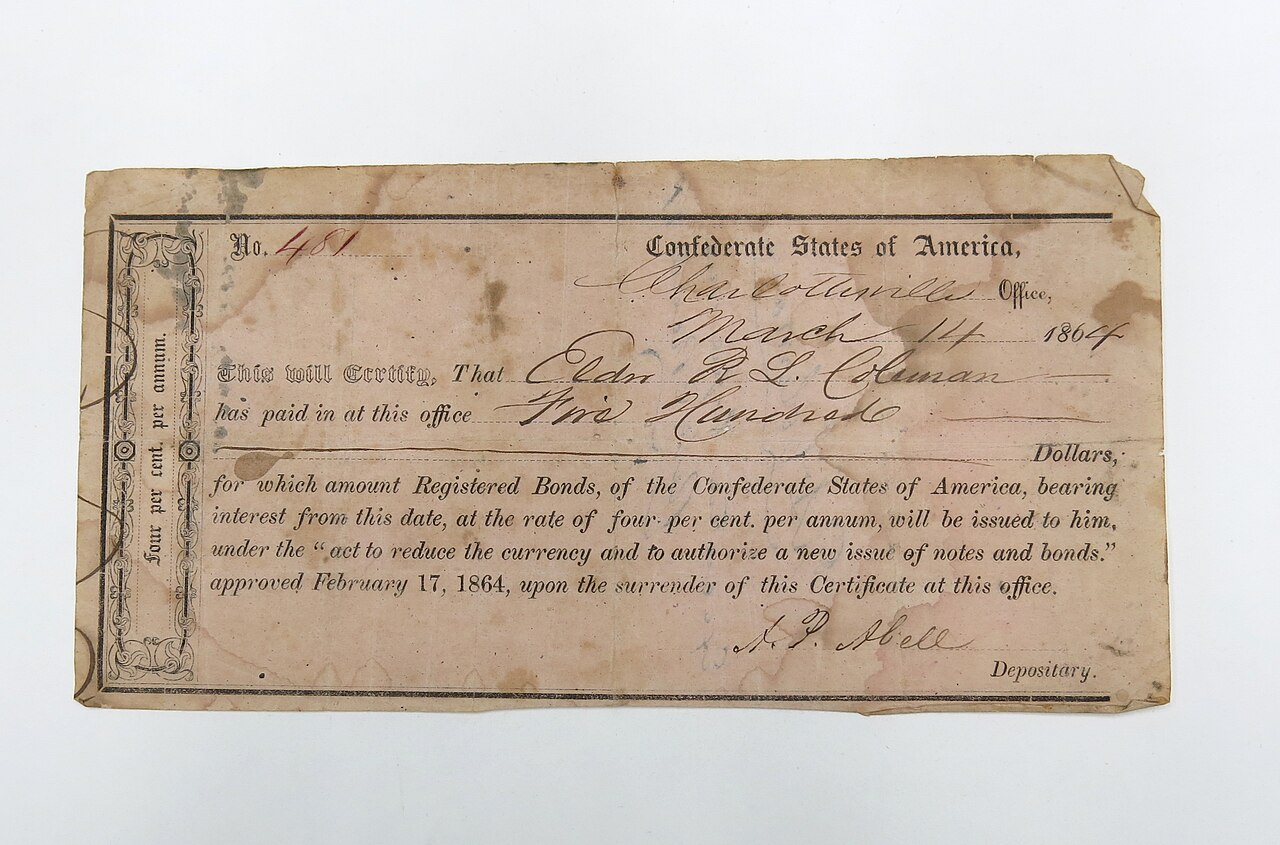
An 1864 bond certificate promising 4% annual interest, a coupon frozen in time while market rates kept moving. Photograph: Wikimedia Commons contributor
What 2022 showed in practice
Theory met reality in 2022. The Federal Reserve raised its policy rate by a cumulative 4.25%, from a range of 0%-0.25% in January to 4.25%-4.5% in December, the fastest hiking cycle since 1980. The 10-year Treasury yield rose from about 1.5% at the start of the year to roughly 4.2% by late October.
The result: the Bloomberg Aggregate Bond Index fell 13.1% in 2022, its worst year since the index began in 1976. Before 2022, the index's worst year was 1994, when it dropped just 2.9%. It was also the first time the index posted back-to-back annual losses, following a 1.5% decline in 2021.
The episode proved two things the math already implied. First, "safe" bonds can lose double digits when rates spike from very low starting yields. Second, rising rates are not only a paper problem: holders who needed to sell before maturity took real losses.
Common questions about bonds and rates
If my bond's price fell, did I lose money?
Not necessarily. If you hold the bond to maturity, you still collect every coupon and get the full face value back (assuming the issuer does not default). The price drop only becomes a realized loss if you sell before maturity.
Do bond funds recover when rates stabilize?
They can. A bond fund's lower price is partly offset by higher yields going forward, since the fund buys new bonds at the higher rates. Over a period roughly equal to the fund's duration, the extra income can make up for the initial price drop.
Why don't new bonds just keep paying the old coupon?
Because issuers compete for buyers. When the market demands higher yields, an issuer must offer a higher coupon to sell its bonds at all. That is the transmission belt between the central bank's rate and the bond market.
Is it better to buy bonds when rates are high?
There is a case for it: you lock in higher yields, and if rates later fall, your bonds' prices rise. But nobody can reliably time rates, so most investors focus on matching bond duration to when they need the money.
Does inflation affect bond prices too?
Yes, through rates. High inflation pushes central banks to raise rates, and it also reduces what each future coupon payment can buy. That is one reason inflation is often called kryptonite for bonds.
This article is for general information only and is not financial advice.
The bottom line
Bond prices fall when interest rates rise because fixed coupons cannot compete with higher-yielding new bonds any other way. The price drops until the old bond's yield matches the market. The mechanism is pure arithmetic, and 2022 showed what happens when it runs in the extreme: a 13.1% annual loss in the broad bond market, something that had never happened before.
This article is for education only and is not investment advice. Bond investing involves risks including interest-rate, credit, and inflation risk.
Latest in Personal Finance
- Learn what happens when your bank says funds are pending after a deposit.
- Find out how a credit limit change affects your score when you ask.
- See how a 401(k) works when you quit your job and your options for the balance.
Subscribe for one plain-English money explainer every morning.
Related stories

How your APR is divided by 365 to get daily interest
Lenders divide your APR by 365 for a daily rate, then apply it to your average daily balance. This guide walks through every step

What is the difference between APR and effective annual rate?
APR ignores compounding inside the year; the effective annual rate includes it. A 12.99% APR card really costs 13.80% a year. Worked

APY vs interest rate: what compounding does to your money
APY includes compounding; the interest rate does not. A 5% rate compounded monthly is really 5.12% APY. Here is how the math works and what