
How Compound Interest Works in a Savings Account
Key takeaways
- Compound interest means you earn interest on your principal and on previously earned interest, so growth accelerates over time.
- Three levers control the outcome: the interest rate, how often interest compounds, and how long the money stays put.
- Compounding frequency matters less than most people think; the rate and the time horizon do the heavy lifting.
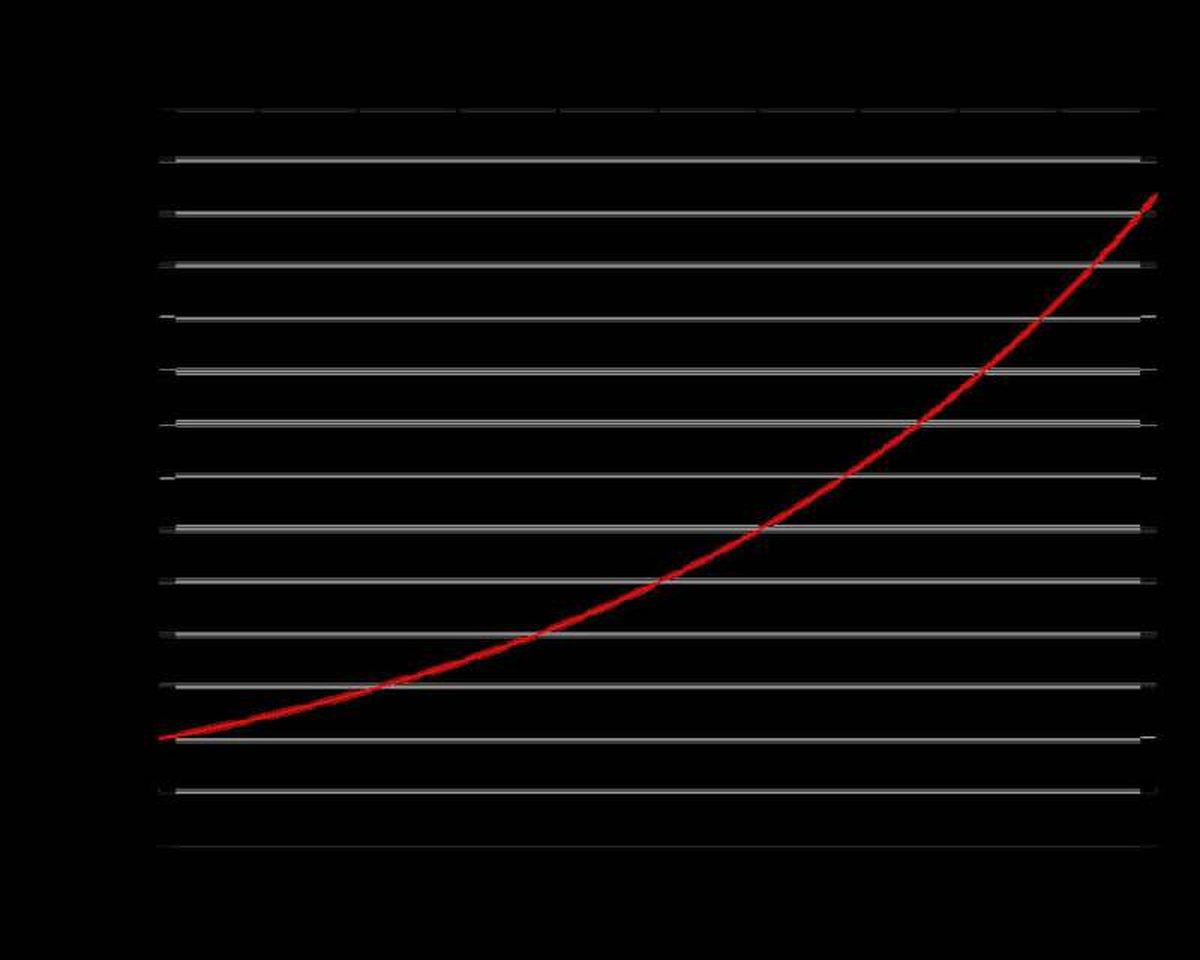
Image Credits: Wikimedia Commons
When you put money in a savings account, the bank pays you for keeping it there. That payment is called interest. Compound interest is what happens when the bank adds that interest to your balance, and then starts paying interest on the new, larger balance.
The FDIC explains it with a simple sequence. You deposit your principal. You earn interest.
The two are added together to become your new principal. The next time you earn interest, you earn it on that new principal. Earning money on your principal and interest, over and over, is compound interest.
This article explains what compound interest actually is, how it differs from simple interest, the three levers that control it, how banks apply it to real savings accounts, and what it looks like in dollars.
What compound interest actually is
Start with the FDIC's vocabulary. The money you deposit is the principal.
The money you earn on the principal is interest, and you get to keep it. Interest is paid after a period of time, such as each month.
Compounding is the act of folding each interest payment back into the balance. Month one pays interest on your deposit. Month two pays interest on your deposit plus month one's interest.
Every cycle, the base grows a little, so every future payment is a little larger.
The FDIC's own example makes this concrete. Noah deposits $100 into a savings account at an FDIC-insured bank paying 3 percent interest compounded monthly.
Each month, the 3 percent annual rate is applied in a monthly slice, and the earnings join the balance. By year's end, the $100 has grown without Noah adding a cent.
Simple interest vs. compound interest
Simple interest is calculated only on the original principal. Compound interest is calculated on the principal plus all previously accumulated interest. That one difference is the entire game.
Take $1,000 earning 5 percent a year for 10 years. With simple interest, the total is $1,500: ten years of $50 payments on the original $1,000.
With annual compounding, the total is about $1,628.89, because each year's interest starts earning its own interest.
The year-by-year path shows the acceleration. At 5 percent compounded annually, $1,000 becomes $1,050 after year one, $1,102.50 after year two, $1,157.63 after year three, $1,215.51 after year four, and $1,276.28 after year five.
Notice the interest itself growing: $50, then $52.50, then $55.13, then $57.88, then $60.78. The amount earned each year increases because the balance it is calculated on keeps increasing.
The standard formula captures all of this: A = P(1 + r/n)^(nt). A is the final amount, P is the starting principal, r is the annual rate as a decimal, n is the number of compounding periods per year, and t is the number of years.
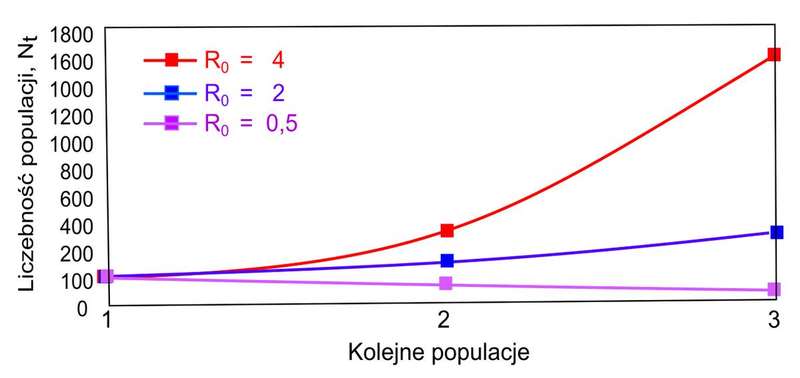
Image Credits: Wikimedia Commons
The three levers: rate, frequency, time
Experian breaks compound interest into five factors, but three do most of the work for a saver: the interest rate, the compounding frequency, and the duration.
The interest rate sets the speed. A higher rate grows money faster, which is why the FDIC notes that different banks offer different rates and the higher the rate, the faster the money grows. This is the lever worth shopping for.
Compounding frequency is how often the folding happens: daily, monthly, quarterly, semi-annually, or annually, depending on the account's terms. More frequent compounding helps, but the effect is smaller than advertising suggests.
Time is the quiet powerhouse. The longer money sits, the more cycles compound, and each cycle builds on all the previous ones. Experian puts it plainly: the longer you leave money in a savings account, the more interest you earn.
The other two factors are deposits and withdrawals. Adding money gives compounding more to work with. Taking money out shrinks the base that future interest is calculated on.
How often do banks actually compound?
It depends on the account. Many savings accounts compound daily but credit the interest monthly.
That means the bank calculates your earnings each day on the current balance and adds the total to your account once a month. Others compound and credit monthly or quarterly. The account's disclosures spell out the exact schedule.
Here is the honest math on frequency. Take $100,000 at 2 percent for one year. Compounded annually, it becomes $102,000.
Compounded daily, the interest earned each day also earns interest on the days that follow, and the total comes out about $20.08 higher.
Over 30 years, the gap widens but stays modest. Annual compounding turns that $100,000 into $181,136.16. Daily compounding reaches $182,208.88.
The daily schedule earns an extra $1,072.72 over three decades, or a bit more than $35 a year on a six-figure balance.
The lesson: frequency is worth understanding, but it is not worth chasing at the expense of a better rate. A quarter-point higher interest rate will beat daily-vs-monthly compounding on any realistic balance.
A worked example with real dollars
Put it together with a realistic saver. You deposit $5,000 into a savings account paying 4 percent, compounded monthly, and leave it alone for 10 years.
The monthly rate is 4 percent divided by 12, or about 0.333 percent per month. Each month, the bank adds that slice to your balance, and the next month's slice is calculated on the new total.
After 10 years, or 120 compounding periods, the formula gives $5,000 × (1 + 0.04/12)^120, which is roughly $7,454. That is $2,454 of earnings on a $5,000 deposit, with no additional contributions.
Now add $100 a month. Regular deposits supercharge compounding because every new deposit starts its own compounding journey. The habit of contributing matters more than finding an exotic compounding schedule.
Frequently asked questions
Does my savings account compound daily?
Many do the calculation daily and credit monthly, but schedules vary by bank and account. Check the account disclosures for the exact compounding and crediting frequency rather than assuming.
What is the difference between the interest rate and APY?
The interest rate is the nominal yearly rate. APY, the annual percentage yield, folds the compounding frequency into a single yearly figure so you can compare accounts directly. Comparing APY is the practical move; our APY explainer walks through it in detail.
Can I lose money to compounding in a savings account?
No. In a savings account, compounding only works in your favor. The realistic drags are account fees on small balances and inflation quietly shrinking what your dollars buy.
How often should I check my savings rate?
Savings rates are variable and tend to drift with the broader interest-rate environment. A quick check once or twice a year is enough to catch a rate that has sagged far below what competitors pay.
The bottom line
Compound interest is interest earning interest. Your bank adds each round of earnings to your balance, and the next round is calculated on the bigger number, so growth accelerates the longer you leave the money alone.
The rate you earn and the years you give it matter far more than whether compounding happens daily or monthly. The practical next step is simple: compare APY across accounts, favor the higher rate with no fees eating the gains, and then let time do the compounding.
---
Topics: compound interest, savings accounts, interest rates, APY, personal finance
Rive News is the research desk behind this publication's explainers, covering money, health, home, and science in plain English.
Latest in Finance
- High-Yield Savings Account, Explained
- APY vs. Interest Rate: How Compounding Changes the Math
- APR Divided by 365: How Daily Interest Is Calculated
- How Credit Card Interest Compounds Daily
Subscribe for one plain-English money explainer in your inbox each week.
Educational content only; not financial advice. Talk to a financial professional about your situation. © 2026 Rive News. Corrections: contact the research desk.
Related stories

How your APR is divided by 365 to get daily interest
Lenders divide your APR by 365 for a daily rate, then apply it to your average daily balance. This guide walks through every step

What is the difference between APR and effective annual rate?
APR ignores compounding inside the year; the effective annual rate includes it. A 12.99% APR card really costs 13.80% a year. Worked

APY vs interest rate: what compounding does to your money
APY includes compounding; the interest rate does not. A 5% rate compounded monthly is really 5.12% APY. Here is how the math works and what