
How Does a Credit Card Grace Period Actually Work?
Key takeaways
- The grace period is the interest-free window between your statement date and your payment due date, and it only applies if you pay your full balance on time.
- Pay less than the full balance and you lose the grace period: new purchases start accruing interest from the day you make them.
- Getting the grace period back usually takes one or two consecutive months of paying the balance in full, and you may owe a final charge called residual interest.
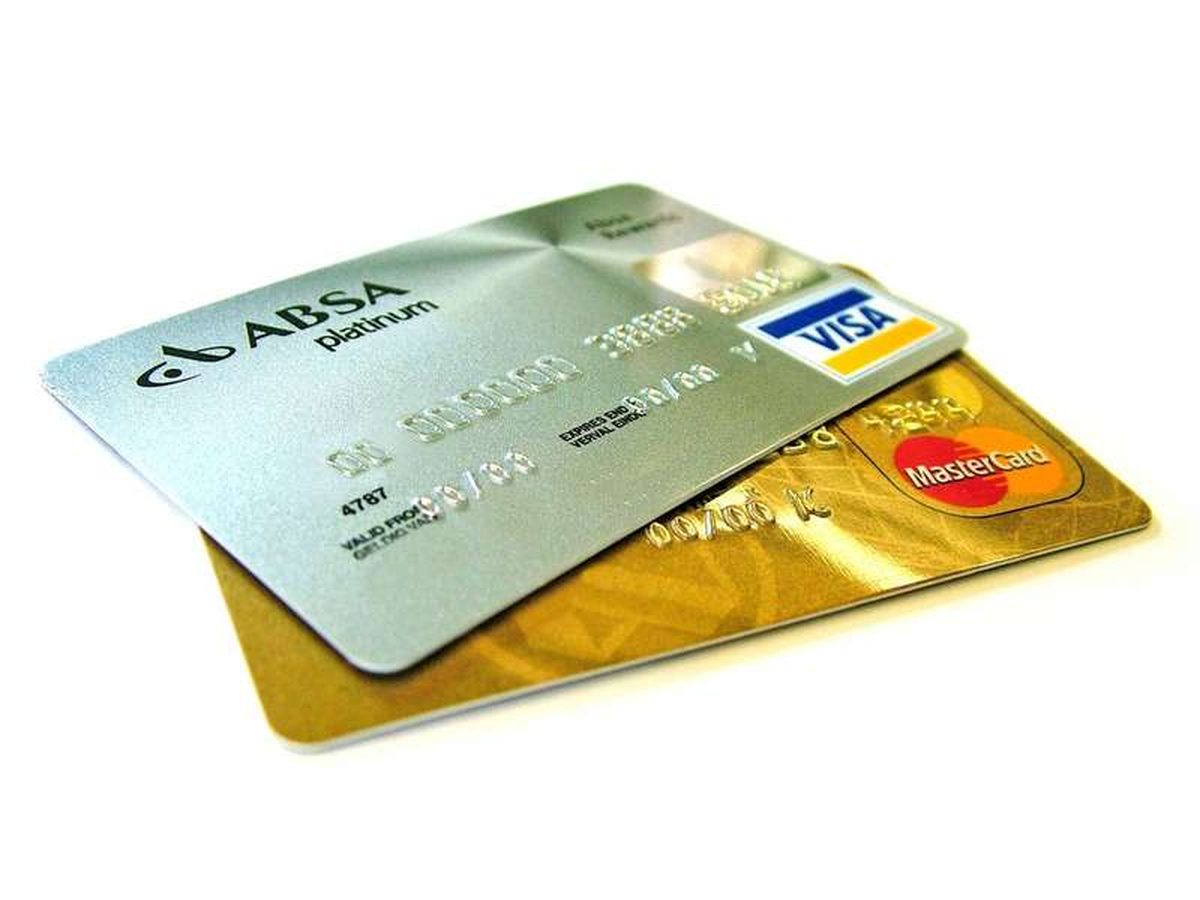
Credit cards are revolving credit: borrow, repay, and borrow again each cycle. The grace period is the interest-free window that makes the cycle cheap. Photograph: Lotus Head/Wikimedia Commons
Image Credits: Wikimedia Commons
A credit card grace period is the stretch of time between the end of your billing cycle and the date your payment is due. During that window, you can owe money on purchases and still pay zero interest, as long as you pay the full balance by the due date.
That simple benefit hides some sharp edges. The grace period can vanish after a single short payment, and it changes how every new purchase is treated. This article explains the credit card grace period, including what it is, how it works when you pay in full, how you lose it, and how you get it back.
What is a credit card grace period?
The Consumer Financial Protection Bureau defines the grace period as the period between the end of a billing cycle and the date your payment is due. While it lasts, you may not be charged interest on purchases if you pay your balance in full by the due date.
Two details from the CFPB are worth knowing. First, card companies are not actually required to give a grace period, though most do on purchases.
Second, grace periods typically apply only to purchases. Cash advances and convenience checks from the issuer generally start accruing interest from the day of the transaction, grace period or not.
The CFPB also sets a floor on timing: card companies must mail or deliver your bill at least 21 days before the payment is due. That is the minimum legal grace period in the United States, though most issuers give 21 to 25 days.
How the grace period works when you pay in full
Think of your billing cycle as a month of spending that gets bundled into a statement. The grace period is the extra few weeks after that statement before payment is due. Pay the whole statement balance by the due date, and the entire month of purchases was effectively an interest-free loan.
A concrete example from Nolo shows the arithmetic. Suppose your billing cycle ends on May 4 and your payment is due on May 25. You buy a $1,200 laptop on May 1.
If you pay the entire balance, including the $1,200, by May 25, you owe no interest on the purchase. You borrowed for 24 days, from May 1 to May 25, free.
Notice how the length of the free loan depends on when you buy. A purchase made early in the cycle can ride interest-free for 50 days or more.
One made the day before the statement closes gets only the grace period itself, roughly three weeks. Either way, the price of admission is the same: full payment, on time.
A manual credit card imprinter from an earlier era of card payments. Modern grace period rules were shaped by the CARD Act of 2009. Photograph: My another account/Wikimedia Commons
Image Credits: Wikimedia Commons
How you lose your grace period
This is where the mechanics turn costly. If you do not pay your full statement balance by the due date, even if you pay almost all of it, you typically lose the grace period on new purchases. Interest then starts accruing on everything you buy from the moment the transaction posts, not from the next statement date.
Nolo illustrates it with the same $500 washing machine example. Buy it on April 1 with a prior unpaid balance of $200, and pay $500 on May 6 intending to cover the new purchase.
Because there is no grace period, the next bill includes interest on the full $700 going back to April 1, plus interest on the remaining $200 afterward. The partial payment did not ring-fence the new purchase.
Losing the grace period has a second, less obvious cost: you keep paying interest on new purchases every cycle until the grace period is reinstated. The Bankrate breakdown shows how fast it compounds. At a 20 percent purchase APR, the daily rate is about 0.0548 percent.
A $1,000 balance grows 55 cents on day one, then interest is charged on $1,000.55 on day two. Over a 31-day cycle that comes to about $17.13, and the meter runs daily.
There is one legal limit on the damage. Under the CARD Act, as codified in 12 CFR 1026.54, an issuer cannot charge interest on days in earlier cycles, or on the portion of the balance you did pay by the due date, if you had been paying in full. The backdating stops at the boundary of your good history.
Two more traps catch cardholders. Balance transfers can kill the grace period on new purchases even when the transfer itself is at 0 percent, because the transferred balance counts as carrying a balance. And the CFPB warns that if you pay in full some months and not others, you may lose the grace period for the unpaid month and the month after.
How you get the grace period back
Regaining the grace period means proving you are back to full-payment behavior. Most issuers reinstate it after one or two consecutive billing cycles of paying the full statement balance on time. Some require two or more full payments in a row before the interest-free window returns.
Expect one last charge on the way out, called residual interest. Interest kept accruing on your carried balance during the grace period itself, and that amount posts to the next statement.
One worked example puts it at about $16.44 on a $1,000 balance paid 25 days after the statement closed. Pay that final charge too, and the slate is clean.
The reliable way to keep the grace period is unglamorous: pay the full statement balance every month, on time, and use a separate card for spending while you pay down any balance transfer. Autopay set to the full statement balance is the simplest tool for the job.
Frequently asked questions
Does paying the minimum keep my grace period?
No. Paying only the minimum means you did not pay the balance in full, so the grace period is lost. Interest accrues on the unpaid portion and on new purchases from their transaction dates.
Do all credit cards have a grace period?
Not necessarily. The CFPB notes that issuers are not required to offer one, though most do on purchases.
Some cards exclude it for certain transaction types. Your cardholder agreement states the exact terms.
Does the grace period apply to cash advances?
Typically no. Cash advances and issuer convenience checks generally begin accruing interest from the transaction date, with no interest-free window at all.
How long does it take to get the grace period back?
Usually one to two consecutive billing cycles of paying the full balance on time, depending on the issuer. Budget for a final residual interest charge on the statement after you pay the balance off.
The bottom line
The grace period is simple when you are winning and expensive when you are not. Pay in full and on time, and every purchase gets weeks of interest-free float. Fall short once, and new purchases start costing you interest from the day you swipe, until you string together enough full payments to earn the window back.
The practical move is to treat the full statement balance as the real minimum payment. Set autopay to cover it, and check your cardholder agreement for the exact grace period length and which transactions are excluded.
This article is educational and is not financial advice. Card terms, APRs, and grace period rules vary by issuer; check your cardholder agreement for the terms that apply to you. The dollar examples above are illustrative.
Tags: credit cards, grace period, interest, personal finance, APR
Rive News is the research desk behind this explainer series, covering health, science, and everyday questions with sourced reporting.
Subscribe for one evidence-based explainer in your inbox every morning.
Related stories

How your APR is divided by 365 to get daily interest
Lenders divide your APR by 365 for a daily rate, then apply it to your average daily balance. This guide walks through every step

What is the difference between APR and effective annual rate?
APR ignores compounding inside the year; the effective annual rate includes it. A 12.99% APR card really costs 13.80% a year. Worked

APY vs interest rate: what compounding does to your money
APY includes compounding; the interest rate does not. A 5% rate compounded monthly is really 5.12% APY. Here is how the math works and what