
Roth IRA vs Traditional IRA Explained Simply: Which One Fits You?
This article is for general information only, not financial advice.
Key takeaways
- The core difference is tax timing. Traditional IRAs give a tax break now, Roth IRAs give tax-free withdrawals later.
- For 2026, you can contribute up to $7,500 per year ($8,600 if you are 50 or older), split across both account types.
- Pick Roth if you expect higher taxes in retirement. Pick traditional if your tax rate is higher right now.
An IRA, or individual retirement account, is a personal account that shelters your retirement savings from taxes. The two main flavors, Roth and traditional, look almost identical from the outside. Inside, they are mirror images.
"The main difference between a Roth IRA and a traditional IRA lies in when you pay taxes," U.S. Bank explains in its retirement planning guide.
That single sentence is the whole decision in miniature. This article unpacks what it means in practice. It covers how each account is taxed, the 2026 contribution limits, income rules, withdrawal rules, and a simple way to choose.
What is a traditional IRA?
A traditional IRA is funded with pre-tax dollars. Pre-tax means before income tax is taken out. If you qualify, your contributions are tax-deductible.
That lowers your taxable income in the year you contribute. The investments inside then grow tax-deferred. That means you owe no yearly taxes on interest, dividends, or gains.
The tax bill arrives at the end. Every dollar you withdraw in retirement is taxed as ordinary income, including all the growth.
The IRS also requires you to start taking minimum withdrawals. These are called required minimum distributions (RMDs), and they begin at age 73. For people born in 1960 or later, that age rises to 75.
The deduction has strings attached. Anyone with earned income can contribute to a traditional IRA. But if you or your spouse is covered by a workplace plan like a 401(k), the deduction phases out above certain incomes.
Phases out means it gradually shrinks to nothing. For 2026, the phase-out for single filers covered by a workplace plan starts at $81,000 of modified adjusted gross income. For joint filers it starts at $129,000, according to figures published by Finhabits from IRS data.
What is a Roth IRA?
A Roth IRA works in reverse. You contribute after-tax dollars and get no deduction today. In exchange, the money grows tax-free.
Qualified withdrawals in retirement are completely tax-free, including every dollar of growth.
Qualified means two conditions. The account has been open at least five years, and you are 59 and a half or older (with some exceptions). One underappreciated perk: you can withdraw your original contributions at any time, tax- and penalty-free, because you already paid tax on that money.
Only the earnings face restrictions.
The Roth has two features retirees love. There are no required minimum distributions during your lifetime, so the account can keep compounding untouched for as long as you like. Compounding means your earnings earn their own earnings.
Withdrawals do not count as taxable income. So they do not push you into a higher bracket or raise Medicare premiums the way traditional IRA withdrawals can.
The trade-off is eligibility. Direct Roth contributions phase out at higher incomes. For 2026, single filers with modified adjusted gross income above $153,000 start losing eligibility.
Contributions are eliminated above $168,000..
For married couples filing jointly, the phase-out runs from $242,000 to $252,000, per U.S. Bank's published 2026 figures.
2026 contribution limits
For 2026, the IRS set the IRA contribution limit at $7,500 for savers under 50, and $8,600 for those 50 and older, according to figures cited by Investopedia and U. S. Bank.
Two rules catch people out:.
- The limit is combined. It covers all your IRAs together, not per account. Contributing $4,000 to a Roth leaves $3,500 of room for a traditional IRA, not another $7,500.
- You need earned income. You cannot contribute more than you earned in the year from work. Investment income and pensions do not count.
You have until the tax filing deadline, usually mid-April of the following year, to make contributions for the prior tax year.
Side-by-side comparison
| Feature | Traditional IRA | Roth IRA |
|---|---|---|
| Tax on contributions | May be deductible now | After-tax, no deduction |
| Growth | Tax-deferred | Tax-free |
| Tax on withdrawals | Taxed as ordinary income | Tax-free if qualified |
| 2026 limit | $7,500 ($8,600 if 50+) | $7,500 ($8,600 if 50+) |
| Income limits | None to contribute; deduction may phase out | Contributions phase out at higher incomes |
| RMDs | Start at 73 (75 for those born 1960+) | None during your lifetime |
| Early withdrawal of contributions | Taxed plus possible 10% penalty | Tax- and penalty-free anytime |
How to choose: the one question that matters
Strip away the details and the decision reduces to a single bet: will your tax rate be higher now or in retirement?
Lean Roth if you expect higher taxes later. This usually describes younger savers and early-career workers in lower brackets. Paying tax now, at a low rate, buys tax-free growth for decades. The math is powerful. Money compounding tax-free for 30 or 40 years can dwarf the value of a small deduction today.
Lean traditional if your tax rate is higher now. Peak-earning years in a high bracket make the upfront deduction valuable. If you expect to retire into a lower bracket, paying tax later at that lower rate wins.
Consider splitting. You can contribute to both in the same year, as long as the total stays under the limit. Many savers hedge this way, buying some deduction now and some tax-free income later.
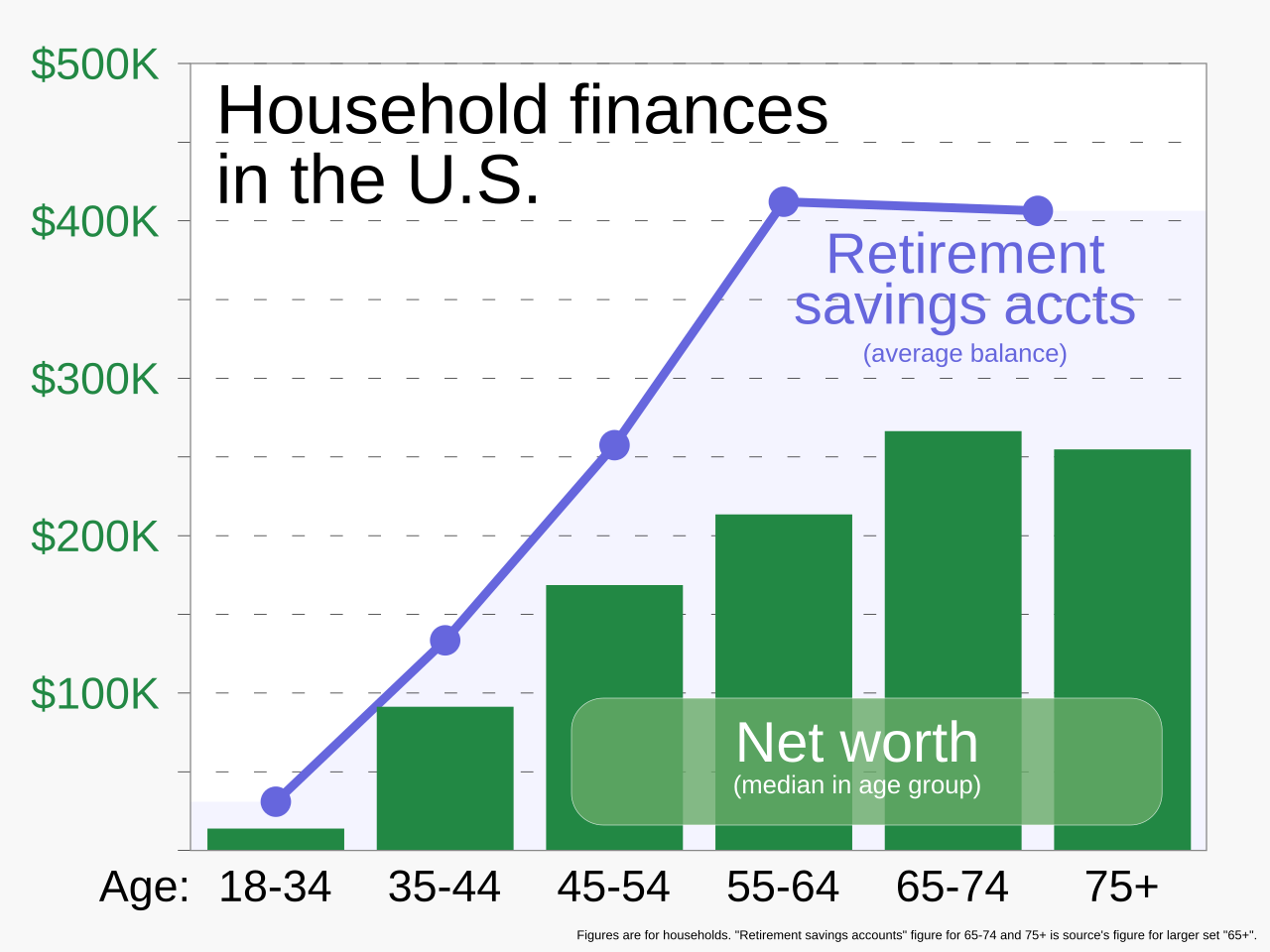
Real-world data hints at how savers actually behave. Investopedia, citing Empower data, reports that Gen Z savers hold median Roth balances more than twice their median traditional IRA balances. That suggests Roth accounts dominate early in saving careers.
By the 40s, traditional balances pull ahead as workers accumulate savings and roll old 401(k)s into traditional IRAs. About three-fifths of traditional IRA-owning households hold rollover funds, according to Investment Company Institute research cited in the same piece.

Common mistakes to avoid
Contributing over the combined limit. Opening both account types does not double your allowance. Track total contributions across every IRA you own.
Assuming Roth is always better for young people. It usually is, but not automatically. A young high earner in a top bracket can still benefit more from the traditional deduction.
Forgetting the five-year rule. Roth earnings withdrawn before the account is five years old can be taxed and penalized even after 59 and a half. The clock starts with your first contribution.
Ignoring the income phase-outs. High earners who contribute directly to a Roth above the limits face excess-contribution penalties. Check the current year's thresholds at IRS.gov before contributing.
Raiding the account early. Traditional IRA withdrawals before 59 and a half generally trigger income tax plus a 10% federal penalty, with limited exceptions. Roth contributions can come out anytime, but pulling them out defeats the purpose.
Frequently asked questions
Can I have both a Roth and a traditional IRA?
Yes. You can own and contribute to both in the same year. The $7,500 annual limit ($8,600 if 50 or older) applies to your combined contributions across all IRAs.
Is a Roth IRA better than a traditional IRA?
Neither is universally better. Roth wins if your tax rate will be higher in retirement. Traditional wins if it is higher now.
Many savers split contributions between the two.
What happens if I earn too much for a Roth IRA?
Direct contributions phase out above the income thresholds ($153,000 to $168,000 for single filers in 2026). Some high earners use a legal workaround called a backdoor Roth, converting traditional IRA contributions. But the tax rules are fiddly enough to warrant professional guidance.
Do I pay taxes on a Roth IRA when I retire?
Qualified withdrawals are completely tax-free at the federal level, including all growth. That is the Roth's defining benefit.
The bottom line
Roth and traditional IRAs offer the same shelter with opposite tax timing. Traditional gives you the break today and taxes you in retirement. Roth taxes you today and sets you free in retirement.
For 2026 you can put up to $7,500 into these accounts ($8,600 from age 50). The smartest move for most people is the one that matches their tax trajectory. Roth when your rate is low now, traditional when it is high, or a split of both when you are unsure.
When the numbers get complicated, a tax professional can run your specific situation in an afternoon.
---
Tags: roth ira, traditional ira, retirement, taxes, personal finance
Rive News's research desk covers personal finance explainers, translating banking products and regulations into plain English.
Latest in finance
- How a 401(k) employer match actually works
- What happens to your 401(k) when you quit
- How big should an emergency fund be
Subscribe for weekly personal finance explainers in plain English.
Standards: Every claim in this article traces to a cited public source. Figures reflect published 2026 IRS data; confirm current limits at IRS.gov before acting.
No statistics were invented, and no quotes were fabricated. Published October 12, 2026.
Related stories

How your APR is divided by 365 to get daily interest
Lenders divide your APR by 365 for a daily rate, then apply it to your average daily balance. This guide walks through every step

What is the difference between APR and effective annual rate?
APR ignores compounding inside the year; the effective annual rate includes it. A 12.99% APR card really costs 13.80% a year. Worked

APY vs interest rate: what compounding does to your money
APY includes compounding; the interest rate does not. A 5% rate compounded monthly is really 5.12% APY. Here is how the math works and what