
Why Your Baby Wakes Up the Second You Put Them Down
Key takeaways
- The Moro (startle) reflex fires when a sleeping baby senses falling, flinging the arms out and waking the baby.
- Newborns also sleep lightly, notice every sensory change, and feel the loss of warmth, motion, and contact all at once.
- The reflex is normal, fades around 2 to 6 months, and lowering the baby horizontally or swaddling can help.

You rocked, shushed, and bounced for forty minutes. The breathing is deep, the little fist has unclenched, and you begin the slow descent toward the crib. Two inches from the mattress, the eyes snap open.
The arms fly out. The crying starts, and you are back at minute zero.
This is one of the most universal experiences of new parenthood, and it is not a sign that you are doing anything wrong. A newborn who sleeps beautifully in your arms and wakes the instant you put them down is responding exactly the way a newborn nervous system is wired to respond.
This article explains the startle reflex, the sleep mechanics behind the wake-ups, what actually helps, and when to check with a pediatrician. It is general information, not medical advice.
The startle reflex
The main culprit has a name: the Moro reflex, also called the startle reflex. It is one of several primitive reflexes healthy babies are born with, and it is one of the things a pediatrician checks right after birth. It is an involuntary, protective response to a sudden loss of support or a sensation of falling.
Here is what it looks like. When the baby's head position suddenly shifts or the head tips backward, the baby throws both arms out away from the body, extends the neck, and opens the fingers. Then, just as quickly, the arms sweep back together with elbows bent, the fingers may curl, and the face takes on a startled look.
Crying often follows. The same sequence can be triggered by a loud noise, a bright light, or a sudden movement, but during a crib transfer the trigger is usually the sensation of falling as you lean over and lower the baby.
The reflex is named for Ernst Moro, the Austrian pediatrician who described the movement in 1918. It is a sign of a developing nervous system doing its job.
But it typically disappears around 2 to 6 months of age, as the brain matures and the baby gains better head control and voluntary movement. Preterm babies may show it for longer, since their milestones follow gestational age rather than birth date.
One reassuring note from pediatric sources: nothing needs to be done when a baby startles. Some babies settle on their own; others need holding or soft talking.
The reflex firing is not a problem to fix. It is a phase to ride out.
Light sleep and sensory change
The Moro reflex gets most of the blame, but it rarely acts alone. A crib transfer changes everything a newborn's senses are tracking, all in a few seconds: warmth, motion, pressure, familiar sound, smell, and physical contact give way to a still, separate, cooler surface.
Newborn sleep makes this worse. Babies spend a large share of their sleep in active, light sleep, the stage when they twitch, grimace, and stir, and they cycle between sleep stages far more often than adults do. A baby who looks deeply asleep in your arms may actually be in light sleep, which is exactly when a small disturbance, a tilt of the head, a change in temperature, is enough to wake them fully.
There is also a comfort factor that has nothing to do with reflexes. Being held is the newborn's baseline: constant warmth, the sound and vibration of a heartbeat and breathing, gentle motion. The crib, however safe and well set up, is none of those things.
Waking on transfer does not mean the baby dislikes the crib or that holding has created a bad habit. It means the contrast is enormous for a nervous system that is still learning the outside world.

What actually helps
The most effective tricks all work by shrinking the sensory shock of the transfer.
Lower the baby horizontally rather than tipping the head back first. Tilting the head backward is the classic Moro trigger, so keep the baby close to your body, descend slowly, and release only once the baby's back is fully touching the mattress. Some parents find that letting the bottom and back touch down before the head reduces the falling sensation.
Timing matters too. Waiting until the baby is in deeper sleep, usually after 15 to 20 minutes of settled sleep, when the limbs are limp and the breathing is slow and regular, gives the transfer a better chance than moving during light sleep.
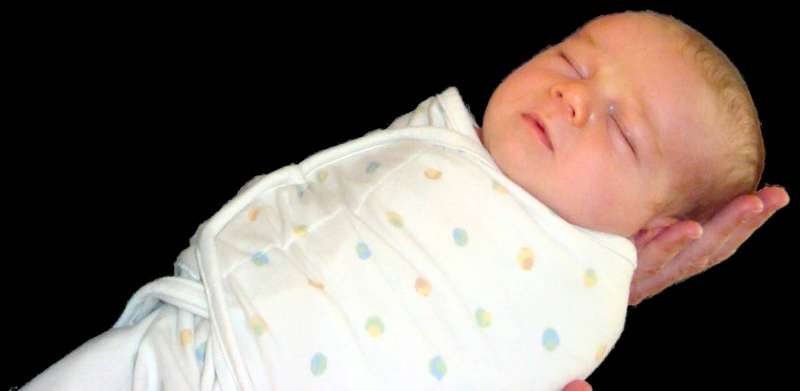
Swaddling helps many newborns by physically preventing the arm-fling that wakes them. Wrapping the baby snugly in a light blanket keeps the arms contained so a small startle does not escalate into full wakefulness.
Safe swaddling has rules: always place the baby on their back to sleep, keep the blanket loose around the hips, and stop swaddling once the baby shows signs of rolling over. Back sleeping is the single most important safe-sleep practice for reducing the risk of sudden infant death syndrome (SIDS).
Warm the sleep surface slightly with your hand before the transfer, keep the room dim and the house quiet, and consider a pacifier at bedtime, which some babies find settling. None of these are magic. But stacked together, they narrow the gap between arms and crib enough that many babies stay asleep through it.
When to check with a pediatrician
The Moro reflex itself is normal, but there are patterns worth raising with your baby's doctor. If the reflex is absent entirely, or appears on only one side of the body, that can signal a problem such as a birth injury, nerve damage, or a fractured collarbone. If the reflex has not faded by about 6 months, mention it at a checkup, since a retained reflex can occasionally point to developmental or neurological issues.
Also learn the difference between a startle and something rarer. Infantile spasms, a rare form of epilepsy, can look like the Moro reflex but behave differently: they come in clusters of brief episodes rather than as single startles, often happen around waking, and may be followed by fussiness or a loss of previously gained milestones. If you see clustered, repetitive jerking movements, contact your pediatrician promptly.
How long does the Moro reflex last?
It is present from birth and usually fades between 2 and 6 months as the brain matures. Preterm babies may keep it longer, following their gestational age rather than their birth date.
Does swaddling stop babies from waking up?
It helps many newborns by keeping the arms contained during a startle, so the reflex does not escalate into wakefulness. Always swaddle for back sleeping only, keep hips loose, and stop once the baby can roll.
Is it okay to let a newborn sleep on me?
Contact naps are common and normal, but safe sleep guidance says they should only happen while the adult holding the baby is awake and alert. Never fall asleep with a baby on a sofa or armchair, and move the baby to a firm, flat sleep surface on their back when you sleep.
Why does my baby only sleep in my arms?
Arms provide constant warmth, motion, heartbeat sounds, and contact, which is the newborn's baseline from the womb. The crib is a sensory downgrade on every one of those channels. It is a normal developmental phase, not a habit you caused.
Outlook
The put-down wake-up is a phase, not a verdict on your parenting. The startle reflex fades as the nervous system matures, sleep cycles lengthen and deepen with age, and most babies gradually accept the crib as the months pass. In the meantime, horizontal lowering, waiting for deep sleep, and safe swaddling give you the best odds.
If the reflex seems absent, one-sided, unusually extreme, or still strong past six months, or if wakefulness comes with anything that worries you, it is a good idea to talk to your pediatrician. Trust your instincts: you know your baby best.
Rive News is the research desk behind this publication's explainers, covering the science of everyday life.
Get one science explainer like this in your inbox every morning. Subscribe to the newsletter.
Related stories

Why babies cry more in the evening: the witching hour explained
The witching hour is the fussy evening stretch most newborns hit daily. Why overtiredness, cluster feeding, and overstimulation stack up

When Do Babies Start Sleeping Through the Night by Month?
Most babies sleep through the night between 3 and 6 months, with regressions at 4 and 8 to 10 months. See the month-by-month table
How to handle toddler tantrums without yelling
Tantrums peak between 18 and 36 months as the brain learns self-control. Co-regulation works: stay calm, name the feeling, hold