
What does a background check actually check
By Rive News / Research desk | Rive News / Published October 25, 2026 at 9:00 AM PKT
Key takeaways
- A typical check covers identity, criminal records, and verification of past jobs and education.
- Credit, driving, and drug-screen checks appear only when the role justifies them.
- Federal law bars reporting most non-conviction records older than 7 years, but convictions have no federal time limit.
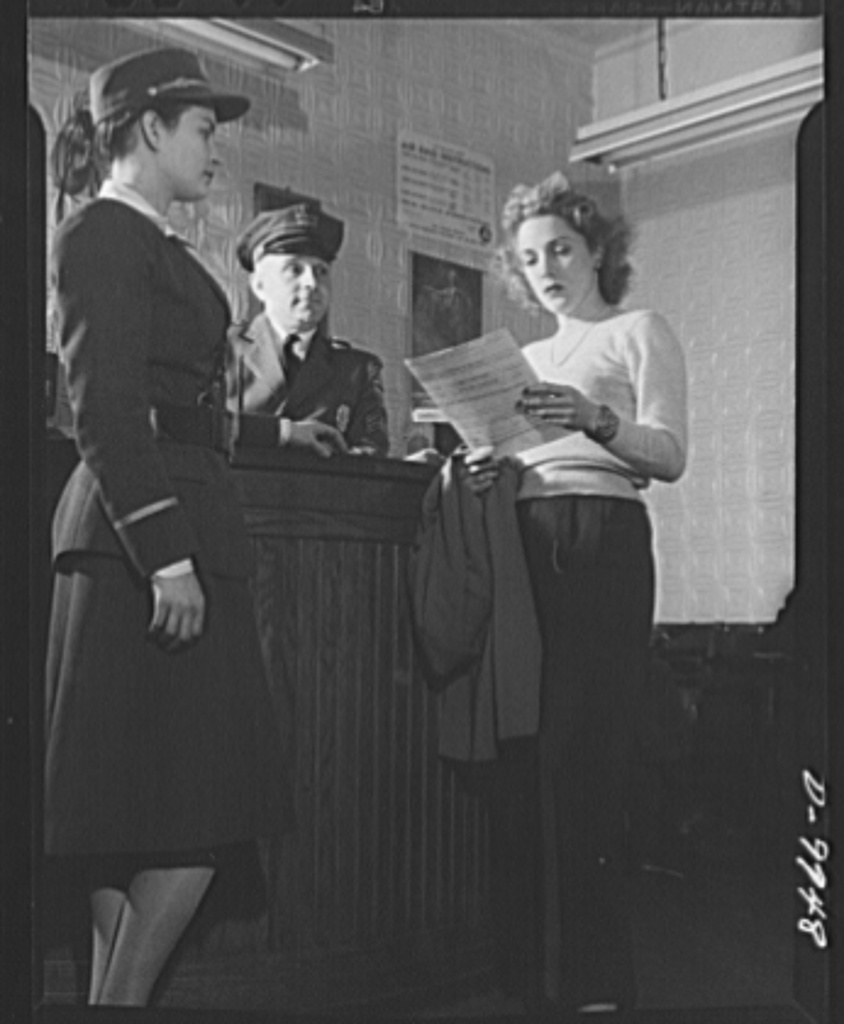
[A person looking over a job application form. Photograph: Ann Rosener]
Image Credits: Wikimedia Commons
A background check is a verification exercise, not a character verdict. An employer, or a screening company working for one, compares what a candidate claimed against public records and previous employers and schools.
The exact package varies a lot by role. A delivery driver faces a driving-record check that an office analyst never sees, while a bank hire faces a credit check that a warehouse hire does not. This article explains what a background check actually checks, including identity and criminal records, job and education verification, the checks that apply only to some roles, and the legal limits on what can be reported.
Identity and criminal records
Every employment check starts with identity. The screener confirms the candidate's name, date of birth, and address history, often through a Social Security number trace in the United States. This step catches name variations and address gaps that would make the rest of the search miss records.
Criminal history is the part most candidates worry about, and it is also the most misunderstood. A criminal search typically covers county court records where the candidate has lived, plus state and federal databases and a national sex-offender registry. Database searches alone are pointers, not proof: reputable screeners confirm any hit at the source court before reporting it, because databases can carry incomplete or outdated dispositions.
An arrest and a conviction are different records with different rules. An arrest means a person was accused; a conviction means a court found them guilty. That distinction drives the reporting limits covered later in this article, and it is why two candidates with similar histories can receive very different reports.
Job, education, and reference checks
Employment verification confirms the basics of a candidate's work history: employer names, job titles, and start and end dates. Screeners usually contact previous employers or use verification databases, and they report what those sources confirm rather than what the resume claimed. A title that does not match or a date that is months off shows up here, even when nothing else is wrong.
Education verification works the same way. The screener confirms degrees earned, institutions attended, and sometimes dates of attendance. Professional license checks sit in this family too: for nurses, teachers, drivers, and other licensed roles, the screener confirms the license is current and in good standing.
Reference checks are a separate, narrower exercise. According to FindLaw's employer guide, investigative consumer reports go further than record checks by interviewing personal and professional references about character and reputation. Those interviews trigger extra disclosure duties for the employer, which is why many employers skip them for ordinary roles and reserve them for senior or sensitive posts.

[Two people shaking hands at a meeting. Photograph: EU2016 SK]
Image Credits: Wikimedia Commons
Checks that depend on the role
Credit history appears only for some jobs, and only where the law allows it. According to Sapphire Check's FCRA guide, screening packages should match the job's duties and risk level, so a finance or security role may include a credit check while most other roles do not. An employment credit report shows payment history, debts, and bankruptcies, but it does not include the candidate's credit score.
Driving records matter for any role that involves driving, from delivery work to sales travel. The screener checks license status, violations, and suspensions. A single old speeding ticket rarely decides a hire, but a suspended license or a pattern of serious violations can.
Drug screening is often mentioned alongside background checks, but it follows different rules. The Fair Credit Reporting Act (FCRA) generally does not cover a drug screen that the employer orders directly and receives straight from the testing facility. It does apply when a third-party screener obtains the result and reports it to the employer, which is a distinction candidates rarely hear about.
Social media review is the least standardized piece. Some employers look at public profiles; others avoid it entirely because of discrimination risk. A check that includes it should still be limited to job-relevant, publicly available information, and many employers leave it out altogether.
The legal limits on what can be reported
The FCRA governs checks run through third-party screening companies. It does not apply when an employer does its own checking in-house, but most employers use outside firms, so the law shapes most reports. Under the FCRA, the employer must get the candidate's written permission first, and must give a copy of the report plus a summary of rights before taking a negative decision based on it.
The law also sets reporting windows. Under section 605 of the FCRA, 15 USC section 1681c, screening companies generally cannot report arrests that did not lead to conviction, civil suits, civil judgments, paid tax liens, or collection accounts older than 7 years.
Bankruptcies have a 10-year window. These clocks run from the date the item entered the record, not from the date a case was resolved.
Criminal convictions are the major exception. Federal law sets no time limit on reporting a conviction, so a conviction from 20 or 30 years ago can legally appear. Some states impose their own limits, and where state law is stricter, the screener must follow the stricter rule.
There is also a salary exception to the 7-year rule. For jobs with an annual salary reasonably expected to reach $75,000 or more, the federal 7-year limits on non-conviction records do not apply. State laws may still limit reporting for those roles, so the exception is not a free pass everywhere.
Finally, a check is only as good as its data, and errors happen. Candidates have the right to dispute inaccurate or incomplete information with the screening company, and the employer must wait a reasonable period after the pre-adverse-action notice before finalizing a negative decision. Checking the report promptly is the one step fully in the candidate's control.
How long does a background check take?
Most database-driven reports finish within 1 to 3 business days, according to screening-industry guides. Full checks with manual verification of jobs and schools typically take 3 to 7 business days, and court searches that need an in-person researcher take longer.
Can an employer check my credit without telling me?
No, not through a third-party screener. The FCRA requires a standalone written disclosure and the candidate's written authorization before the employer orders the report. A credit check buried in a general application form does not meet that standard.
Does an expunged record show up?
A properly expunged or sealed record should not appear in a lawful report, and screeners are expected to exclude it. Records that were dismissed or never led to a conviction are also subject to the 7-year reporting limit described above.
Do background checks include medical records?
No. Medical information is not part of a standard employment check, and health inquiries are separately restricted by disability law. Drug-screen results are handled under their own rules, as explained above.
The bottom line
A background check verifies identity, criminal history, work, and education, then adds role-specific pieces such as credit or driving records only where the job justifies them. Its limits matter as much as its scope: old non-conviction records fade after 7 years, convictions do not, and state law can tighten either rule.
Candidates who know the scope can read their own report with clear eyes. If something looks wrong, dispute it promptly, because the window between the employer's first notice and its final decision is the moment corrections still change outcomes.
Tags: background check, hiring, job search
Rive News's research desk covers practical explainers across driving, work, and everyday science, checking each claim against published sources before writing.
Related
- Why background checks take so long to finish
- What do reference checks actually ask former employers about you?
- How to explain a career gap on your resume honestly
- Why do job applications ask for race and gender?
Subscribe for one practical explainer each morning.
Standards: facts checked against the sources listed above; corrections are published when an error is found.
Related stories

How to Ask for a Raise With Data, Not Emotions
Ask for a raise with market data and documented results, not emotions. Research your rate from BLS wage tables, build an evidence file, run

How to Explain a Career Gap on Your Resume Honestly
A career gap is not a red flag if you explain it honestly: give a reason, show what you did, and point forward. Recruiters reveal the exact

How to Switch Careers at 30 With No Experience in the Field
A career change at 30 means repackaging a decade of transferable skills, not starting over. Map your skills, earn one certification,