
Why Do Job Applications Ask for Race and Gender?
Key takeaways
- Employers ask for race and gender to satisfy federal recordkeeping and reporting rules, not to screen candidates.
- Answering is voluntary in the US, and the form is stored separately from your application.
- Research shows hiring bias is real anyway. Identical resumes with white-sounding names got 50 percent more callbacks in a landmark 2004 field experiment.
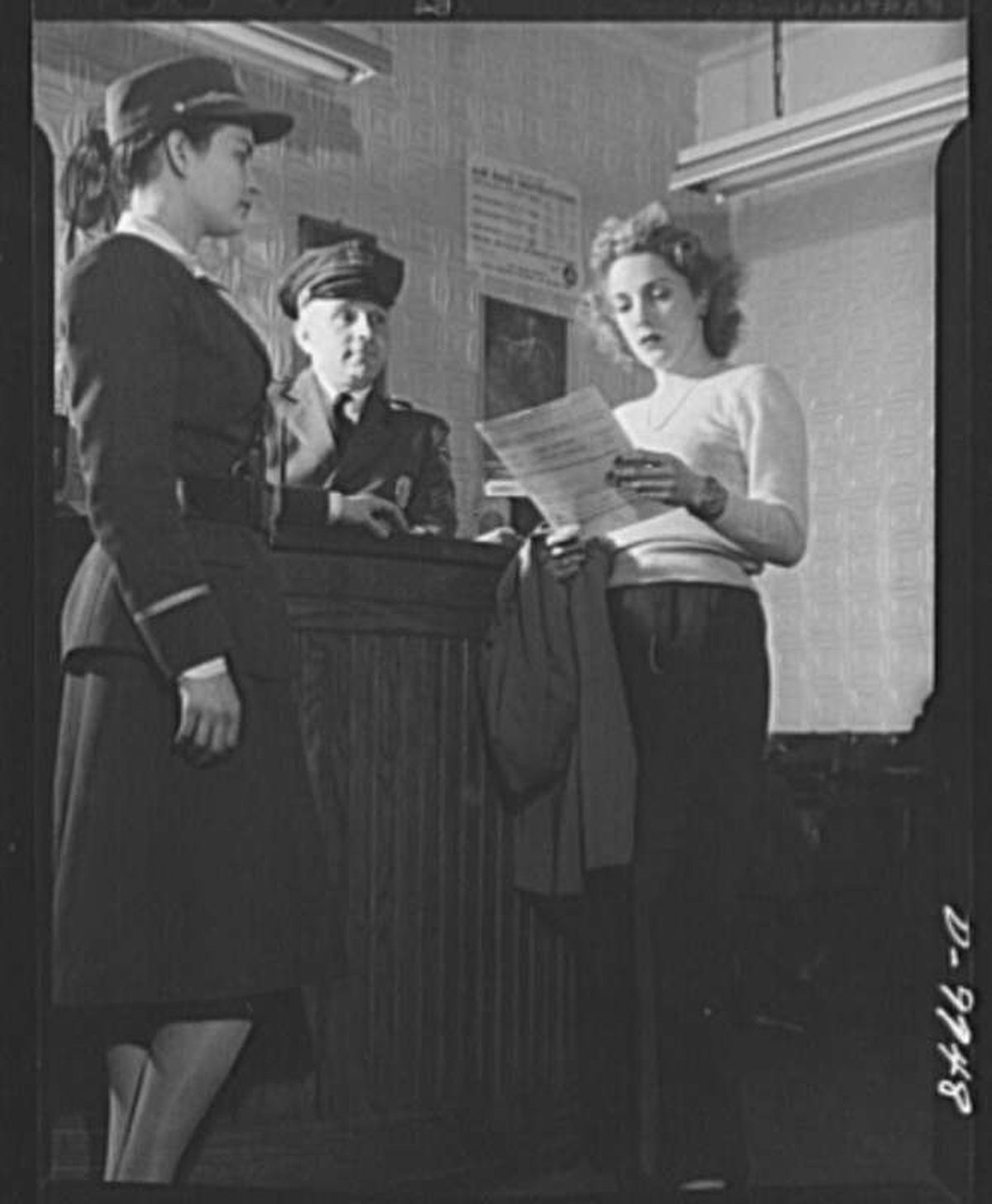
Application forms have asked personal questions for decades, but today's race and gender questions exist for federal compliance, not candidate screening. Photograph: Ann Rosener/Wikimedia Commons
Image Credits: Wikimedia Commons
Those questions about your race, ethnicity, and gender at the end of a job application are called a voluntary self-identification form. It is the page that says the information is kept confidential, will not affect your hiring decision, and that you can skip it entirely.
Many applicants wonder why it exists at all if it supposedly does not matter. The short answer is that federal law requires many employers to collect this data and report it to the government for civil rights enforcement.
This article explains what those questions actually are, the federal rules behind them, whether you have to answer, and what the research shows about bias in hiring.
What those questions actually are
The form is separate from your application. It typically asks you to select one gender and one race or ethnicity category, such as Hispanic or Latino, White, Black or African American, Asian, or Native Hawaiian or Pacific Islander.
The standard language on these forms is direct. A sample form published by payroll company ADP states: "Submission of this information is voluntary and refusal to provide it will not subject you to any adverse treatment." The same form says the data is kept confidential and used only for lawful monitoring and reporting.
Employers are supposed to store this information apart from hiring materials. A widely used sample form from HR firm Prothman notes that the form "is processed and maintained separately from your personnel file and is not used to make decisions about the terms and conditions of employment." Hiring managers reviewing your resume should never see it.
The federal rules behind them
Two sets of rules drive the collection. The first comes from the Office of Federal Contract Compliance Programs, which oversees companies that do business with the federal government. Its regulation, 41 CFR 60-1.12(c), requires federal contractors to be able to identify the gender, race, and ethnicity of each employee and, where possible, each applicant.
The second is the EEO-1 report, also called Standard Form 100. Per the EEOC, all private employers with 100 or more employees, plus federal contractors with 50 or more employees meeting certain criteria, must file it every year. The report breaks the workforce down by job category, sex, and race or ethnicity so the EEOC can spot patterns of discrimination.
The data also feeds adverse-impact analysis. If a company's applicant pool is diverse but its hires are not, the numbers flag it. As job site Salarship puts it, employers should only ask about race and ethnicity for data purposes, and collecting it for anything else is unlawful.
Do you have to answer?
No. In the United States, answering is voluntary, and every standard form says so in plain language. Refusing cannot legally be held against you.
If you leave the form blank, the employer may still record something. The EEOC's own sample questionnaire warns that if you choose not to self-identify, "the federal government requires this employer to determine this information by visual survey and/or other available information." In practice, that means HR may note what they observe. That is one more reason the data stays in aggregate reports rather than on your file.
One thing worth knowing: the form is not the interview. Employers are generally barred from asking about race, religion, or national origin in interviews or on the application itself. The self-identification form is the narrow, regulated exception, and its separation from hiring decisions is the whole point of the design.
What the research shows about hiring bias
Here is the uncomfortable part. The forms are designed so your answers cannot influence hiring, but bias finds other channels. The most famous demonstration is a 2004 field experiment by economists Marianne Bertrand and Sendhil Mullainathan, published as NBER Working Paper 9873 and later in the American Economic Review.
They sent fictitious but identical resumes to help-wanted ads in Boston and Chicago newspapers, varying only the names. Resumes with white-sounding names received 50 percent more callbacks for interviews than identical ones with African-American-sounding names. The authors calculated that a white-sounding name was worth roughly eight additional years of experience.
The discrimination was uniform across occupations and industries. Strikingly, federal contractors and employers that advertised themselves as "Equal Opportunity Employer" discriminated just as much as everyone else.
Later research confirmed the pattern had not faded. A 2017 meta-analysis led by Northwestern sociologist Lincoln Quillian pooled 28 field experiments covering 55,842 applications.
White applicants received 36 percent more callbacks than Black applicants and 24 percent more than Latino applicants, and for Black applicants the gap had not narrowed in 25 years. Researcher Sarah Choudhary summarized the findings in a widely shared analysis.
None of this means the self-identification form causes bias. It means the form exists precisely because bias is measurable, and regulators want the aggregate data to detect it.

Help-wanted ads like this one are where landmark bias studies sent test resumes, varying only the names on otherwise identical applications. Photograph: Mxn/Wikimedia Commons
Image Credits: Wikimedia Commons
Frequently asked questions
Can an employer reject me for skipping the race and gender questions?
No. The forms state explicitly that refusal will not subject you to adverse treatment, and using the form in hiring decisions is unlawful. If you suspect otherwise, that is what employment lawyers and the EEOC exist for.
Who sees my answers?
Ideally, only HR staff who compile aggregate reports. The standard design keeps the form separate from your resume and application, so the hiring manager never sees it. In small companies the separation can be thinner in practice, which is another reason answering is optional.
Why do they ask about veteran status and disability too?
Those feed separate federal requirements. Federal contractors track veteran and disability hiring under different laws, and the forms often bundle all the self-identification questions together. The same voluntary, kept-separate rules apply.
Does the form actually prevent discrimination?
It does not prevent it. It measures it. Aggregate data lets regulators and researchers spot patterns no single applicant could see, like the callback gaps documented in the Bertrand and Mullainathan experiment. Prevention still depends on enforcement and on employers changing how they screen.

A help wanted sign in a shop window: the data collected from applicants helps regulators see whether a company's hires reflect its applicant pool. Photograph: Michael Neubert/Wikimedia Commons
Image Credits: Wikimedia Commons
The bottom line
Job applications ask for race and gender because federal rules, from OFCCP recordkeeping to the annual EEO-1 report, require employers to count who applies and who gets hired. Your answers are voluntary, confidential, and legally walled off from hiring decisions.
The deeper story is that bias persists through other channels, as decades of resume experiments show. If you want to understand what actually moves the needle in hiring, read our guide on what recruiters look for in six seconds.
Tags: job applications, EEO, hiring process, workplace discrimination, career advice
Rive News is the research desk behind this publication, covering career, work, and money topics with sourced, practical guidance.
Latest in Career
- How to Explain a Career Gap on Your Resume Honestly
- What do recruiters actually look for in 6 seconds?
- How to answer why should we hire you without sounding arrogant
- How to Negotiate Salary When They Ask for Your Expectations First
Subscribe for one practical career guide in your inbox every week.
Related stories

How to Ask for a Raise With Data, Not Emotions
Ask for a raise with market data and documented results, not emotions. Research your rate from BLS wage tables, build an evidence file, run

How to Explain a Career Gap on Your Resume Honestly
A career gap is not a red flag if you explain it honestly: give a reason, show what you did, and point forward. Recruiters reveal the exact

How to Switch Careers at 30 With No Experience in the Field
A career change at 30 means repackaging a decade of transferable skills, not starting over. Map your skills, earn one certification,