
What do recruiters actually look for in 6 seconds?
Key takeaways
- Ladders' eye-tracking studies found recruiters spend about 6 seconds (2012) and 7.4 seconds (2018) on the first screen of a resume.
- Their eyes land on name, current title and employer, previous title and employer, dates, and education, in roughly that order.
- Resumes that win the scan use simple layouts, clear headings, bold titles, and bulleted accomplishments; cluttered ones lose.

Recruiters at a hiring event, where the first screen of a resume happens in seconds. Photograph: OptimusPrimeBot/Wikimedia Commons
Image Credits: Wikimedia Commons
The "6-second resume" is the claim that recruiters decide a resume's fate in seconds, not minutes. It comes from eye-tracking research, a technique that records where a reviewer's eyes actually land instead of asking them afterward.
In practice, the number describes the first screen, not a full read. If that glance says "maybe," the recruiter keeps reading; if nothing in those seconds answers "who is this and what do they do," the resume is gone.
This article takes a closer look at the 6-second scan, including what the eye-tracking studies actually measured, where recruiters' eyes land, and how to design a resume for the scan.
What the eye-tracking studies actually measured
In 2012, the careers site Ladders reported that recruiters looked at a resume for about six seconds during the initial screen. The figure became the most quoted statistic in the resume industry, and it stuck around for years.
Ladders repeated the study in 2018 and found the average initial screen had risen to 7.4 seconds, HR Dive reported. According to Ladders, the improvement came partly from timing: the 2012 round happened during the U.S. recession, when floods of applicants gave recruiters less time per resume, while 2018's tight labor market let them linger slightly longer.
The setup matters for reading these numbers honestly. The research tracked a group of professional recruiters over a 10-week period, according to a research synthesis of the study. And the trade publication ERE has criticized the headline figure as a "vacuum metric," arguing the report never disclosed which roles were reviewed, how long the resumes were, or how experienced the recruiters were, as summarized by Resumefast.
Treat the seconds as a design constraint, not a law: the first decision is fast, and it is made from the top of the page.
Where recruiters' eyes land
The 2012 study found recruiters spent most of those seconds on a small set of items: the candidate's name, current title and company, previous title and company, the start and end dates of those two roles, and education. That is the origin of the "6-second resume" line, according to Resumefast's summary of the findings.
The pattern did not change in 2018. Eyes still went to the current job title and employer first, then the previous role, then across to the dates, then down to education. What changed was only the total time, up by about a second and a half.
That gaze path matches how people read screens generally: the F-pattern and E-pattern, where eyes sweep the top of the page and then travel down the left edge. "Unemployment is at unprecedented lows in the current job market, and the findings of this new study underline the extent to which resume-skimming behaviors impact ... a job seeker's chances of being noticed," Ladders CEO Marc Cenedella said when the 2018 results were released.
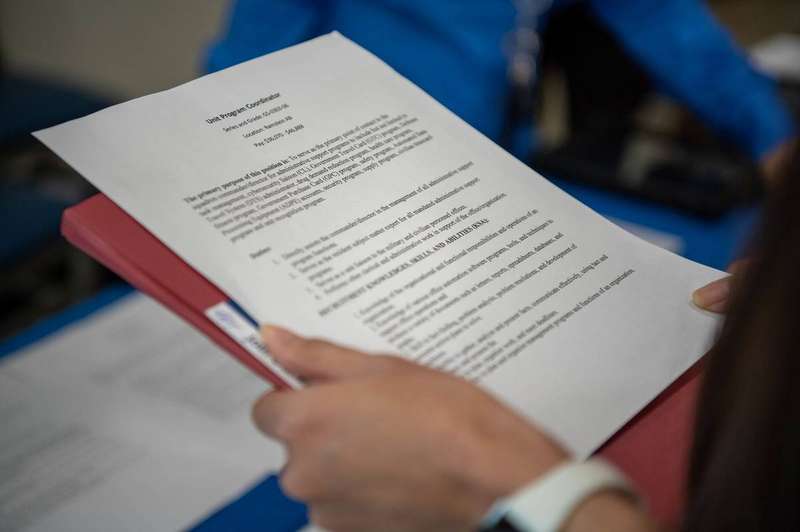
A job fair in progress, where recruiters make snap judgments on stacks of resumes. Photograph: OptimusPrimeBot/Wikimedia Commons
Image Credits: Wikimedia Commons
How to design a resume for the 6-second scan
The top third of page one is the whole game. Put your name, current title, and employer exactly where the eye lands first, with dates beside them rather than buried in a paragraph. A recruiter should be able to answer "who, where, when" without hunting.
Use a simple layout with clearly marked section and title headers, written in a clear font. The top-performing resumes in the 2018 study shared a formula: bold job titles backed by bulleted lists of accomplishments, plus a short overview or mission statement at the top of the first page. Simple does not mean plain; it means scannable.
Then cut what kills the scan. The 2018 study found resumes lost attention when they had cluttered layouts, long sentences, multiple columns, very little white space, missing section or job headers, or keyword stuffing. Each of those made the eye slide off the page instead of traveling down it.
Once the scan says "maybe," give the reader something worth reading. Measured accomplishments under each role, the results you produced rather than the duties you held, are what turn a seven-second glance into a real read. The layout buys you the seconds; the results buy you the interview.
Resume guides emphasize clean structure because recruiters skim for layout, titles, text flow, and keywords. Photograph: Infographic22/Wikimedia Commons
Image Credits: Wikimedia Commons
Frequently asked questions
Do recruiters really spend only 6 seconds on every resume?
No. The figure is the average first screen in Ladders' studies: 6 seconds in 2012, 7.4 seconds in 2018. Resumes that survive that screen get a genuine read, and the number varies by role, industry, and applicant volume.
Does a fancy, creative resume template help?
The 2018 study suggests the opposite. Simple layouts with clear headings beat cluttered, multi-column designs, and missing section headers actively hurt. Design for the skim, not for the art gallery.
Should I put a summary at the top of my resume?
Ladders found that resumes with a detailed overview or mission statement at the top of the first page held recruiters' attention better. Keep it to two or three lines so it does not push your first job down the page.
What matters more, keywords or layout?
Both were named in the 2018 study, but layout came first. Recruiters skimmed for superficial details such as layout, job titles, text flow, and keywords, and the resumes that won combined clean structure with relevant terms rather than stuffing them.
The bottom line
Six or seven seconds is not the whole hiring process; it is the cover charge. Name, titles, companies, dates, education: answer those in the top third of page one and you buy yourself a real read.
Audit your resume the way the eye-tracking cameras did. Open it, give yourself seven seconds, and notice where your eyes landed. If it was not your current title and employer, rearrange until it is.
Rive News is the research desk behind the Rive News production run, writing practical explainers across gardening, careers, education, and more.
Latest in career
- How to Tell Overwatering vs Underwatering in Plants: Finger Test and Weight Method
- What Is Active Recall and How to Use It for Studying
- Why Do Brake Rotors Warp, or Do They Actually?
- Why Do You Get Blisters When Hiking and How to Prevent Them
Get one practical explainer in your inbox every morning. Subscribe to the Rive News newsletter.
Related stories

How to Ask for a Raise With Data, Not Emotions
Ask for a raise with market data and documented results, not emotions. Research your rate from BLS wage tables, build an evidence file, run

How to Explain a Career Gap on Your Resume Honestly
A career gap is not a red flag if you explain it honestly: give a reason, show what you did, and point forward. Recruiters reveal the exact

How to Switch Careers at 30 With No Experience in the Field
A career change at 30 means repackaging a decade of transferable skills, not starting over. Map your skills, earn one certification,