
Why do brake rotors warp, or do they actually?
Key takeaways
- A truly warped rotor is rare; most brake shudder comes from pad material transferred unevenly onto the rotor surface.
- As little as 0.0004 inch of thickness variation can be felt through the pedal, according to Motor Trend.
- New pads need a proper bed-in procedure, and hot brakes should not sit clamped at a stop. Any brake shudder deserves a professional inspection.

A car's disc brake assembly. The rotor looks perfectly flat even when the pedal pulses. Photograph: SreeBot/Wikimedia Commons
Image Credits: Wikimedia Commons
"Warped rotors" is the standard diagnosis for a brake pedal that pulses or a steering wheel that shudders under braking. Most drivers have heard it, and plenty have paid to have their rotors machined because of it.
But according to brake engineers, the rotor itself is almost never warped. The vibration usually comes from something thinner and sneakier: friction material from the pads, laid down unevenly on the rotor face.
This article takes a closer look at the warped-rotor question, including what "warped" is supposed to mean, how uneven deposits actually form, what fixes the shudder, and when to get a professional inspection.
What "warped" is supposed to mean
The story goes like this: hard braking overheats the rotor, the metal warps like a vinyl record left in the sun, and the wavy surface pulses against the pads with every revolution. Machining the rotor flat again should fix it.
It sounds plausible, and the fix sometimes seems to work, briefly. But the shudder usually returns after a short time, which is the first clue the diagnosis was wrong. As Motor Trend put it, warped discs are "generally not the issue causing the vibration" once the wheel hub and bearings check out.
What is actually happening: uneven pad deposits
Every normal stop transfers a whisper of pad friction material onto the rotor. When the system is properly bedded in, that transfer layer is thin and even, and it actually helps you stop: part of braking grip comes from the pad grabbing that deposited layer, not just bare metal.
Push the pads past their temperature limit and the transfer turns lumpy. Material deposits unevenly, leaving spots that are microscopically thicker than the rest of the rotor face. Engineers call the result disc thickness variation, or DTV.
The amounts involved are tiny, and the effects are not. Thickness variations above about 15 microns (0.00059 inch) can easily generate driver complaints, according to a brake service paper from WINSTOP. Motor Trend reports that as little as 0.0004 inch of variation can be felt through the pedal, and 0.001 inch becomes seriously annoying.
Your foot can detect hills on the rotor that your eyes never will.
The racing record backs this up. Carroll Smith, the race engineer behind StopTech's well-known white paper on the myth, wrote that in more than 40 years of professional racing, including work on the Shelby and Ford GT40 programs, he had never seen a warped brake disc. Every case he investigated, on race cars and street cars alike, turned out to be pad material transferred unevenly to the disc surface.
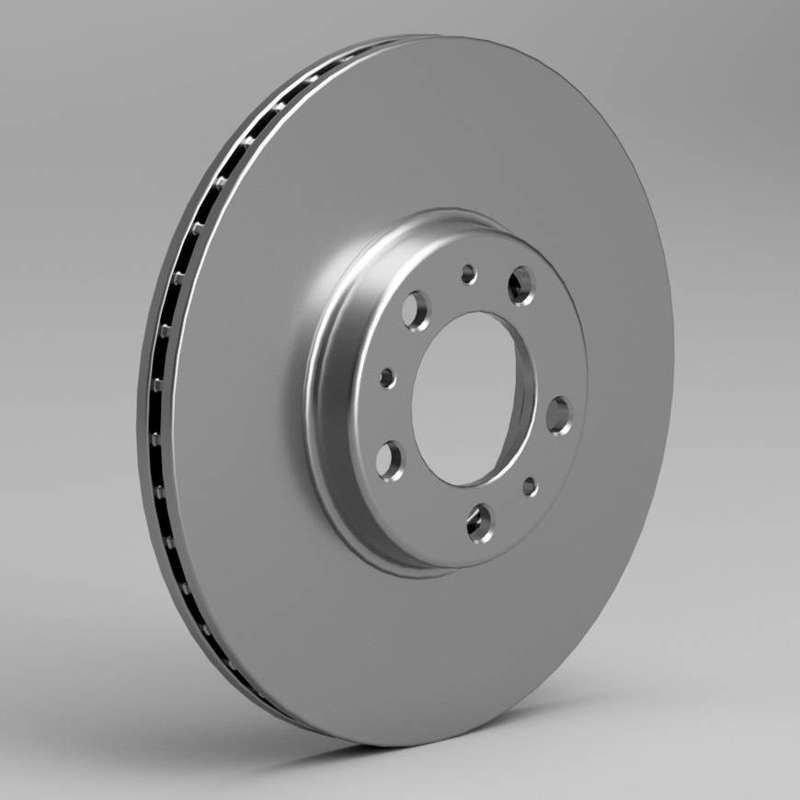
A ventilated brake rotor. Uneven pad deposits on this face, invisible to the eye, are what the driver feels as shudder. Photograph: Renamed user 34e65e7ca6e55ea44a7362c3f596ec03/Wikimedia Commons
Image Credits: Wikimedia Commons
How the uneven deposits get there
The classic scenario starts with heat. Coming down a long grade or braking hard repeatedly pushes pad temperatures past what the pad compound is rated for, loosening the resins that bind the friction material together. Brake rotors can reach 250 to 300 degrees Fahrenheit in normal driving and far more under aggressive use, according to SlashGear's explainer.
Then comes the imprint. Stop the car completely with the brakes still hot, say at a red light at the bottom of an off-ramp, and the pad sits clamped on one spot of the hot rotor, stamping its footprint into the surface. Motor Trend describes exactly this mechanism: by the time the rotors cool, the high spot is baked in.
From there it snowballs. Each subsequent stop adds a little more material to the high spots, and the shudder gets worse. A skipped or rushed bed-in after new pads are installed starts the same cycle early, which is why pad manufacturers stress following the break-in procedure.
What to do if your brakes shudder
Caught early, the shudder can sometimes be evened out by rebedding the brakes: a series of hard slowdowns from about 50 mph to 10 mph without coming to a full stop, repeated several times, then a cooldown drive with minimal stopping, as Motor Trend suggests. The heat smears the deposited material evenly across the rotor face again.
If the vibration persists, get a professional inspection promptly. Brakes are safety equipment, not a DIY guessing game, and a technician can measure runout and thickness variation directly instead of guessing. Mention uneven pad deposits when you describe the symptom so the shop measures rather than assumes.
For prevention, two habits matter most. Bed in new pads exactly per the manufacturer's instructions, and when you know the brakes are hot, avoid sitting with your foot hard on the pedal at a stop. Shifting into Park at a long light at the bottom of a grade keeps the hot pad from stamping the hot rotor.
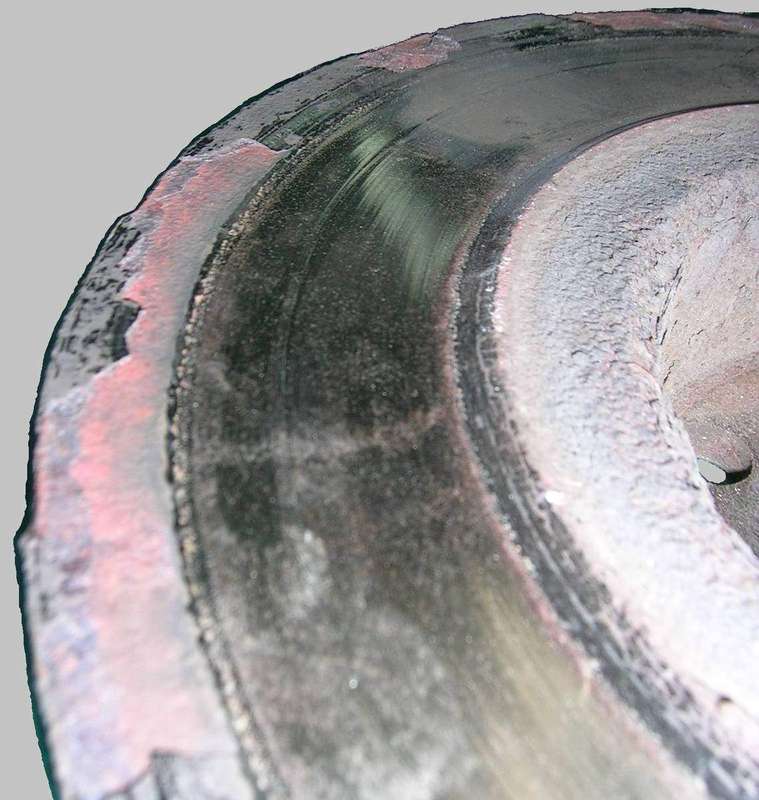
A worn rotor. Grooves and deposits like these change braking feel long before anything "warps." Photograph: Maly LOLek/Wikimedia Commons
Image Credits: Wikimedia Commons
Frequently asked questions
Can brake rotors actually warp?
Almost never on a street car. Brake engineers report that the usual culprit behind the shudder is uneven pad deposits causing disc thickness variation, not a bent rotor. Cracked or heat-damaged discs exist, but they are a different failure.
Is it safe to drive with a shuddering brake pedal?
Get it inspected promptly. Vibration signals uneven braking force, and brakes are safety-critical. A professional can measure the rotors and tell you whether the fix is rebedding, resurfacing, or replacement.
Will machining the rotors fix the vibration?
It can smooth the surface temporarily. But if the underlying deposit pattern or the skipped bedding that caused it is not addressed, the shudder often comes back.
Do drilled or slotted rotors prevent this?
Not by themselves. The deposit mechanism depends on pad compound, operating temperatures, and proper bedding, not on the styling of the rotor face.
The bottom line
The rotor is not bent; it is blotchy. Microscopic hills of pad material, thousandths of an inch tall, are enough to make the pedal pulse and the wheel shudder.
If your brakes shudder, treat it as a safety issue first and a curiosity second: book a professional brake inspection, and mention uneven pad deposits so the technician measures rather than assumes.
Rive News is the research desk behind the Rive News production run, writing practical explainers across gardening, careers, education, and more.
Latest in auto
- How to Tell Overwatering vs Underwatering in Plants: Finger Test and Weight Method
- What Do Recruiters Actually Look for in 6 Seconds?
- What Is Active Recall and How to Use It for Studying
- Why Do You Get Blisters When Hiking and How to Prevent Them
Get one practical explainer in your inbox every morning. Subscribe to the Rive News newsletter.
Related stories

Why Does Tire Pressure Drop in Cold Weather?
Cold weather can cut tire pressure by 1 psi for every 10°F drop, thanks to the ideal gas law. Here is what happens inside the tire and what

How to Buy a Used Car Without Getting Scammed: The Checklist
Over 450,000 cars a year have rolled-back odometers, NHTSA says. This checklist covers VIN checks, title washing, and the inspection that
Why Does My Car Pull to One Side When Braking?
A car that pulls when you brake has a brake force imbalance, usually a sticking caliper or collapsed hose. Learn the causes, the heat test