
Why do you get blisters when hiking and how to prevent them
Key takeaways
- A blister forms when repeated friction shears skin layers apart and the body floods the gap with protective fluid.
- Hiking supplies all three blister ingredients at once: friction, moisture from sweat, and heat.
- Prevention is a system: fitted boots, moisture-wicking socks, hot-spot taping, and dry-sock breaks.

A pair of hiking boots. Fit is the first line of defense, but only one of several. Photograph: Fæ/Wikimedia Commons
Image Credits: Wikimedia Commons
A blister is the body's emergency patch for skin under attack. When something rubs the same spot of skin over and over, the outer layers shear apart from the layers beneath, and the body floods the gap with clear fluid to cushion the damage.
Hiking is practically designed to create blisters: miles of repetitive foot motion inside a warm boot, sweat softening the skin, and grit or seams adding extra rub. One hiking publication estimates that blisters affect around 70% of long-distance hikers.
This article takes a closer look at hiking blisters, including how they form, the friction-moisture-heat equation, the prevention system that works, and what to do when one forms anyway.
How a blister actually forms
It starts with shear, not just rubbing. Each step slides the foot a fraction inside the boot while pressure pins the skin in place, and the layers of skin shift against each other until they separate. The fluid pocket that follows is deliberate: the serum cushions and protects the damaged tissue underneath while it heals, which is why an intact blister roof is worth preserving.
Moisture is the accelerant. Wet skin softens and its friction coefficient rises, so the same rubbing does far more damage than it would on dry skin. Heat from exertion speeds the whole process along.
Remove any one of these three factors and blisters become far less likely, as Peak Gear Guide notes.
The friction plus moisture plus heat equation
Blister guides often reduce the recipe to three ingredients: friction plus moisture plus heat equals a blister. It is a useful way to think because every prevention trick is just an attack on one of the three.
Hiking delivers all three at once. Long miles mean thousands of repeated rubs; sweat and stream crossings supply the moisture; steady exertion supplies the heat. The classic hot spots are the back of the heel, the ball of the foot, and the sides of the toes, where friction and moisture peak together.
That is also why blisters strike on longer hikes and hot days more than on short cool ones. And it is why new or ill-fitting boots are the usual suspect: too tight creates pressure points, while too loose lets the foot slide around with every step, multiplying the friction.
The prevention system that actually works
Experienced hikers do not rely on a single trick. They layer defenses so that when one fails, and one eventually will, the others keep their feet intact.
- Fit the boots. Look for a snug heel with a roomy toe box, and break boots in on shorter walks before any long trip. Ten miles in brand-new footwear is asking for trouble, according to Darn Tough's hiking guide.
- Choose the socks. Wear merino wool or synthetic moisture-wicking socks, never cotton. Cotton absorbs sweat and holds it against the skin like a sponge, while wool and synthetics move moisture away. Always carry a dry spare pair.
- Add a liner. A thin liner sock under the main sock moves the rubbing between the two sock layers instead of against your skin. T3 describes this as the classic double-sock method: the liner sticks to the foot while the outer sock sticks to the boot.
- Tape the hot spots. At the first warm, tender tingle, stop and cover the spot with athletic tape or moleskin. A five-minute stop now beats days of limping later.
- Manage moisture on the move. Air your feet out on long breaks, change damp socks promptly, and keep grit out of your boots with gaiters or high-top footwear. The American Hiking Society also recommends medicated foot powder before you set out.
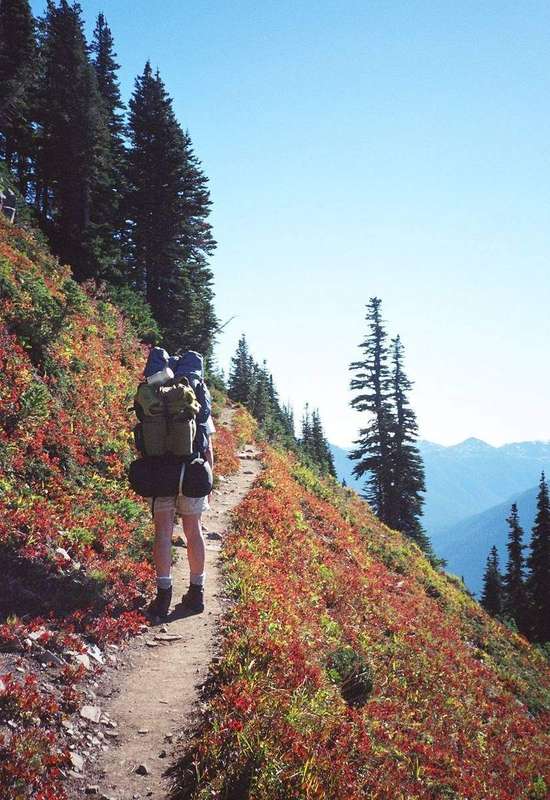
A backpacker on the trail. Thousands of steps per day is exactly the repetitive friction blisters need. Photograph: Tm/Wikimedia Commons
Image Credits: Wikimedia Commons
What to do when a blister forms anyway
Stop at the first sign of a hotspot. A reddish, tender patch is a blister in waiting, and the American Hiking Society advises covering it with athletic tape or a second-skin bandage, then changing into dry socks.
For a formed blister, pad around it with donut-shaped pieces of moleskin to take pressure off the spot, stacking them if needed. Keep the roof intact: a popped blister is an open wound, far more likely to pick up an infection from the bacteria and humidity inside a boot. Most blisters heal naturally in three to seven days if left alone, according to Outdoor Shell.
Skip the duct tape on open blisters. The American Hiking Society warns that the chemicals on the sticky side of duct tape can trap germs against an open wound and may promote infection. Save the duct tape for gear repairs.
Know when to stop hiking and get medical attention: pus in the blister, red streaks spreading from it, fever, or pain that prevents normal walking. Take extra care if you have diabetes or circulation problems, since foot wounds carry higher risks there.
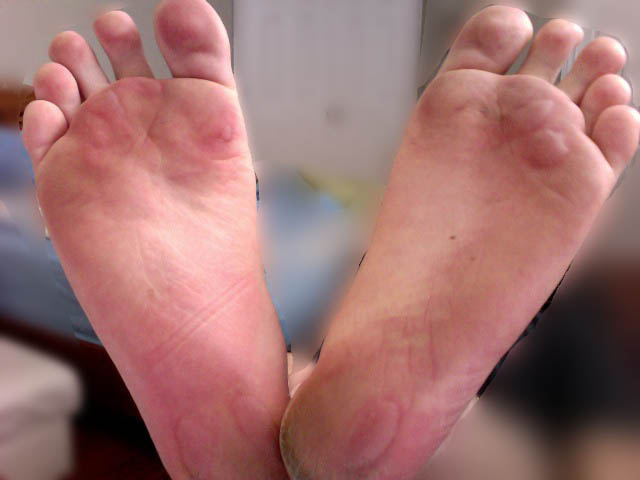
Friction blisters on a foot, the result of the shear-plus-moisture mechanism described above. Photograph: AndryFrench/Wikimedia Commons
Image Credits: Wikimedia Commons
Frequently asked questions
Why do I get blisters even in good boots?
Fit is only one leg of the stool. Moisture, heat, grit inside the boot, socks that bunch up, or hot spots you walked past can blister feet inside perfectly good footwear.
Are liner socks worth it?
For blister-prone hikers, yes. The liner shifts friction from your skin to the space between the sock layers, and it wicks moisture outward into the outer sock.
Should I pop a hiking blister?
Usually not. The intact roof protects the wound underneath; pad around it with moleskin and let it heal, which typically takes three to seven days. If you must drain one far from help, keep the skin intact and keep it clean.
How do I toughen my feet before a big hike?
Break in your boots on shorter walks first, keep toenails trimmed, and build mileage gradually so your skin and your footwear adapt together.
The bottom line
Blisters are not bad luck; they are physics. Friction shears the skin, moisture multiplies the damage, and heat hurries it along. Every prevention trick is just an attack on one of those three.
Before your next long hike, do the boring work: broken-in boots, wool or synthetic socks with a liner, tape in the pack, and a spare dry pair. Your feet will carry you further than your legs will.
Rive News is the research desk behind the Rive News production run, writing practical explainers across gardening, careers, education, and more.
Latest in sports
- How to Tell Overwatering vs Underwatering in Plants: Finger Test and Weight Method
- What Do Recruiters Actually Look for in 6 Seconds?
- What Is Active Recall and How to Use It for Studying
- Why Do Brake Rotors Warp, or Do They Actually?
Get one practical explainer in your inbox every morning. Subscribe to the Rive News newsletter.
Related stories

Why Is Altitude Sickness Worse for Some People?
Altitude sickness hits some people harder because of genetics, ascent speed, and prior history, not fitness level. Here is what raises risk

How to choose hiking boots for beginners: fit, features, and break-in
Beginners should buy for fit first: snug everywhere, tight nowhere, with a thumb's width at the toes. Here is how to size, test,
What Does Hiking Trail Difficulty Rating Actually Mean?
Hiking trail difficulty ratings work differently by system: the US Yosemite Decimal System and Europe's SAC scale from T1 to T6. Learn