
What is active recall and how to use it for studying
Key takeaways
- Active recall means testing yourself from memory instead of rereading notes.
- In a 2006 experiment, students who used recall remembered 61% of a passage after a week. Rereaders remembered only 40%.
- A 2013 review rated practice testing and spaced repetition as the only top study methods. Highlighting and rereading rated low.

Students studying in a library, where the most popular techniques are often the least effective. Photograph: Gary Lee Todd/Wikimedia Commons
Image Credits: Wikimedia Commons
Active recall is a study method built on one idea: you learn more by pulling facts out of your memory than by reading them again. Instead of rereading notes or highlighting a textbook, you close the book and try to remember.
Researchers call this the testing effect. Pulling an answer out of memory makes the memory itself stronger. It feels harder and slower than rereading, but that difficulty is the point.
This article explains what active recall is, why the testing effect works, four practical ways to use it, and the mistakes that weaken it.
What active recall actually is
Active recall has a few names: retrieval practice, self-testing, the testing effect. They all mean the same thing: give the answer from memory before you check it.
Flashcards are the classic format, but any self-test counts. You can use a blank page and write down everything you remember. You can use practice questions. You can explain a topic out loud with no notes open. Each of these forces you to retrieve.
The key detail is the order. You try first, then you check. If you peek at the answer before trying, the exercise turns back into rereading. Then the benefit disappears.
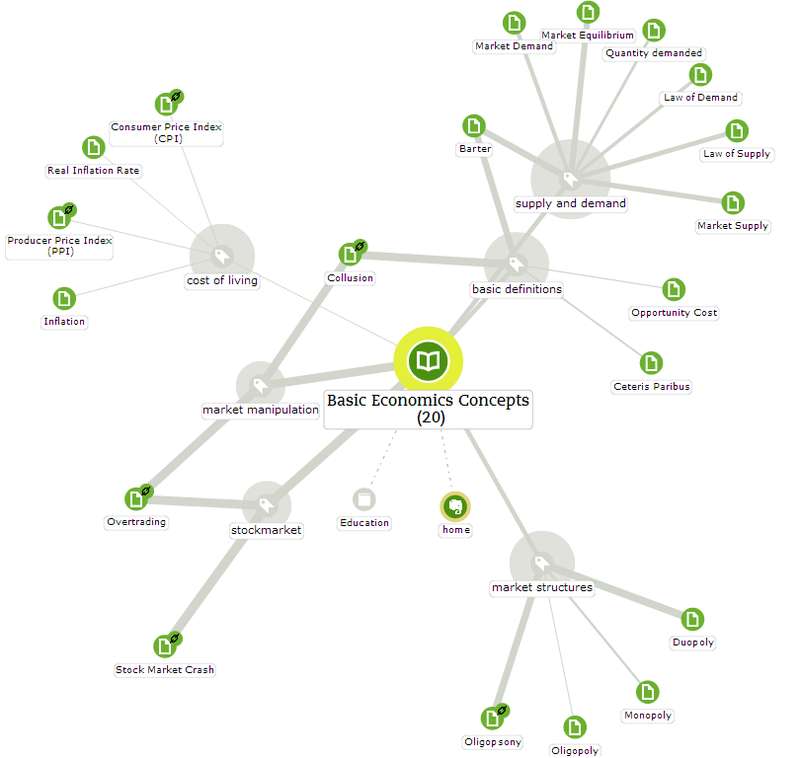
A student flashcard on economics concepts. The rule that makes flashcards work: answer before you flip. Photograph: Trevithj/Wikimedia Commons
Image Credits: Wikimedia Commons
Why the testing effect works
In 2006, psychologists Henry Roediger and Jeffrey Karpicke at Washington University in St. Louis ran an experiment that should have changed how everyone studies. Students learned short science passages. One group read a passage four separate times. The other group read it once, then spent the rest of the time writing down everything they could remember, with no peeking.
Five minutes later, the rereaders looked like the winners. They recalled 83% against 71%. One week later, the picture flipped. The rereaders could produce only 40% of the passage. The recall group produced 61%. That is how learning researcher Yu-kai Chou describes the study in his analysis. The students who studied the most remembered the least. The students who felt the most confident learned the worst.
The effect grows when you wait longer. In a 2008 study published in Science, Karpicke and Roediger had students learn foreign-language words. A week later, students who kept retrieving the words recalled about 80% of them. Students who kept studying without testing recalled only 33 to 36%. That comes from AhaSlides' review of the research. A 2011 study in Science by Karpicke and Blunt found that retrieval practice even beat concept mapping, a popular "deep" study technique, on a test one week later.
Zoom out and the pattern holds across the field. John Dunlosky's 2013 review of ten common study techniques gave a high-utility rating to only two: practice testing and distributed practice. Highlighting, rereading, and summarizing were all rated low.
"Now we have some pretty powerful evidence that during a test there are cognitive processes happening that actually promote learning," Jeffrey Karpicke said of the findings, in a Washington University news release.
How to use it: four practical methods
You do not need an app or a complicated system. Pick one of these the next time you study.
- Blank-page recall. After reading a chapter, close it and write down everything you remember. Then reopen the book, fill the gaps in a different color, and repeat the exercise tomorrow.
- Flashcards, done properly. Look at the prompt, say the answer out loud, then flip the card. If you only recognize the answer after you see it, that card is not learned yet.
- Practice questions under exam conditions. Use past papers and end-of-chapter questions. Time yourself and use no notes. This is recall plus the exact skill the exam demands.
- Teach it from memory. Explain the concept to a friend, a voice recorder, or a blank document. Every place you stumble marks a gap to revisit.
Then spread the attempts across days instead of cramming them into one night. Spacing works through the same channel as testing. A gap of a day or more lets the memory trace fade just enough. Then the next attempt demands real retrieval instead of recognition of still-fresh material. That is why Dunlosky's review rated distributed practice right alongside testing itself.
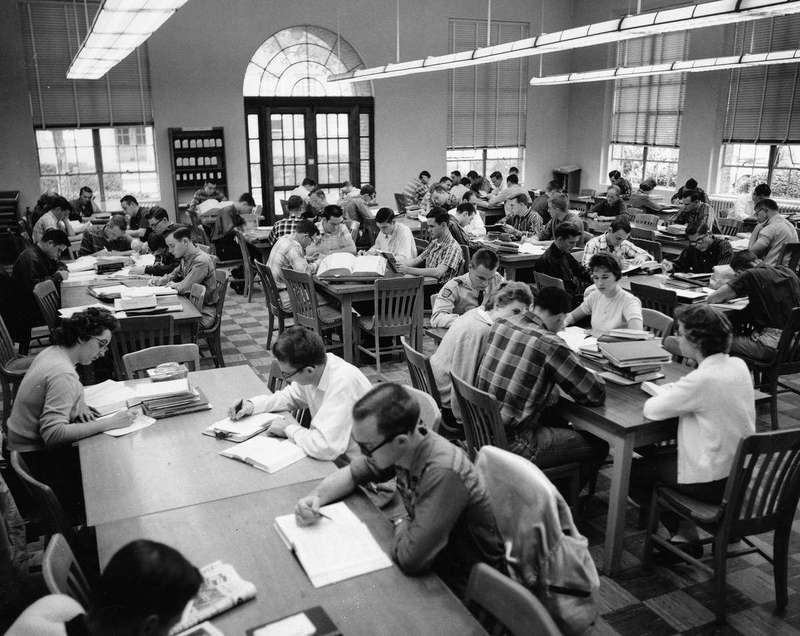
Study sessions work best when they include self-testing, not just re-exposure to the material. Photograph: Michael Barera/Wikimedia Commons
Image Credits: Wikimedia Commons
Mistakes that weaken the effect
The biggest mistake is the illusion of fluency. Rereading feels productive because the material looks familiar. But familiarity is not recall. If your studying feels easy, you may not actually be learning.
Second is peeking too early. Checking the answer before making a real attempt converts the exercise back into rereading. You lose the retrieval benefit you sat down to get.
Third is testing without feedback. An attempt you never check can cement a wrong answer. So always close the loop: attempt, check, correct, repeat.
Frequently asked questions
Is active recall just flashcards?
Flashcards are one format among several. Blank-page recall, practice tests, and teaching a concept from memory all count as retrieval practice.
How is this different from normal studying?
Normal studying shows you the material again. Active recall forces you to produce it. In the 2006 Roediger and Karpicke study, producing won after one week, 61% to 40%. Rereading looked better after five minutes, but that early lead was a mirage.
Does it work for problem subjects like math?
Yes. Working practice problems from memory is retrieval practice. Roediger and Butler's 2011 review found that the testing effect holds across age groups, subjects, and testing formats.
When should I start using it?
From the first study session, not the night before the exam. Spacing your recall attempts across days multiplies the benefit instead of leaving it all to cramming.
The bottom line
Reading feels like learning and testing feels like failing. That is exactly backwards. The students who looked worst five minutes after studying remembered the most a week later.
Tonight, try the blank page. Read one section, close the book, and write down what you remember. It will feel harder than rereading.
That difficulty is the method working.
Rive News is the research desk behind the Rive News production run, writing practical explainers across gardening, careers, education, and more.
Latest in education
- How to Tell Overwatering vs Underwatering in Plants: Finger Test and Weight Method
- What Do Recruiters Actually Look for in 6 Seconds?
- Why Do Brake Rotors Warp, or Do They Actually?
- Why Do You Get Blisters When Hiking and How to Prevent Them
Get one practical explainer in your inbox every morning. Subscribe to the Rive News newsletter.
Related stories

Why Do I Blank Out During Tests Despite Studying: Test Anxiety and Retrieval Failure
Blanking out in exams is retrieval failure, not missing knowledge. Anxiety drains working memory; rereading builds false confidence. Here

How to Study for Exams Without Burning Out
Sleep 7-8 hours, study in 25-50 minute blocks, and exercise daily. The science-backed way to study for exams without burning out, and what

Why Do I Forget What I Just Read? Science Has an Answer
You forget what you just read because of the forgetting curve, mapped by Ebbinghaus in 1885. Science explains why memory fades fast and how