
What Does Hiking Trail Difficulty Rating Actually Mean?
Key takeaways
- There is no single worldwide system. The US and Canada use the Yosemite Decimal System (Class 1 to 5), while much of Europe uses the SAC scale (T1 to T6).
- In YDS, Class 1 is simple hiking and Class 5 is technical rock climbing. In the SAC scale, T1 is an easy marked trail and T6 is very difficult alpine terrain.
- Ratings assume good conditions and describe the hardest section, so always read the full trail description, not just the grade.
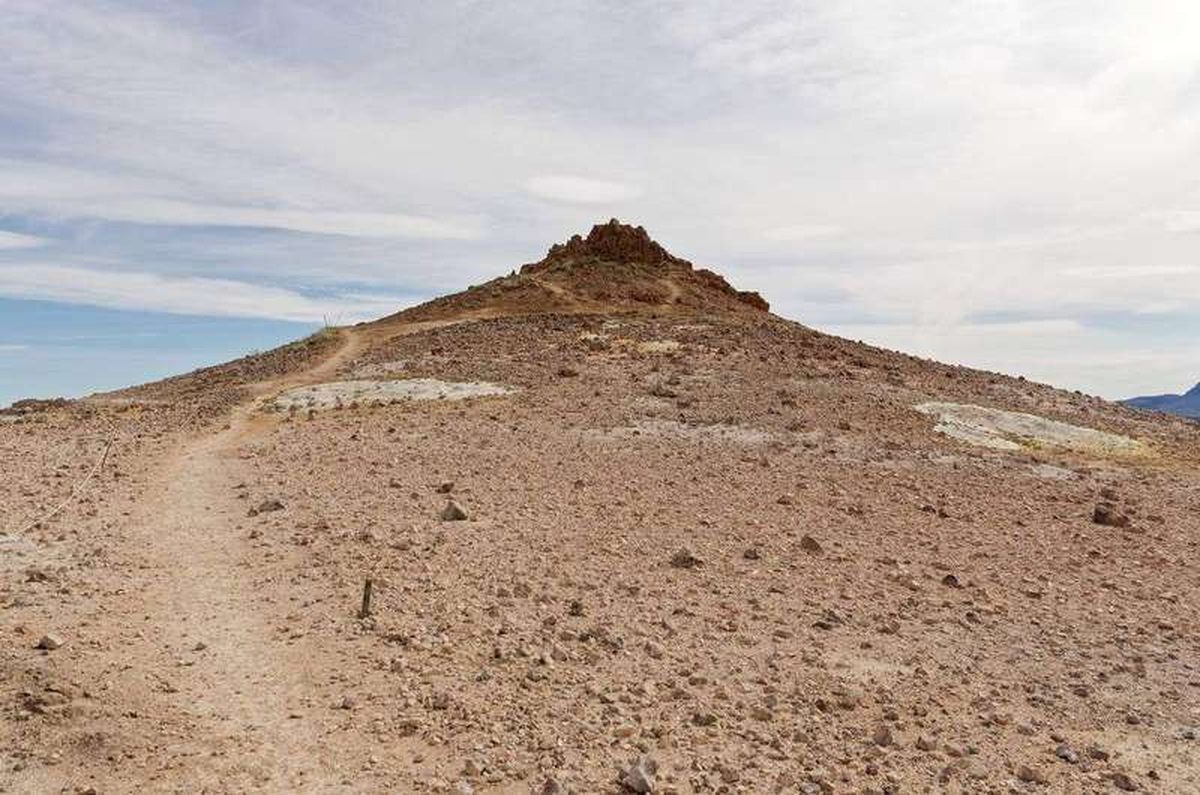
A well-marked hiking trail in open terrain. This kind of route would sit at the easy end of most rating systems. Photograph: Jakubhal/Wikimedia Commons
Image Credits: Wikimedia Commons
A trail listing says "Class 2" or "T4" next to the distance and elevation gain. You are left guessing whether that means a pleasant walk or a scramble with your hands. Difficulty ratings are supposed to answer that question, but only if you know which system you are looking at.
The confusion is real because different countries built different systems. A rating that means easy hiking in one country can mean something much harder in another.
This article explains hiking trail difficulty ratings: why there is no single system, how the US Yosemite Decimal System works, how the European SAC scale works, what commitment grades add, and how to use a rating before you go.
Why there is no single system
Hiking difficulty ratings grew up regionally, each one built for local terrain and local traditions. The United States developed its system out of rock climbing in Yosemite Valley.
Switzerland developed its own for the Alps. Neither was designed for the other, and neither has replaced the other.
That matters because the same word means different things in different places. "Class 3" in the American system involves scrambling with your hands.
A similarly numbered grade in another system might describe something much easier or much harder. Always check which system a trail guide is using before comparing two routes.
Most rating systems also share two quiet assumptions. First, the grade describes the hardest section of the route, not the average. A trail can be an easy walk for 90 percent of its length and still carry a harder grade because of one steep pitch.
Second, grades assume favorable conditions: good weather, good visibility, and dry terrain. Rain, ice, or darkness can make any grade feel harder.
The Yosemite Decimal System (US and Canada)
The Yosemite Decimal System, usually shortened to YDS, is the dominant classification system in the United States and parts of Canada. It was developed by the Sierra Club in the 1950s to unify earlier climbing grades from Yosemite Valley.
YDS divides terrain into five classes:
- Class 1 is hiking on a trail, where your hands are not needed.
- Class 2 is simple scrambling, where you might use your hands occasionally.
- Class 3 is scrambling on steeper ground where a fall could hurt, and many hikers carry a rope for safety.
- Class 4 is steep scrambling or easy climbing where a fall could be serious.
- Class 5 is technical rock climbing that requires ropes, protection, and training.
For hikers, the important classes are 1 through 3. If a trail is rated Class 1, expect a walkable path. Class 2 means some off-trail travel or scrambling.
Class 3 means you will be using your hands and should have experience with exposure.
Class 5 gets its own decimal scale, from 5.0 up to 5.15, with letter suffixes (a through d) for finer distinctions at 5.10 and above. That part of the system belongs to rock climbers, not hikers. When hikers see "5.x" on a route description, it means the route includes real climbing.
The SAC scale (Europe)
The Swiss Alpine Club scale, the SAC scale, rates hiking and alpine routes from T1 to T6. It is widely used in Switzerland and other Alpine regions, and it is the system you will meet most often on European trail guides.
The grades run from easiest to hardest:
- T1, Hiking. Well-marked trails on gentle terrain. No special skills or equipment needed. If marked, the blazes are yellow.
- T2, Mountain hiking. Trails with continuous routes and steeper sections. Sure-footedness helps, and hiking boots are recommended. Marked white-red-white.
- T3, Demanding mountain hiking. Paths may not always be visible. Exposed sections can require hands for balance, with scree and some fall risk. Marked white-red-white.
- T4, Alpine hiking. Path traces not always present. Quite exposed terrain with tricky grassy slopes and easy snowfields. Marked white-blue-white where marked at all.
- T5, Demanding alpine hiking. Often pathless, with easy climbing sections, difficult exposed terrain, and glaciers with slip risk. Basic skills with ice axe, rope, and crampons expected.
- T6, Very difficult alpine hiking. Mostly unmarked. Grade II scrambling, very exposed, dangerous talus and steep snow-free glacier sections. Extensive alpine experience and full technical gear required.
The SAC's official guidance stresses that grades assume favorable conditions. Bad weather, fresh snow, or poor visibility raise the effective difficulty of every grade.
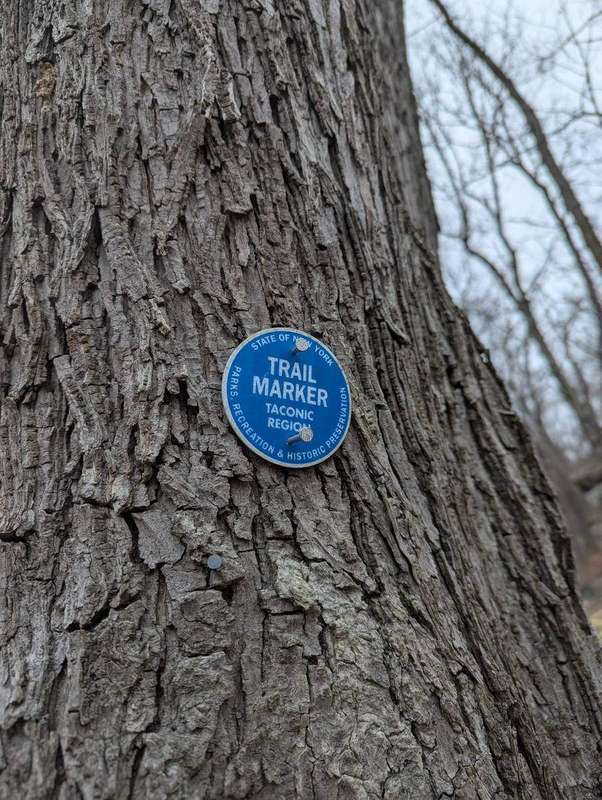
Trail blazes mark the route and hint at the system in use. In Switzerland, blaze colors track the SAC grade. Photograph: Reconrabbit/Wikimedia Commons (CC0)
Image Credits: Wikimedia Commons
Commitment grades: how long and how serious
Technical difficulty is only half the picture. Several systems add a grade for commitment: how long the route takes and how hard it is to bail out.
In the US, the National Climbing Classification System (NCCS) grades commitment with Roman numerals:
- Grade I means one to three hours.
- Grade II means three to four hours.
- Grade III means four to six hours.
- Grade IV is a full day, often eight to twelve hours.
- Grade V requires an overnight, and Grade VI means two or more days.
For hikers, the practical version is simpler: check the distance, the elevation gain, and the estimated time, not just the difficulty grade. A technically easy T1 trail that is 25 kilometers long with 1,500 meters of climbing is a serious day out regardless of its grade.
How to use a rating before you go
Start by identifying the system. If the guide is American, you are reading YDS classes. If it is Swiss or Alpine, you are reading SAC grades.
When in doubt, look for the tell. Decimals like 5.8 mean YDS, while a T before the number means SAC.
Match the grade to your experience honestly. If your hardest hike so far was a T2, a T4 is not the place to find out what exposure feels like. Ratings describe the terrain, not your fitness, so combine the grade with the distance and elevation to judge the full effort.
Read the whole description. The grade covers the crux, the hardest move or section, so look for what the rest of the route involves. A Class 2 route that is "mostly Class 1 with one Class 2 section" is a different day from a sustained Class 2 scramble.
Check the conditions. Every system assumes good weather and dry rock.
A T3 in a thunderstorm or a Class 2 trail under fresh snow is effectively harder than its grade. The rating is a starting point, not a promise.
Frequently asked questions
What is the difference between Class 3 hiking and climbing?
In the Yosemite Decimal System, Class 3 is steep scrambling where you use your hands for balance and a fall could injure you. Class 4 adds serious fall consequences and most parties want a rope, while Class 5 is technical rock climbing. The line between hiking and climbing sits somewhere in Class 3 and 4.
Is a T4 hike harder than a Class 3 hike?
They come from different systems, so the comparison is rough. T4 (SAC) involves exposed alpine terrain and some use of hands, which is broadly similar in spirit to YDS Class 3. But the systems measure different things, so treat any conversion as an estimate.
Do trail ratings account for fitness?
No. Ratings describe technical difficulty: the steepness, exposure, and terrain of the hardest section. Fitness, distance, elevation gain, weather, and pack weight are separate factors you must judge yourself.
Why do two guides rate the same trail differently?
Grading is subjective, conditions change, and guides may use different systems or edition standards. Treat the grade as informed opinion. When guides disagree, plan for the harder rating.
The bottom line
A hiking difficulty rating is a compact warning label, but only in the language of its own system. YDS classes tell you how much scrambling to expect in North America, and SAC grades tell you how alpine a European route gets.
It's a good idea to look up any grade you have not hiked before you commit to the trail. Ten minutes with the rating system saves you from discovering the meaning of "exposed T4 terrain" the hard way.
Topics: hiking, trail ratings, Yosemite Decimal System, SAC scale, outdoor safety
Rive News's research desk covers practical how-to topics with sourced, verifiable information.
Latest in Sports
- Why Do You Get Blisters When Hiking and How to Prevent Them
- How to Start Running When You Hate Running: The Walk-Run Way In
- Why Does Going Downstairs Hurt Knees More Than Going Up?
Subscribe to the Rive News newsletter for weekly practical guides.
Sources:
- Explorersweb (explorersweb.com)
- Wikipedia (en.wikipedia.org)
- Advnture (advnture.com)
- SAC official scale via Alpinetrek (alpinetrek.ch)
Corrections: we correct errors promptly. Contact the newsroom with documentation.
Copyright 2026 Rive News. All rights reserved.
Related stories

Why Is Altitude Sickness Worse for Some People?
Altitude sickness hits some people harder because of genetics, ascent speed, and prior history, not fitness level. Here is what raises risk

Why Do You Get Blisters When Hiking and How to Prevent Them
Friction plus moisture plus heat equals a blister. Learn why hiking breeds all three, and the boots, socks, and tape system that keeps

How to choose hiking boots for beginners: fit, features, and break-in
Beginners should buy for fit first: snug everywhere, tight nowhere, with a thumb's width at the toes. Here is how to size, test,