
How to Start Running When You Hate Running: The Walk-Run Way In
Key takeaways
- Hating running usually means hating how running has always been taught: too fast, too far, too soon.
- The walk-run method alternates short jogs with walking breaks, and Olympian Jeff Galloway took a group of beginners to 5K and 10K finishes in ten weeks with it.
- Stop chasing motivation and build identity instead: become someone who goes out three times a week, and let fitness follow.
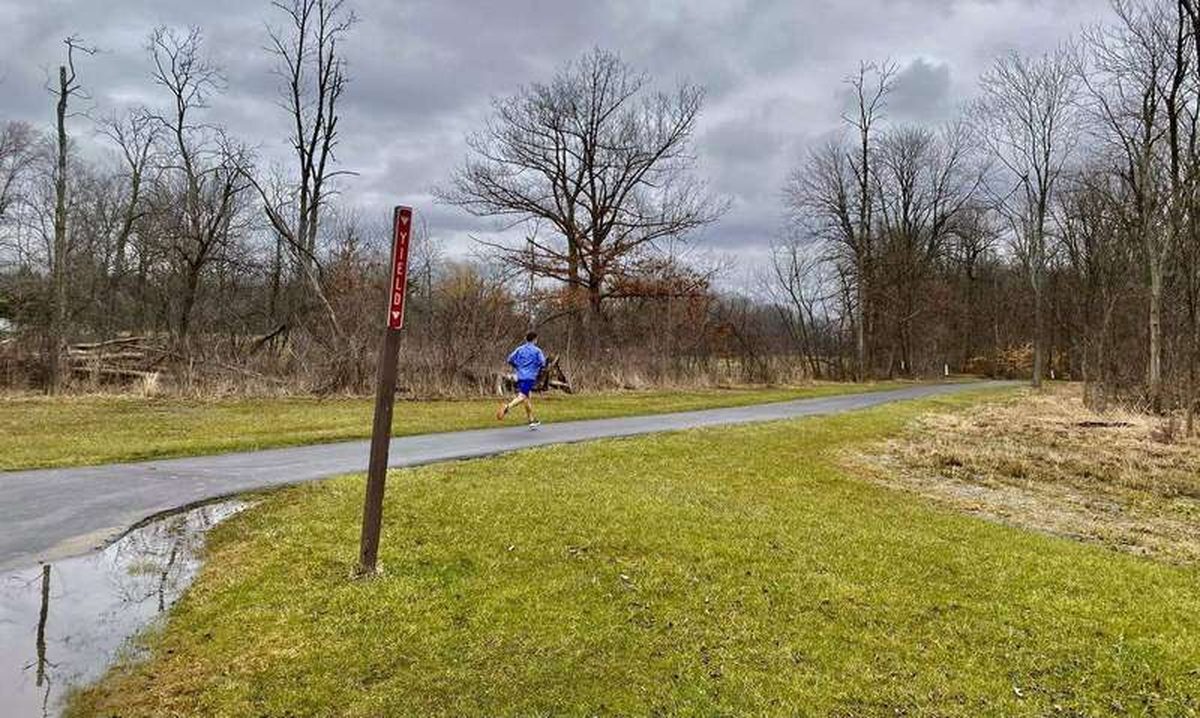
A jogger on a park trail: you do not have to run the whole time to become a runner. Photograph: Andre Carrotflower/Wikimedia Commons
Image Credits: Wikimedia Commons
If you hate running, you are in good company. Plenty of lifelong runners hate parts of it too. What most people actually hate is not running itself but the way they were taught to start: lace up, run until you cannot breathe, repeat until you quit.
There is a gentler door in, and it has carried complete beginners to race finish lines for fifty years. It does not require loving the run. It only requires showing up.
This article takes a closer look at why hating running is normal, how the walk-run method works, what your first 8 weeks can look like, and how to make the habit stick.
Why hating running is normal (and useful information)
Almost everyone who hates running shares the same origin story. School PE turned it into punishment. A first adult attempt meant sprinting until the lungs burned, then limping through shin splints for a week.
Of course you quit. The method was the problem, not you.
Ultrarunner and outdoor writer Brendan Leonard has said that when strangers learn he runs long distances, they often tell him they hate running, and he replies that he hates it too sometimes. The Washington Post once asked readers who disliked running but wanted to do it anyway for their advice, and more than 100 people wrote back. The most common counsel: go slower, and give yourself permission to walk.
That is useful information, not failure. Hating the gasping, pounding version of running just tells you what to avoid. The version that works for beginners looks almost nothing like it.
The walk-run method: your way in
The run-walk-run method, popularized as "Jeffing," was developed by Olympian Jeff Galloway in the early 1970s. Galloway, a member of the 1972 U.S. Olympic team in the 10,000 meters who has finished more than 230 marathons, created it while coaching a group of inexperienced runners. The idea is simple: alternate short running bursts with walking breaks, from the very first session.
For a true beginner, that can mean jogging 30 seconds and walking 30 seconds, repeated for 20 minutes. Galloway has started some people with as little as 10 seconds of running per minute. The walk breaks let your heart rate recover, keep your legs fresh, and make the whole outing feel manageable instead of miserable.
His central rule is the "huff and puff" test: if you hear yourself huffing and puffing, take more frequent walk breaks and slow down. You should be able to hold a conversation while you jog. If you cannot, you are going too fast, no matter how slow it feels.
It worked on his first group. After ten weeks of the technique, Galloway challenged his beginner students to finish a 5K or 10K race, and all of them did, according to Saga Magazine.
He then spent two years refining the method. Speaking to Saga, Galloway said: "My mission in life has been to help people improve the quality of life through running and exercise."
Skeptics call it cheating. Galloway's answer is his own body: he says he has not had a running injury since 1978 using walk breaks. Whether or not you match that record, the logic holds: walking before you are exhausted beats walking because you collapsed.

Runners on a forest trail: planned walk breaks let you cover real distance from the very first week. Photograph: Lebu Ayiga/Wikimedia Commons
Image Credits: Wikimedia Commons
Your first 8 weeks, planned
Here is a simple progression. Do three sessions a week, with at least one rest day between them. Every session starts with a 5-minute brisk walk to warm up and ends with a 5-minute easy walk to cool down.
Weeks 1-2: Jog 30 seconds, walk 60 seconds. Repeat for 20 minutes. If 30 seconds of jogging leaves you gasping, drop to 15 seconds of jogging. There is no minimum speed requirement.
Weeks 3-4: Jog 60 seconds, walk 60 seconds. Repeat for 20 to 25 minutes. Keep the conversational pace: if you cannot talk, slow down before you shorten the walk.
Weeks 5-6: Jog 2 minutes, walk 1 minute. Repeat for 25 minutes. By now the jogging segments will start feeling like the main event and the walks like brief resets.
Weeks 7-8: Jog 5 minutes, walk 1 minute. Repeat for 30 minutes. Many people find they can drop the walk breaks whenever they feel like it around this point. Others keep them forever, and that is fine too. Plenty of marathoners use walk breaks on race day.
Three rules govern the whole plan. First, never increase your total weekly time by more than about 10 percent. Second, keep one session a week genuinely easy, slower than you think you should go.
Third, when in doubt, take the walk break early rather than late. Walking before you need it is strategy; walking because you blew up is rescue.
Get shoes that fit before you start. Visit a running store for a gait check (a test of how your feet move when you run) if you can, and buy half a size up from your everyday shoes, since feet swell with impact. Everything else you own already works.
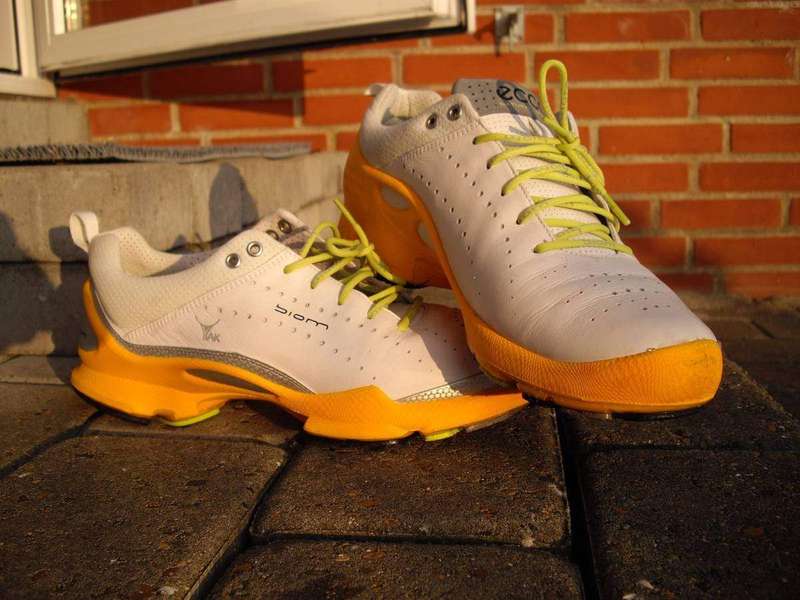
Proper running shoes matter more than any gear upgrade: size up half a size to allow for foot swelling. Photograph: Tdn70/Wikimedia Commons
Image Credits: Wikimedia Commons
Make it stick: identity over motivation
Motivation is a terrible fuel. It shows up on January 1 and vanishes by January 20. The runners who last are not more motivated; they have built an identity that makes skipping feel stranger than going.
The shift is small but powerful. Stop framing it as "I have to run today" and start framing it as "I am someone who goes out three times a week." James Clear makes this case in Atomic Habits: lasting change comes from focusing on who you want to become rather than what you want to achieve.
Every completed session is a vote for that identity, even the slow, walk-heavy ones. Especially those.
Shrink the commitment until it feels almost silly. On bad days, the deal is ten minutes out the door. You can turn around after ten minutes if you want to; you almost never will.
Consistency at low effort beats heroic efforts followed by three weeks off, every single time.
Stack the habit onto something you already do. Shoes by the door, kit laid out the night before, same three days each week. Remove every decision between you and the first step, because decisions are where motivation leaks out.
And track the streak, not the pace. A calendar with X marks is a better training log for a beginner than any app dashboard. Thirty slow sessions will change your body more than five fast ones, and the calendar proves it to you on the days your brain insists nothing is happening.
Frequently asked questions
Is walk-run actually running, or am I cheating?
It is running, and it is a legitimate training method used by beginners and marathoners alike. The walk breaks are planned recovery, not failure. Finishing a 5K with walk breaks counts exactly the same as finishing it without them.
How fast should I jog during the run bursts?
Slow enough to hold a conversation. That is Galloway's huff-and-puff rule, and it is the single most important pace guide for beginners. If you are gasping, you are going too fast no matter what the stopwatch says.
Will I ever be able to run without walking?
Probably, if you want to. Most people following a walk-run progression find the walk breaks naturally shrinking over 8 to 12 weeks. But there is no requirement: many experienced runners keep walk breaks permanently because they recover faster and enjoy it more.
What if I miss a week?
Pick up where you left off, or one step back. Do not try to "make up" missed sessions by doubling up; that is how injuries happen. The identity is "someone who goes out three times a week," and one missed week does not erase it.
The bottom line
You do not need to love running to become a runner. You need a method that does not punish you for being a beginner, and walk-run is exactly that: 30 seconds of jogging, 30 seconds of walking, three times a week, at a pace where you can talk.
In ten weeks, Galloway's first students went from non-runners to race finishers. Your only job is the next session. Lay out the shoes tonight, walk out the door tomorrow, and let the identity do the rest.
Tags: running, beginner running, walk-run, fitness, habits
Rive News is the research desk behind this publication, covering fitness, training, and practical health habits with sourced, honest guidance.
Related stories
- Leggy Seedlings: Why They Stretch, How Light Fixes Them, and When to Start Over
- How to Negotiate Salary When They Ask for Your Expectations First
- How Spaced Repetition Actually Works: The Forgetting Curve and Optimal Intervals
- How Often Should You Really Change Engine Oil? The 3,000-Mile Myth
Subscribe for one practical fitness guide in your inbox every week.
Related stories

Why Is Altitude Sickness Worse for Some People?
Altitude sickness hits some people harder because of genetics, ascent speed, and prior history, not fitness level. Here is what raises risk

Why Do You Get Blisters When Hiking and How to Prevent Them
Friction plus moisture plus heat equals a blister. Learn why hiking breeds all three, and the boots, socks, and tape system that keeps

How to choose hiking boots for beginners: fit, features, and break-in
Beginners should buy for fit first: snug everywhere, tight nowhere, with a thumb's width at the toes. Here is how to size, test,