
How Spaced Repetition Actually Works: The Forgetting Curve and Optimal Intervals
Key takeaways
- Memory fades on a predictable curve: without review, most new information is gone within days, with the steepest loss in the first 24 hours.
- Reviewing just before you would forget flattens the curve, and each successful recall lets the next gap stretch longer.
- Large studies show the optimal gap scales with how long you need to remember: days of spacing for a week, weeks of spacing for a year.
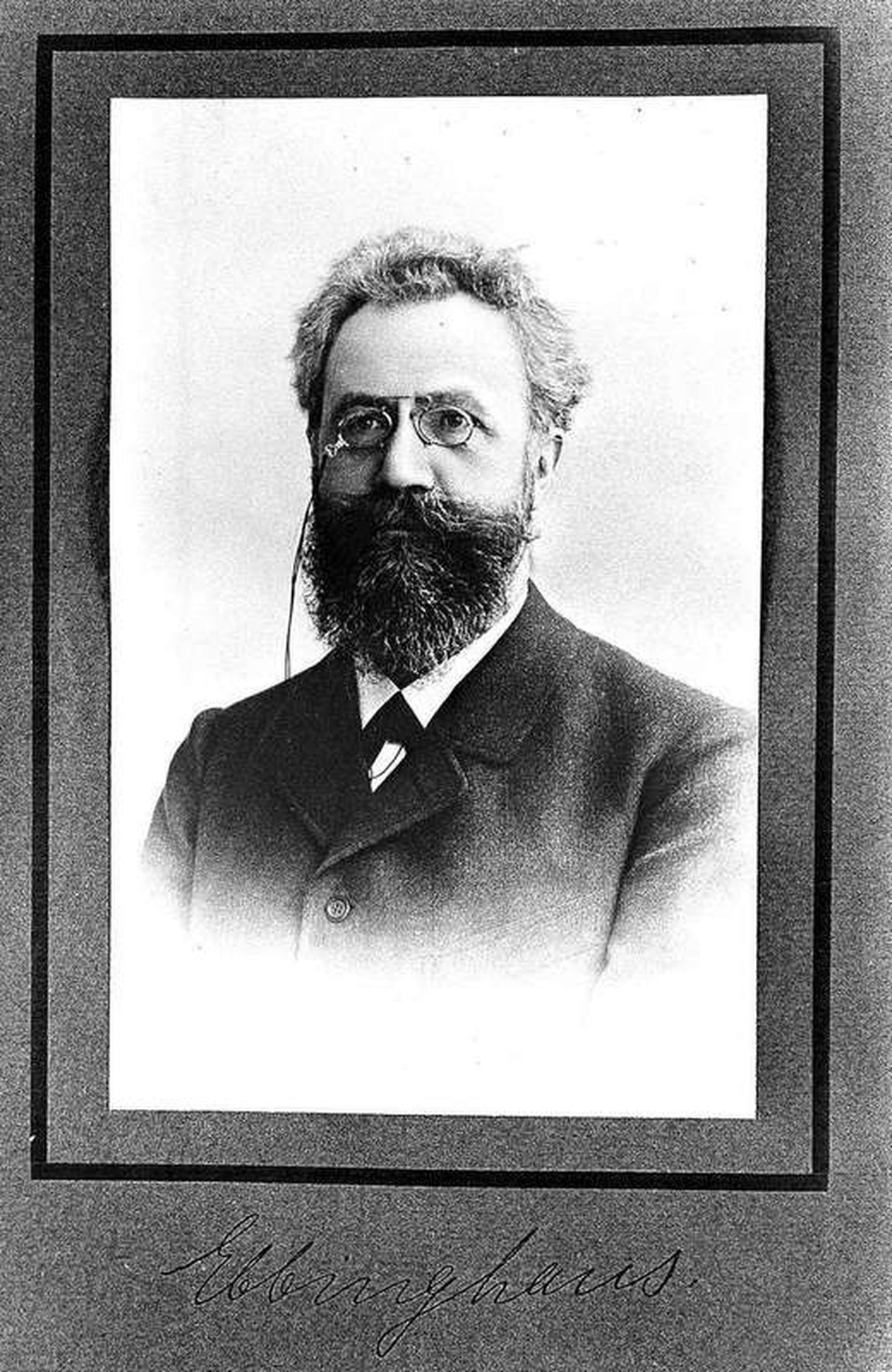
Hermann Ebbinghaus, whose 1880s self-experiments first mapped how memory fades over time. Photograph: Wellcome Collection/Wikimedia Commons
Image Credits: Wikimedia Commons
Spaced repetition is a study method built on a simple idea: review material at growing gaps, each time just before you would forget it. Done right, a few well-timed reviews can lock in knowledge that cramming would lose within days.
The method works because forgetting is not random. It follows a predictable curve, and once you know the curve's shape, you can schedule reviews to land exactly where they do the most good.
This article takes a closer look at what the forgetting curve actually shows, why growing gaps beat cramming, what the optimal gap looks like, and how to use spaced repetition in practice.
What the forgetting curve actually shows
In the 1880s, German psychologist Hermann Ebbinghaus ran a landmark experiment on himself. He memorized lists of nonsense syllables, strings like WID and ZOF designed to carry no meaning, then measured how much effort it took him to relearn each list after different delays. The result was the forgetting curve: a steep drop followed by a long flattening.
The numbers were stark. In his data, recall dropped to about 58 percent after 20 minutes, 44 percent after an hour, and roughly 34 percent after a day, leveling off near 21 percent after a month, according to a detailed analysis by Taalhammer. The exact figures applied to meaningless syllables memorized by one person, and meaningful material fades more slowly, but the shape applies broadly: fast early loss, then a flattening tail.
That shape has survived more than a century of checking. A 2015 direct replication by Jaap Murre and Joeri Dros matched Ebbinghaus's original numbers within a few percentage points, and the curve has since been confirmed across different populations, content types, and decades. It is one of the most solid findings in brain science (cognitive psychology, the science of how we think and remember).
Two details matter for everything that follows. First, the steepest forgetting happens within the first day, so the first review matters more than any other. Second, meaningful, well-connected material starts higher on the curve and decays more slowly, which is why understanding beats rote memorizing even before spacing enters the picture.
Why expanding gaps beat cramming
Each time you successfully recall something, the forgetting curve for that memory resets and flattens. The information takes longer to fade after every review, which is why the gaps between reviews can keep growing: a day, then three days, then a week, then two weeks, then a month.
The key word is recall. Actively pulling an answer from memory strengthens it far more than rereading the same page, a finding known as the testing effect.
Rereading feels productive because the material looks familiar, but familiarity is not the same as retrievability. Spaced repetition pairs the two mechanisms: spacing schedules the review, recall does the strengthening.
There is also a Goldilocks principle at work. If you review too soon, recall is effortless and the memory barely strengthens. If you wait too long, you have forgotten completely and you are simply relearning from scratch.
The sweet spot is the moment of effortful recall: hard enough to feel like work, successful enough to succeed. Memory researchers call this desirable difficulty, and growing gaps are designed to keep you in that zone automatically.
Cramming fails by comparison because it piles all the effort into the flat part of the curve. A marathon study session feels thorough, but every repetition after the first lands while the memory is still fresh, earning almost no additional durability. As Harold Pashler of UC San Diego put it, instruction that packs a lot of learning into a short period is likely to be extremely inefficient for remembering factual information.

Flashcards are the classic spaced repetition tool: each card is reviewed at growing gaps based on how easily it is recalled. Photograph: EnglishFlashCardsSample contributor/Wikimedia Commons
Image Credits: Wikimedia Commons
What the optimal gap looks like
The natural question is how long the gaps should be, and here the research gives a surprisingly precise answer: it depends on how long you need to remember.
In 2008, Nicholas Cepeda, Harold Pashler, and colleagues published a landmark study in Psychological Science that tested more than 1,350 people over delays of up to a year. They found that the optimal gap between study sessions grows as the test delay grows. Spacing reviews further apart at first increased final test performance, then gradually reduced it, forming a ridge of optimal timing.
The practical rule they derived: for a test one week away, the best gap is roughly 20 to 40 percent of that delay, about a day or two. For a test a year away, the optimal gap shrinks to about 5 to 10 percent of the delay, roughly three to five weeks. Pashler summed it up plainly: "If you want to remember information for just a week, it is probably best if study sessions are spaced out over a day or two.
" For year-long retention, he said, spacing learning over about a month works best.
The gains were large. Optimal spacing sometimes raised the chance of recall in the final session by 50 percent compared with poor timing, according to the UC San Diego release on the study. A 2006 meta-analysis by the same research group added that the optimal gap sits around 10 to 20 percent of the retention gap across many studies.
Sleep plays a quiet supporting role. Both the 1885 and 2015 forgetting data show a small lift at the 24-hour mark, suggesting that overnight memory processing does some of the reviewing for you. Spacing sessions across days is not just convenient; it lets sleep do part of the work.
How to use spaced repetition in practice
You do not need an app to use the method, though many people like them. The underlying system, the SM-2 algorithm developed by Piotr Wozniak in 1987, simply automates what you can do with a box of cards: review soon, then stretch the gap after each success and shrink it after each failure.
Start with a simple growing schedule: review new material after 1 day, then 3 days, then 7 days, then 14 days, then 30 days. When you recall something easily, push its next review further out.
When you struggle or fail, pull it back to a short gap. The schedule adapts to each item's difficulty, which is the whole point: hard items get more reviews, easy ones get fewer.
Always test yourself rather than reread. Cover the answer, say it out loud or write it down, then check. The effort of recall is the mechanism, so a review session should feel like a quiz, not a reading session.
Keep sessions short and frequent rather than long and rare. Twenty minutes of spaced review across several days beats a three-hour cram session for anything you need to remember past the exam. And learn with meaning first: Ebbinghaus deliberately used nonsense syllables to measure pure memory mechanics, but he noted that meaningful material is retained far better, so connect new facts to things you already understand before you start spacing them.
Memory consolidation happens across days, with sleep doing part of the reviewing for you. Photograph: Wellcome Collection/Wikimedia Commons
Image Credits: Wikimedia Commons
Frequently asked questions
How is spaced repetition different from just studying regularly?
Regular studying often means rereading on a fixed schedule. Spaced repetition specifically uses growing gaps timed to land just before you would forget, and it relies on active recall rather than rereading, which research shows is the combo that builds durable memory.
What is the best gap for spaced repetition?
It depends on your test date. Research by Cepeda and colleagues suggests spacing reviews over a day or two for a test in a week, and over about a month for retention across a year. A practical default is 1, 3, 7, 14, and 30 days, adjusting per item.
Does spaced repetition work for skills or just facts?
Mostly facts and declarative knowledge. Physical skills like riding a bicycle decay more slowly once learned, but during the initial learning phase, spacing practice sessions over weeks still produces more durable skills than cramming the same hours into one session.
Do I need a flashcard app to do spaced repetition?
No. The method predates computers by a century, and a simple Leitner box (cards sorted into compartments by how well you know them) implements the same growing-gap logic. Apps just automate the scheduling.
The bottom line
Spaced repetition works because forgetting is predictable. Ebbinghaus showed that memory drops fast and then flattens, and a century of research since has shown that reviewing just before the drop, at steadily growing gaps, flattens the curve for good.
Match your spacing to your deadline, test yourself instead of rereading, and let sleep help. A handful of well-timed reviews will do what hours of cramming cannot.
Tags: spaced repetition, memory, study skills, learning science, forgetting curve
Rive News is the research desk behind this publication, covering education, learning science, and practical study methods with sourced, research-backed guidance.
Related stories
- Leggy Seedlings: Why They Stretch, How Light Fixes Them, and When to Start Over
- How to Negotiate Salary When They Ask for Your Expectations First
- How Often Should You Really Change Engine Oil? The 3,000-Mile Myth
- How to Start Running When You Hate Running: The Walk-Run Way In
Subscribe for one practical learning-science guide in your inbox every week.
Related stories

Why Do I Blank Out During Tests Despite Studying: Test Anxiety and Retrieval Failure
Blanking out in exams is retrieval failure, not missing knowledge. Anxiety drains working memory; rereading builds false confidence. Here

How to Study for Exams Without Burning Out
Sleep 7-8 hours, study in 25-50 minute blocks, and exercise daily. The science-backed way to study for exams without burning out, and what

Why Do I Forget What I Just Read? Science Has an Answer
You forget what you just read because of the forgetting curve, mapped by Ebbinghaus in 1885. Science explains why memory fades fast and how