
How Often Should You Really Change Engine Oil? The 3,000-Mile Myth
Key takeaways
- The 3,000-mile oil change rule dates to 1980s oil technology. Most carmakers abandoned it long ago.
- Modern cars on full synthetic oil typically go 7,500 to 10,000 miles between changes. Some manufacturers approve up to 15,000.
- Your owner's manual is the final authority. It lists the exact interval for your engine, oil grade, and driving conditions.
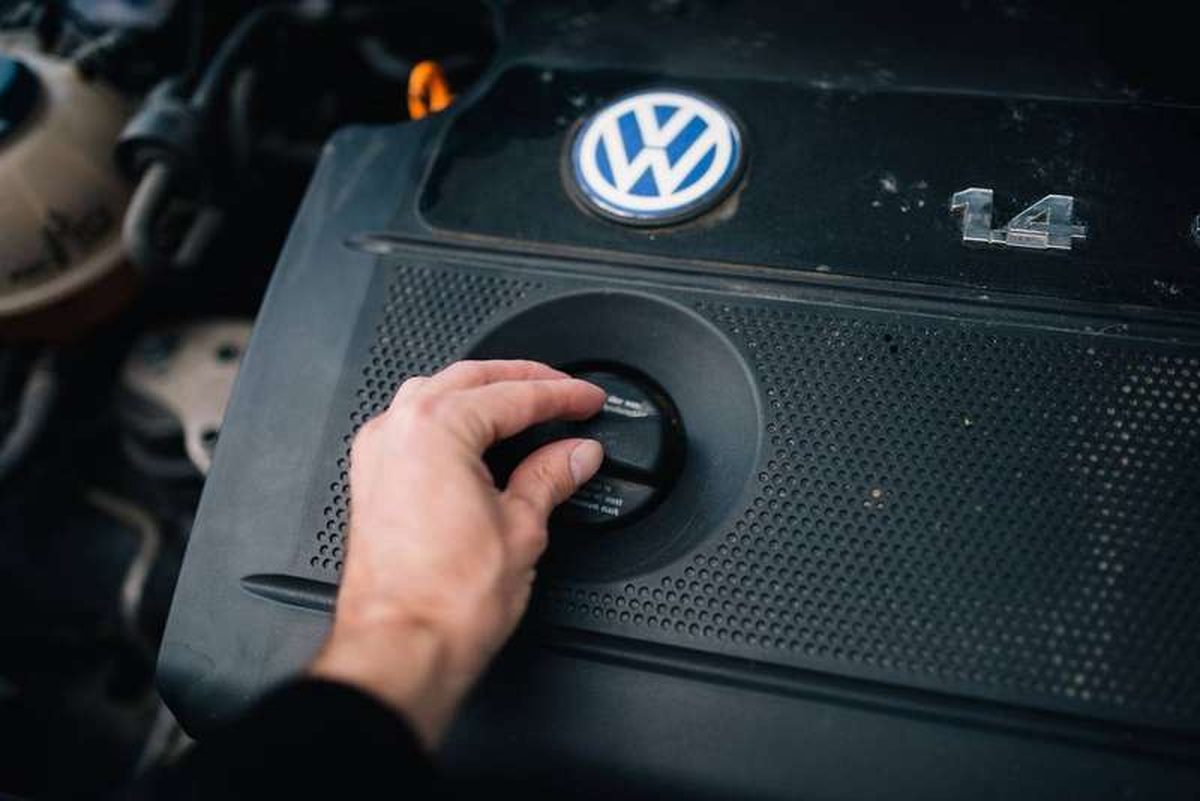
A mechanic checks the oil level: the right interval for your car is in the owner's manual, not on the windshield sticker. Photograph: Shixart1985/Wikimedia Commons
Image Credits: Wikimedia Commons
If you grew up hearing that oil must be changed every 3,000 miles, you are following advice that expired decades ago. The number was real once. It just has not been true for a long time.
Modern engines and modern oils are built for far longer service. Yet quick-lube shops still print 3,000-mile stickers. Frequent changes are good for their business, whether or not your engine needs them.
This article takes a closer look at where the 3,000-mile rule came from, what manufacturer manuals actually say, when you should change oil sooner, and which myths are costing you money.
Where the 3,000-mile rule came from
The rule was born in an era of very different chemistry. In the 1970s, typical cars ran on 10W-40 conventional oil. It was good for about 2,000 miles or less before breaking down. In the 1980s, 5W-30 oil arrived with better fuel economy. The standard recommendation settled at 3,000 miles, per Offroaders.com's history of the myth.
From the early 1980s on, oil change shops made the 3,000-mile interval their universal advice. It was simple, memorable, and profitable. Meanwhile, engines got tighter and oils got dramatically better. The sticker on the windshield never caught up.
HowStuffWorks puts it bluntly: if you check your car's user manual, you will probably find you have been changing your oil more often than you need to. That is at least according to the people who designed your car. Most carmakers abandoned the 3,000-mile interval long ago in favor of 5,000 or 7,500 miles. Many now go further.
What manufacturer manuals actually say
The manual in your glove box is the only advice calibrated to your exact engine. Manufacturers spend heavily on durability testing to set these numbers. The warranty depends on following them.
Toyota is a clear example. For vehicles that require 0W-20 synthetic oil, Toyota approves an oil change interval of 10,000 miles or 12 months, whichever comes first.
For models running conventional grades, the interval stays at 5,000 miles or 6 months. Even at the longer interval, Toyota still wants the car in every 5,000 miles for tire rotations and inspections.
The broader pattern is similar across brands. General guidance from service references: conventional oil every 3,000 to 5,000 miles, synthetic blend every 5,000 to 7,500, and full synthetic every 7,500 to 15,000. Many newer vehicles also carry an oil life monitoring system. It watches your actual driving and lights up when a change is genuinely due. Under easy conditions, that can stretch intervals to 10,000 or 15,000 miles.
The honest summary: for a modern car on full synthetic, 7,500 to 10,000 miles is the normal range. The manual's number beats every rule of thumb. If you drive an older car on conventional oil, shorter intervals still apply, and the manual will say so.

Checking the dipstick regularly matters more than the calendar: low oil level damages engines faster than old oil does. Photograph: Shixart1985/Wikimedia Commons
Image Credits: Wikimedia Commons
When you should change oil sooner
Manuals list two schedules for a reason. "Normal" driving covers steady highway miles in moderate weather. "Severe" driving covers almost everything else. Most drivers land in the severe column.
Severe conditions include frequent short trips under 10 miles, heavy stop-and-go traffic, extreme heat or freezing cold, towing or hauling heavy loads, and dusty or gravel roads. Short trips are the big one. The engine never fully warms up. Moisture and fuel build up in the oil, and it degrades faster. If your commute is five miles of city traffic in winter, follow the shorter interval in your manual's range.
Toyota spells this out explicitly. Drivers who make frequent short trips in below-freezing weather, idle heavily, or tow are told to use the 5,000-mile, 6-month schedule even with synthetic oil.
Other brands have equivalent severe-service tables. Check which column your driving actually falls in before you pick a number.
Two habits matter more than the exact mileage. Check the dipstick monthly and top off when low. Running low on oil kills engines far faster than running slightly past an interval. And never skip the filter: a fresh filter with old oil is pointless, and an old filter with fresh oil defeats the purpose of the change.
Myths that cost you money
"Dark oil means it needs changing." False. Engine oil darkens naturally as it circulates and traps contaminants. That is literally its job. Color alone says almost nothing about the oil's remaining life.
"Synthetic oil causes leaks." False. This myth dates to early synthetics decades ago. Modern synthetic oils are fully compatible with engine seals. They actually protect better against wear, heat, and sludge than conventional oil.
"Changing oil more often can't hurt." It will not damage the engine, but it wastes money and oil for no benefit. One unnecessary synthetic change a year, every year, adds up to hundreds of dollars over the life of the car. There is also the environmental cost of the discarded oil.
"The shop knows better than the manual." The shop has a financial interest in seeing you every 3,000 miles. The engineers who warranty your engine for 100,000 miles have the opposite incentive: they want the interval right. Trust the manual.
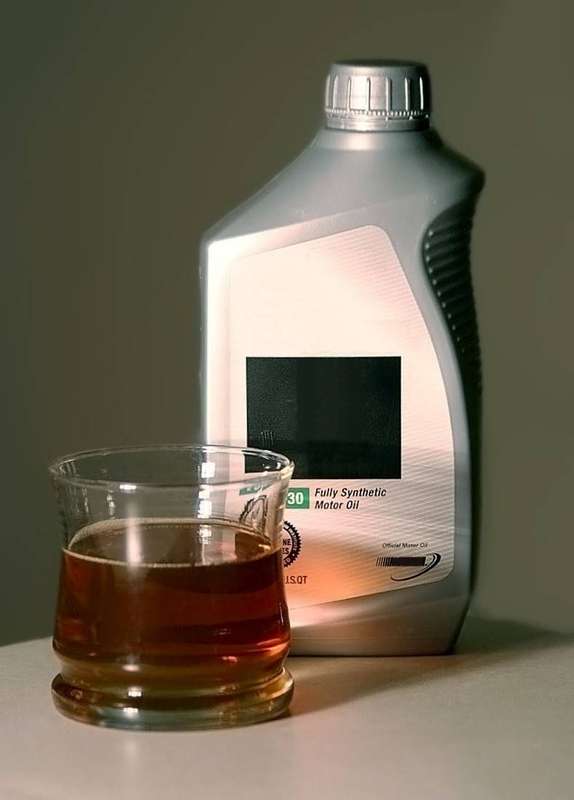
Modern synthetic oil is chemically engineered to resist breakdown far longer than the conventional oils of the 1980s. Photograph: Interiot/Wikimedia Commons
Image Credits: Wikimedia Commons
Frequently asked questions
How often should I change synthetic oil?
Most manufacturers specify 7,500 to 10,000 miles or 12 months for full synthetic. Some approve up to 15,000 miles. Toyota, for example, approves 10,000 miles or 12 months for vehicles requiring 0W-20 synthetic. Always confirm in your owner's manual.
Does it hurt to change oil too often?
It will not harm the engine, but it costs money and wastes oil without adding protection. Following the manufacturer's recommendation is the best balance of engine health and cost.
Can I switch from conventional to synthetic oil?
Yes, for most engines it is safe. Many drivers switch specifically for the longer intervals and better protection. Check your manual for the approved grade and the interval that applies to it.
What actually counts as severe driving?
Frequent trips under 10 miles, stop-and-go traffic, extreme temperatures, towing, and dusty roads. If most of your driving looks like that, use the shorter interval your manual lists for severe service.
The bottom line
The 3,000-mile oil change belongs to the era of carburetors and 10W-40. For a modern car on synthetic oil, the honest answer is usually 7,500 to 10,000 miles. The exact number is printed in your owner's manual.
Look up the severe-service schedule if your driving is mostly short city trips. Check the dipstick monthly. Stop letting the windshield sticker decide. Your engine was designed by people who know its limits better than the shop selling you the change.
Tags: engine oil, car maintenance, oil change, synthetic oil, auto myths
Rive News is the research desk behind this publication, covering cars, maintenance, and practical ownership advice with sourced, honest guidance.
Related stories
- Leggy Seedlings: Why They Stretch, How Light Fixes Them, and When to Start Over
- How to Negotiate Salary When They Ask for Your Expectations First
- How Spaced Repetition Actually Works: The Forgetting Curve and Optimal Intervals
- How to Start Running When You Hate Running: The Walk-Run Way In
Subscribe for one practical car-ownership guide in your inbox every week.
Related stories

Why Does Tire Pressure Drop in Cold Weather?
Cold weather can cut tire pressure by 1 psi for every 10°F drop, thanks to the ideal gas law. Here is what happens inside the tire and what

Why Do Brake Rotors Warp, or Do They Actually?
Mechanics rarely see a truly warped rotor. The shudder usually comes from uneven pad deposits a few thousandths of an inch thick. Here

How to Buy a Used Car Without Getting Scammed: The Checklist
Over 450,000 cars a year have rolled-back odometers, NHTSA says. This checklist covers VIN checks, title washing, and the inspection that