
Why Does Going Downstairs Hurt Knees More Than Going Up?
Key takeaways
- Descending stairs forces the quadriceps to brake your body weight with an eccentric contraction. That multiplies force between the kneecap and its groove.
- Patellofemoral joint force rises from about 0.9 times body weight while walking to about 3.2 times body weight on stair ascent. Downhill loading is worse still.
- Pain around the kneecap that lasts more than 2 to 4 weeks, or comes with swelling, locking, or instability, deserves a clinician's look.
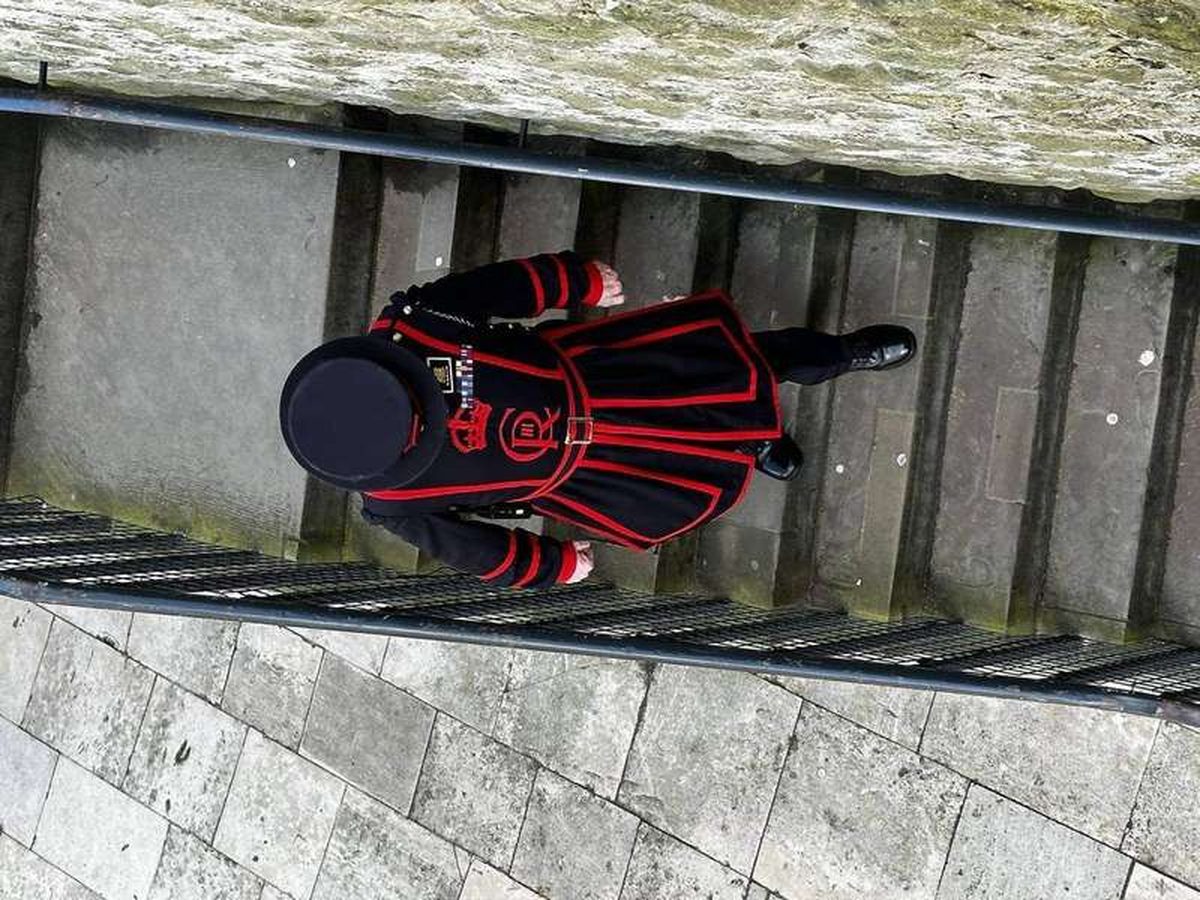
Each descending step makes the thigh muscles lower the body's full weight on a bent knee, multiplying force behind the kneecap. Photograph: Matt Brown/Wikimedia Commons
Image Credits: Wikimedia Commons
It is a common and confusing pattern: climbing the stairs feels fine, or at least tolerable, while coming back down sends a sharp ache through the front of the knee. The staircase did not change between trips. What changed is what your knee has to do.
The short answer is that descending makes your quadriceps work as brakes on a bent knee, and braking multiplies force on the kneecap. This article explains why going downstairs hurts knees more than going up. It covers how eccentric loading stresses the kneecap, which conditions it can signal, and when to see a clinician.
What happens inside the knee on stairs
The kneecap, or patella, slides in a groove at the end of the thigh bone as the knee bends and straightens. The thigh muscles pull the patella into that groove with every step. The deeper the knee bends while loaded, the harder the kneecap gets pressed against the groove.
Walking on flat ground is gentle by this measure. A systematic review in the British Journal of Sports Medicine, cited in a biomechanics explainer by Essential Health Science, puts patellofemoral joint reaction force at roughly 0.9 times body weight during walking. Stair ascent pushes that figure to about 3.2 times body weight.
Stairs are simply a bigger mechanical ask than flat ground. The knee bends deeper, the thigh muscles pull harder, and the contact force behind the kneecap climbs. That is the baseline both directions share.
Why descending loads the knee harder
Going up, your quadriceps shorten as they lift you. Going down, they do the opposite: they lengthen under load, fighting gravity to lower your body one controlled step at a time. That lengthening-under-load pattern is called an eccentric contraction.
Eccentric work is the hard part. A physiotherapy explainer on downhill knee pain describes it plainly: when descending, the quadriceps brake the body by contracting eccentrically, which increases the pressure between the kneecap and the femur. If the kneecap area is already sensitive, the descent finds it fast.
Downhill walking research backs this up. Biomechanics researchers Schwameder and colleagues measured patellofemoral compression roughly three to four times higher during downhill walking than on flat terrain. An earlier downhill-walking study by Kuster and colleagues specifically investigated stress on the femoropatellar joint during descent.
Orthopedic surgeon Dr. Van Thiel puts it in everyday terms on his practice site: going downstairs requires the quadriceps to control the body's movement as the knee bends, and that can increase stress on the patellofemoral joint and make symptoms more noticeable. Same staircase, different muscle job, different pain.
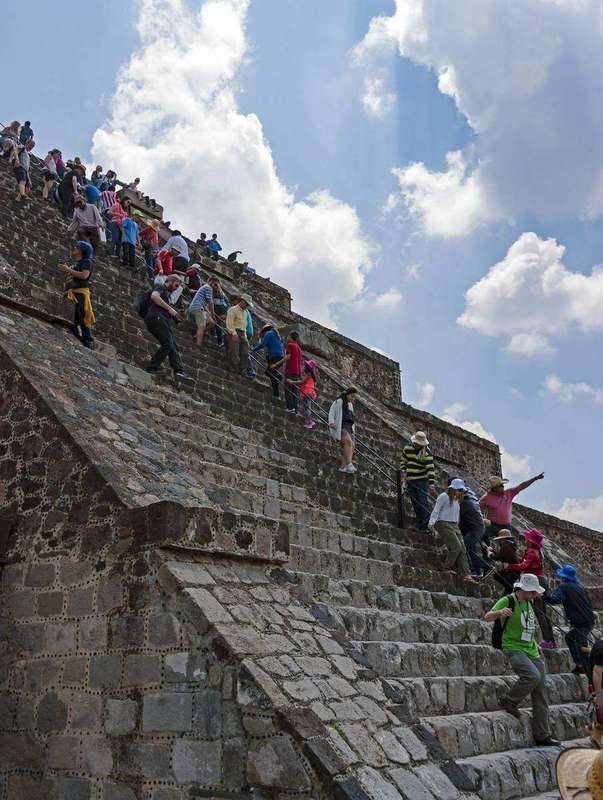
Steep descents concentrate the braking load on the quadriceps with the knee deeply bent, the position that stresses the kneecap most. Photograph: Daniel Case/Wikimedia Commons
Image Credits: Wikimedia Commons
Conditions behind stair pain
Pain around or behind the kneecap has a name: patellofemoral pain, sometimes called runner's knee. Emma Glynn, a physiotherapist writing as The Hip & Knee Physio, describes it as pain aggravated by activities that load the joint with the knee bent: going downstairs, squatting, running, and sitting with knees flexed for long periods.
It is usually a mechanical overload problem, not a single injury. The joint gets asked to do more than it can currently tolerate, often after a change in training, joint mechanics, or tissue sensitivity. Muscle imbalances around the hip and thigh, early cartilage changes, and tracking issues where the kneecap does not glide cleanly are frequent contributors.
Other suspects live nearby. Chondromalacia patellae is fraying of the cartilage under the kneecap.
Patellar tendinitis is inflammation of the tendon below the kneecap. A U.S. military physical-therapy handout on runner's knee explains the mechanics: as compression at the joint rises with movement under resistance, friction rises too, irritating the cartilage surfaces.
Stair pain alone does not diagnose any of these. But the location of the pain is a useful clue for a clinician: pain in front of the knee that stairs reliably trigger points first at the patellofemoral joint.
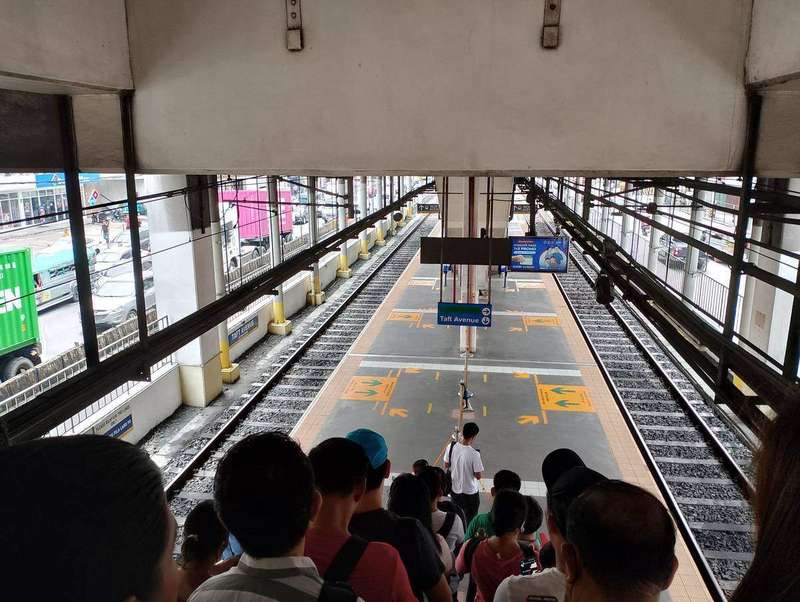
Everyday stairwells load the knees the same way a hiking descent does, just in shorter bursts. Photograph: LastCelebration/Wikimedia Commons
Image Credits: Wikimedia Commons
When to see a clinician
This article is an explainer, not a diagnosis. Occasional aching after an unusually hard day of stairs often settles with rest. Persistent or worsening pain is a different matter.
The University of California, Berkeley's health service advises contacting a clinician if symptoms do not resolve within 2 to 4 weeks. Dr. Van Thiel's site lists clearer red flags: pain that continues for several weeks, interferes with walking or stairs, causes swelling, produces locking or catching, creates a feeling of instability, or follows an injury.
Strengthening the hip and thigh muscles, improving stair technique, and breaking up long sitting are the approaches the current evidence supports for this pattern of pain, according to the biomechanics explainer citing the British Journal of Sports Medicine review. But results come over weeks of consistent work, and the right exercises depend on the actual diagnosis.
Frequently asked questions
Is knee pain going downstairs a sign of arthritis?
Not necessarily. Pain around the kneecap on stairs is most commonly patellofemoral pain, a mechanical overload issue. It can occur with perfectly healthy cartilage. Only imaging and an exam can say whether arthritis is involved.
Why do my knees hurt on stairs but not on flat ground?
Flat walking loads the patellofemoral joint at roughly 0.9 times body weight. Stairs multiply that force several times over on a deeply bent knee. The stairs simply cross a load threshold that flat ground never reaches.
Does strengthening the quadriceps help stair pain?
Exercise therapy targeting the hip and knee muscles is the primary evidence-supported intervention for patellofemoral pain. Stronger muscles around the joint handle the braking load of descent with less irritation.
Should I avoid stairs if my knees hurt?
Temporarily reducing aggravating activity gives an irritated joint a chance to settle, which Berkeley's handout recommends. But long-term avoidance weakens the very muscles the joint relies on, so the goal is graded return, ideally guided by a clinician or physiotherapist.
Outlook
Going downstairs hurts more than going up because descent asks the quadriceps to brake the body's weight eccentrically on a bent knee. That multiplies force behind the kneecap several times over. For most people this is an overload story, and graded strengthening plus sensible load management resolves it over weeks.
It's a good idea to see a clinician or physiotherapist if the pain persists beyond a few weeks, recurs every time you descend, or comes with swelling, locking, or instability. Knees that only complain on stairs are giving you useful information. The next step is getting it properly interpreted.
Tags: knees, joint health, exercise, biomechanics, pain
Rive News is the research desk behind Rive News's explainers, covering travel, food, fitness, parenting and pets with sourced, plain-English guides.
Latest in Fitness
- What Size Backpack Fits Under an Airplane Seat?
- Why Does Bread Go Hard but Crackers Go Soft When Stale?
- What Is the 4-Month Sleep Regression, and Why Does It Happen?
- Why Do Dogs Tilt Their Heads When You Talk?
Subscribe for one practical explainer in your inbox every morning.
Corrections: spotted an error? Email the desk and we will fix it promptly and note the change.
Copyright 2026 Rive News. All rights reserved. Content is for general information only and is not medical advice.
Related stories

How long does it really take to build noticeable muscle?
Strength gains start in week one, but visible muscle takes 8-12 weeks for most beginners. What the Oklahoma CT-scan study measured,

Why you feel dizzy after a workout: the 5 common causes
Post-workout dizziness usually comes from a blood pressure dip, dehydration, or low blood sugar. The numbers behind each cause, and when

Why Do Knees Hurt When Squatting but Not Running?
Knees hurt when squatting but not running because deep bends multiply force on the kneecap. Learn the mechanics, common causes, fixes,