
Why Do Knees Hurt When Squatting but Not Running?
Key takeaways
- Deep squats multiply the force on the kneecap. Joint stress roughly doubles from 60 to 90 degrees of knee bend.
- Running bends the knee far less at peak load, so irritated kneecap tissue often stays quiet on a run.
- Pain that persists, swells, or locks needs a professional. This article explains mechanics, not a diagnosis.

Image Credits: Wikimedia Commons
It is a confusing pattern. You can run five kilometers with no complaints, then drop into a bodyweight squat and feel an ache behind or around the kneecap.
The knee seems fine until you ask it to bend deeply under load. That contrast is actually the biggest clue to what is going on.
This article explains why knees hurt when squatting but not running: how squat forces differ from running, the usual causes of squat-only knee pain, how to fix it, and when to see a professional.
What happens inside the knee during a squat
The kneecap, or patella, sits in a groove at the front of the femur and acts like a pulley for the quadriceps. Every time you bend the knee under load, the quads pull the kneecap hard against the femur. Researchers call this the patellofemoral joint reaction force, and it climbs steeply with depth.
The numbers are striking. Escamilla and colleagues found that during a wall squat, patellofemoral joint stress rose from about 4 megapascals at 60 degrees of knee bend to about 8 megapascals at 90 degrees.
A 2025 study in Applied Sciences reported that increasing squat depth raised patellofemoral stress by roughly 62 percent, and concluded that depth influences joint stress more than where the load sits. A separate biomechanical model estimated peak kneecap force at around 3.6 times body weight near 110 degrees of flexion.
For perspective on loaded squats: the International Journal of Sports Physical Therapy reports that a bodyweight squat generates roughly 1,450 to 1,950 newtons of patellofemoral force, while a heavy 12-rep-maximum barbell squat reaches 4,500 to 4,700 newtons. Depth is the dial. The deeper the bend, the harder the kneecap presses into the femur.
So if the cartilage or tissue behind your kneecap is irritated, the squat is a stress test for it. The force curve rises exactly where the squat takes you.
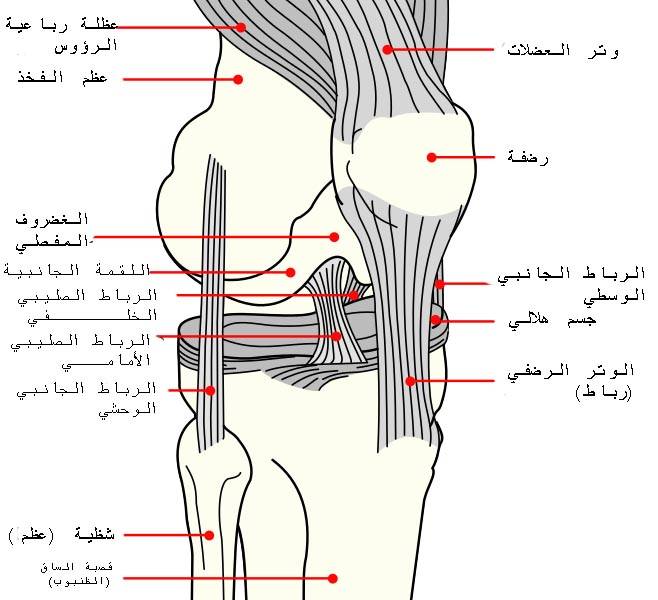
Image Credits: Wikimedia Commons
Why running feels fine
Running looks high-impact, but the knee never bends deeply at the moment of peak load. At foot strike, the knee is only modestly flexed, and the joint moves through a relatively small range while forces pass through. The kneecap never gets pressed into the femur the way a deep squat presses it.
Running also spreads the work across the hips, calves, and Achilles tendon. The stride is elastic.
Much of the shock is absorbed below the knee. Squatting is the opposite: a slow, grinding bend that parks maximum quad tension right at maximum knee flexion.
This explains the classic pattern of patellofemoral pain. Clinicians describe it as pain with stairs, deep squats, lunges, and prolonged sitting with bent knees, often with running tolerated early on.
If your knee aches going downstairs and sitting through a movie, but handles an easy jog, the kneecap joint is the prime suspect. That pattern has a name, patellofemoral pain syndrome, but only a professional can confirm it.
Image Credits: Wikimedia Commons
Common causes of squat-only knee pain
Weak or imbalanced quads top the list. The inner quad muscle, the vastus medialis, helps track the kneecap in its groove.
When it is weak relative to the outer quad, the kneecap can drift slightly off track under load. Deep flexion magnifies small tracking errors into real irritation.
Tight or overworked surrounding tissue contributes. A tight IT band or tight quads and hip flexors can alter how the kneecap glides. Limited ankle mobility forces the knees further forward to reach depth, which increases the bend angle and the force behind it.
Form and loading mistakes are common. Dropping too deep too fast, bouncing out of the bottom, adding weight before the pattern is solid, or squatting through sharp pain all raise stress on irritated tissue. Knees caving inward under load is another classic aggravator.
Sometimes the cause is simply too much, too soon. A new squat program, heavier loads, or higher frequency can irritate the joint before the tissues adapt. The running feels fine because the running load did not change.
How to fix it
Reduce the depth first. Squat to a box or bench that stops you above the painful range.
As symptoms calm down, lower the box gradually. Since joint stress climbs steeply with depth, shaving off the bottom 15 degrees often removes most of the aggravation.
Lighten the load and slow the tempo. Tempo squats with a three-second descent build strength through the range without the peak forces of heavy or bouncy reps. Goblet squats and split squats let you train the legs hard while controlling depth precisely.
Strengthen the muscles that protect the kneecap. Step-ups, terminal knee extensions, and hip abductor work address the quad balance and hip control that keep the patella tracking well. Calf and ankle mobility drills help if stiff ankles push your knees forward.
Check the basics around training. Warm up with five to ten minutes of easy cardio and leg swings.
Avoid sitting with deeply bent knees for hours right after irritating the joint. Ice or a cold pack for 15 minutes after training can calm a flare, though it does not fix the cause.
Track what changes the pain. Note the depth, load, and variation that hurts, and the ones that do not. That log is genuinely useful if you end up seeing a physiotherapist.
When to see a professional
Some signs mean self-management is not enough. See a doctor or physiotherapist if the knee swells, locks, catches, or gives way. The same applies if pain persists beyond two to three weeks despite reducing depth and load, or if it starts hurting during running and daily walking too.
Sharp pain, pain after a twist or impact, or an inability to bear weight deserves prompt evaluation rather than a wait-and-see approach. Night pain that wakes you is another reason to get checked.
A professional can assess tracking, strength imbalances, and movement patterns in ways an article cannot. Imaging is sometimes warranted, but many cases are managed with targeted rehab once the pattern is identified.
Frequently asked questions
Is it normal for knees to ache a little when squatting?
Mild muscle fatigue around the knee is normal. Aching behind or around the kneecap that repeats every session is not. Treat repeatable pain as a signal to adjust depth, load, or form.
Should I stop squatting if my knees hurt?
Stop the variation and depth that causes sharp or worsening pain. You can usually keep training with a reduced range, lighter load, or a different squat variation while the irritation settles.
Does knee pain when squatting mean arthritis?
Not necessarily. In younger active people, squat-only knee pain is more often a tracking or overload issue. Arthritis tends to bring stiffness, swelling, and pain across more activities. Only a clinician can sort this out.
Why do my knees hurt going downstairs but not upstairs?
Descending stairs loads the knee in deep flexion with eccentric quad control, similar to a squat. Climbing keeps the bend shallower at peak effort. It is the same depth-force relationship at work.
Outlook
Knees that hurt when squatting but not running are usually telling you about force, not damage. Deep flexion multiplies the pressure behind the kneecap, while running keeps the joint in a friendlier range.
Reduce depth, lighten load, strengthen the supporting muscles, and rebuild the range gradually. Most cases of this pattern respond well to that approach.
It is a good idea to see a physiotherapist or sports medicine doctor if pain persists beyond a few weeks, if swelling or locking appears, or if the pain spreads to running and everyday walking. This article explains the mechanics behind a common pattern. It is general information, not medical advice, and it does not replace an evaluation of your knee.
---
About the author: Rive News is the research desk behind these explainers, covering practical questions with verified facts and named sources.
Related stories
- How Many Liters Backpack for a 2-Week Carry-On Trip
- Why Does Bread Go Stale Faster in the Refrigerator?
- When Do Babies Start Sleeping Through the Night by Month?
- Why Does My Dog Stare at Me While I Eat?
Subscribe for one practical explainer like this in your inbox every morning.
Rive News follows a corrections policy: factual errors are fixed promptly and noted with an update timestamp.
Related stories

How long does it really take to build noticeable muscle?
Strength gains start in week one, but visible muscle takes 8-12 weeks for most beginners. What the Oklahoma CT-scan study measured,

Why you feel dizzy after a workout: the 5 common causes
Post-workout dizziness usually comes from a blood pressure dip, dehydration, or low blood sugar. The numbers behind each cause, and when
Muscle Soreness vs Injury: How to Tell DOMS From Real Damage
DOMS is a dull ache peaking about 48 hours after exercise, fading within a week. A strain is sharp, sudden, and often swollen. How to tell