
Muscle Soreness vs Injury: How to Tell DOMS From Real Damage
Key takeaways
- DOMS is a dull, diffuse ache that starts 12 to 24 hours after unfamiliar exercise, peaks around day two, and fades within a week.
- A muscle strain announces itself during the workout with sharp, localized pain, possible swelling or bruising, and reduced function.
- Pain that arrives with a distinct pull or pop, worsens over days, or limits normal movement deserves a professional assessment.
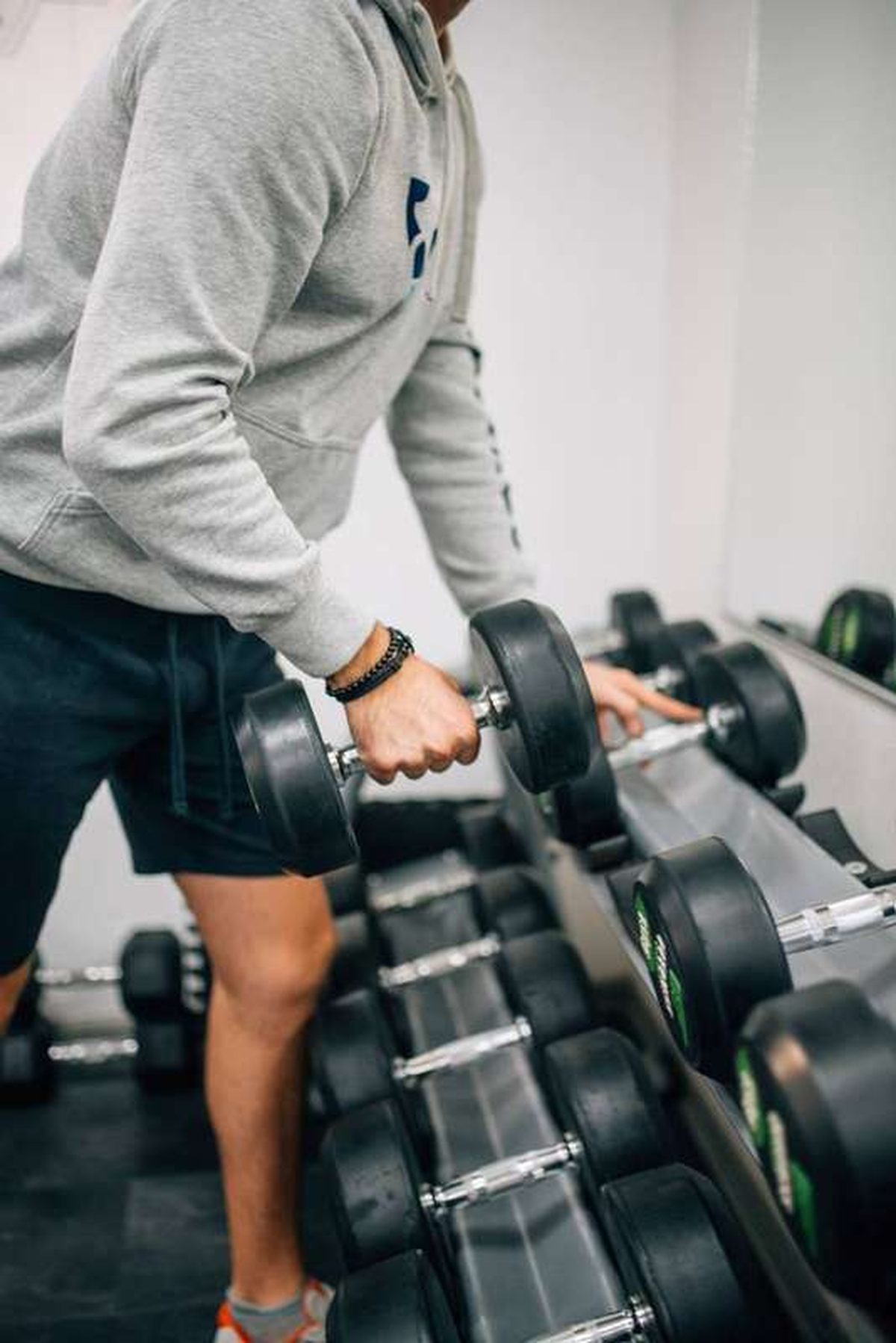
Two days after a hard workout, your thighs burn on every staircase. Is that your body getting stronger, or is something actually wrong?
This question confuses beginners and experienced lifters alike, because delayed-onset muscle soreness and a real muscle strain can both make you wince. But they are different problems with different timelines, different feelings, and very different risks if you mix them up.
DOMS, short for delayed onset muscle soreness, is the familiar ache that arrives a day or two after new or intense exercise. A muscle strain is damage to the muscle fibers themselves, from a mild overstretch to a partial tear. This article explains what DOMS is, what a strain feels like, how to tell the two apart, and what to do about each.
What DOMS is
DOMS is not caused by lactic acid, despite the old gym myth. It comes from tiny damage to muscle fibers, especially after eccentric contractions, where the muscle lengthens under tension (think lowering into a squat, or the down phase of a biceps curl). That small damage starts a short swelling response as the body repairs and builds the tissue back stronger.
The timeline is the most reliable clue. DOMS typically begins 12 to 24 hours after exercise and peaks between 24 and 72 hours. The feeling is a general, dull ache and stiffness across the whole worked muscle group, often with tenderness when you press on it.
It eases somewhat with gentle movement and warm-ups, and it reliably gets better day by day after the peak. Most cases clear up within five to seven days, leaving the muscles stronger than before.
DOMS is also fair about symmetry: if both legs did the workout, both legs usually ache. And it lives in the muscle belly, the thick middle of the muscle. Soreness centered on a joint, a knee, a shoulder, a spine, is never DOMS; that is a separate question worth taking seriously.
What a muscle strain feels like
A strain tells a different story from the first moment. Where DOMS creeps in hours later, a strain usually announces itself during the activity: a sudden sharp pain, a pull, a pop, sometimes a distinct grabbing feeling in the muscle. The pain sits in one exact spot rather than spread across the muscle group.
Visible signs are the other giveaway. A strained muscle may swell, and bruising can appear over several hours as hurt blood vessels leak under the skin.
The hurt muscle works worse: less strength, a limp, or trouble doing movements that were easy yesterday. Strains take anywhere from several days to several weeks to heal, far longer than DOMS.
Tendon pain is a third category people often confuse with both. It sits near the spots where muscle meets joint, most commonly the Achilles, the elbows, or the front of the knee, and it usually comes from repeated overuse over weeks rather than one session. A useful quirk: tendon pain is often worst first thing in the morning or when starting exercise, then gets better once warmed up.

How to tell the difference
Run through this comparison when you are unsure which one you have.
Timing separates them most cleanly. DOMS arrives 12 to 24 hours after the workout and builds gradually. A strain hits during or right after the activity with a clear moment you can point to.
Type of pain comes next. DOMS is a dull, spread-out ache and stiffness across the muscle. A strain is sharp, stabbing, or pinned to one spot.
Symmetry helps too. DOMS usually affects both sides if both sides worked. A strain is typically one-sided.
Response to movement is telling. DOMS eases somewhat as you warm up and move gently. A strain gets worse with use and may cause limping or guarding.
Visible signs close the case. DOMS brings mild swelling at most, and no bruising. A strain can bring clear swelling, bruising, or even a visible defect in the muscle.
Two patterns deserve quick attention no matter what else. Pain that arrived during the workout with a clear pull or pop is not DOMS, whatever it feels like afterward.
And the timeline works in reverse too: DOMS reliably improves day by day after its peak. Anything moving the other way has earned a professional opinion.
What to do about each
For DOMS, the playbook is patience plus gentle movement. Light activity, walking, easy cycling, or the same exercises at very low effort improves blood flow and usually reduces stiffness.
Massage, foam rolling, and good sleep and protein support the repair process. Stretching may improve comfort, but it does not reliably prevent DOMS; slowly raising training load is the real prevention.
Do not train the sore muscle group hard again until the soreness has eased a lot. That said, DOMS is not a badge of a good workout either. You can have an excellent training session with no soreness at all, especially once your body has adjusted to the movements.
For a suspected strain, stop the activity and do not try to push through it. Rest the muscle, and if there is swelling, the standard early approach is rest, ice, compression, and elevation in the first day or two.
See a clinician promptly if there is clear swelling or bruising, a visible deformity, an inability to bear weight or use the limb, or pain that is not clearly improving within a few days. As the physiotherapists at MoveStrong Clinic advise, sudden pain during exercise, swelling, bruising, or pain that does not improve after a few days all warrant a proper assessment.
How long does DOMS last?
It usually begins 12 to 24 hours after exercise, peaks around 24 to 72 hours, and fades within five to seven days. Anything still getting worse after a week is unlikely to be ordinary DOMS.
Can you work out with DOMS?
Light, gentle activity is usually fine and often helps stiffness. Avoid another hard session for the same muscle group until the soreness has eased a lot, and stop if movement causes sharp pain or clear weakness.
Is DOMS a sign of a good workout?
Not necessarily. DOMS reflects unfamiliar stress on the muscle, not workout quality. Well-trained lifters routinely train hard with no soreness at all, and chasing soreness as a goal is a fast track to overtraining.
When should muscle soreness worry you?
Seek prompt medical care for severe weakness, major swelling, dark or cola-colored urine, or rapidly worsening symptoms. Those point to serious muscle injury or breakdown, not ordinary soreness.
Outlook
For most exercisers, the ache after a hard session is DOMS: uncomfortable, harmless, and gone within a week, with stronger muscle left behind. The skill is in spotting when the pattern breaks.
Sudden pain with a clear moment, sharp localized pain, swelling, bruising, joint-centered pain, or soreness that gets worse instead of fading are all signals to stop guessing. This article is general information, not medical advice: if pain persists, limits your normal movement, or worries you for any reason, it is a good idea to see a doctor or physiotherapist for an assessment.
Rive News is the research desk behind this publication's explainers, covering the science of everyday life.
Get one science explainer like this in your inbox every morning. Subscribe to the newsletter.
Related stories

How long does it really take to build noticeable muscle?
Strength gains start in week one, but visible muscle takes 8-12 weeks for most beginners. What the Oklahoma CT-scan study measured,

Why you feel dizzy after a workout: the 5 common causes
Post-workout dizziness usually comes from a blood pressure dip, dehydration, or low blood sugar. The numbers behind each cause, and when

Why Do Knees Hurt When Squatting but Not Running?
Knees hurt when squatting but not running because deep bends multiply force on the kneecap. Learn the mechanics, common causes, fixes,