
Why does my car pull to one side when braking?
Key takeaways
- A car that pulls only when braking has a brake force imbalance: one side of an axle grips harder than the other, and the car steers toward the stronger side.
- The most common culprits are a sticking brake caliper and a collapsed brake hose that traps hydraulic pressure in the caliper.
- The harder you brake, the harder it pulls, so get it diagnosed within the week and avoid highway driving until it is fixed.
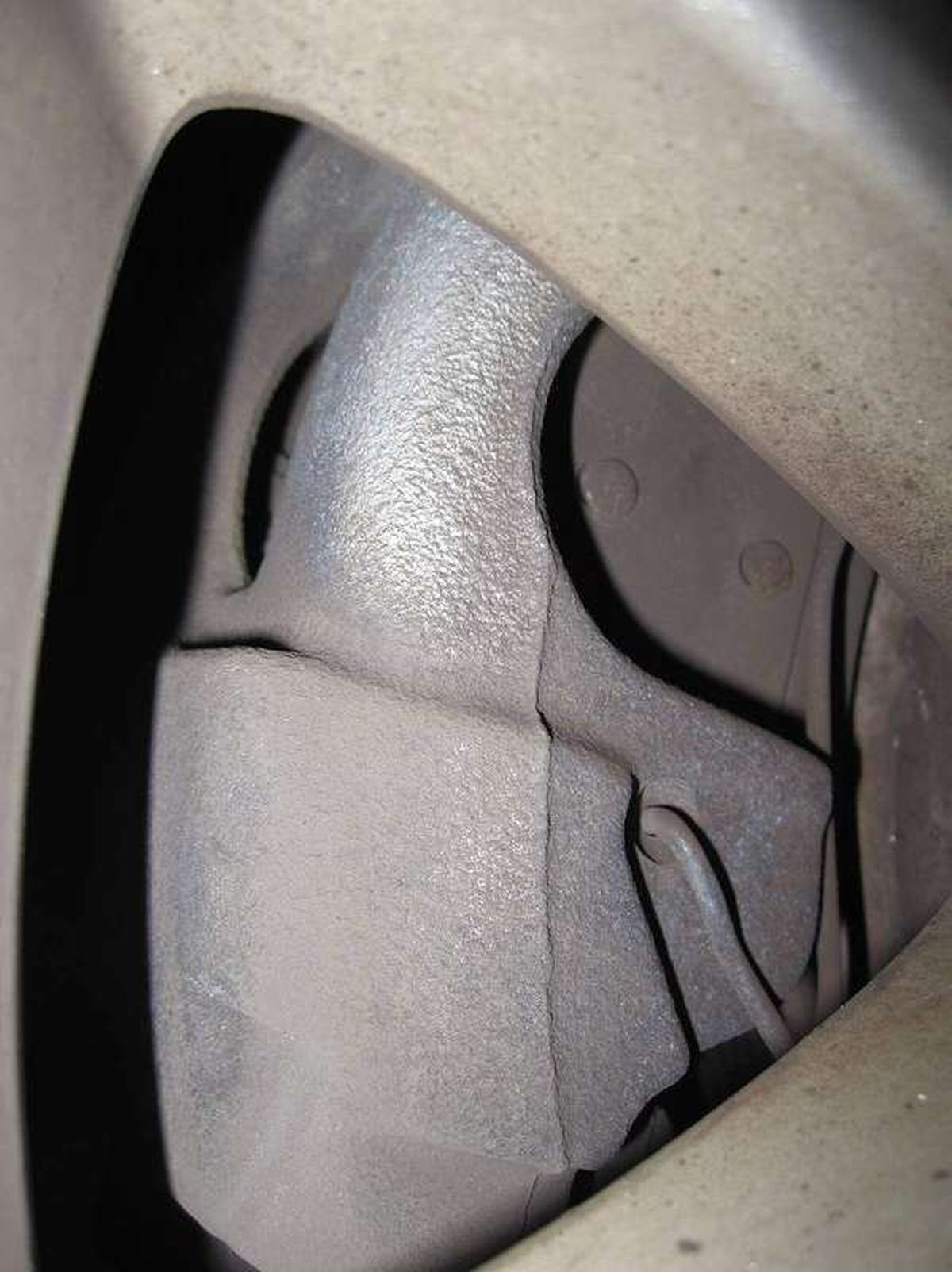
A disc brake caliper on a car wheel. When a caliper sticks or a hose collapses, this corner can grip harder than the other side and yank the car sideways. Photograph: Pava/Wikimedia Commons
Image Credits: Wikimedia Commons
A car that tracks straight and then veers left or right the moment you touch the brake pedal is telling you something specific. This is not a wheel alignment problem. Alignment issues pull while you are driving; a pull that appears only under braking is almost always a brake imbalance, one side of an axle generating more or less stopping force than the other.
The mechanism is simple once you see it. Braking force on each wheel should be roughly equal. When one corner grabs harder, that wheel slows more than its partner, and the car rotates toward the stronger side.
The imbalance scales with pedal pressure, which is why a mild drift in town becomes a sharp veer in an emergency stop.
This article explains why a car pulls to one side when braking, including the most common brake causes, the non-brake causes worth checking, how to tell which side is at fault, and what the fix involves. Note: brakes are safety-critical. Use this to understand the problem, then have a qualified mechanic diagnose and repair it.
What is happening when your car pulls
Your brake system splits hydraulic pressure between the wheels so each one slows at the same rate. A brake pull means that balance is broken on one axle.
As the brake specialists at Direct Brakes explain, the car pulls toward the side with more braking force, which is the side doing more than its share of the stopping.
Two failure modes produce this. In one, a caliper on one side is not applying fully, so the opposite side does all the work and the car pulls toward the working side. In the other, a caliper is not releasing, so one corner drags constantly and the car pulls toward the dragging side every time you brake.
Either way, the pull gets worse the harder you brake, because the force difference grows with pedal pressure. That scaling is the signature of a brake imbalance and the reason it is dangerous: the situation where you need maximum straight-line stopping is exactly where the pull is strongest.
The most common brake causes
A sticking or seized brake caliper tops every mechanic's list. The caliper is the clamp that squeezes the pads against the rotor, and it has to both apply and release cleanly. Corrosion on the slide pins, a stuck piston, or torn dust boots letting in dirt and water can jam it in either position, according to Jalopnik's brake guide.
A collapsed brake hose is the sneaky one. The flexible hose feeding the caliper can deteriorate internally and act like a one-way valve: fluid goes in under pedal pressure but cannot fully return when you release.
The brake stays partially applied, and as Direct Brakes notes, the hose looks normal from the outside with no cracks or leaks, so this one is hard to spot without testing the hydraulic circuit.
Contaminated brake pads reduce friction on one side only. Oil, grease, or brake fluid on a pad's friction surface means that corner grips less, and the car pulls toward the clean side. Uneven pad wear from any mechanical issue produces the same imbalance.
Old or contaminated brake fluid rounds out the list. Moisture in the fluid lowers its boiling point and can cause uneven pressure behavior, which is one reason fluid has a replacement interval.
If your engine oil change interval is the maintenance you actually track, add brake fluid to the same mental checklist.
Non-brake causes worth checking
Not every braking pull is in the caliper. Uneven tire pressure or significantly different tread wear between the two sides changes how each tire grips, and mechanics answering on Gumtree's Q&A flag this as a real contributor. A tire that is low or worn differently alters the braking torque at that corner.
Worn suspension parts also let wheels move under load. Worn bushings can misalign a wheel when braking forces hit, and loose tie rod ends or incorrect toe settings change how the car tracks during a stop. If the pull is inconsistent or the car also wanders while cruising, the suspension deserves a look alongside the brakes.
These secondary causes are worth knowing because they explain the "we replaced the caliper and it still pulls" stories. A good diagnosis checks tires and suspension before declaring the brake job done.
How to tell which side is at fault
You can narrow it down without tools, using heat. After a normal drive, the affected wheel often runs noticeably hotter than the others, because a dragging brake turns motion into heat.
Direct Brakes describes the check: hold your hand near the wheel without touching it and feel for the difference. A clear temperature gap points at the hot corner.
Your nose helps too. A burning smell from one wheel after driving suggests a brake that is not releasing. So does a slight drag you can feel when coasting, or one side's pads wearing visibly faster than the other's.
What you cannot do at home is confirm a collapsed hose, which hides inside a normal-looking rubber line. That diagnosis needs a mechanic to test the hydraulic circuit at the wheel. If the heat test points at a corner but everything looks fine, the hose is the prime suspect.
Note the related symptom to rule out: if the car shakes under braking rather than pulling, that is a different problem. Our explainer on why a car shakes when braking at high speed covers that one.
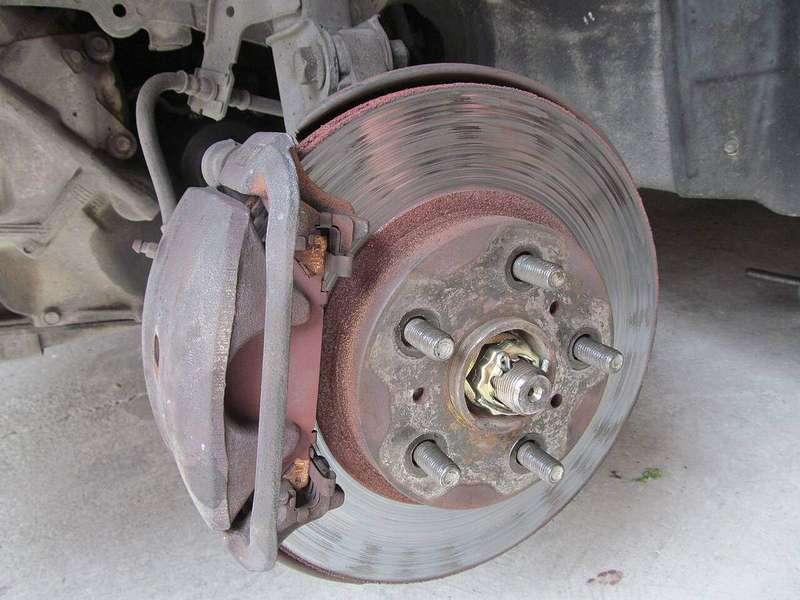
A car disc brake showing a rusty, worn rotor and caliper. Corrosion like this is one of the main reasons calipers stick. Photograph: Riley from Christchurch, New Zealand/Wikimedia Commons
Image Credits: Wikimedia Commons
Is it safe to drive?
Treat this as a safety repair, not a comfort issue. Direct Brakes is direct about it: a mild pull in normal driving becomes a sharp veer under hard emergency braking, because the imbalance is proportional to braking force.
The car will not fix itself, and the failing component only degrades further.
Their guidance is practical: avoid highway driving and following closely behind other cars until it is repaired, and get it looked at within the week. An emergency stop at highway speed is the worst possible moment to discover how hard your car pulls.
Ignoring it also spreads the damage. A dragging caliper overheats the rotor, cooks the pads, and can boil the brake fluid, which Jalopnik notes leads to noticeably reduced braking performance. What starts as one stuck component can take out the pads, rotor, and fluid on that corner.
What the fix looks like
The repair depends on the cause, and a mechanic will usually service components in axle pairs to keep braking balanced. Cleaning and lubricating seized caliper slide pins is the cheapest fix; a full caliper replacement runs more. A collapsed hose means replacing the hose on the affected corner.
Contaminated pads mean new pads, and usually a new or resurfaced rotor on that axle, since the contamination transfers to the rotor surface. If uneven wear has damaged one side, the fix is the pad-plus-root-cause combination, not pads alone.
Catching it early matters financially as well as for safety. Direct Brakes points out that an early diagnosis usually means fixing the less expensive root cause before it destroys additional components. The heat test costs nothing; a full corner rebuild costs real money.
After any brake work, the system needs a proper bleed to remove air from the lines. Air in the hydraulics creates a spongy pedal and its own kind of imbalance, so a careful mechanic finishes with fresh fluid and a firm pedal.
Keep tire pressures even afterward too, since pressure differences can mimic a mild pull.
Frequently asked questions
Why does my car only pull when I brake, not while driving?
Because the imbalance is in the braking system, not the alignment. Alignment problems pull constantly while cruising. A pull that appears only with the pedal down means the two sides of an axle are generating unequal braking force.
Can a sticking caliper fix itself?
No. Corrosion, a jammed piston, or a collapsed hose only gets worse with heat cycles and time. The brake specialists at Direct Brakes emphasize this is a safety repair that does not resolve on its own.
Which side is bad if my car pulls left when braking?
Usually the side it pulls toward is doing more braking, either because the opposite caliper is weak or because that side's caliper is dragging. The heat test confirms it: the faulty corner typically runs hotter after a drive.
How much does it cost to fix brake pull?
It depends on the cause. Servicing caliper pins is the cheapest fix; caliper or hose replacement costs more per corner; contaminated pads plus rotor work runs highest. Early diagnosis keeps it at the cheaper end by catching the root cause before it damages neighboring parts.
The bottom line
A braking pull is a force imbalance, and the car always steers toward the stronger side. Sticking calipers and collapsed hoses cause most cases; tires and suspension cause the rest. The heat test tells you which corner to suspect.
Get it diagnosed within the week, avoid hard highway braking until then, and let a qualified mechanic do the repair. Brakes are the one system where guessing is never worth it.
Rive News is the research desk behind the Rive News production run, writing practical explainers across gardening, careers, education, and more.
Latest in auto
- Why brake rotors warp, or do they actually
- Why your car shakes when braking at high speed
- Why tire pressure drops in cold weather
Get one practical explainer in your inbox every morning. Subscribe to the Rive News newsletter.
Corrections: spotted an error in this article? Email the research desk and we will verify and fix it promptly.
Related stories

Why Does Tire Pressure Drop in Cold Weather?
Cold weather can cut tire pressure by 1 psi for every 10°F drop, thanks to the ideal gas law. Here is what happens inside the tire and what

Why Do Brake Rotors Warp, or Do They Actually?
Mechanics rarely see a truly warped rotor. The shudder usually comes from uneven pad deposits a few thousandths of an inch thick. Here

How to Buy a Used Car Without Getting Scammed: The Checklist
Over 450,000 cars a year have rolled-back odometers, NHTSA says. This checklist covers VIN checks, title washing, and the inspection that