
Why Does My Car Shake When Braking at High Speed?
Key takeaways
- The shaking is almost always caused by disc thickness variation (DTV), not by rotors that have warped from heat.
- DTV comes from brake pad material deposited unevenly on the rotor surface, often after hard braking without a proper pad break-in.
- Brake shake is a safety issue. Get a professional inspection rather than diagnosing it yourself.
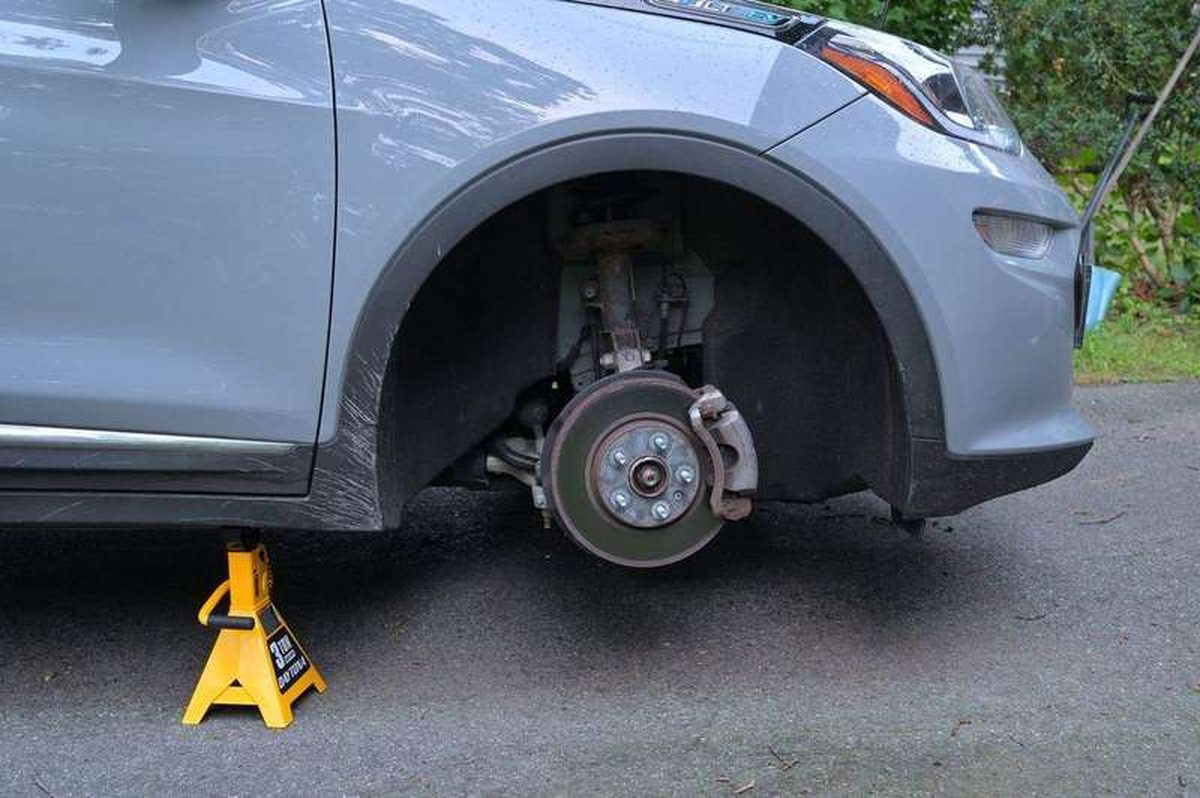
A front disc brake assembly. When the rotor surface is not perfectly uniform, braking at speed produces a shudder. Photograph: 4300streetcar/Wikimedia Commons
Image Credits: Wikimedia Commons
You press the brake pedal at highway speed and the steering wheel starts shaking in your hands. Sometimes the pedal pulses under your foot too. The usual diagnosis from the shop is "warped rotors," and the usual fix is to resurface or replace them.
Here is the uncomfortable part: in most cases, the rotors were never warped at all. Brake engineers have been saying this for decades, and the real cause has a different name and a different fix.
This article explains why cars shake when braking at high speed, including the warped-rotor myth, what disc thickness variation actually is, how uneven pad deposits form, other possible causes, and what to do about it.
The warped-rotor myth
The story sounds reasonable. Braking generates heat, heat warps metal, and a warped rotor wobbles against the pads. But the physics do not support it for normal street cars.
Carroll Smith was one of the lead engineers on the original Ford GT40 program at Le Mans and later worked with the Ferrari F1 team. In a widely cited article, he wrote that in more than 40 years of professional racing, including what he called one of the most intense brake development programs in history, he had never seen a warped brake disc. He reported seeing cracked discs and discs with uneven pad material deposited on them, but never a disc that had actually warped.
His conclusion: every case of "warped brake disc" he investigated, on racing cars and street cars alike, turned out to be friction pad material transferred unevenly to the surface of the disc. That uneven deposition creates thickness variation, which produces the vibration drivers blame on warping.
Brake parts manufacturer Raybestos agrees. In its 2018 technical bulletin on pedal pulsation, the company states that a diagnosis of warped rotor is wrong, and that rotors rarely, if ever, warp. The bulletin identifies the cause as disc thickness variation, almost always resulting from excessive lateral runout.
What disc thickness variation actually is
Disc thickness variation, usually shortened to DTV, means the rotor is not the same thickness all the way around. Some spots on the friction surface are a tiny bit thicker than others, sometimes because of uneven pad material stuck to the surface and sometimes because of uneven wear.
As the rotor spins, the brake pads ride over these thick and thin spots. The thicker sections push the caliper piston back into the caliper, and the thinner sections let it come forward. That rapid in-and-out movement changes the brake fluid pressure, and you feel it as a pulsing pedal or a shaking steering wheel.
The tolerances involved are tiny. Raybestos notes that most vehicles specify lateral runout, the side-to-side wobble of the rotor as it turns, of two thousandths of an inch or less. Variation that small is invisible to the eye but very noticeable at 70 miles per hour.
DTV tends to get worse as the brakes heat up. Extended braking makes the uneven spots grip differently than the rest of the rotor, which amplifies the pulsation. That is why the shake often feels worst on long downhill stretches or after repeated hard stops.
How uneven pad deposits form
Modern brake pads work partly by leaving a thin, even film of friction material on the rotor. When that film goes down evenly, braking is smooth. When it goes down in patches, you get DTV.
The usual trigger is heat. When pads are pushed past their temperature limit, for example during a hard stop from high speed or repeated aggressive braking, pad material can transfer to the rotor in uneven blobs instead of a smooth layer. Sitting still with hot brakes clamped on the rotor can leave one heavy deposit right where the pads were parked.
Skipping the break-in makes it worse. New pads need a bedding-in procedure, a series of moderate stops that lays down an even transfer layer.
MotorTrend's brake coverage warns that failing to bed in pads after installation can quickly lead to uneven pad-material transfer and the start of vibration problems. Always follow the pad manufacturer's break-in instructions.
Worn wheel bearings can start the cycle too. Excess play in a bearing lets the rotor wobble slightly, which wears some spots more than others and begins the DTV spiral.
Other possible causes worth ruling out
DTV is the most common cause, but a shake under braking can come from other parts of the car. A competent inspection should check for these.
Worn suspension components, such as bushings or ball joints, let the wheel move under braking loads and can produce a similar shudder. Warped or damaged wheels and tires with uneven wear can vibrate too, though those usually shake while driving, not only under braking.
Sticking calipers are another suspect. A caliper that does not release fully drags the pad on the rotor, overheating one spot and creating the very deposits that cause DTV. If the shake appeared after a brake job, improper installation or missing hardware is worth a look.
If the steering wheel shakes at speed without touching the brakes, the problem is balance or alignment, not the rotors. The brake-specific clue is vibration that appears or worsens only when you press the pedal.
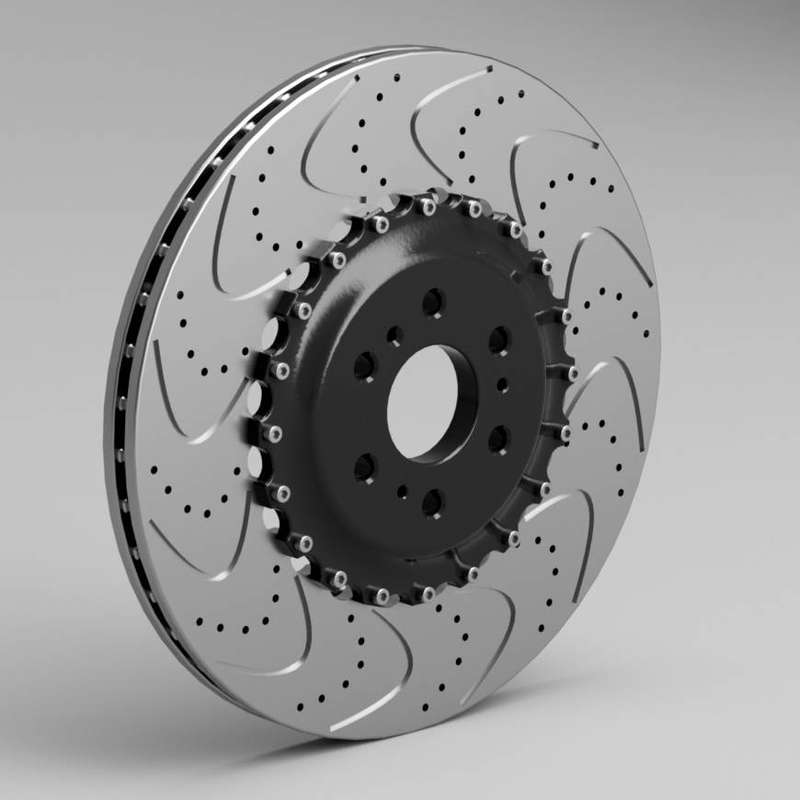
A ventilated brake rotor. Rotor design helps manage heat, but no design is immune to uneven pad deposits. Photograph: Atharv Chandel/Wikimedia Commons
Image Credits: Wikimedia Commons
What to do about it
First, do not ignore it. A shaking car under braking is a safety issue, and DTV reduces the pad's contact with the rotor, which can lengthen stopping distances. Book a professional inspection.
A mechanic can measure runout and thickness variation with a dial indicator and a micrometer. If the rotors are above the minimum thickness stamped on the rotor, machining (resurfacing) can remove the uneven layer and the deposits. If they are below minimum, replacement is the only safe option.
Sometimes a re-bedding procedure can clear up mild deposits. This involves a series of controlled hard stops to lay down a fresh, even transfer layer. It is not a do-it-yourself project for most drivers, since it requires an empty road and precise technique, so ask your shop whether it is appropriate.
Prevention matters after the fix. Break in new pads properly, avoid sitting with your foot hard on the brake right after a hot stop, and keep up with wheel bearing and suspension maintenance. Cheap pads run at lower temperature limits, so use pads rated for your driving.
Frequently asked questions
Can brake rotors really warp?
Almost never on street cars. Carroll Smith reported never seeing a warped disc in 40-plus years of professional racing. What feels like warping is disc thickness variation from uneven pad deposits or uneven wear.
Why does the shaking only happen at high speed?
DTV is speed-sensitive because the pads hit the thick and thin spots more times per second as the wheel spins faster. At low speed the same variation exists but is too slow to feel.
Will resurfacing the rotors fix the shake?
It can, if the rotors are still above minimum thickness and the underlying cause is addressed. But if the pads are not bedded in correctly afterward, or a sticking caliper or worn bearing caused the deposits, the shake will come back.
Is it safe to drive with brake vibration?
No. Reduced pad contact can increase stopping distances, and vibration can mask or worsen other brake problems. Have the brakes inspected by a professional as soon as you notice pulsing or shaking.
The bottom line
Your car shakes when braking at high speed because of disc thickness variation, not warped rotors. Uneven pad deposits create thick and thin spots on the rotor, and at highway speed those spots punch back through the pedal and steering wheel.
It's a good idea to have any brake vibration checked by a qualified mechanic promptly. Brakes are the one system where a wrong guess can cost more than money, so let a professional measure the rotors and find the real cause.
Topics: brakes, car maintenance, brake rotors, disc thickness variation, auto safety
Rive News's research desk covers practical how-to topics with sourced, verifiable information.
Latest in Auto
- Why Do Brake Rotors Warp, or Do They Actually?
- How Often Should You Really Change Engine Oil? The 3,000-Mile Myth
Subscribe to the Rive News newsletter for weekly practical guides.
Sources:
- MotorTrend (motortrend.com)
- Ricks Free Auto Repair Advice (ricksfreeautorepairadvice.com)
- Raybestos Bulletin 18-17 via Brake Parts Inc (brakepartsinc.com)
Safety note: brake problems affect vehicle safety. This article is for information only and is not a substitute for professional inspection and repair.
Corrections: we correct errors promptly. Contact the newsroom with documentation.
Copyright 2026 Rive News. All rights reserved.
Related stories

Why Does Tire Pressure Drop in Cold Weather?
Cold weather can cut tire pressure by 1 psi for every 10°F drop, thanks to the ideal gas law. Here is what happens inside the tire and what

Why Do Brake Rotors Warp, or Do They Actually?
Mechanics rarely see a truly warped rotor. The shudder usually comes from uneven pad deposits a few thousandths of an inch thick. Here

How to Buy a Used Car Without Getting Scammed: The Checklist
Over 450,000 cars a year have rolled-back odometers, NHTSA says. This checklist covers VIN checks, title washing, and the inspection that