
How recruiters find candidates who never applied for jobs
By Rive News / Research desk | Rive News / Published October 29, 2026 at 9:00 AM PKT
Key takeaways
- About 70 percent of the global workforce counts as passive candidates: employed, not applying, but open to the right approach, according to LinkedIn research cited by SignalHire.
- Recruiters find these people through database searches, skills matching, referrals, talent pools, and professional footprints such as open-source work and publications.
- A findable profile uses the standard job title, lists concrete skills and achievements, and stays visible in the industry, so searches surface it before any application exists.

[A professional taking notes during a meeting at a modern office desk.] Photograph: Shixart1985
Image Credits: Wikimedia Commons
Most hires never start with an application. The person a recruiter wants is often already employed, doing good work, and not looking at job boards at all. Recruiters have built an entire practice around finding those people first, and understanding it changes how a job search works.
This article explains how recruiters find candidates who never applied, including the size of the passive workforce, where recruiters actually search, how Boolean and skills-based searching works, the role of referrals and talent pools, and what makes a profile findable.
The passive majority
The core fact of modern recruiting is that applicants are the minority of the talent pool. LinkedIn research cited by SignalHire puts passive candidates at 70 percent of the global workforce, leaving 30 percent reachable through job postings. A company that only hires from applicants is fishing in less than a third of the market.
That same SignalHire summary cites another LinkedIn finding: 83 percent of recruiting professionals believe that within five years, the ability to engage passive candidates will be the number one skill a recruiter needs. The shift is already visible in practice. Technology sales professional Ketan Kansara told Best Business Review Worldwide that he was 37 when an external recruiter working for IBM first contacted him on LinkedIn, asking about his experience and how it might fit the company's needs.
He recognised immediately that the approach was not accidental: he had deliberately built a visible professional profile that made his skills and achievements easy to identify.
The volume of applications for advertised roles has pushed in the same direction. With applications per job advertisement at record levels, employers increasingly look beyond the formal CV pile for people who already demonstrate relevant experience, industry knowledge, or professional presence online. The application pile has not disappeared, but for many roles it is no longer the first place a recruiter looks.
Passive does not mean unwilling. It means not actively applying. Most passive candidates will take a conversation about the right role, especially one that offers better pay, a stronger team, or work they find more interesting.
Recruiters know this, which is why outreach to employed people is routine rather than rude, and why a polite decline still leaves a useful connection for later.
Where recruiters actually search
LinkedIn Recruiter is the main tool, but it is not the only one. Recruiters run searches inside LinkedIn's database, then extend the search to other professional footprints: GitHub and Stack Overflow for engineers, published papers and patents for researchers, portfolios for designers, and conference speaker lists for specialists. One 2026 sourcing platform, Pin, advertises searches across 850 million profiles drawn from professional networks, GitHub, Stack Overflow, open-source contributions, patents, academic publications, and the broader web.
An analysis of sourcing strategy warns that a LinkedIn-only approach misses a large share of strong candidates. Passive candidates are more likely to show up through industry-specific communities, technical publications or research work, open-source contributions, conferences, and closed professional circles than through polished public profiles. They also often have outdated LinkedIn profiles, since people who are not job hunting rarely update them, which means outreach based only on LinkedIn can rest on wrong titles or stale locations.
Recruiters compensate with breadth and verification. They cross-check profiles against other public signals, such as recent talks, commits, articles, or company pages, before reaching out. The goal is not a longer list of names but a more accurate one: fewer messages to the wrong people, better timing for the right ones.
Search inside LinkedIn itself has its own machinery. Recruiter accounts can filter by title, skill, location, years of experience, company, and education, and a feature called Spotlights helps prioritise who to message first. According to Careerflow's guide to recruiter tools, Spotlights flag candidates who have discreetly marked themselves Open to Work, people who previously applied to the company, people with first-degree connections inside the company, and people who have engaged with the company's talent brand by following its page or viewing its jobs.
A candidate who matches several spotlights at once jumps the queue.
Boolean search and skills matching
The classic sourcing technique is Boolean search: combining job titles, skills, and exclusions into a single query string. A 2026 SitePoint guide to passive sourcing gives a typical example for a data engineering role: ("senior data engineer" OR "staff data engineer" OR "lead data engineer") AND (Snowflake OR BigQuery OR Redshift) AND (dbt OR Airflow) AND (fintech OR payments OR "financial services") NOT (intern OR junior OR consultant OR recruiter). Each operator narrows the pool toward people whose profiles contain exactly the right combination of signals.
Boolean search has a weakness: it depends on exact words. Someone titled "Software Engineer, Data Platform" who has built the same warehouse will not match a search for "senior data engineer" unless the query also covers that title. Modern sourcing tools answer this with skills-based matching, which reads the work described in a profile rather than only the title.
The SitePoint guide notes that skills-based matching stops title mismatches from hiding good people, because it evaluates what a person has done, not only what they are called.
For the candidate, the lesson is practical. Use the standard title for the role you want, not a creative variation, because recruiters search for standard titles. A profile headline that says "Operations Lead" will not surface in a search for "Supply Chain Manager" even if the jobs are identical.
List the tools, systems, and outcomes in plain terms, because those are the keywords searches actually match.
Referrals, talent pools, and past applicants
Not all sourcing is cold search. Referrals remain one of the most trusted channels: an employee recommending a former colleague carries more weight than a keyword match, because the referrer stakes their reputation on the suggestion. Companies formalise this with referral bonuses and internal prompts when a role opens.
Talent pools are the quieter system behind many hires. When a recruiter finds a strong candidate for one role, or speaks to someone who is not ready to move, that person often enters a database for future roles. Months later, when a matching role opens, the recruiter contacts the pool before posting the job publicly.
That is how a person can receive an approach for a role that was never advertised to them: the search happened before the posting, or instead of it.
Past applicants are another pool. LinkedIn Recruiter's Past Applicants spotlight exists because someone who applied once has already shown interest in the company. A recruiter filling a new role will often re-contact strong past applicants before sourcing strangers, since the company's name is already familiar and the earlier conversation gives a starting point.
Internal mobility works the same way inside large companies. Recruiters search internal directories and past interview records for employees or former candidates who fit a new opening. The candidate experience feels like being discovered, but from the recruiter's side it is a database query over people the company already knows.
What makes a profile findable
Findability is mostly about clarity and visibility. Keep the headline in the standard format of target title, key skill, and industry, because LinkedIn ranks the headline higher than almost any other field in recruiter searches. Fill the experience section with concrete achievements and the tools used, not just responsibilities, since searches match on skills and outcomes.
Stay visible in the industry in small, regular ways. Posting about a project lesson, commenting thoughtfully on industry posts, speaking at a meetup, contributing to an open-source project, or publishing a short technical note all create footprints that sourcing tools index. None of this requires becoming an influencer; it requires leaving traces of competence where recruiters look.
Signal availability carefully. LinkedIn's Open to Work setting has a private option visible only to recruiters, which flags you as open without alerting your current employer or your public network. That distinction matters for employed candidates who want to be found without announcing a search.
Updating the profile regularly also matters, because stale profiles get skipped or misread.
Finally, answer recruiter messages, even with a no. A polite reply that explains what would interest you in future keeps you in the recruiter's network for the next role. Recruiters remember responsive, clear candidates, and the next approach often arrives because the first conversation went well.
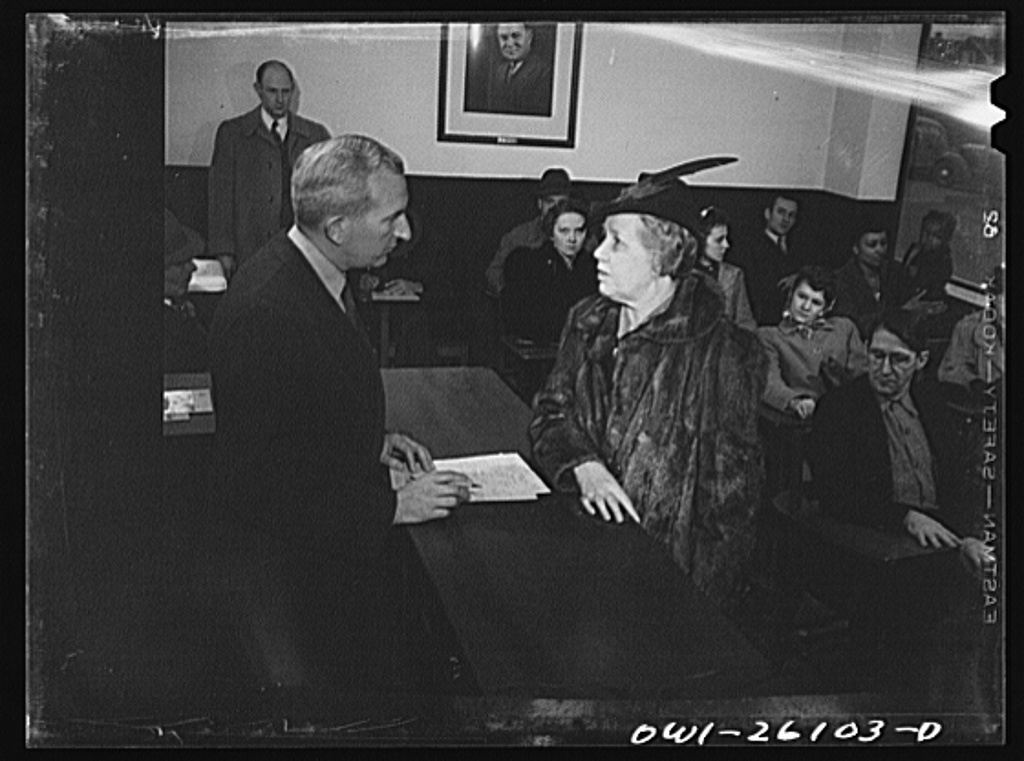
[People waiting to be interviewed at an employment agency.] Photograph: Marjory Collins
Image Credits: Wikimedia Commons
Frequently asked questions
Do I need to be "Open to Work" to be found?
No. Recruiters search the whole database, not only people flagged as open. The Open to Work spotlight helps prioritise you, and its private recruiter-only setting lets you signal availability discreetly, but strong profiles get approached without it.
Do recruiters only use LinkedIn?
No. LinkedIn is the largest single channel, but recruiters also search GitHub, Stack Overflow, publications, patents, portfolios, conference lists, and their own talent pools. A LinkedIn-only strategy misses candidates whose strongest signals live elsewhere.
Can I be contacted while employed?
Yes, routinely. Passive candidates are employed by definition, and recruiters approach them every day. A conversation is not a commitment, and most recruiters expect employed candidates to need a compelling reason to move.
How do I signal availability without alerting my boss?
Use LinkedIn's private Open to Work setting, which is visible to recruiters but not to your public network. Keep your profile updated as a matter of routine rather than in a sudden burst, so changes do not signal a job search.
The bottom line
Recruiters find candidates who never applied because most of the workforce never applies. About 70 percent of workers are passive, and recruiters reach them through database searches, skills matching, referrals, talent pools, and the professional footprints people leave in their industries. The candidates who get found are not necessarily the loudest; they are the clearest.
A standard title, concrete skills, visible work, and a discreet availability signal put a profile in front of recruiters long before any application exists, which is why the best career move is often making yourself findable rather than applying more.
---
Rive News's research desk covers practical gardening, home, and how-things-work explainers, drawing on university extension services and published research.
Related
- How to make your LinkedIn profile attract recruiters
- How to write a LinkedIn headline that gets read
- How recruiters decide who gets a phone screen
- How employee referrals actually get processed at work
Subscribe to Rive News for one practical explainer in your inbox each morning.
Rive News publishes research-desk explainers from public sources. Corrections: contact the desk and cite the article and the fact in question.
Related stories

How to Ask for a Raise With Data, Not Emotions
Ask for a raise with market data and documented results, not emotions. Research your rate from BLS wage tables, build an evidence file, run

How to Explain a Career Gap on Your Resume Honestly
A career gap is not a red flag if you explain it honestly: give a reason, show what you did, and point forward. Recruiters reveal the exact

How to Switch Careers at 30 With No Experience in the Field
A career change at 30 means repackaging a decade of transferable skills, not starting over. Map your skills, earn one certification,