
How recruiters decide who gets a phone screen
By Rive News / Research desk | Rive News / Published October 24, 2026 at 9:00 AM PKT
Key takeaways
- Eye-tracking research found recruiters spend about 7 seconds on the first resume skim, hunting for name, titles, employers, dates, and education.
- The screen is not a full read: it is pattern-matching, and simple layouts with bold titles and clear headers win.
- The six-second number is a design constraint, not a verdict; resumes that survive the skim get a real read.

[Job candidates attend an interview session, the moment the resume's first impression gets tested in person.] Photograph: Ministério dos Assuntos Parlamentares e Comunicação Social
Image Credits: Wikimedia Commons
Recruiters do not read your resume first. They scan it. In a series of eye-tracking studies by the career site Ladders, professional recruiters spent an average of about 6 seconds on the first look at a resume in 2012, and 7.4 seconds when the study was repeated in 2018. The phone screen goes to the candidates who survive that skim.
Those seconds are not random browsing. Recruiters are pattern-matching against the role: does this person look like someone who has done this job before, at a recognizable company, recently enough to matter? This article explains what the research actually found, what recruiters look for in those seconds, and how to structure a resume so the skim works in your favor.
Where the six-second rule comes from
The claim traces to a 2012 eye-tracking study by TheLadders that monitored 30 professional recruiters over a 10-week period as they reviewed resumes. The study found the average initial screen lasted approximately 6 seconds. TheLadders updated the study in 2018 and found the number had increased to 7.4 seconds.
The 2018 release framed the improvement as a sign of a tighter labor market. "Unemployment is at unprecedented lows in the current job market, and the findings of this new study underline the extent to which resume-skimming behaviors impact not only a jobseeker's chances of being noticed, but also a company's ability to spot qualified candidates," said Ladders CEO Marc Cenedella in the company's announcement.
One honest caveat, raised by the industry publication ERE and summarized by ResumeFast: the 2018 report does not say which roles or resume lengths were reviewed, how many recruiters took part, or how experienced they were. It is a company study, not peer-reviewed research. Review time also depends on the role, the industry, and how many applicants there are.
There is also newer data. A 2025 study by InterviewPal, cited by ResumeGeni, measured 4,289 resume reviews from 312 recruiters and found an average initial scan of 11.2 seconds. Recruiters using AI-assisted tools and structured review interfaces spent more time on the first pass because the job context was displayed alongside the resume.
What recruiters actually look at
Across the studies, the scan concentrates on a handful of data points. CareerFlow's analysis of the research lists six: name, current job title, current employer, employment dates, previous job title, and education. These receive roughly 80% of initial scan attention.
That list tells you the decision logic. The recruiter is answering three questions: who is this, what do they do now, and have they done it somewhere I recognize? Everything else on the page is, in the first seconds, decoration.
The eye-tracking heat maps show recruiters following F-pattern and E-pattern reading tendencies. They start at the top, sweep across, then drop down the left margin. Bullets that start with strong verbs on the left edge get read; dense paragraphs in the middle of the page do not.
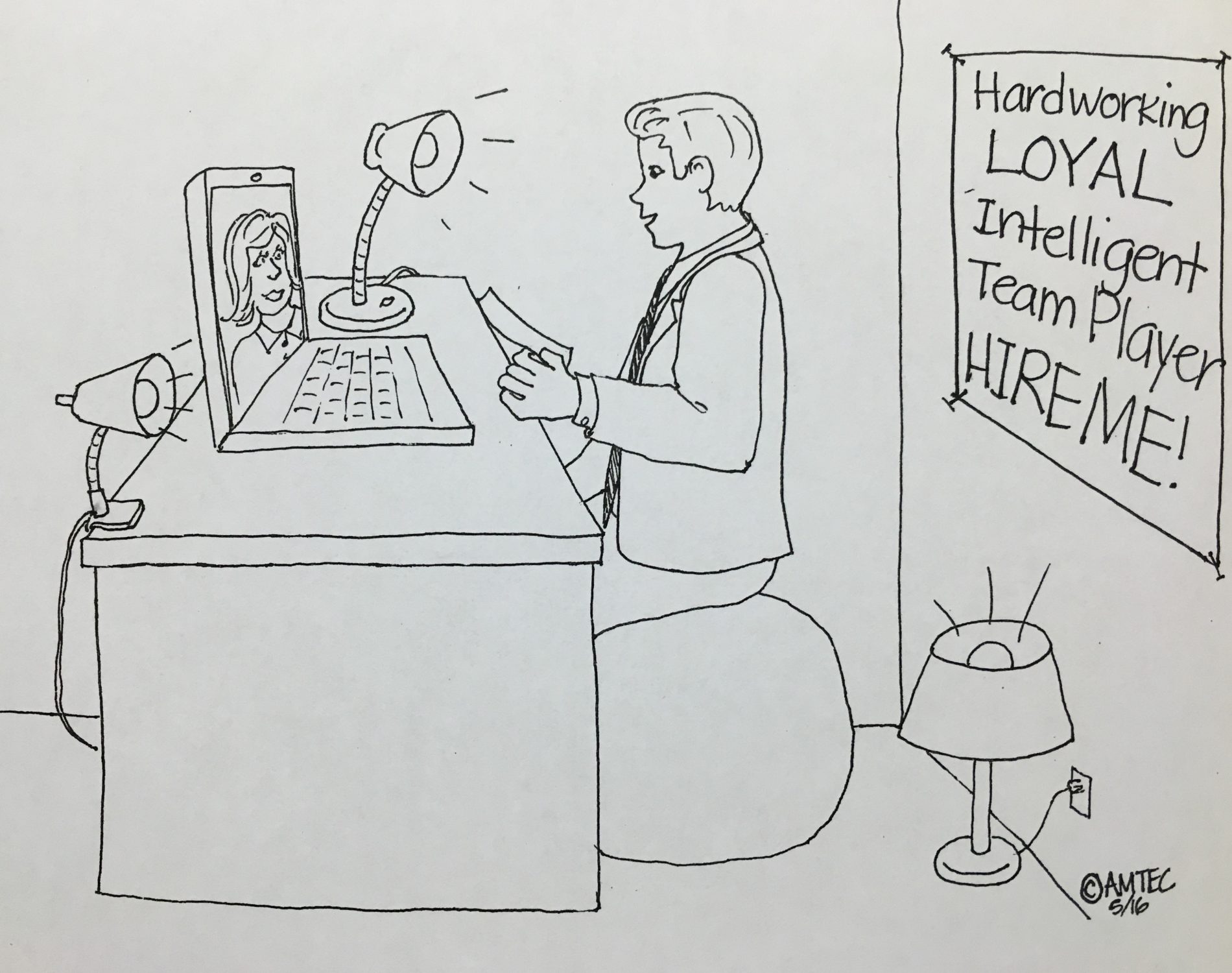
[An illustration of a remote job interview; the resume skim decides who gets to this stage.] Photograph: Amtec Photos
Image Credits: Wikimedia Commons
What helps and what hurts
The 2018 Ladders findings, summarized by HR Dive and reported by ResumeFast, drew a clear line. Resumes that held attention had simple layouts with clearly marked section headers, bold job titles supported by bulleted lists of accomplishments, and a short overview or mission statement at the top of the first page.
The ones that lost attention were cluttered: long sentences, multiple columns, very little white space, missing section headers, and keyword stuffing. Keyword stuffing is worth flagging because it is the most common self-inflicted wound. Applicants pack the page with terms to beat the applicant tracking system, and the resulting wall of text repels the human who reads next.
Design for the skim and the read separately. The skim needs the top third of page one to answer "who is this and what do they do" instantly. The deeper read, which happens only for survivors, needs the details: quantified accomplishments, relevant skills, and a work history that reads cleanly top to bottom.
The ATS comes before the human
There is a step before the recruiter's eyes that candidates forget. Most large employers run resumes through an applicant tracking system first. The software parses the file, extracts the fields, and often scores or filters candidates before any human looks.
This means the resume has to pass two different tests with opposite instincts. The ATS wants clean, parseable structure: standard section headings, no tables or text boxes, no graphics carrying key information.
The human wants the same thing, it turns out. Fancy templates with columns and icons frequently break parsing and hurt the skim at the same time.
Put keywords in naturally. Mirror the job posting's language for your actual skills and tools, in your bullet points and skills section, rather than in a stuffed footer. Both the software and the recruiter reward relevance; both punish visible gaming.

[A video interview session; AI-assisted review tools are changing how long recruiters spend on the first pass.] Photograph: Taichung City Government Labor Bureau
Image Credits: Wikimedia Commons
How the phone screen decision actually gets made
The skim produces a sort, not a verdict: yes, no, maybe. Clear yeses and clear nos are fast.
The maybes get a second, longer look, often later in the batch. That second look is where detail matters: the accomplishments under each role, the trajectory across roles, the education and certifications.
Recruiters also screen for disqualifiers at this stage. Unexplained gaps, job-hopping patterns, a location mismatch for an on-site role, or a title wildly off from the role can end the review in seconds. None of these are automatically fatal, but each one spends the limited attention budget on a question instead of an answer.
Referrals and internal candidates often skip this line entirely. A resume that arrives with a name attached gets the longer read first. That is one more reason networking matters: it changes which pile your resume lands in.
What to do this week
Run the seven-second test on your own resume. Look at it for seven seconds, look away, and write down what you absorbed. If your current title, strongest credential, and most relevant employer did not make the cut, restructure the top third.
Then check the six data points. Is your name, current title, current employer, dates, previous title, and education all findable in seconds? If a recruiter has to hunt for any of them, you are spending their budget on search instead of selling.
Finally, simplify. One column, clear headers, bold titles, bullets that start with verbs and end with numbers. The research is consistent on this point across a decade: the resumes that win the skim are the easiest to skim.
Frequently asked questions
Do recruiters really only spend 6 seconds on a resume?
That is the average first skim, not the total review. The 2012 Ladders study found about 6 seconds; the 2018 update found 7.4 seconds; a 2025 study found 11.2 seconds with AI-assisted review.
Resumes that pass the skim get read properly. Think of it as a filter, not a full evaluation.
What is the first thing recruiters look at?
The top third of the first page: name, current title and employer, and the summary or overview. Eye-tracking shows the scan starts at the top and follows F-pattern and E-pattern sweeps down the left margin.
Does a fancy resume design help you stand out?
The research says the opposite. Cluttered layouts with multiple columns, graphics, and little white space performed worse in the Ladders studies.
They also break applicant tracking system parsing. Simple and clean beats creative for screening.
How important are keywords for getting a phone screen?
Important for passing the ATS, which often runs first. Mirror the job posting's real skill and tool names in your bullets and skills section. But keyword stuffing hurts with the human reader, so keep it natural and truthful.
Can you recover from a weak resume with a referral?
Often, yes. Referred candidates typically skip the cold skim and get a longer look. A referral does not fix a bad resume, but it changes which pile yours lands in and buys you the full read.
The bottom line
The phone screen decision starts with a scan that lasts seconds, and the research on that scan has held up for over a decade: simple layout, clear headers, bold titles, and the six key facts findable instantly. The six-second figure is a design constraint, not a prophecy. Build the top of your resume for the skim, the body for the read, and let the applicant tracking system parse it all cleanly, and you give yourself the best shot at the call.
Rive News's research desk covers careers, hiring research, and workplace explainers from published studies and industry reports.
Related
- How to prepare for a behavioral interview step by step
- What should you wear to a job interview in 2026?
- How to build a professional network without feeling fake
- How to negotiate remote work at the offer stage
Subscribe for one practical career explainer every week.
Rive News publishes research-backed explainers; claims are sourced from the studies and industry reports listed above.
Related stories

How to Ask for a Raise With Data, Not Emotions
Ask for a raise with market data and documented results, not emotions. Research your rate from BLS wage tables, build an evidence file, run

How to Explain a Career Gap on Your Resume Honestly
A career gap is not a red flag if you explain it honestly: give a reason, show what you did, and point forward. Recruiters reveal the exact

How to Switch Careers at 30 With No Experience in the Field
A career change at 30 means repackaging a decade of transferable skills, not starting over. Map your skills, earn one certification,