
What Are Transferable Skills? Examples by Industry and Role
Key takeaways
- Transferable skills are abilities that carry from one job or industry to another, such as communication, leadership, data analysis, and time management.
- The World Economic Forum's Future of Jobs Report 2025 ranks analytical thinking (69%) and resilience (67%) as the top core skills employers want.
- Employers hire career changers on proof of these skills, so translate past duties into the language of the role you want.
A speaker presents to attendees at a workplace training workshop. Photograph: U.S. Army Corps of Engineers Europe District

Image Credits: Wikimedia Commons
A nurse who calms a crowded ward and a project manager who keeps a software release on track are drawing on the same ability: staying organized under pressure. That ability does not belong to one job title. It travels with the person who has it.
Transferable skills are abilities you can carry from one role, industry, or career to another. Case Western Reserve University's Center for Career Success describes them as "commonly overlooked abilities that are acquired in every occupation" and applied throughout a career. They include soft skills like communication and leadership, but also portable hard skills like budgeting or data analysis, according to Indeed's career guide.
This article explains transferable skills: what counts as one, which skills employers rank highest right now, transferable skills by industry with examples from retail, teaching, healthcare, and the military, and how to show them on your resume.
What counts as a transferable skill?
Indeed's UK career guide, updated in June 2026, defines transferable skills as abilities that "can be applied across various industries and roles." You often build them without noticing: working across departments, volunteering, a side project, or a previous career entirely.
The guide's example list reads like a job ad from almost any field: dependability, leadership and team management, problem-solving, data analysis, communication, time management, empathy, adaptability, technological literacy, and organisation.
The US Labor Department's O*NET database breaks workplace skills into sharper pieces. Its skills list includes critical thinking ("using logic and reasoning to identify the strengths and weaknesses of alternative solutions"), complex problem solving, active listening, judgment and decision making, time management, monitoring, and active learning.
One common confusion: soft skills and transferable skills are not the same thing. They overlap, but transferable skills can also be hard skills, such as budget management or computer programming, Indeed's employer guide notes. A spreadsheet model you built for a retail store works just as well in a hospital or a startup.
Which skills employers rank highest right now
The World Economic Forum's Future of Jobs Report 2025 ranks skills by the share of employers who call each one core to their workforce. The top five for 2025: analytical thinking (69%), resilience, flexibility and agility (67%), leadership and social influence (61%), creative thinking (57%), and motivation and self-awareness (52%).
Close behind come technological literacy (51%), empathy and active listening (50%), and curiosity and lifelong learning (50%). AI and big data (45%) ranks as the fastest-growing skill. The report is built on a survey of more than 1,000 companies covering 14 million workers in 55 countries, according to published summaries of the findings.
The same report finds employers expect 39% of workers' core skills to change by 2030. Look at the top-ranked list again: almost every skill on it is transferable, not one industry's jargon. Employers are asking for abilities that work anywhere.
Transferable skills by industry, with examples
The same skill wears different uniforms in different industries. Here is how four common backgrounds map to new fields.
From retail and hospitality to tech
Shop floors and restaurants are training grounds for customer-facing tech roles. Service orientation, which 47% of employers call a core skill in the WEF report, is the same muscle behind a great customer success manager.
A store supervisor who built weekly staff rotas was doing resource management, and one who calmed an angry customer was practicing empathy and conflict resolution. Both translate directly to tech support leadership or sales roles. If you are moving into tech without client work yet, you can still build a portfolio with no clients to prove the technical half of the switch.
From teaching to corporate training
Teachers present daily, design lessons, and assess performance. In corporate language, that is presenting, instructional design, and performance evaluation. Case Western's career center lists teaching and training under communication skills for exactly this reason.
A teacher moving into corporate learning and development already owns the core of the job: explaining ideas clearly to groups and checking that they landed. Classroom management becomes facilitation. Grading becomes feedback. If you are planning a career switch in your 30s, teaching experience is one of the easiest backgrounds to reframe.
From healthcare to operations
A nurse with an Australian-funded medical team puts up a health-education poster in a village near Kokoda Hospital. Photograph: Department of Foreign Affairs and Trade

Image Credits: Wikimedia Commons
Healthcare runs on prioritization under pressure. Nurses triage patients, document precisely, and coordinate across doctors, labs, and families. In O*NET terms, that is judgment and decision making, attention to detail, and cross-functional communication.
An operations coordinator does the same work with shipments and schedules. A nurse who ran shift handovers for a 40-person ward has handled a more complex operation than many office managers ever will. The skill is identical. Only the setting changed.
From the military to management
U.S. Air Force service members at an awards ceremony. Photograph: U.S. Air Force photo by Karen Abeyasekere
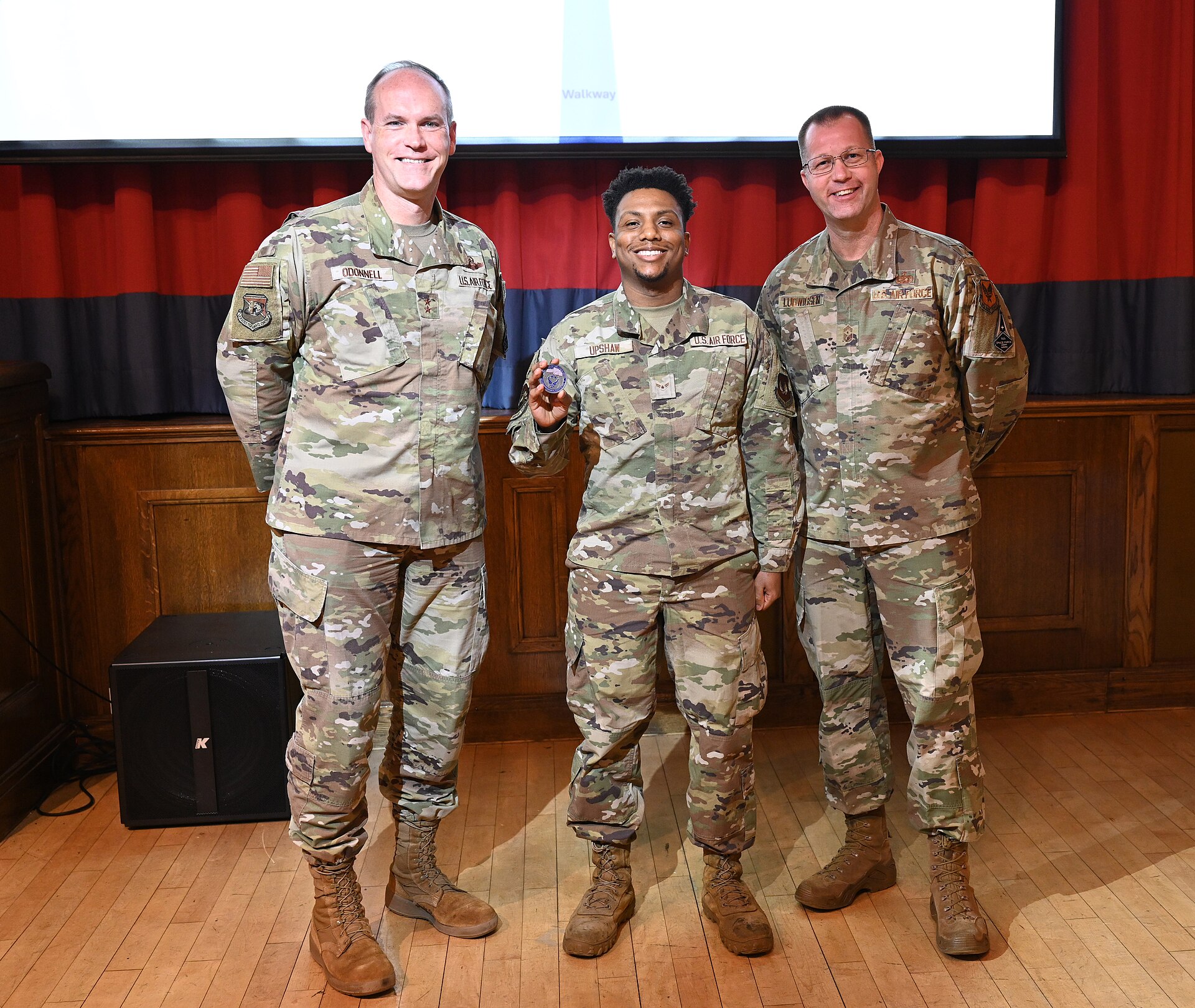
Image Credits: Wikimedia Commons
Brandeis University's Hiatt Career Center lists the transferable skills veterans bring to civilian work: leadership, communication, integrity, and adaptability. Its resume guidance is direct: translate titles and jargon, focus on transferable skills, and have a civilian review the resume.
Its example resume shows how this looks. A Headquarters Company Officer managed a voluntary team of 150 staff, oversaw equipment and budgeting above $1.5 million, and cut the disciplinary rate by 20% in a year. That is team management, budget ownership, and measurable results: the same lines a civilian operations director would write.
The lesson applies beyond the military. Any career changer should describe duties in the target industry's language, not the old one's.
How to show transferable skills on your resume
Indeed's career guide gives a practical playbook. List the skills in your skills section, reference one or two in your professional summary, and prove them inside your experience bullets with concrete results.
Mirror the job description's wording. If the ad asks for "stakeholder communication," write "stakeholder communication," not "talking to people." The match needs to be visible fast, because first impressions of a resume form in seconds, and what recruiters actually look for rewards scannable proof over adjectives.
For interviews, use the STAR method: situation, task, action, result. A cover letter works best with one concrete story, not a list of claims.
Career changers often undersell themselves by keeping old job titles and old jargon. Translate instead: "Managed a voluntary team of 150" beats a service-specific title for a civilian hiring manager, as the Brandeis example shows. If your history includes time away from work, it reads better to explain a career gap honestly than to leave a hole you hope nobody notices.
FAQ
What is an example of a transferable skill?
Communication is the classic one. A teacher explaining fractions to a classroom, a nurse updating a worried family, and a project manager running a status meeting are all using the same skill in different settings.
What is the difference between a transferable skill and a hard skill?
A hard skill is technical and job-specific, like suturing or writing Python. A transferable skill carries across roles. The categories overlap: some hard skills, like budgeting or data analysis, are transferable because they work in many industries.
How do I identify my transferable skills?
List what you actually did in past roles, not your titles. Then sort that list into the five buckets used by Case Western's career center: analytical, communication, interpersonal, organizational, and creative. Whatever fills those buckets is your transferable set.
Should I list transferable skills on my resume?
Yes. Put them in your skills section, echo them in your summary, and prove each one with a result in your experience bullets. Match the exact wording of the job description so the fit is obvious at a glance.
The bottom line
Transferable skills are the abilities that survive a career change: communication, leadership, analysis, organization, and adaptability. The WEF's 2025 rankings show employers want exactly these. Pick your three strongest, translate each into one result from your past work, and lead your resume with them.
Topics: career change, resume tips, job skills, career advice, workplace skills
Rive News is the research desk behind the Career section, covering workplace skills, hiring, and career change with sourced, verifiable reporting.
Latest in Career
- How to Switch Careers at 30 With No Experience in the Field
- What do recruiters actually look for in 6 seconds?
- How to Explain a Career Gap on Your Resume Honestly
- How to Ask for a Raise With Data, Not Emotions
Get one practical career tactic a week: subscribe to the Career newsletter.
Spotted an error? We correct mistakes promptly: tell us and we will fix it.
Copyright 2026 Rive News. All rights reserved.
Related stories

How to Ask for a Raise With Data, Not Emotions
Ask for a raise with market data and documented results, not emotions. Research your rate from BLS wage tables, build an evidence file, run

How to Explain a Career Gap on Your Resume Honestly
A career gap is not a red flag if you explain it honestly: give a reason, show what you did, and point forward. Recruiters reveal the exact

How to Switch Careers at 30 With No Experience in the Field
A career change at 30 means repackaging a decade of transferable skills, not starting over. Map your skills, earn one certification,