
How to Improve Handwriting for Exams Without Slowing Down
Key takeaways
- Examiners need readable handwriting, not beautiful handwriting, so aim for consistent letter shapes and spacing.
- Short daily drills, timed practice, and a comfortable pen lift speed and neatness together.
- Simple layout habits, such as headings, short paragraphs, and underlined key words, make answers easier to mark.
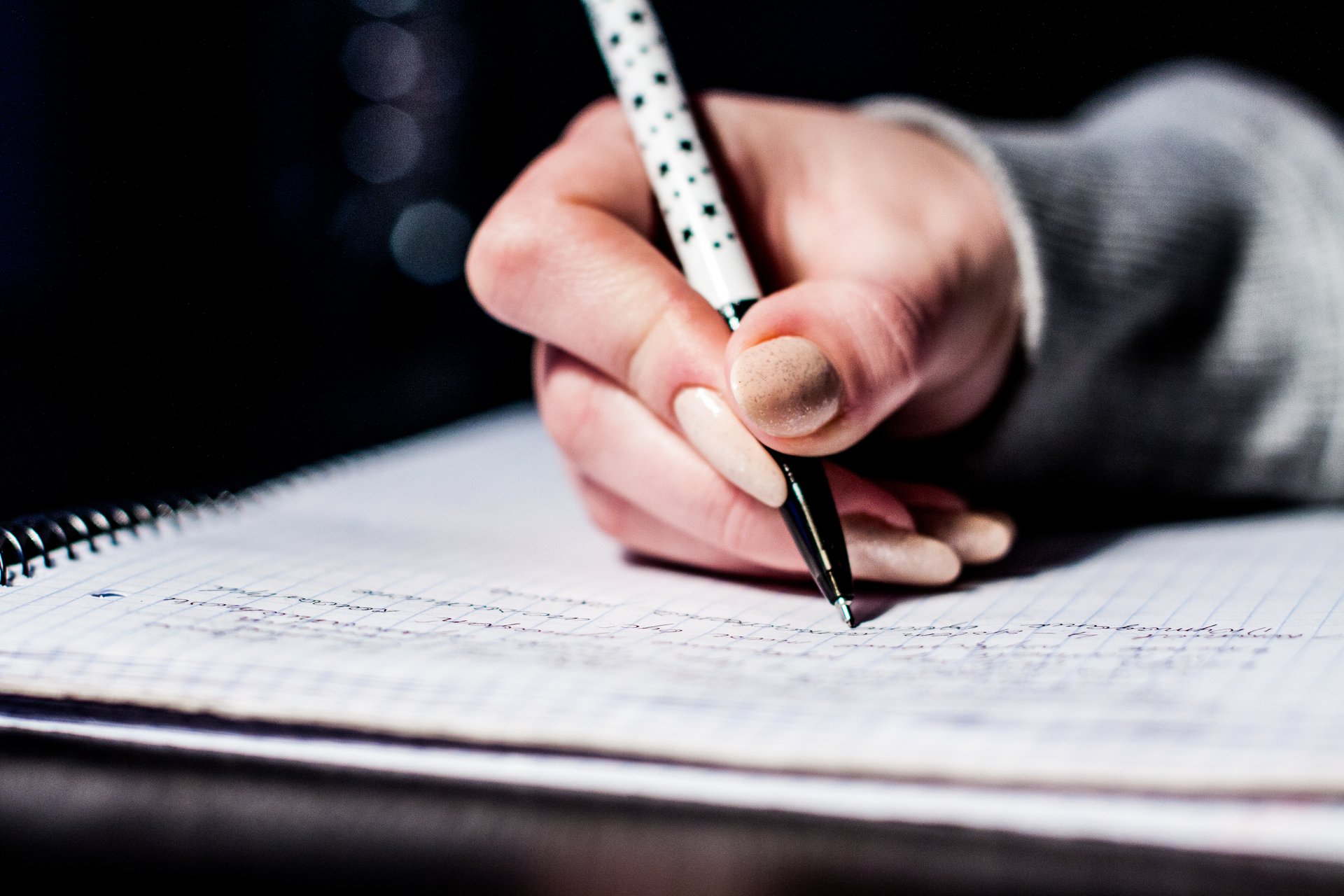
Handwriting in exams is a balancing act. Write too fast and the examiner cannot read your answer. Write too slowly and you run out of time.
Many students swing between the two and end up with neither neatness nor speed.
The fix is not to write beautifully. It is to write consistently. Examiners read hundreds of scripts, and they reward answers they can scan without effort.
A plain, even hand with clear spacing beats fancy loops every time.
This article explains how to improve handwriting for exams without slowing down, with drills, grip and posture fixes, and exam-day habits that protect both speed and legibility.
What examiners actually need
Examiners do not need perfect handwriting. They need an answer they can read at speed. Every second an examiner spends decoding a word is a second spent not crediting your ideas.
Legibility has four parts: letter shape, letter size, spacing, and slant. When all four stay consistent, the page looks clean even if the handwriting itself is plain. When they shift from line to line, the page looks messy even if individual letters are fine.
Unfiltered Thoughts, in its guide for board exams, makes the point directly: examination handwriting does not need to be stylised or ornamental, and overly decorative cursive with large loops often harms legibility under time pressure. A simplified semi-cursive or clear print style usually works best.
Consistency matters more than style. A student who writes plain letters at an even size and spacing will outscore a student with beautiful first-page writing that collapses into a scrawl by page five.
Fix letter shapes first
Start with the building blocks. Most unreadable handwriting comes from a handful of letters that collapse under speed: a, e, o, u, n, r, and t.
Write the alphabet slowly and look for trouble spots. Letters that look alike are the main risk. If your a looks like your o, or your r looks like your v, those letters need work.
Close the loops on a, e, and o so they read as closed letters rather than open squiggles.
Keep lowercase letters at a uniform height. Unfiltered Thoughts notes that lowercase letters such as a, e, c, and o should hold a steady height, while ascenders such as t, d, h, and k, and descenders such as p, g, y, and q, should extend above and below the line in proportion without tangling with neighbouring lines.
Keep your slant steady too. A slight forward lean or a vertical hand both work. A slant that shifts back and forth inside one paragraph makes words harder to read.
Pick one slant and hold it.
Make letters tall and narrow rather than short and wide. Tall letters use the wrist's natural up-and-down motion and stay readable at speed. Wide, cramped letters force small sideways movements that tire the hand and crowd the line.
Spacing is half of legibility
Spacing is the most underrated part of neat handwriting. Crowded words merge into a block that strains the eye. Words spaced too far apart look sparse and break the flow.
Use the width of a lowercase o as a rough guide for the gap between words, as Unfiltered Thoughts suggests. The gap does not need measuring. It needs to be even.
An even gap lets the examiner see word boundaries at a glance.
Leave a clear margin on the left. Keep line spacing wide enough that descenders from one line do not touch ascenders on the next. If your school allows it, write on every other line for long answers, since the extra space makes the script far easier to mark.
Break answers into short paragraphs. A wall of unbroken prose hides your best points and tires the reader. Short paragraphs, each making one point, look organised and read fast.
Grip and posture
A poor grip slows you down and hurts your hand. A good grip feels relaxed and lets the pen glide.
Hold the pen between thumb and index finger, resting on the middle finger, with a light grip. If your fingers ache after ten minutes, you are gripping too hard. A relaxed grip gives smoother letters and less fatigue.
The Economic Times, in its exam writing guide, advises using a smooth-flowing pen that reduces hand strain. Test pens before the exam. A pen that needs pressure to write will tire your hand.
A pen that flows with light pressure keeps you going.
Sit with both feet on the floor and your back supported. Do not hunch over the page. Keep the paper at a comfortable angle.
GIIS Noida advises right-handed students to angle the paper slightly to the left and left-handed students to tilt it to the right, which reduces hand fatigue and lets the pen move freely.
Short daily drills that work
Improvement comes from short, regular practice, not from one long session the night before the exam. Ten minutes a day for two weeks beats three hours on a Sunday.
Start with letter drills. Pick one letter a day and write it in rows, aiming for identical shapes. Then write whole words, watching the flow from one letter to the next and the spacing between words.
Use a test sentence to track progress. Write the same sentence at the top of a practice page each week, then compare the pages. The sentence "the quick brown fox jumps over the lazy dog" is a useful choice because it contains every letter of the alphabet.
Then move to speed drills. GIIS Noida suggests a ten-minute daily routine: rewrite the same sentence three to five times at your fastest legible speed, time yourself, and try to beat your record without losing legibility. Shake your fingers before and after writing to relax the hand.
Add timed answers. The Economic Times advises practising under timed conditions by setting a timer, writing full answers, and tracking progress. Start with a comfortable time limit, then trim it a little each session.
GIIS Pune suggests starting with ten lines in five minutes and then aiming for fifteen.
The goal of each drill is legible speed, not raw speed. If your writing collapses at a faster pace, slow down one notch and hold that pace. Speed built on collapsing letters is not speed at all.
One interventional study cited by GIIS Noida found that an upper limb exercise programme, run five days a week for four weeks, produced a 21 percent improvement in handwriting speed among undergraduate students. Hand exercises and regular writing practice together build the endurance a long exam demands.
Shortcuts that save time without losing marks
Small shortcuts save minutes across a long paper, but only if the examiner can still follow them.
Use symbols with care. Arrows, brackets, and numbering help structure an answer. A page full of symbols with no sentences does not.
Keep symbols as signposts inside normal sentences.
Plan before you write. A one-minute plan with three bullet points saves far more time than it costs. It stops mid-answer pauses, crossings out, and rewritten paragraphs, all of which eat time and dirty the page.
Layout habits that make answers easier to mark
Presentation is not decoration. It is how the examiner finds your points.
Start each answer with a clear heading or an opening line that states the point. Follow with short paragraphs or bullet points. Number steps in order when the question asks for a sequence.
Unfiltered Thoughts notes that breaking answers into short paragraphs or bullet points improves readability at once, and that underlining headings and key words directs the examiner's focus to the core facts the marking scheme asks for.
Leave a line between answers. If you skip a question and return to it later, leave a clear gap and label the answer with the question number. A squeezed-in answer in the margin is easy to miss.
Cross out cleanly. A single straight line through a wrong word is neat and readable. Scribbling over a word leaves a blot that draws the eye and hides the correction.
Do not rewrite whole answers in the last minutes, since that risks losing marks you already earned.

Exam-day plan
Exam day is not the day to try a new pen, a new grip, or a new style. Use what you practised with.
Arrive with two pens you have tested, plus a spare. Test both on scrap paper before the exam starts. A pen that skips or blobs on the first page sets a bad tone for the whole paper.
Read the whole paper first. Mark the questions you will answer and the order you will answer them. Start with a question you know well, since a confident first answer sets a steady rhythm.
Watch the clock, not the clock on the wall only. Divide your time by marks. A ten-mark question deserves roughly twice the time of a five-mark question.
If you fall behind, move on and return later rather than letting one answer eat the whole paper.
A steady pace holds legibility from the first page to the last.
If your hand cramps, stop for ten seconds. Put the pen down, shake your hand, stretch your fingers, and start again. Ten seconds of rest saves minutes of cramped, unreadable writing.
A two-week practice plan
Spend the first few days on letter shapes, then move to words and sentences. In the second week, write full answers under exam timing, then sit one timed practice paper. Ask a teacher or a friend to check a timed answer and mark the words they cannot read.
In the last two days, do light drills only, rest your hand, and confirm your pens and timing plan.
Common questions about exam handwriting
Students ask the same questions before almost every exam season. These answers cover the most frequent ones.
Is cursive or print better for exams?
Either works if it is consistent and readable. Many students find a simplified semi-cursive or clear print style fastest, since it avoids the loops and joins that collapse under pressure.
How fast should exam handwriting be?
Fast enough to finish the paper with time to check, and slow enough that every word reads clearly. If you cannot read your own script an hour later, it is too fast. If you regularly leave questions blank, it is too slow.
The bottom line
Better exam handwriting comes from consistency, not beauty. Keep letter shapes even, spacing steady, and slant stable. Train with short daily drills and timed practice, and use a pen and grip that keep your hand relaxed.
On exam day, plan your answers, write at a steady pace, use headings and short paragraphs, and underline the key words that carry your argument. Your handwriting does not need to impress anyone. It needs to let the examiner read your best thinking without effort.
Tags: handwriting, exams, study, writing
Latest in Education
- How to organise revision for five subjects at once
- How to speed read without losing comprehension
- How to use flashcards effectively instead of just flipping them
- How to stay motivated during long exam seasons
Subscribe for one practical study guide in your inbox each week.
Related stories

Why Do I Blank Out During Tests Despite Studying: Test Anxiety and Retrieval Failure
Blanking out in exams is retrieval failure, not missing knowledge. Anxiety drains working memory; rereading builds false confidence. Here

How to Study for Exams Without Burning Out
Sleep 7-8 hours, study in 25-50 minute blocks, and exercise daily. The science-backed way to study for exams without burning out, and what

Why Do I Forget What I Just Read? Science Has an Answer
You forget what you just read because of the forgetting curve, mapped by Ebbinghaus in 1885. Science explains why memory fades fast and how