
Why does quizzing yourself beat re-reading for exams
By Rive News / Research desk | Rive News / Published October 31, 2026 at 9:00 AM PKT
Key takeaways
- Testing yourself strengthens memory far more than re-reading, by about 21 percentage points a week later in the classic study.
- The effect holds across 272 comparisons: retrieval practice beats restudying even without feedback.
- Re-reading feels effective because fluency tricks your brain, but the confidence is an illusion.
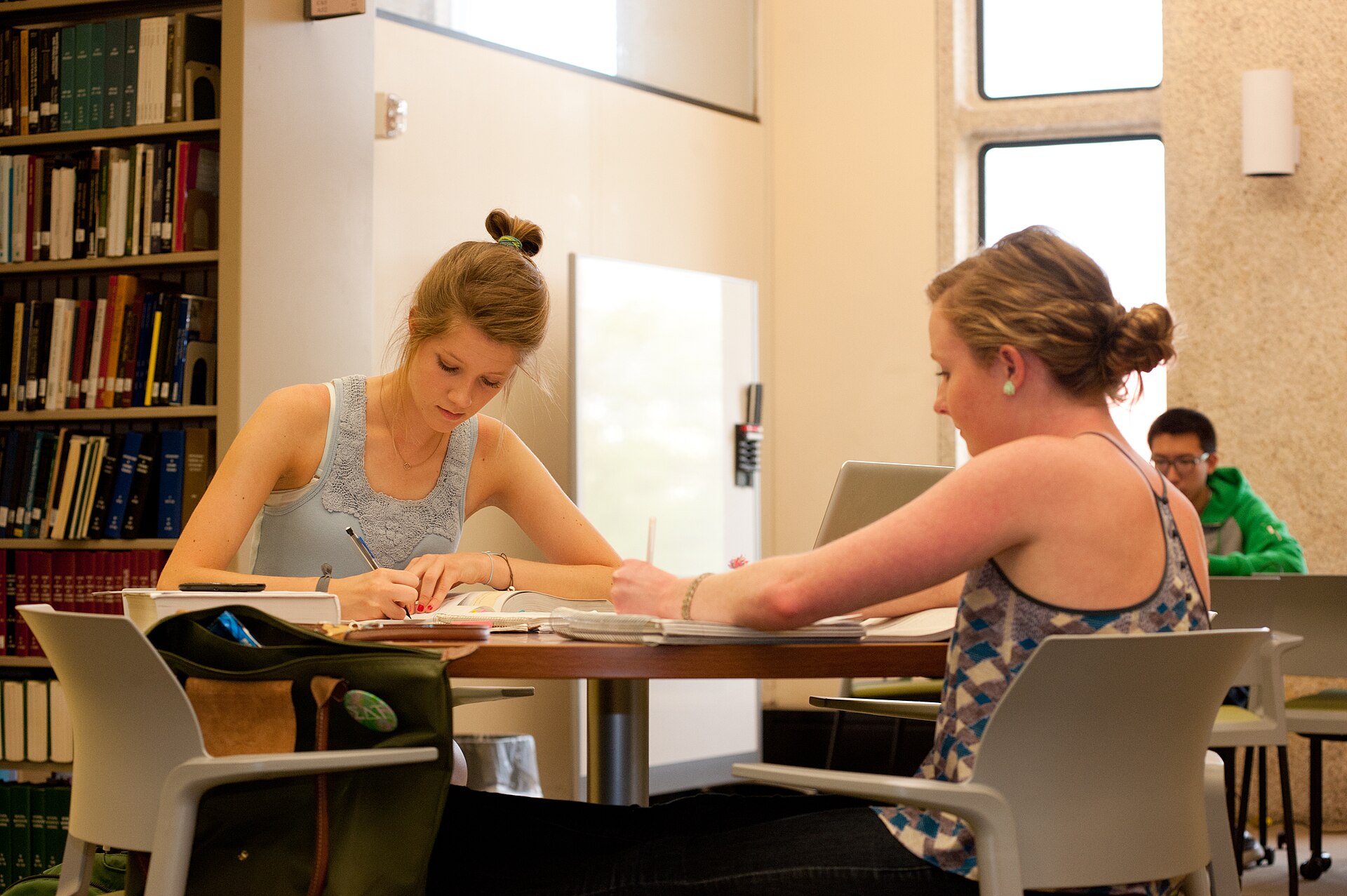
[A student studying in the Howard-Tilton Library in New Orleans in 2012.] Photograph: Tulane Public Relations
Image Credits: Wikimedia Commons
Wikimedia Commons
Retrieval practice means pulling information back out of memory instead of putting it in again. Closing the book and writing down everything you remember is retrieval.
Re-reading the same chapter is review. Same content, different result a week later.
This article explains why quizzing yourself beats re-reading the chapter, including what retrieval practice is, the landmark experiment that proved it, why it even beats deeper study methods, why re-reading still feels so good, and how to quiz yourself properly.
What retrieval practice actually is
Retrieval practice is any study activity where you bring information to mind from memory without looking at the answer first. Flashcards, practice questions, a one-minute brain dump on a blank page, or explaining a concept aloud with the book closed all count. Researchers also call it the testing effect, because a test is the classic way to trigger it.
The key insight is that the test is a learning event, not just a measurement event. The act of retrieval itself strengthens the memory it touches. We have had the quiz's job description backwards for a century.
Importantly, the quiz does not need to be graded, formal, or even written down. A quick question at the start of class counts, as long as you have to dig for the answer.
The experiment that settled it
In 2006, two psychologists at Washington University in Saint Louis, Henry Roediger and Jeffrey Karpicke, published "Test-Enhanced Learning" in Psychological Science. Their design was simple. College students read short science passages.
One group read a passage four separate times. Another read it once, then spent the remaining sessions writing down everything they could remember, with no peeking.
Five minutes after the final session, the re-readers looked like the winners. They recalled about 83 percent of the material, against 71 percent for the testers. That is exactly why re-reading feels so effective in the moment.
One week later, the picture inverted. The students who had practiced recall produced about 61 percent of the passage.
The students who had read it four times produced about 40 percent. The group that spent less total time with the material, and never saw it again after a single reading, beat the group that pored over it repeatedly by roughly 21 percentage points.
The cruel detail: the students who studied the most remembered the least, and the students who felt the best about their learning learned the worst.
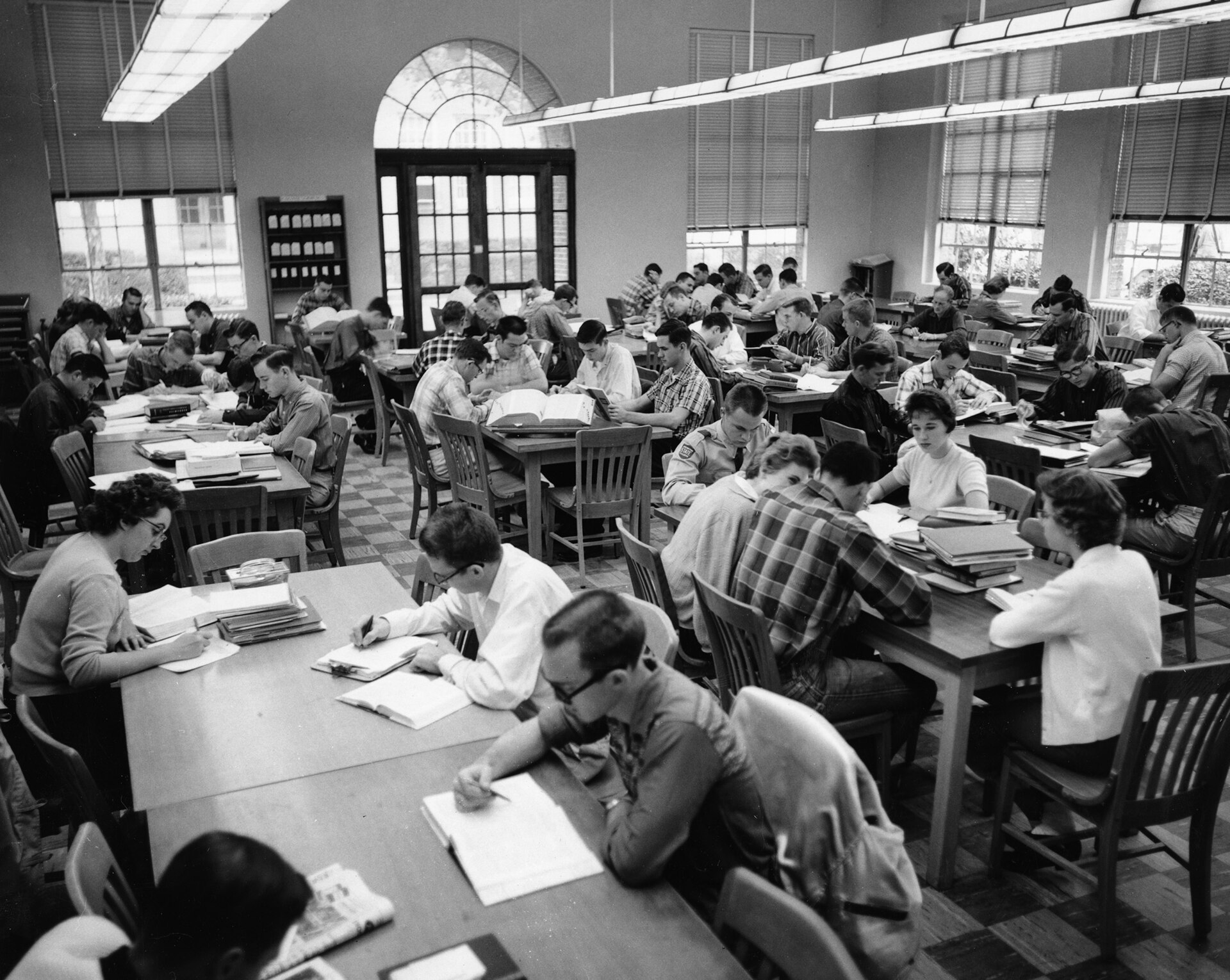
[Students studying in the Arlington State College library.] Photograph: University of Texas at Arlington Photograph Collection
Image Credits: Wikimedia Commons
It beats even deeper study methods
Skeptics asked whether quizzing only wins against lazy re-reading. It does not. In 2011, Karpicke and Janell Blunt compared retrieval practice with concept mapping, the darling of study-skills curricula, in a study published in Science.
One week later, the retrieval group learned more, including on questions that required making inferences rather than reciting facts. Even when the final test asked students to build a concept map, the quizzers won.
A 2008 study by Karpicke and Roediger, also in Science, showed retrieval matters even after you already "know" something. Students learned foreign-language vocabulary, and once they could recall a word correctly, it was either kept in testing or dropped from it. A week later, students who kept retrieving recalled about 80 percent of the words.
Students whose words were dropped from testing, even though they kept studying them, recalled only about 33 to 36 percent. Extra study after learning had no measurable effect.
The effect is not a fluke of one lab. A 2017 meta-analysis by Olusola Adesope and colleagues in Review of Educational Research pooled 272 independent comparisons from 118 articles and over 15,000 participants. Practice testing beat restudying by a solid margin, an effect size of g = 0.51, and beat filler tasks or no review by g = 0.93. The advantage shows up in laboratories and in real classrooms, and the gap widens as the retention interval lengthens.
John Dunlosky's landmark 2013 review of ten popular study techniques for Psychological Science in the Public Interest rated practice testing as high utility. Re-reading and highlighting, the methods students report using most, were rated low. Practice testing sits next to spaced repetition as one of only two techniques with that top rating.
Why re-reading feels like it works
The fluency illusion explains the popularity gap. Re-reading makes the text feel familiar, and your brain mistakes familiarity for knowledge.
Each pass gets smoother, so you conclude you are learning. You are mostly learning to recognize the text, not to recall the ideas.
The numbers are stark. In a 2009 survey by Karpicke, Andrew Butler, and Roediger of 177 college students, 84 percent listed re-reading among their study strategies. The worst common study method is also the most popular one, because the feeling of learning is strongest exactly when learning is weakest.
This also explains why students predicted the opposite of the results. In the 2006 experiment, the re-readers were more confident after five minutes and wrong about the one-week outcome. Confidence during study is a terrible proxy for memory later.
A similar mismatch shows up elsewhere in learning. Students often say they understand a topic better after a break, and teachers notice that learners remember stories far longer than the lesson wrapped around them. The brain keeps what it had to work for.
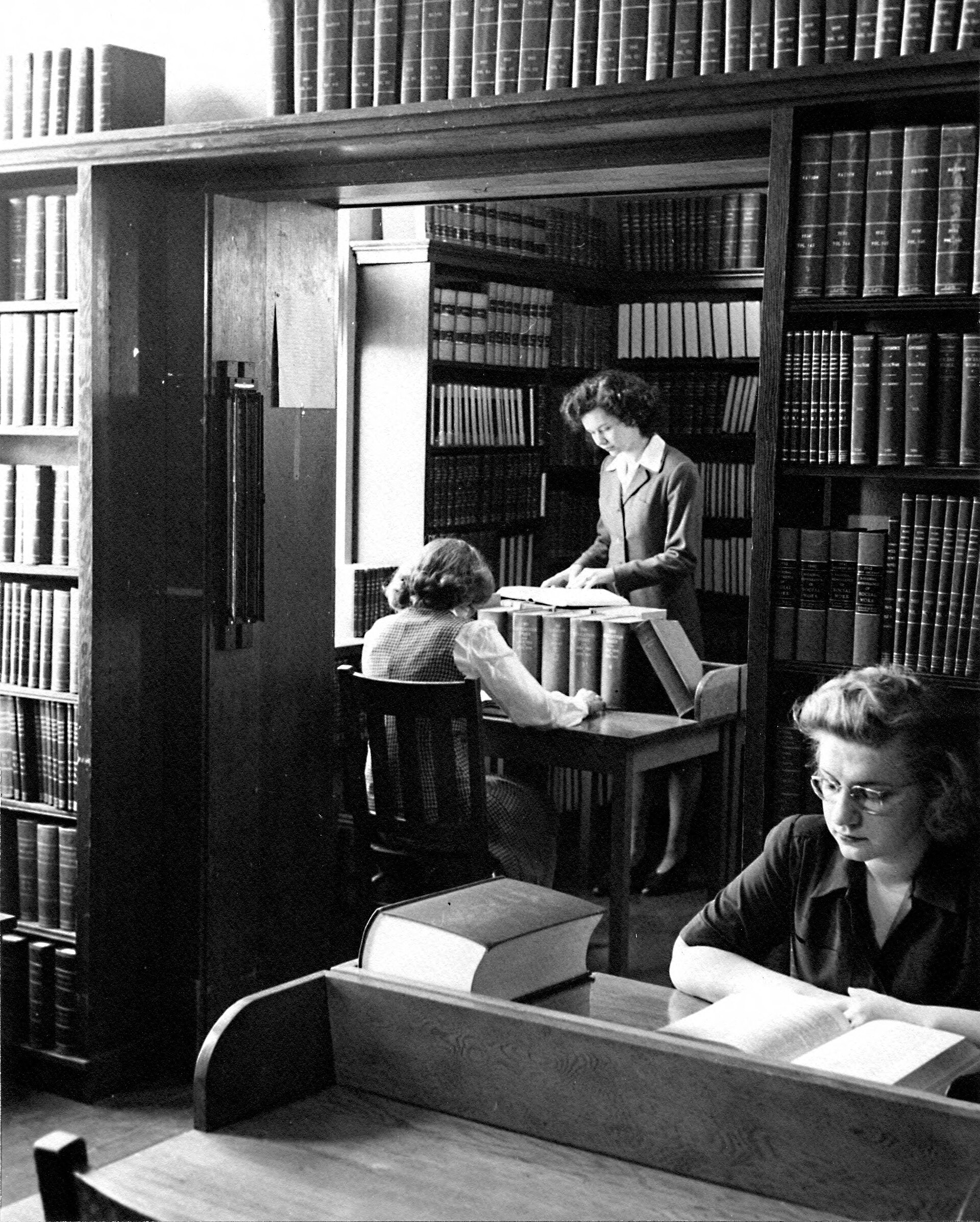
[Female students studying at the St. Cloud State University library.] Photograph: the library study subject
Image Credits: Wikimedia Commons
How to quiz yourself properly
First, read or listen once to have something to retrieve. Retrieval needs raw material. Most of the evidence comes from laboratory experiments, so treat the technique as strong guidance, not a guarantee for every subject and age group.
Then close the source and write down everything you remember. A blank page beats a highlighted one. If you stall, that gap is information: it shows you exactly what to restudy.
This is why changing up your study routine often helps, it breaks the false fluency of the familiar page.
Add feedback after the attempt. Even failed retrievals followed by checking the answer produce stronger memory than never attempting. The struggle primes the brain to absorb the correction.
Keep the stakes low. Frequent low-stakes quizzes lower anxiety and build durable memory.
Rare high-stakes exams do the opposite, burning working memory with dread. Keep the testing, kill the stakes.
Space the quizzes out. Retrieval practice and spaced repetition are the two high-utility techniques in Dunlosky's review, and they stack. One quiz today, one in three days, one next week will beat three quizzes in one evening.
For facts that refuse to stick, borrow a trick from music. There is a reason you can remember songs better than facts: rhythm and repetition aid recall. Set the stubborn list to a beat and quiz yourself on it.
How long should a self-quiz be?
Five to ten minutes per topic is plenty. The research used short free-recall sessions, not marathon practice exams. Regular short quizzes beat rare long ones.
Does quizzing work without feedback?
Yes. The original 2006 experiments used free-recall tests with no feedback and still found the effect. Feedback helps more, especially after failed attempts, but retrieval alone does real work.
Is quizzing only good for memorizing facts?
It is broader than that. The 2011 Science study found retrieval practice beat concept mapping even on questions requiring inference. It strengthens the underlying understanding, not just word recall.
Why do students keep re-reading if it does not work?
Because fluency feels like learning. Each smooth re-read boosts confidence, and 84 percent of students in one survey used it. The feeling is real; the learning is not.
Can quizzing replace reading the chapter?
It cannot. You need something in memory before you can retrieve it. Read first, then test, since extra study after you can recall the material has no measurable effect.
The bottom line
Quizzing yourself beats re-reading because retrieval is a learning event: pulling information out strengthens the memory trace, while re-reading only builds a feeling of familiarity. The evidence runs from a 61-versus-40 percent split one week after a single experiment to 272 pooled comparisons showing a reliable, growing advantage over time. Read once, close the book, write what you remember, check the gaps, and repeat.
It feels harder. That difficulty is the point.
Tags: retrieval practice, testing effect, study techniques, memory, exams
Rive News's research desk covers how learning and memory actually work.
Related
- Why students remember teachers' stories and forget the lesson
- Does changing your study routine help you remember
- Why you understand a topic better after a break
- Why songs stick better than facts
Subscribe to the Rive News newsletter for one clear explainer every morning.
Rive News publishes research-backed explainers. Corrections: reply to any article and we will review it.
Related stories

Why Do I Blank Out During Tests Despite Studying: Test Anxiety and Retrieval Failure
Blanking out in exams is retrieval failure, not missing knowledge. Anxiety drains working memory; rereading builds false confidence. Here

How to Study for Exams Without Burning Out
Sleep 7-8 hours, study in 25-50 minute blocks, and exercise daily. The science-backed way to study for exams without burning out, and what

Why Do I Forget What I Just Read? Science Has an Answer
You forget what you just read because of the forgetting curve, mapped by Ebbinghaus in 1885. Science explains why memory fades fast and how