
Why banks ask for proof of address
By Rive News / Research desk | Rive News / Published October 29, 2026 at 9:00 AM PKT
Key takeaways
- Banks ask for proof of address to verify who you are, not because they suspect you personally.
- Address checks support anti-money-laundering law and help banks spot identity fraud.
- Utility bills, bank statements and government letters are among the documents most often accepted.
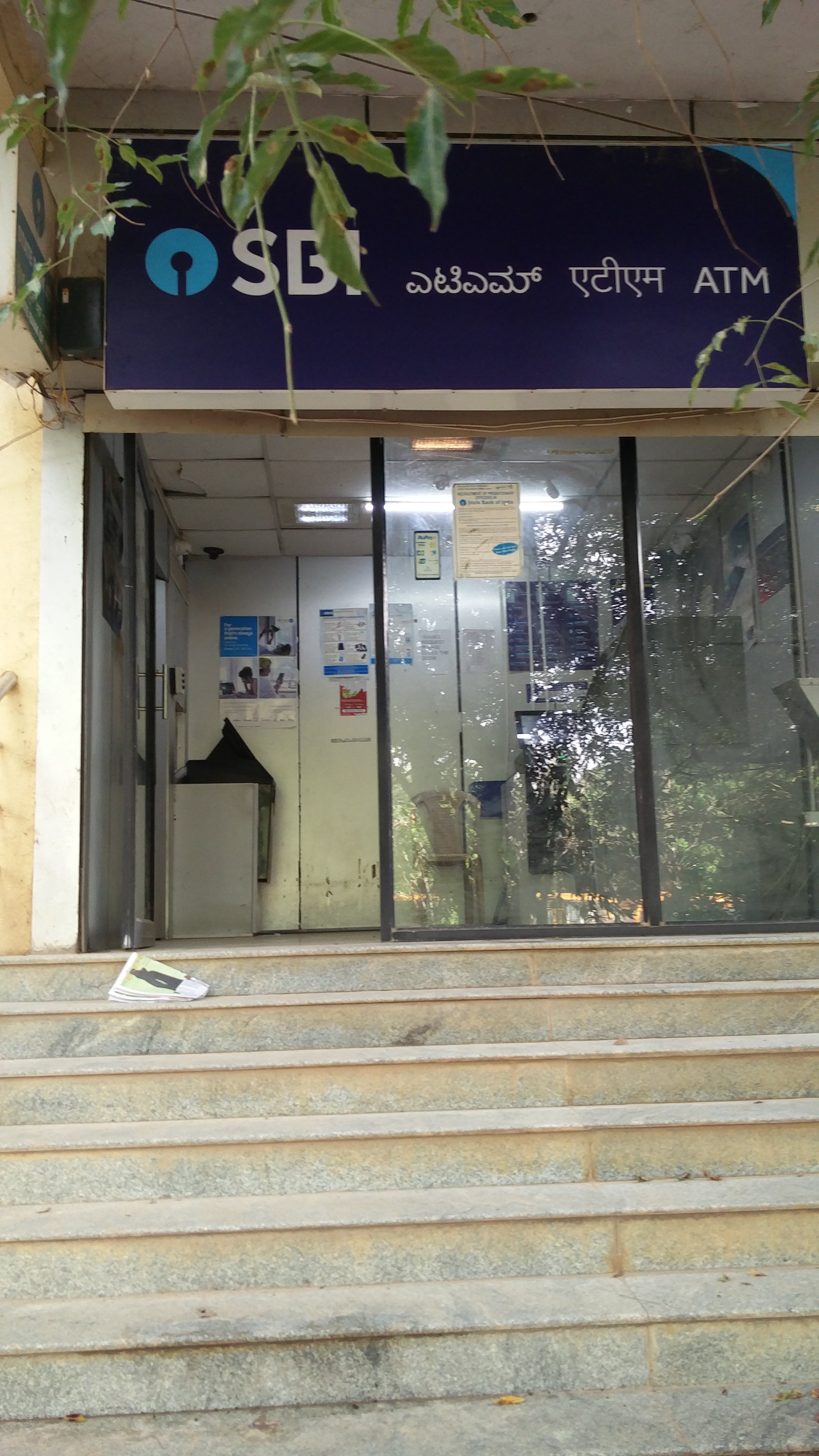
[An automated teller machine outside a bank branch.] Photograph: Wikimedia Commons contributor
Image Credits: Wikimedia Commons
Opening a bank account usually means producing two kinds of document: something proving who you are, and something proving where you live. The second request puzzles many people, especially when a passport or driving licence already shows a name and a photograph. The answer lies in how banks verify identity, and in the laws that require them to do it.
This article explains why banks ask for proof of address, including the identity checks behind the request, the documents that usually count, and what happens when standard documents are not available.
This is general educational information, not financial advice.
It is not personal suspicion
The first point to clear up is that being asked for proof of address does not mean a bank suspects the applicant of wrongdoing. Banks ask every applicant, because the law requires them to verify the identity of every customer before letting them move money through the financial system.
Plaid describes this process as Know Your Customer, or KYC: a due diligence process that financial institutions use to verify a customer's identity and assess their risk. The goal, in Plaid's words, is to ensure customers are who they claim to be. Without that check, anyone could open an account in someone else's name, or under a false identity, and use it to move money anonymously.
That is also why the request comes at account opening, rather than later. Once an account is open, money can move quickly. Verification after the fact would be too late to prevent the account being used for fraud or money laundering in the meantime.
What proof of address actually proves
A photo identity document proves that a person exists and looks like the photograph. Proof of address adds a second, independent anchor: a place where that person can be reached, and a record that ties the person to that place.
Fintech Global's guide to proof of address makes the distinction clearly. It says proof of address is not simply about confirming where someone lives, but is an identity verification tool that helps organisations avoid regulatory trouble and keep their onboarding processes sound. When address information is compared with identity data, mismatches stand out, and impersonation becomes harder.
An address also gives the bank a way to contact the customer about the account, to send statements and security notices, and to meet its record-keeping duties. For business accounts, the address helps identify where a company operates and who ultimately controls it, which matters when ownership is layered through several companies.
The anti-money-laundering link
The strongest reason banks ask is anti-money-laundering law. Plaid notes that KYC checks are legally required under anti-money-laundering laws, which aim to ensure financial platforms are not used for criminal activity. Banks that fail to meet those duties can face steep fines, greater exposure to fraud, and loss of customer trust.
Money laundering means disguising the origins of money obtained illegally so that it appears legitimate. Criminal networks try to open accounts under false or temporary addresses to stay anonymous while moving funds. A verified residential address makes that harder, because it ties the account to a real place and a real person, and it gives investigators a starting point if the account is later misused.
The same logic covers terrorist financing and sanctions evasion. Address information helps compliance teams detect geographic risk factors, such as addresses in high-risk or sanctioned areas. That is one reason banks sometimes ask for proof of address again, years after opening, when a customer moves or when regulations change.
What counts as proof of address
Banks commonly accept documents that show the applicant's name and current residential address, issued by an independent organisation. Fintech Global lists utility bills for gas, water, electricity or internet, bank statements, mortgage documents, lease or rental agreements, government-issued letters and insurance policies. Most banks require the document to be recent, often within the last three months, and legible, with the name and address clearly visible.
Photo identity documents can sometimes do double duty. A driving licence that shows a current address may satisfy both the identity and the address check in one document. A passport, by contrast, usually does not show a home address, so it normally needs to be paired with a separate proof of address.
Digital banks follow the same rules with different tools. They may accept a scanned bill or statement, and they may add biometric checks, such as matching a selfie to the photo on an identity document. The underlying requirement is unchanged: the bank must be satisfied about who the customer is and where they live before the account is fully opened.
Why the check repeats
Proof of address is not always a one-time request. Banks run ongoing monitoring of transactions and periodic reviews of customer information, as part of the wider KYC lifecycle. A change of address, a new product application, or a transaction that looks unusual can all trigger a fresh request.
There is also a practical reason for re-checking. People move, and statements sent to an old address will not reach them.
A bank that holds an outdated address may miss fraud alerts, miss a customer's own messages, and fall foul of its duty to keep accurate records. Asking for updated proof after a move protects both sides.
For company accounts, the checks go further. U.
S. Bank notes that, under a 2016 United States rule, banks must verify the identities of beneficial owners of legal entity clients, including any individual with an ownership stake of 25% or more, and any individual who exercises significant control over the entity. That individual's full legal name, date of birth, current residential address and identification number must be collected, which is why company directors are often asked for personal proof of address as well.
What to do without standard documents
Not everyone has a utility bill in their own name. Students, people living with family, recent movers and people in shared housing often face this problem, and banks usually have alternatives for them.
Fintech Global lists several options used when traditional documents are unavailable: a landlord's letter confirming tenancy, a statement from a social services agency, a notarised affidavit of residency, a voter registration card, or a postal service confirmation of a change of address, provided the document displays the correct information.
The best approach is to ask the bank what it accepts before applying, rather than guessing. Different banks accept different documents, and a letter that satisfies one bank may not satisfy another. Bringing two forms of evidence, such as a tenancy agreement plus a letter from the landlord, usually speeds the process.
Why banks cannot just take your word for it
It would be simpler for banks to accept a typed address without evidence, and simpler for customers too. The reason they do not is that an unverified address proves nothing. Anyone can type any address into a form, including an address that belongs to someone else or does not exist at all.
Verification works because the document comes from a third party with its own records. A utility company, a government department or another bank has already checked the address when it set up the bill, the letter or the account. The new bank is borrowing that earlier check, and combining it with the photo identity document, to build a picture that is much harder to fake than either document alone.
That layered approach is the point of the whole exercise. A stolen passport alone is not enough to open an account, because the thief would also need a matching proof of address.
A forged bill alone is not enough either, because it would also need matching photo identity. Each layer makes impersonation harder, even if no single layer is perfect.

[A payment agent handling a transaction at a terminal.] Photograph: Wikimedia Commons contributor
Image Credits: Wikimedia Commons
Frequently asked questions
Does being asked for proof of address mean I am suspected of money laundering?
No. Banks ask every applicant, because anti-money-laundering law requires them to verify identity before opening an account. The request is routine, not an accusation.
Can a driving licence count as proof of address?
Often yes, if it shows the current home address. A passport usually cannot, because it does not normally show a home address, so it is usually paired with a separate bill or statement.
How recent must a proof of address document be?
Most banks require a recent document, often within the last three months, with the name and address clearly visible. Older documents may be rejected even if the address is unchanged.
What if I have no utility bill in my name?
Ask the bank what alternatives it accepts. A landlord's letter, a tenancy agreement, a government letter or a voter registration card may be accepted, depending on the bank's policy.
Why does my bank ask again years after I opened the account?
Banks run periodic reviews and ongoing monitoring as part of their KYC duties. A change of address, a new product, or a change in regulations can all trigger a fresh request for proof of address.
The bottom line
Banks ask for proof of address because identity verification is a legal duty, not a courtesy. The document ties a person to a place, supports anti-money-laundering checks, and makes it harder for criminals to open accounts under false identities.
For the applicant, the practical lesson is to keep one recent, legible document showing name and current address, and to update the bank promptly after moving. That single habit removes the most common delay in opening an account. Readers dealing with other bank processes may also want to read why banks hold check deposits for days and banks and credit unions explained in plain terms.
Tags: banking, proof of address, identity checks
Rive News is a research desk that writes plain-English explainers from public sources, with claims checked against the documents cited.
Related
- Why banks hold your check deposits for days
- Banks and credit unions explained in plain terms
- Why banks close accounts without warning or explanation
- How a direct debit actually takes money from an account
Subscribe for a weekly explainer on the money topics readers ask about most.
Rive News publishes general educational explainers. Figures and policies cited here come from the public sources listed above and can change; check the bank's current terms before acting.
Related stories

How your APR is divided by 365 to get daily interest
Lenders divide your APR by 365 for a daily rate, then apply it to your average daily balance. This guide walks through every step

What is the difference between APR and effective annual rate?
APR ignores compounding inside the year; the effective annual rate includes it. A 12.99% APR card really costs 13.80% a year. Worked

APY vs interest rate: what compounding does to your money
APY includes compounding; the interest rate does not. A 5% rate compounded monthly is really 5.12% APY. Here is how the math works and what