
Why banks hold your check deposits for days
By Rive News / Research desk | Rive News / Published October 27, 2026 at 9:00 AM PKT
Key takeaways
- A check hold means the money shown in your account has not actually arrived from the payer's bank yet.
- Federal Regulation CC caps the wait: most checks clear by the second business day, with $275 available next day.
- Longer holds apply only in specific cases, such as large deposits, new accounts or suspected fraud.
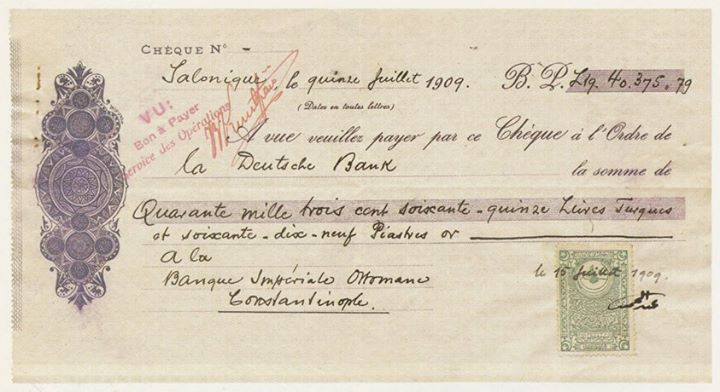
A bank cheque shown with coins. Photograph: the subject
Image Credits: Wikimedia Commons
A check hold is a temporary restriction on money from a deposited check. The balance may show in your account, but the bank will not let you spend or withdraw it until the payer's bank has confirmed the funds.
The delay exists because a check is a promise, not a payment. Your bank credits your account provisionally, then collects the money from the payer's bank, and that collection takes time.
This article explains why banks hold your check deposits for days, including what a check hold actually is, the standard timetable, the six exception holds, why banks bother holding at all, and what you can do about a hold.
This is general educational information, not financial advice.
What a check hold actually is
When you deposit a check, your bank endorses it and forwards it to the bank where the writer holds an account. That bank, the paying bank, then decides whether to honour it.
Only after the paying bank pays does the money truly move. Until then, your bank is exposed: if you withdraw the money and the check bounces, your bank loses it.
A hold protects the bank against that loss, and it also protects you from spending money that may vanish later with fees. A returned check can trigger overdraft charges on top of the reversed deposit.
Regulation CC is the federal rule that sets the maximum wait. It implements the Expedited Funds Availability Act of 1987, and its job is to stop banks holding deposits indefinitely while still giving them time to catch bad checks.
The rule sets ceilings, not targets. Many banks release funds faster than the law requires, and the law does not force a bank to hold a check at all.
Business days matter to every deadline. Under Regulation CC, business days are Monday through Friday excluding federal holidays, so a check deposited on Friday afternoon does not start its clock until Monday.
The standard timetable
Some deposits must be available by the next business day. Cash handed to a teller, electronic payments such as wires and ACH credits, US Treasury checks, US Postal Service money orders and checks drawn on the Federal Reserve or a Federal Home Loan Bank all qualify.
Cashier's checks, certified checks and teller's checks also qualify when deposited in person to a bank employee, as do checks drawn on an account at the same bank, known as on-us checks.
Ordinary checks follow a two-day rule. Funds from most check deposits must be available by the second business day after the banking day of deposit.
A floor applies even to held checks. The first $275 of a day's check deposits must be available by the next business day, a figure raised from $225 on July 1, 2025, as the Federal Reserve's Regulation CC compliance guide confirms.
Deposit method changes the timetable. Deposits made at an ATM the bank does not own, called nonproprietary ATMs, may be held until the fifth business day, because the bank receives them later.
The six exception holds
Longer holds, sometimes stretching to seven business days or more, apply only in specific situations spelled out in Regulation CC. The exceptions are narrow, and the bank must tell you when it uses one.
Large deposits are the most common trigger. If the total of checks deposited on one banking day exceeds $6,725, the amount above that threshold can be held for a longer period, a figure raised from $5,525 on July 1, 2025.
New accounts are another trigger. During the first 30 days after an account is opened, banks may hold check deposits longer, because they have no history on which to judge the customer.
Repeated overdrafts also qualify. An account overdrawn repeatedly in the past six months can face extended holds, since the pattern suggests higher risk.
Reasonable cause to doubt collectibility is a fourth exception. If the bank has specific reason to believe a check will not be paid, such as a stop-payment notice or a suspicious item, it may extend the hold.
Emergency conditions form a fifth exception. A computer failure, natural disaster or other event beyond the bank's control can justify longer holds until normal operations resume.
Redeposited checks form the sixth exception. A check deposited again after being returned unpaid can be held longer, since it has already failed once. In every exception case, the bank must give a hold notice explaining the reason and the release date.
For a large deposit, the release schedule is tiered. Using a $15,000 check as an example, $275 is available on the first business day, a further $6,450 by the second business day, and the remaining $8,275 by the seventh business day.
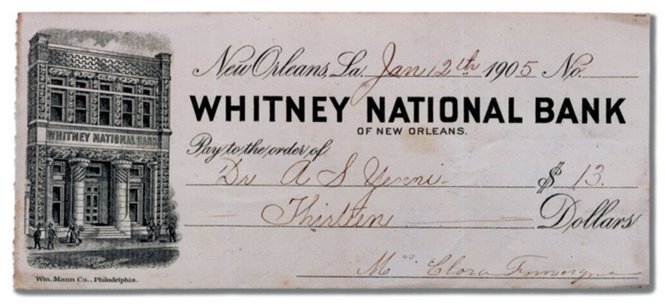
A historic bank check dated 1905. Photograph: the subject
Image Credits: Wikimedia Commons
Why banks bother holding at all
Check fraud is the core reason. Counterfeit checks, altered checks and checks written on closed or empty accounts still circulate, and electronic processing has not eliminated them.
A bank that releases funds immediately bears the loss when a check bounces after withdrawal. Holds shift that waiting period to the depositor, who is better placed to know whether the payer is trustworthy.
Holds also buy time for the return system to work. The paying bank must spot problems and return the unpaid check, and the depositary bank needs that return before the money is spent.
The system has improved with electronic check processing. Since most checks now clear electronically rather than travelling as paper, ordinary holds are shorter than they were decades ago.
Still, the risk has not vanished. Same-day settlement rules under Regulation CC push paying banks to return unpaid checks quickly, which is why most ordinary checks now clear in two business days.
What you can do about a hold
Ask for the hold notice. Banks must disclose their funds availability policy when you open an account, and they must give you a notice when a specific deposit is held, including the reason and the date funds will be available.
Choose faster payment methods for urgent money. Wires and ACH credits carry next-day availability, and cash deposited in person is available the next business day, as explained in our guide to what pending funds mean.
Deposit in person when possible. Cashier's checks and government checks qualify for next-day availability only when deposited in person to an employee, not at an ATM.
Keep a buffer for timing gaps. Because weekends and federal holidays do not count as business days, a Friday deposit can take until the following week to fully clear even under the standard schedule.
If you believe a hold is wrong, ask the bank to explain it in writing and check the policy you received at account opening. If the bank cannot justify the hold under Regulation CC, you can complain to your state banking regulator or the federal regulator that supervises the bank.
Frequently asked questions
Why is only part of my check available?
Regulation CC requires the first $275 of a day's check deposits by the next business day, with the rest following the standard or exception schedule. Partial availability is the normal pattern, not an error.
Do weekends count toward a check hold?
No. Business days are Monday through Friday excluding federal holidays, so a Friday deposit starts its clock on Monday and a holiday week stretches every deadline.
Can a bank hold a check for more than seven business days?
Yes, in exception cases such as large deposits, new accounts or suspected fraud, and the bank must give a hold notice. Beyond the exception schedule, the bank must show the longer hold is reasonable.
Does Regulation CC require banks to hold checks?
No. It sets maximum hold times and disclosure duties, but it does not require a hold. Many banks release funds faster than the legal ceiling, especially for established customers.
The bottom line
Banks hold checks because the money has not arrived yet, and Regulation CC caps how long they can make you wait. Most checks clear by the second business day, with $275 available the next day, and longer holds need a specific reason.
Check your hold notice, deposit in person for next-day items, and plan around weekends and holidays. If a hold looks unjustified, ask the bank to explain it in writing.
Tags: Banking, Checks, Regulation CC, Deposits
Rive News is a research desk covering home, health, money and everyday science topics, writing explainers from public sources rather than personal experience.
Related
- How Banks Make Money on Free Checking Accounts: Fees, Interest, and Swipes
- What Happens to Your Money If a Bank Fails: FDIC Insurance Explained
- Why Do Banks Charge Monthly Maintenance Fees on Checking Accounts?
Subscribe for one practical money explainer each week.
Rive News publishes general information only. Corrections are welcome through the research desk.
Related stories

How your APR is divided by 365 to get daily interest
Lenders divide your APR by 365 for a daily rate, then apply it to your average daily balance. This guide walks through every step

What is the difference between APR and effective annual rate?
APR ignores compounding inside the year; the effective annual rate includes it. A 12.99% APR card really costs 13.80% a year. Worked

APY vs interest rate: what compounding does to your money
APY includes compounding; the interest rate does not. A 5% rate compounded monthly is really 5.12% APY. Here is how the math works and what