
How does buy now pay later actually make money
Key takeaways
- Merchant fees are the main earner: stores pay a cut of each sale for the extra orders BNPL drives.
- Late fees and interest on longer plans add revenue when shoppers miss payments or borrow more.
- The "free" split payment is paid for by the store, and sometimes by the shopper, not by magic.
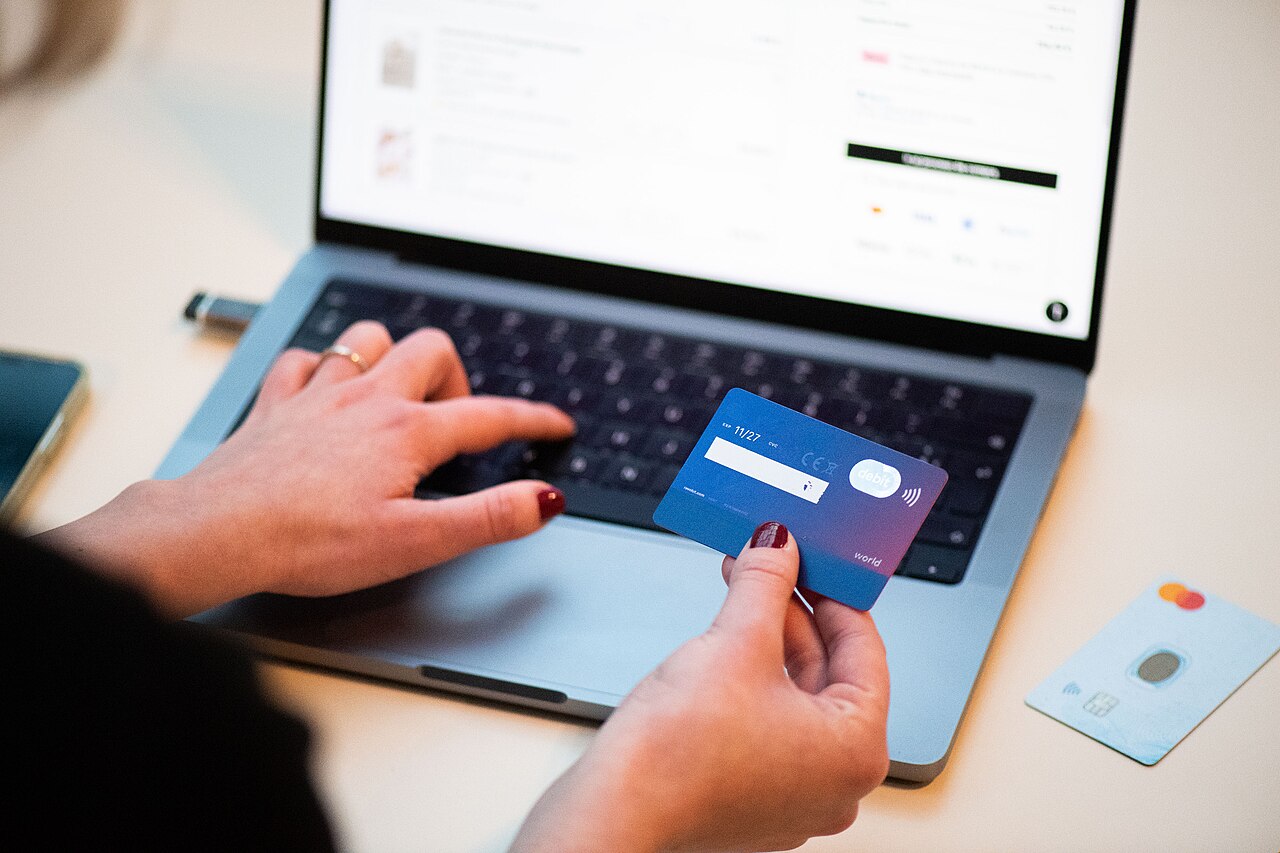
Buy now pay later, or BNPL, lets you split a purchase into smaller payments, often with no interest if you pay on time. At checkout, you might see a "Pay in 4" button next to the card option. The first payment leaves your account at once, and the rest follow every two weeks.
This article explains how buy now pay later actually makes money, including merchant fees, late fees, interest on longer plans, data and marketplace income, and loan sales. This article is for general information, not financial advice.
What buy now pay later actually is
BNPL is point-of-sale financing. You buy an item now and pay for it later on a set schedule. The best-known format is Pay in 4, which the Congressional Research Service (CRS) describes as four installment payments in four two-week intervals.
The first payment is often around 25% of the purchase price, due at checkout.
Longer plans work differently. For pricier items, BNPL firms offer monthly payments that can run up to 60 months, according to CRS. These longer plans may charge interest, which makes them closer to a standard consumer loan.
Pay in 4 plans usually charge no interest if you pay on time.
The market grew fast. CRS, citing Consumer Financial Protection Bureau (CFPB) data, reports that originations by five major providers grew nearly tenfold from 2019 to 2021, reaching 180 million originations in 2021 totaling $24.2 billion. FindLaw, citing Federal Reserve research, reports that one in five Americans have used BNPL loans.
BNPL firms are mostly nonbank financial companies. CRS names Klarna, Afterpay, Affirm, Splitit, and Sezzle among the firms operating in the space. Some work with banks for origination.
The product took off during the pandemic shift to online shopping, and it now appears across sectors, not just apparel and cosmetics.
Merchant fees: the biggest earner
Merchant fees are the core of the business. Every time a shopper uses BNPL at checkout, the store pays the lender a fee. The CFPB's then-director Rohit Chopra said in prepared remarks that lenders charge participating sellers a commission typically 2 to 4 percent of the transaction amount, which is a significant part of lenders' overall revenue.
FindLaw gives a slightly higher range of 3% to 6% of the purchase price. The exact rate varies by provider, product, and merchant. Either way, the fee is far higher than the cost of a card swipe.
Stores accept it because BNPL drives orders they might not have won otherwise. A shopper who hesitates at a $200 total may commit to four payments of $50.
The CFPB says lenders pitch retailers on incremental sales, meaning sales the store would not have made without the option. BNPL also lifts basket sizes, since a split payment makes a larger purchase feel manageable. Some merchants raise prices to cover the fee, which means all shoppers can end up paying, not just BNPL users.
Think of it like the old charge card model. Chopra compared BNPL to the Diners Club card introduced in 1950, where the restaurant paid a commission on sales and diners paid no interest. BNPL works the same way, with the merchant as the paying customer and the shopper as the product that attracts them.
Late fees and interest on longer plans
Late fees are the second revenue stream. Pay in 4 plans charge no interest, but they do charge fees when payments arrive late. CRS, citing a CFPB survey, reports that in 2021 more than 10% of BNPL consumers were charged late fees.
A single missed payment can also trigger bank overdraft fees if the lender pulls from an empty account.
Interest comes from the longer plans. A 12-month or 24-month BNPL loan for furniture or electronics often carries interest, sometimes at rates close to a credit card. These plans are usually covered by standard lending disclosure rules, since they run longer than four installments.
For more on how borrowing costs work, see our explainer on how interest on a personal loan is calculated.
Credit losses are the cost side of this model. Not every borrower repays. Chopra said that in the CFPB's dataset, 2.9% of borrowers charged off a BNPL loan in 2020, rising to 3.8% in 2021. Lenders price their merchant fees and late fees to cover those losses and still profit.
Disputes add another cost. FindLaw reports that the CFPB found about 13% of BNPL transactions involved a return or dispute, amounting to at least $1.8 billion in disputed or returned transactions in 2021. Sorting out refunds across a lender, a merchant, and a shopper is slow, which is why regulators pushed for clearer dispute rights.
Data, marketplaces, and selling loans
Data is a quieter earner. BNPL firms sit inside the checkout, so they see detailed purchase behavior across many stores. Chopra said these firms can gather detailed information about purchase behavior in a way traditional cards cannot, and use it to power app-based marketplaces with paid product placement.
Shoppers browsing a BNPL app see promoted products, and merchants pay for that placement.
The CFPB flagged this as a concern, not just a business model. It said firms can use data and interface design to gamify shopping and lending, promoting repeat usage and further revenue. Some firms build closed-loop shopping apps with partner brands.
FindLaw notes that the CFPB worried about firms using payment histories to push certain brands and products, often aimed at younger audiences.
Some lenders also earn money by selling loans to investors. Packaging BNPL loans and selling them frees up cash to make new loans. Investors buy the future payment streams, and the lender keeps the merchant fees and servicing income.
This is the same basic machinery as other consumer lending, applied to small installment loans.
Regulation shapes how far each stream can go. In May 2024, the CFPB issued an interpretive rule treating BNPL as equivalent in some ways to a credit card, requiring Truth in Lending Act disclosures and the right to dispute charges, according to CRS. The rule changed the dispute and disclosure picture, though the underlying fee model stayed intact.
What this means for shoppers
BNPL is cheapest when you treat it as a budgeting tool, not as extra income. Use it for one planned purchase at a time. Set the payments in your calendar.
Make sure the money is in your account before each due date, since a failed payment can trigger both a late fee and a bank charge.
Stacking is the trap to avoid. Chopra identified loan stacking, where a borrower takes on multiple BNPL loans at the same time, as a key overextension risk. Three purchases split into four payments each do not feel like three debts, until all the payments land in the same two weeks.
Harvard Business School research cited by CRS found that after starting BNPL, consumers had a higher likelihood of overdraft and lower checking account balances driven by BNPL-driven spending.
Check whether on-time payments build your credit history. CRS reports that of five major BNPL providers studied by Harvard Business School, two reported positive payment information to credit bureaus, while four reported negative payment information. Missing payments is more likely to hurt your credit than on-time payments are to help it.
Compare BNPL with a credit card's grace period. A card paid in full within the grace period also charges no interest, and it may offer stronger dispute protections and rewards. If you carry a balance, compare the card's interest with the BNPL plan's total cost, including any fees.
Ask one question before you tap the button: would I buy this at full price today if I had to pay in full? If the answer is no, the split payment is not making the item cheaper. It is only making the spending easier.
That ease is exactly what the merchant fee pays for.
Is buy now pay later free?
Pay in 4 plans charge no interest when you pay on time. They are not free to run: the store pays a merchant fee, and late payers pay fees. Longer plans often charge interest.
Does BNPL affect your credit score?
It can. Some providers report missed payments to credit bureaus, and debts sent to collection can appear on credit reports. On-time payments are less consistently reported, so they may not build your history.
Why do stores offer BNPL if it costs them a fee?
Stores expect more sales and larger orders. The CFPB says lenders pitch retailers on incremental sales they would not have made without the option.
Can you return something bought with BNPL?
Yes, and the lender must handle the refund. Since 2024, BNPL lenders have faced credit-card-style dispute and refund duties under the CFPB's interpretive rule.
The bottom line
Buy now pay later makes money mainly from the store, not from you. Merchant fees of roughly 2 to 6 percent per sale carry the model. Late fees, interest on longer plans, marketplace placement, and loan sales add more.
The product is useful when you use it for one planned purchase and pay on time. It turns expensive when stacked loans, missed payments, and overdrafts pile up. If you want to build savings instead of splitting spending, start with our guide on the difference between saving and investing.
Tags: buy now pay later, BNPL, personal finance, consumer credit
Latest in Finance
- How the credit card grace period saves you money
- The difference between saving and investing
- How interest on a personal loan is calculated
- Fixed vs variable interest rates
Subscribe for weekly personal finance explainers from the Rive News research desk.
Related stories

How your APR is divided by 365 to get daily interest
Lenders divide your APR by 365 for a daily rate, then apply it to your average daily balance. This guide walks through every step

What is the difference between APR and effective annual rate?
APR ignores compounding inside the year; the effective annual rate includes it. A 12.99% APR card really costs 13.80% a year. Worked

APY vs interest rate: what compounding does to your money
APY includes compounding; the interest rate does not. A 5% rate compounded monthly is really 5.12% APY. Here is how the math works and what