
Why is there no grace period on cash advances? Fees and APR
Key takeaways
- Cash advances are priced as short-term loans, not purchases, so interest starts on the transaction date with no interest-free window.
- Expect a triple hit: a 3-5% upfront fee, a higher APR than purchases, and interest accruing daily from day one.
- Even repaying fast does not dodge the interest; Chase puts it bluntly on its own site: there is no way of paying less for cash advances.
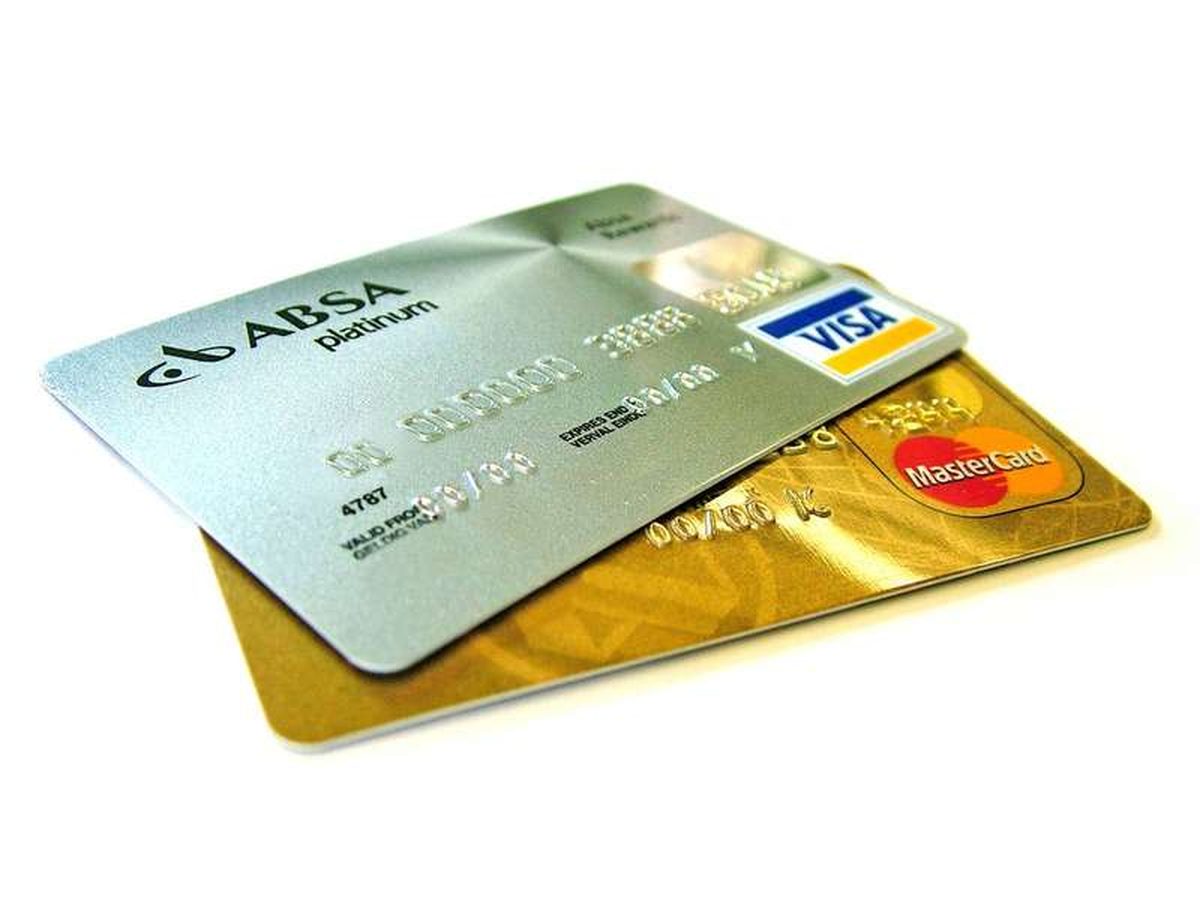
A cash advance borrows against the same credit line as these cards, but the pricing works nothing like a purchase. Photograph: Lotus Head/Wikimedia Commons
Image Credits: Wikimedia Commons
Swipe a credit card at a store and you typically get three weeks or more before interest starts. Pull cash from the same card at an ATM and interest starts the same day. The difference is not a glitch; it is the design.
This article explains cash advances and their missing grace period, including what a cash advance actually is, why issuers skip the interest-free window, the three costs stacked against you, what a real advance costs, and how to avoid needing one.
What a cash advance actually is
A cash advance lets you borrow cash against your credit card's line of credit. You can get it at an ATM with your card and PIN, at a bank counter, or with convenience checks the issuer mails you.
Overdraft Apps describes it plainly: a cash advance is pretty much a short-term loan offered by your credit card issuer. The convenience masks the mechanics.
When you use a debit card at an ATM, you withdraw your own money. When you use a credit card, you borrow the bank's money in cash form.
That distinction drives everything that follows. Issuers do not treat the two transactions the same because they are not the same.
A purchase has a merchant, a settlement delay, and fraud protections built into the card network. A cash advance is money out the door, instantly and irreversibly.
Why there is no grace period
The grace period exists for purchases. The Consumer Financial Protection Bureau notes that issuers must send your bill at least 21 days before payment is due, and that grace periods typically apply only to purchases. Cash advances and issuer convenience checks, the CFPB says, generally start accruing interest from the day of the transaction.
Why the split? Because the grace period is a feature of purchase lending, where the issuer earns a cut from the merchant on every swipe. That merchant revenue subsidizes your interest-free float.
A cash advance has no merchant and no merchant fee, so the issuer has no revenue to fund a free window.
Risk plays a role too. Cash is fungible and final; once withdrawn, the issuer cannot reverse the transaction the way it can dispute a purchase. Pricing the advance as an immediate-interest loan compensates for that one-way risk.
The Motley Fool's breakdown notes that interest on a cash advance begins accruing immediately, unlike purchases, and that the APR is typically higher.
So the honest answer to "why" is structural: the grace period was never a gift. It was a merchant-subsidized feature of purchase credit, and cash advances sit outside the system that pays for it.
The three costs stacked against you
A cash advance hits you three ways at once, and each one is worse than its purchase equivalent.
First, the upfront fee. Most issuers charge 3 to 5 percent of the advance amount, according to the Fool. On a $500 withdrawal, that is $15 to $25 before a single day of interest.
Issuers also set minimums: Overdraft Apps notes Chase charges at least $10 and Capital One at least $5, so small advances get punished proportionally harder.
Second, immediate interest. With no grace period, the daily interest clock starts the moment the cash is in your hand.
The Fool emphasizes that you will owe interest even if you repay the full advance when your statement arrives. There is no paying fast enough to earn a free ride.
Third, a higher APR. Cash advance APRs commonly run 5 to 10 percentage points above the purchase APR, per the Fool, with industry ranges from 17.99 to 29.99 percent reported by Overdraft Apps. Chase, the largest US card issuer, charges 29.99 percent on cash advances for most of its cards.
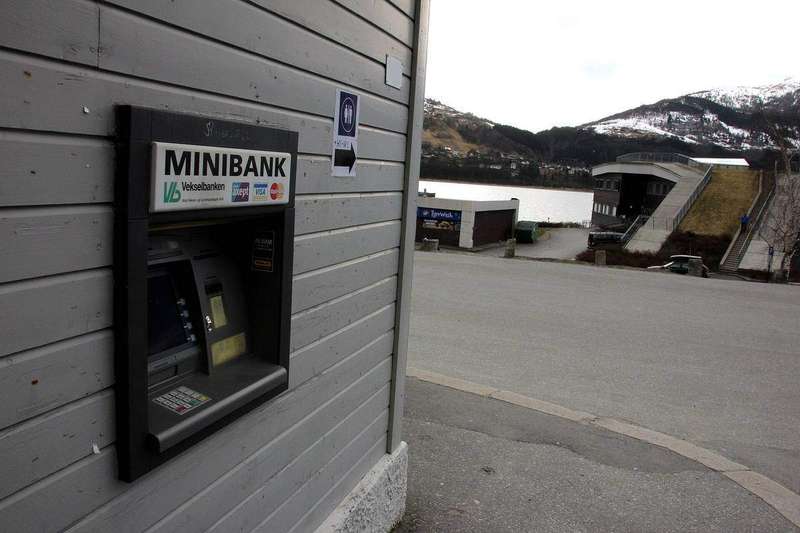
Withdrawing cash on a credit card starts the interest clock the same day, with none of the interest-free float purchases get. Photograph: Bjarne Henning Kvaal/Wikimedia Commons
Image Credits: Wikimedia Commons
What $1,000 really costs
Nasdaq's Dollar Scholar column walked through a concrete example using the author's own American Express terms. His purchase APR was 24.24 percent; his cash advance APR was 29.99 percent, with a fee of $10 or 5 percent per advance, whichever is greater.
On a $1,000 advance repaid after one month, the math came to roughly $1,075 at minimum, before any ATM owner's own usage fee. That is $50 in fees plus about $25 in interest for thirty days of borrowing.
Scale that up and the trap shows its teeth. At 29.99 percent with daily compounding and no grace period, every week you carry the balance adds real money. The advance also raises your credit utilization ratio, the share of your credit line in use, which can weigh on your credit score if it climbs past recommended levels.
How to avoid needing one
The cheapest cash advance is the one you never take. If the need is an emergency expense, a debit card withdrawal from your own account costs nothing beyond a possible out-of-network ATM fee, usually under $5 and often reimbursable.
An emergency fund, even a small one, is the structural fix. A few hundred dollars in savings breaks the cycle of borrowing cash at 30 percent to cover a surprise bill. Building it is slow; paying 29.99 percent APR is fast in the wrong direction.
If you are already carrying card debt, check where your payments go. Under the CARD Act, any amount you pay above the minimum must be applied to your highest-APR balance first, which means extra payments attack the cash advance balance before cheaper purchase debt. Paying more than the minimum is the fastest way to stop the daily interest.
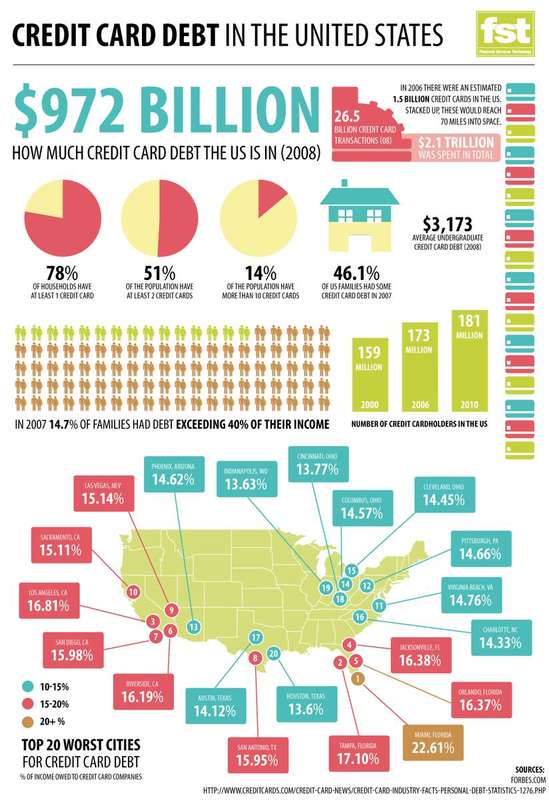
High-cost borrowing like cash advances feeds the broader US credit card debt load. Photograph: Tiffany Farrant/Wikimedia Commons
Image Credits: Wikimedia Commons
Frequently asked questions
Do cash advances earn credit card rewards?
No. The Fool notes that you earn no rewards on a cash advance, and it does not count toward a sign-up bonus spending requirement either. Rewards are funded by merchant fees, which cash advances do not generate.
Can I get a grace period by paying the advance off the same day?
No. Interest accrues from the transaction date, so even same-day repayment leaves a small interest charge plus the upfront fee. The Fool states this explicitly: the advance collects interest from the moment the transaction completes.
Do cash advances hurt my credit score?
They can, indirectly. The advance raises your balance and your credit utilization ratio, and high utilization can lower scores.
Missed payments on the higher balance hurt like any missed payment. The advance itself is not a separate black mark.
Why is the cash advance APR higher than the purchase APR?
Issuers price the higher risk and the lack of merchant revenue into the rate. Cash is final, fraud-prone, and often a signal of financial distress, so the advance gets loan-style pricing instead of purchase-style pricing.
The bottom line
There is no grace period on cash advances because the grace period was built for purchases, funded by merchant fees that cash advances never generate. The advance is priced as what it is: a short-term, high-risk cash loan.
That pricing means a 3 to 5 percent fee upfront, interest from day one, and an APR several points above your purchase rate. Chase says it best on its own website, as quoted by Nasdaq: "There is no way of paying less for cash advances." Treat them as a last resort, and build the emergency savings that make them unnecessary.
This article is educational and is not financial advice. Card terms, APRs, and fees vary by issuer; check your cardholder agreement for the terms that apply to you.
Tags: cash advances, credit cards, grace period, APR, personal finance
Rive News is the research desk behind this explainer series, covering tech, health, science, and everyday questions with sourced reporting.
Latest in Personal Finance
- How Does a Credit Card Grace Period Actually Work?
- How Credit Card Interest Compounds Daily: A Step-by-Step Walkthrough
- Why Paying Only the Minimum Keeps You in Debt
- What is a daily periodic rate on a credit card?
Subscribe for one evidence-based explainer in your inbox every morning.
Related stories

How your APR is divided by 365 to get daily interest
Lenders divide your APR by 365 for a daily rate, then apply it to your average daily balance. This guide walks through every step

What is the difference between APR and effective annual rate?
APR ignores compounding inside the year; the effective annual rate includes it. A 12.99% APR card really costs 13.80% a year. Worked

APY vs interest rate: what compounding does to your money
APY includes compounding; the interest rate does not. A 5% rate compounded monthly is really 5.12% APY. Here is how the math works and what