
What Is a Charge-Off, and Why Does Paying It Not Always Help?
Key takeaways
- A charge-off is an accounting entry: the creditor has written the debt off as a loss, but you still owe the money.
- Paying updates the account to "paid" or "settled" yet the entry can remain on your report for 7 years from the first missed payment.
- Paying is still often worth it: it stops collection calls, removes the lawsuit risk inside the statute of limitations, and looks better to future lenders.
A charge-off is one of the most misunderstood entries on a credit report. It sounds final, as if the debt were erased.
Many people assume that paying it will wipe the slate clean. Neither is true: a charge-off is a creditor-side accounting decision, and the debt survives it completely intact.
The Consumer Financial Protection Bureau describes a charge-off as an accounting determination that classifies a debt as unlikely to be collected, in its July 2020 Quarterly Consumer Credit Trends report. That classification changes the creditor's books. It changes nothing about your legal obligation to repay.
This article explains what a charge-off is, when creditors file one, why paying it rarely removes it from your credit report, what paying can still accomplish, and how to handle one step by step.

A stack of credit cards. After roughly 180 days of missed payments, card issuers must classify the account as a charge-off. Photograph: U.S. Army USAG-RP by Mary Davis
Image Credits: Wikimedia Commons (Tiffany Farrant, US Army; Mary Davis, US Government Accountability Office)
What a charge-off actually is
When you stop paying a debt, the creditor eventually gives up trying to collect it through normal billing. At that point the creditor moves the account from "past due" to "charged off" in its own ledgers. This is an internal bookkeeping move required by federal banking regulators, not a legal ruling about the debt.
Think of it this way: the creditor is telling its shareholders and regulators that it no longer expects to be repaid. The debt itself, however, still exists, and you still owe it.
A charged-off account is routinely sold to third-party collectors, who then pursue it. In 2018, roughly 28 percent of consumers with a credit file had a debt reported by a third-party collector, according to the CFPB's analysis of nationwide credit records.
One common confusion is the difference between a charge-off and debt forgiveness. Forgiveness cancels the obligation; a charge-off merely reclassifies it.
The collection letters may even continue, because the new owner of the debt has every incentive to recover what the original creditor wrote off.
When creditors charge off an account
Federal regulators set the timetable. Under the Uniform Retail Credit Classification and Account Management Policy issued by the Federal Financial Institutions Examination Council, banks must charge off open-end accounts such as credit cards after 180 days of missed payments. Closed-end installment loans are charged off after 120 days, as reported by LegalClarity with citations to the governing rules.
In practice, the months before a charge-off follow a familiar pattern. Your account passes through 30-day, 60-day, and 90-day late marks, each reported to the bureaus, while collection attempts escalate.
Some creditors offer hardship programs or settlements during this window precisely because a charge-off forces them to take a loss on the books. Once the charge-off is recorded, the account's negative status is at its most severe.
Note that medical debt works on a different clock: a hospital may send a bill to collections anywhere from 30 to 180 days after billing, with no single standard, as former CFPB Director Richard Cordray described in 2014 remarks. The 120 and 180-day rules apply to bank-regulated consumer credit, which is where most charge-offs come from.
Why paying does not always help your credit report
Here is the part that surprises people most. Federal law allows a charge-off to remain on your credit report for seven years, counted from the date of first delinquency: the first missed payment you never made up. That is 15 USC 1681c, the Fair Credit Reporting Act's reporting-period rule, and the CFPB has confirmed that paying the account does not restart that clock.
So when you pay a charged-off debt, the entry does not vanish. It updates to "paid charge-off" or "settled," which future lenders view slightly more favorably than "unpaid," but the seven-year history stays visible.
Credit repair companies sometimes imply otherwise. The entry leaves only when the reporting period expires, or when you successfully dispute a genuine error such as a wrong date or a duplicate tradeline.
There is also a separate trap worth knowing. Making a payment or even acknowledging the debt in writing can restart the statute of limitations for lawsuits in some states.
That is a different clock from the credit-reporting clock, and most state limits fall in the three-to-six-year range, per the CFPB. Paying a very old, time-barred debt can therefore revive a creditor's ability to sue you, which is why checking your state's rules first matters so much.
If you carry balances on other cards while dealing with a charge-off, remember that interest keeps compounding daily on revolving balances, which is one reason charged-off balances grow even after you stop using the card.
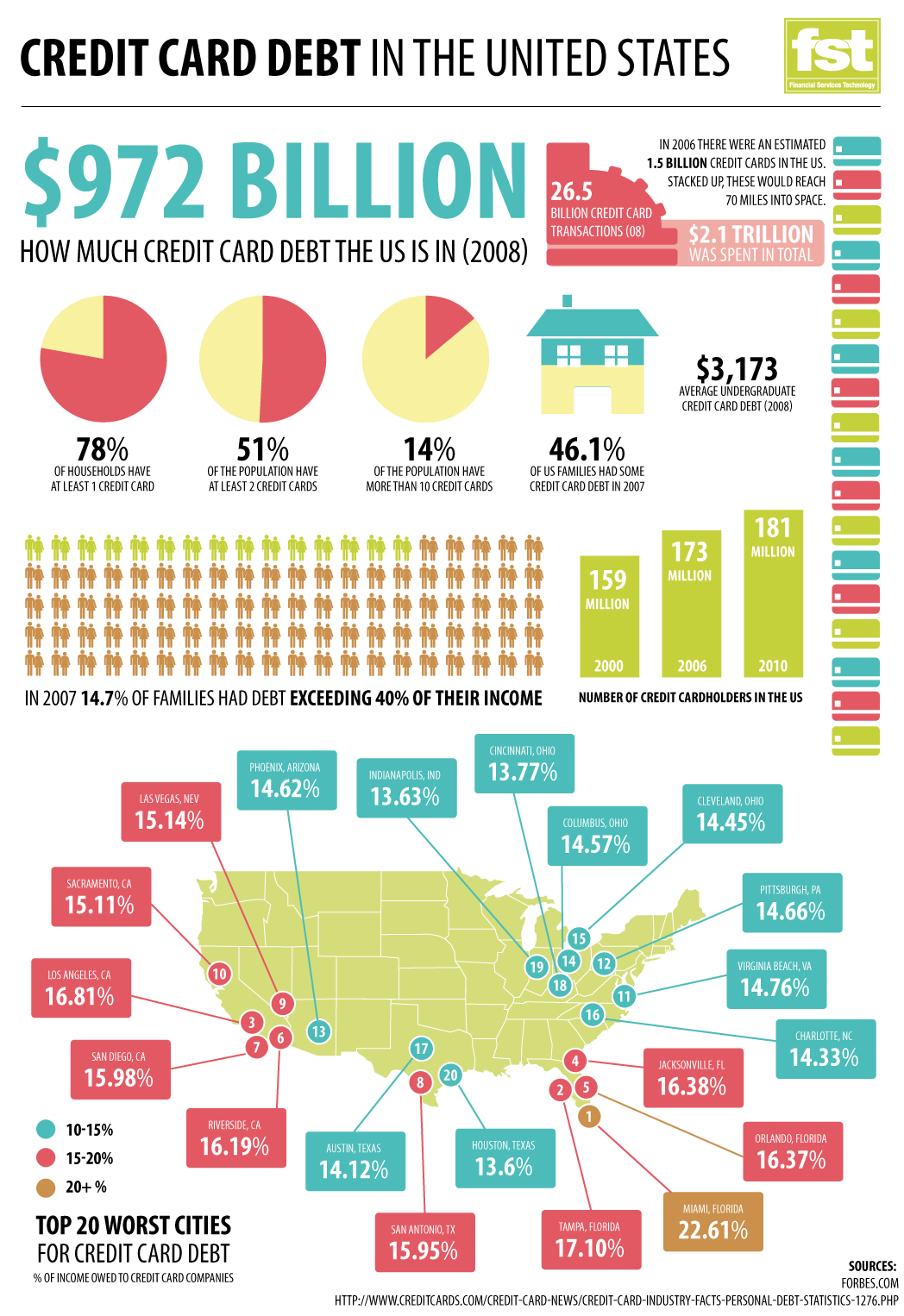
Total US credit card debt has climbed steeply in recent years, and charge-offs have risen with it. Photograph: Tiffany Farrant
What paying can still accomplish
None of this means paying is pointless. It means the payoff is different from what most people expect. Paying a charge-off delivers several concrete benefits even though the entry stays on your report.
First, it stops collection activity. Once the balance is resolved, the calls and letters end, and the account stops being resold to new collectors.
Second, it eliminates the risk of a lawsuit for debts still inside the statute of limitations. A judgment would add a public record to your report and could lead to wage garnishment, so removing that risk is genuinely valuable.
Third, a "paid" or "settled" status simply reads better to the humans who review your file. Mortgage underwriters and landlords often treat an unpaid charge-off as an automatic red flag, while a resolved one is a problem with a documented ending. Paying will not produce an instant score jump, and anyone who promises one is selling something, but the file is unambiguously cleaner afterward.
One option worth negotiating is a "pay for delete" agreement, where the creditor or collector agrees in writing to remove the tradeline in exchange for payment. Collectors are not required to agree, and many refuse as a matter of policy. The CFPB advises getting any settlement terms in writing before you pay a single dollar, which applies doubly here: verbal promises from collectors are worthless without paper.
How to handle a charge-off, step by step
Start by pulling your reports from all three bureaus and finding the exact date of first delinquency for the account. That date sets the seven-year expiration, and collectors sometimes report it incorrectly. If the date is wrong or the entry is duplicated, dispute it with the bureau in writing.
Next, confirm who actually owns the debt now. The original creditor may have sold it, in which case paying the original creditor accomplishes nothing.
Ask for debt validation in writing, and do not acknowledge the debt as yours until the paperwork checks out. Scammers recycle old charged-off accounts precisely because confused borrowers pay without verifying.
Check the lawsuit clock before you pay anything
Then check your state's statute of limitations. If the debt is time-barred, the collector cannot successfully sue, though they can still ask you to pay. Weigh that against your own goals: some people pay time-barred debts for peace of mind or to qualify for a mortgage, and that is a legitimate choice as long as it is an informed one.
If you decide to settle, negotiate the amount and the reporting language before paying. Aim for "paid in full" status if you can afford it, since it reads better than "settled for less than owed."
Get the agreement in writing, pay by a traceable method, and keep records for at least seven years. For context on how small unpaid balances snowball, the minimum payment debt trap explains why balances grow faster than most borrowers expect.
Finally, rebuild around the charge-off rather than waiting for it to fall off. On-time payments on your remaining accounts, low utilization on open cards, and no new delinquencies steadily dilute the damage. Scores recover gradually; the charge-off stings less each year as it ages, and it disappears entirely when the seven-year period ends.
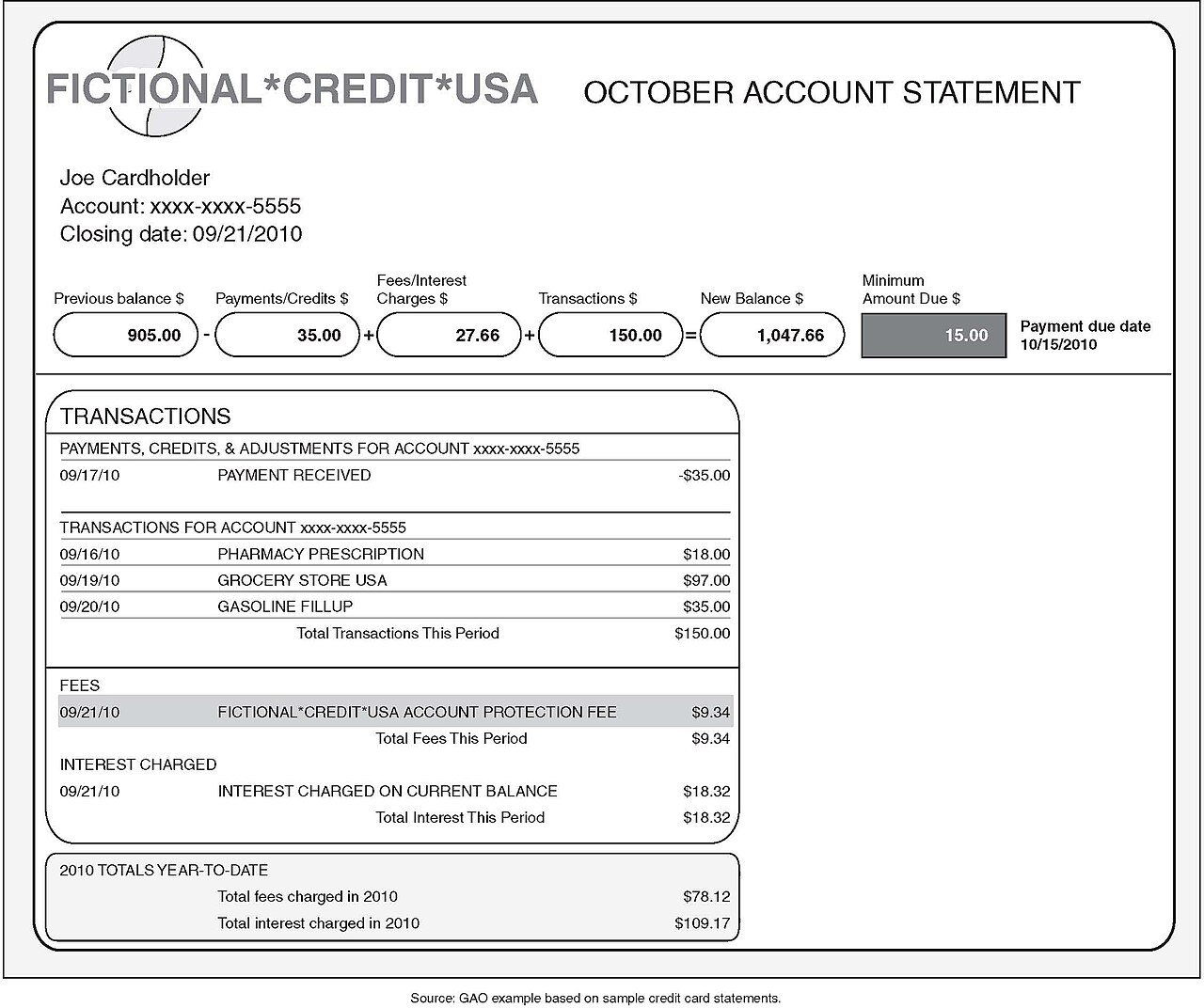
An illustrative credit card billing statement. After charge-off, interest and fees may stop accruing, but the reported balance remains. Photograph: U.S. Government Accountability Office
Does paying a charge-off remove it from my credit report?
No. Paying updates the status to "paid" or "settled," but the entry remains for seven years from the date of first delinquency under the Fair Credit Reporting Act. Only expiration of the reporting period or a successful dispute of an error removes it early.
Can a charge-off be sued on after I pay it?
Once paid in full, there is nothing left to sue over, which is one of the main reasons to pay debts still inside your state's statute of limitations. That limit is typically three to six years, depending on the state and the type of debt.
Will my credit score go up if I pay a charge-off?
It might rise slightly, but do not expect a dramatic jump. Scoring models still see the underlying delinquency history. The bigger gains come from the clean payment history you build afterward, plus the removal of collection activity.
Should I pay a charge-off that is past the statute of limitations?
It depends on your goals. The collector cannot successfully sue on a time-barred debt, and the entry will fall off your report on schedule whether you pay or not. Some people still pay to clear the moral ledger or satisfy a mortgage underwriter; just make sure you understand that paying cannot hurt the reporting clock but could restart the lawsuit clock in some states, so get advice first if you are unsure.
The bottom line
A charge-off is the creditor's accounting decision, not the end of your debt. Paying it will not erase it from your credit report, because federal law keeps it there for seven years from the first missed payment either way.
Pay it anyway when it stops collections, kills lawsuit risk, or clears the way for a mortgage or lease. And if the entry is wrong, duplicated, or past its expiration date, dispute it instead of paying it.
This article explains credit-report mechanics for general information only; it is not legal or financial advice.
Latest in Personal Finance
- How daily interest is calculated on your balance
- How the credit card grace period actually works
- Why the minimum payment is a debt trap
- Does credit card interest compound daily?
Get one practical money explainer like this every morning. Subscribe to the Rive News newsletter.
Related stories

How your APR is divided by 365 to get daily interest
Lenders divide your APR by 365 for a daily rate, then apply it to your average daily balance. This guide walks through every step

What is the difference between APR and effective annual rate?
APR ignores compounding inside the year; the effective annual rate includes it. A 12.99% APR card really costs 13.80% a year. Worked

APY vs interest rate: what compounding does to your money
APY includes compounding; the interest rate does not. A 5% rate compounded monthly is really 5.12% APY. Here is how the math works and what