
Commonwealth Bank union pay deal brings 13% rises and AI committee
Key takeaways
- Commonwealth Bank and its union reached a draft pay deal.
- Tier 1 unpackaged staff get 13% over three years.
- Staff still must vote yes before the deal takes effect.

Sydney's central business district skyline. Photograph: andrew milling / Wikimedia Commons.
Image Credits: Wikimedia Commons.
Commonwealth Bank and its staff union reached a draft pay deal. The deal gives some staff a 13% pay rise over three years. It also creates a new AI committee.
Staff still must vote yes for the deal to take effect.
The Finance Sector Union shared the news on October 13, 2026. It said the two sides reached in-principle agreement. That means they agree on the main terms. The FSU Bargaining Team backs the new deal.
What happened
The Finance Sector Union is the staff union. It is called the FSU for short. It has talked with the bank for months.
The talks covered pay and work rules. On October 13, 2026, the union shared a breakthrough. The two sides reached in-principle agreement.
That means they agree on the main terms. The full text still needs final drafting. Then all CBA staff will vote on it.
An enterprise agreement is a formal deal. It sets pay and work rules for staff at one firm. This deal would run for three years.
It would cover Commonwealth Bank and Bankwest staff. It would also cover Bankwest Level 3 and 4 staff.
The headline term is pay. Tier 1 unpackaged staff get 13% over three years. The union calls it one of the highest rises in banking.
Unpackaged staff are staff who get overtime pay. Packaged staff do not get overtime pay. Tier 3 and 4 staff get more too.
They gain up to 6.5% extra guaranteed pay. That is a move from the bank's first offer. The bank's first offer was far lower.
Every worker gets a guaranteed rise in Year 1. The Year 1 rise is backdated to July 1, 2026. It is paid on a Yes vote. Staff do not wait for Fair Work Commission approval.
The deal also changes leave and allowances. Paid parental leave rises to 20 weeks. It is now 18 weeks.
Parental leave is time off for new parents. Five days of paid family planning leave will cover more. It will now include reproductive health.
The on-call allowance becomes $500. It will rise by 3.5% in years 2 and 3. The domestic relocation allowance doubles to $3000. Relocation help is money to move for work.
The deal also tidies two pay cut-off lines. They sat at $119,400 and $170,000. They become one line at $145,000. That line will rise with prices over the deal term. First aid and kilometre allowances rise.
They will rise with prices over the deal term.
Other terms cover daily work life. Higher duties pay starts after one day. It used to start after four days.
Higher duties pay is extra pay for cover work. Bankwest staff now get rest and tea breaks. Learning must take place in paid time.
The deal also limits start-before-you-start pressure. That phrase means unpaid work before a shift.
Work goal rules get clearer words. Bosses must consult more on goals. The deal eases one flex work rule.
Flex work means work with flexible hours or place. The three-month review period will ease for long-term cases. Bankwest staff get one more fix.
They no longer must work 15 minutes before overtime starts.
The deal also creates an AI committee. AI means computer tools that do tasks. The tools can answer calls or sort data.
The committee will look at how the bank uses these tools. The deal also adds a Sustainable Workforce rule. It covers change, support, and new skills.
It also adds a First Nations employment clause.
Before this deal, the union had said no. It wanted 15% over three years. It said the old offer was too low.
Under the old offer, 60% of staff would get less than CPI in year one. CPI is a measure of price rises. Half of staff would get no rise, or as little as 4%.
That was over three years. The union called that a real pay cut.
Why it matters
Pay talks at a big bank touch many lives. CBA is a large bank in Australia. Its staff serve customers across the country.
When pay lags prices, staff feel strain. The union called the old offer a real pay cut. Thousands of members signed a petition.
They sent their stories to CEO Matt Comyn. The union said member action drove the result.
A three-year deal gives staff a clear view. They know the floor for pay growth. A floor is the lowest promised rise.
This deal may shape other pay talks.
A pay rise changes what lands in a paycheck. Gross pay is pay before tax. Net pay is pay after tax.
A rise in gross pay lifts net pay too. Fees can still eat into extra pay. One costly trap is overdraft protection.
It is best to know the full terms.
The AI committee matters for a second reason. Banks now use AI in daily work. Staff have raised AI as a concern.
A committee gives a place to raise AI plans. It will not settle every fear. It sets a place to raise them.
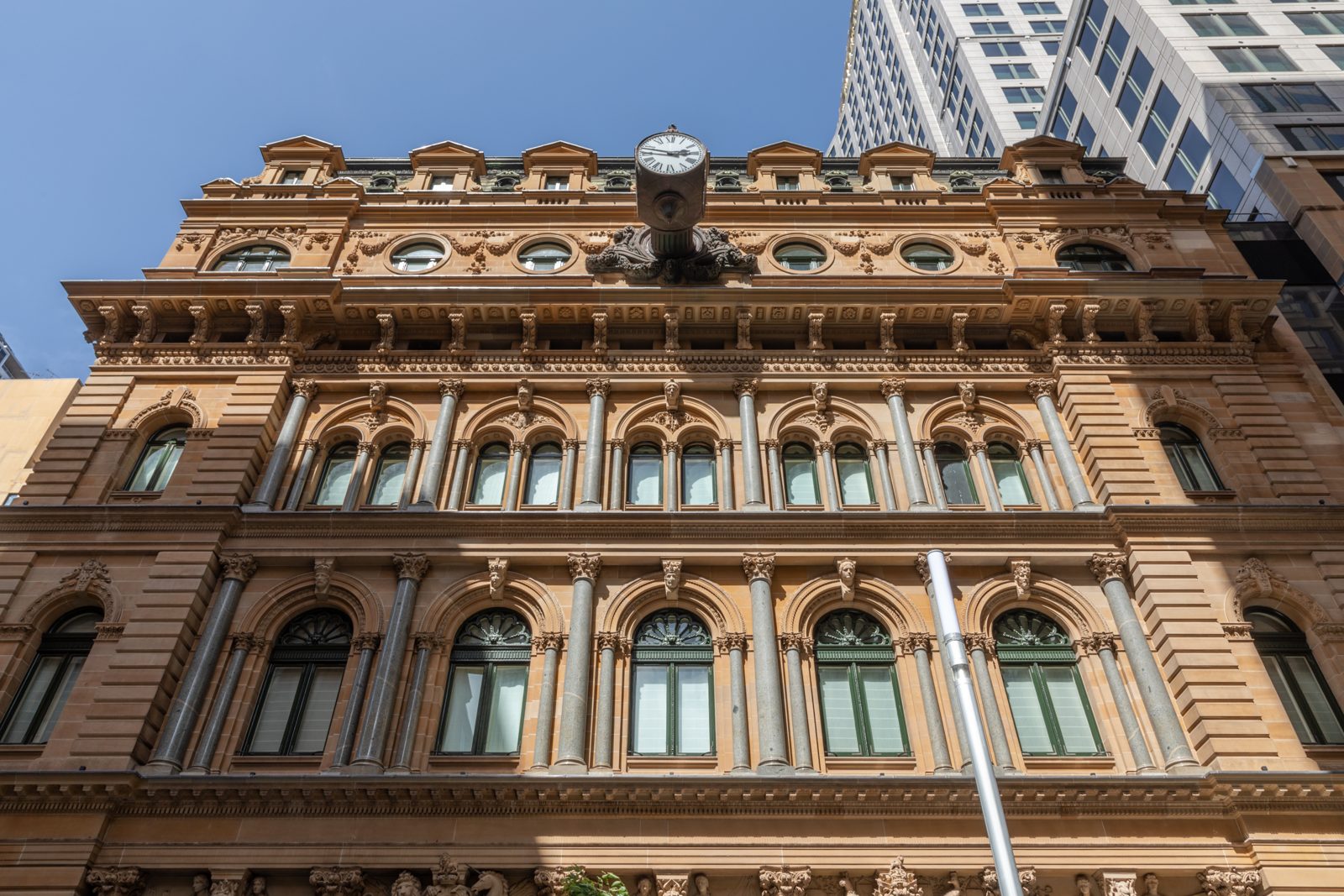
A historic building on George Street in Sydney. Photograph: Dietmar Rabich / Wikimedia Commons.
The union said the bank made an $11 billion profit. That figure frames the pay talks. Staff had asked for a fair share.
The new offer moves toward that goal.
What happens next
The draft deal is not final yet. Union reps meet later this week. They will talk through the fine terms.
Then the two sides will finish the drafting. The deal then goes to a staff vote. The union expects the vote in the coming weeks.
The union will hold info sessions for members. The sessions will answer questions on the new deal. They will also cover the vote process.
Staff should watch for session dates.
The planned AGM action is now off. The union had planned action at the AGM on Wednesday. The AGM is the bank's yearly meeting.
The action is now cancelled. A small group will still attend. It will ask the Board and CEO about key issues.
Those issues are AI, offshoring, and branch closures.
The vote is the key test. A yes vote locks in the terms. A no vote sends both sides back to talks.
If staff vote yes, the deal takes effect. Year 1 rises would be backdated to July 1, 2026. Staff would not wait for Fair Work approval. If staff vote no, talks start again.
The next weeks will show which path staff choose.
This article is for information only and is not medical/financial advice.
Related stories

How your APR is divided by 365 to get daily interest
Lenders divide your APR by 365 for a daily rate, then apply it to your average daily balance. This guide walks through every step

What is the difference between APR and effective annual rate?
APR ignores compounding inside the year; the effective annual rate includes it. A 12.99% APR card really costs 13.80% a year. Worked

APY vs interest rate: what compounding does to your money
APY includes compounding; the interest rate does not. A 5% rate compounded monthly is really 5.12% APY. Here is how the math works and what