
Direct debit vs standing order in plain terms
By Rive News / Research desk | Rive News / Published October 29, 2026 at 9:00 AM PKT
Key takeaways
- A direct debit lets an organisation collect money from your account, with your permission, and the amount can vary.
- A standing order is a fixed payment you set up and control, sent by your bank on a schedule you choose.
- Direct debits carry the Direct Debit Guarantee; standing orders do not have that dedicated protection.

[A payment agent handling a transaction at a terminal.] Photograph: Wikimedia Commons contributor
Image Credits: Wikimedia Commons
A direct debit and a standing order both pay bills automatically from a bank account. The difference is who is in charge.
With a direct debit, the company collecting the money controls the amount and date, within the permission you gave. With a standing order, you control the amount, date and recipient, and your bank simply sends it.
This article explains direct debit vs standing order in plain terms, including how each one is set up, what happens when amounts change, how cancellation works, and which one suits which kind of payment.
This is general educational information, not financial advice.
What is a direct debit?
A direct debit is an instruction that lets an organisation collect money from a bank account. The account holder authorises the organisation, usually by completing a direct debit mandate, and the organisation then requests each payment from the bank. The account holder does not send the money; the organisation collects it.
Direct debits suit bills that change. Energy bills, phone bills, insurance premiums, council tax and loan repayments are common examples, because the amount can rise or fall with use, rates or charges.
The collecting organisation must give advance notice of the amount and date of each collection, unless a different arrangement has been agreed, according to UK parliamentary answers on the Pay. UK rules.
The protection that comes with direct debits is the Direct Debit Guarantee. Interbacs summarises it in three parts: a right to a refund if an incorrect payment is taken, advance notice of changes, and the right to cancel by contacting the bank. If an incorrect payment is taken, the account holder is entitled to a full and immediate refund from their bank or building society.
That guarantee covers errors in collection, such as the wrong amount, the wrong date, or a payment taken after cancellation. It does not cancel an underlying contract. A correctly collected bill that the account holder disputes on other grounds still needs to be sorted out with the company itself.
What is a standing order?
A standing order is an instruction from the account holder to their own bank. The account holder tells the bank to send a fixed amount to a named recipient on a regular schedule, such as weekly or monthly, and the bank carries out that instruction until it is changed or cancelled.
Standing orders suit payments that never change. Rent at a fixed monthly amount, a regular transfer into a savings account, or a fixed payment to a family member are typical uses. The account holder sets the amount, the date, the frequency and the end point, and only the account holder can change those details, by contacting the bank.
Because the amount is fixed, a standing order cannot adapt to a bill that varies. If rent rises from £2,000 to £2,200, the payer must amend the order, or the landlord will keep receiving £2,000. That manual step is the price of full control, and it is also a common source of shortfalls when a payment changes and the order does not.
The control question, in one line
The simplest way to tell the two apart is to ask who moves the money. A standing order is a push payment: the payer pushes money out on a schedule they set. A direct debit is a pull payment: the collecting organisation pulls money in under a permission the payer gave.
That single difference explains most of the rest. It explains why direct debits handle variable bills and standing orders do not.
It explains why the company can change a direct debit amount after giving notice, while only the payer can change a standing order. And it explains why direct debits need a dedicated guarantee, since the payer is not the one initiating each payment.
Side-by-side comparison
A table makes the contrast concrete. The points below draw on the comparison published by myPOS and on the Pay.UK scheme rules described in parliamentary answers.
| Feature | Standing order | Direct debit |
|---|---|---|
| Who sets it up | You, through your bank | The company, with your authorisation |
| Who controls it | You, fully | The company, within the agreement |
| Amount | Fixed each time | Fixed or variable |
| Changes | You must change it yourself | The company can change it after advance notice |
| Protection | General payment rules, no dedicated guarantee | Direct Debit Guarantee |
| Typical uses | Rent, savings transfers, family payments | Utilities, subscriptions, phone bills, insurance |
The advance notice point deserves emphasis. For a direct debit, the collecting organisation must tell the payer in advance if the amount or date changes.
One commonly cited notice period is at least 10 working days, although the exact period is set in the guarantee wording for each organisation. A payer who receives that notice can query the change or cancel before the money leaves.
Setting each one up
Setting up a standing order usually takes a few minutes in online or mobile banking. The payer enters the recipient's account details, including sort code and account number, chooses the amount and frequency, picks a start date, and confirms. The bank then sends the payment on each scheduled date.
Setting up a direct debit starts with the collecting organisation, not the bank. The payer gives the organisation their bank details and authorisation, often through an online form or a paper mandate. The payer's bank then confirms the new direct debit to the payer.
That difference in setup explains a difference in visibility. A standing order appears in the payer's app as an instruction the payer created. A direct debit appears in favour of the collecting organisation, which is why an unfamiliar company name on a direct debit list is worth checking promptly.
Cancelling each one
Both can be cancelled through the payer's bank, but the consequences differ. Cancelling a standing order simply stops the payments, since the payer was the only party involved. There is no company to notify, unless the payment was owed under a separate agreement, such as rent.
Cancelling a direct debit also stops the bank from paying, and the bank must act on the payer's instruction. But cancelling the payment does not cancel the underlying contract. A payer who cancels a direct debit for a phone contract still owes the phone company under that contract, and the company may pursue the missed payment by other means.
For that reason, cancelling a direct debit is best done in two steps: tell the bank, and tell the company. The first step protects the bank account. The second step avoids letters about missed payments and gives the company a chance to agree another way to pay.
What happens when money is short
Insufficient funds affect the two methods differently. A standing order that cannot be paid may simply fail, and the payer may not notice until the recipient complains. A direct debit that cannot be paid is more likely to trigger a notice from the bank or the collecting organisation, since the collection attempt itself creates a record.
Either way, a failed automatic payment is not a free pass. Rent, loan repayments and utility bills remain owed, and repeated failures can lead to charges or damage to a credit record. The practical safeguard is the same for both: check that the balance covers the scheduled payments, especially when several debits land on the same day as payday timing shifts.
Which one should you choose?
The choice follows the shape of the payment. If the amount is fixed and the payer wants total control, a standing order fits. Rent, regular savings and fixed family support are the textbook cases.
If the amount varies, or the payer wants the company to adjust the payment when a bill changes, a direct debit fits. Energy, broadband, mobile and insurance bills are the textbook cases, and the Direct Debit Guarantee adds a layer of protection that standing orders do not offer.
Some payments could use either method, and the deciding factor is then convenience against control. A fixed loan repayment could use either route. A direct debit removes the need to amend the payment if the rate changes, while a standing order keeps the payer in charge.
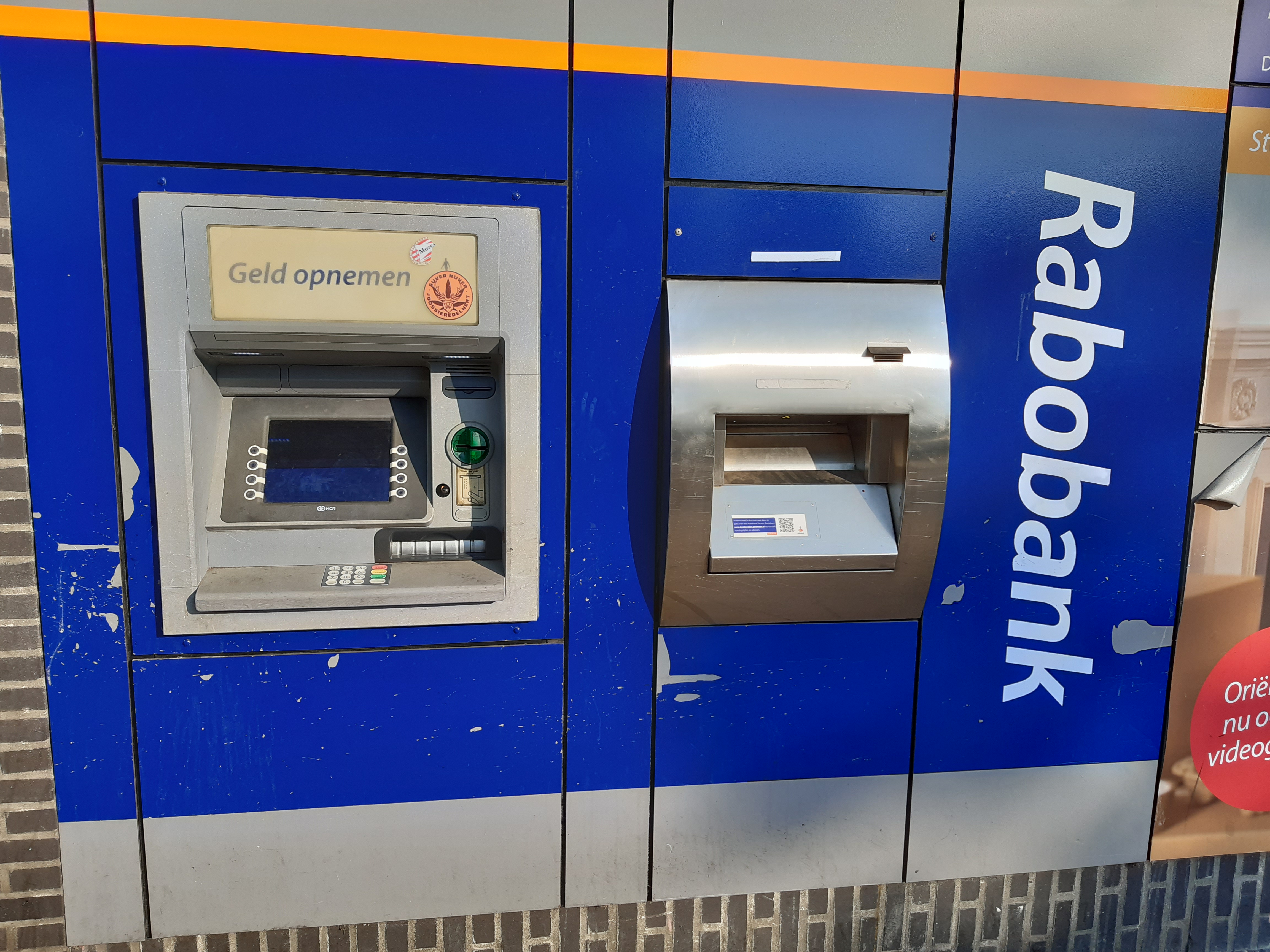
[A bank cash machine in a city street.] Photograph: Wikimedia Commons contributor
Image Credits: Wikimedia Commons
Frequently asked questions
Can a company take any amount it likes with a direct debit?
No. The company can only collect under the authorisation given, and it must give advance notice of the amount and date. An incorrect collection is covered by the Direct Debit Guarantee, which entitles the payer to a full and immediate refund from their bank.
Can I change the amount of a standing order?
Yes, at any time, through your bank. Only you can change it, so a rise in rent or a change in a savings goal needs a manual amendment, or the old amount will keep going out.
Does cancelling a direct debit cancel my contract?
No. Cancelling stops the bank payment, but the contract with the company remains. Tell the company as well, and agree another way to pay anything still owed.
Which is safer, a direct debit or a standing order?
For variable bills, a direct debit has the stronger dedicated protection, through the Direct Debit Guarantee. For fixed payments where the payer wants full control, a standing order is simpler and the payer initiates every change.
Do standing orders work for bills that change every month?
Not well. A standing order sends the same amount each time, so a bill that varies would be overpaid or underpaid. A direct debit, or a manual payment, suits a varying bill better.
The bottom line
A direct debit and a standing order are both automatic, but they put control in opposite hands. A direct debit lets a trusted organisation collect what is owed, with advance notice and a strong refund guarantee behind it. A standing order lets the payer send a fixed amount on a fixed schedule, with no surprises and no need for anyone else's permission.
Choosing well comes down to one question about each payment: does this amount change, and who should be allowed to change it? Answer that, and the right method usually picks itself. Readers sorting out regular payments may also want to read how a direct debit actually takes money from an account and why banks sometimes close accounts without warning.
Tags: direct debit, standing order, bank payments
Rive News is a research desk that writes plain-English explainers from public sources, with claims checked against the documents cited.
Related
- Direct debit explained: how money leaves your bank account
- Why banks close accounts without warning or explanation
- Banks and credit unions explained in plain terms
- Why banks hold your check deposits for days
Subscribe for a weekly explainer on the money topics readers ask about most.
Rive News publishes general educational explainers. Figures and policies cited here come from the public sources listed above and can change; check the bank's current terms before acting.
Related stories

How your APR is divided by 365 to get daily interest
Lenders divide your APR by 365 for a daily rate, then apply it to your average daily balance. This guide walks through every step

What is the difference between APR and effective annual rate?
APR ignores compounding inside the year; the effective annual rate includes it. A 12.99% APR card really costs 13.80% a year. Worked

APY vs interest rate: what compounding does to your money
APY includes compounding; the interest rate does not. A 5% rate compounded monthly is really 5.12% APY. Here is how the math works and what