
How does a contactless payment reach your bank after you tap
By Rive News / Research desk | Rive News / Published October 31, 2026 at 9:00 AM PKT
Key takeaways
- Your real card number never leaves your card or phone during a tap; it travels as a token, a stand-in number issued under EMVCo's tokenisation framework.
- The token rides a 13.56 MHz NFC radio link to the terminal, then travels through the merchant's bank to the card network, which swaps the token back to your real account number.
- Only your bank gives the final yes or no, usually within one or two seconds of the tap.
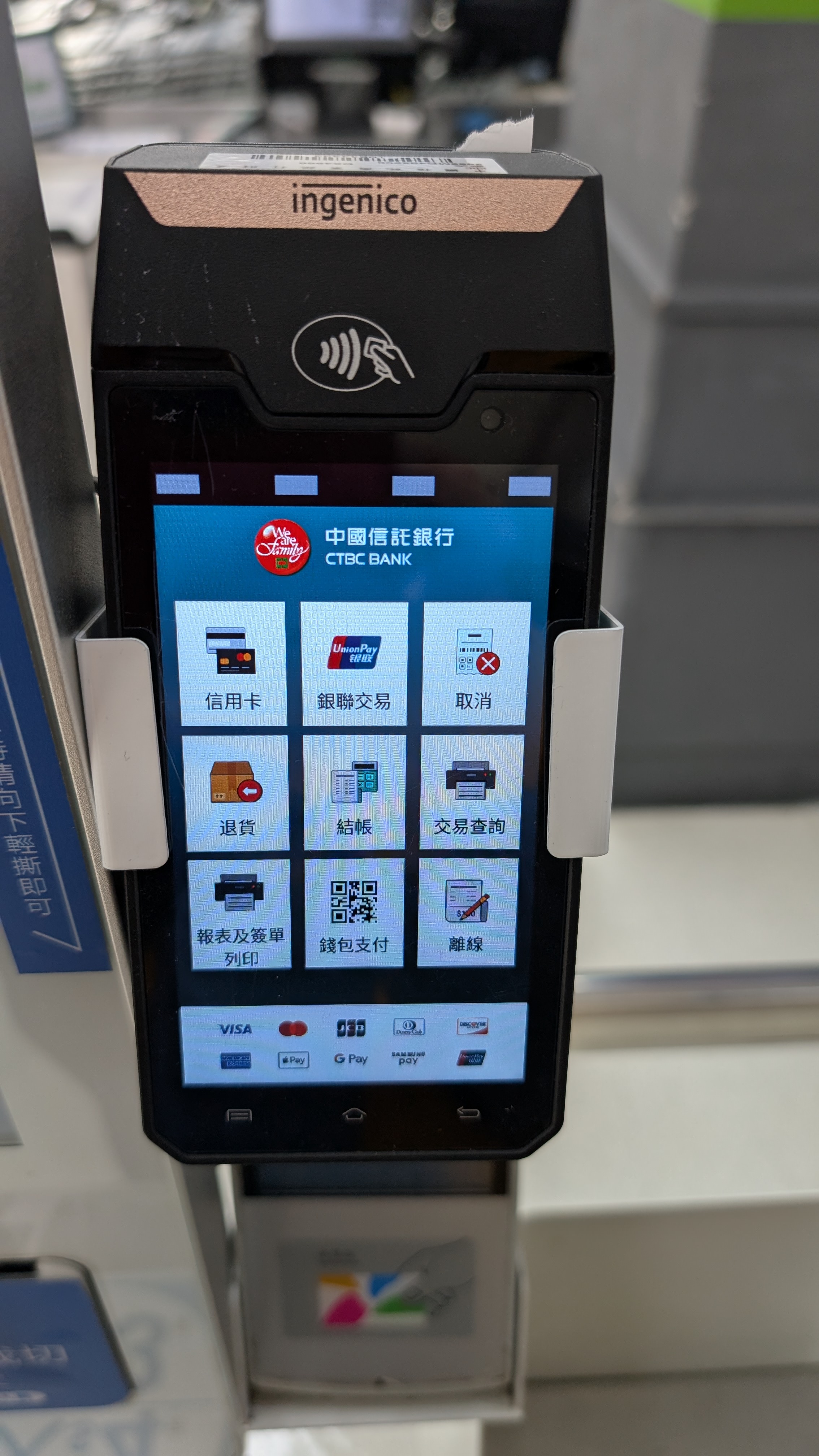
A modern payment terminal with a contactless reader waiting for a tap. Photograph: payment terminal at a store self-checkout
Image Credits: Wikimedia Commons
A contactless payment is the exchange of payment credentials between your card or phone and a shop terminal using short-range radio, without inserting the card or typing a PIN for small amounts. The word "tap" hides a surprising amount of choreography: your credentials travel through at least four organisations before your bank decides whether the purchase goes through.
The interesting part is what your real card number does during all of this. Nothing, as it turns out, which is by design. This article explains what leaves your card when you tap, how tokenisation swaps your card number for a stand-in, the route it takes through the terminal and card network, and why your bank makes the final decision.
What actually leaves your card when you tap
When you hold a card or phone near the terminal, the reader switches on a radio field at 13.56 MHz, the frequency defined for NFC communication, according to the payment-industry glossary published by Solidgate. Your card wakes up on that field and sends back encrypted payment credentials.
The range matters: NFC works only within about 4 cm. The short range is deliberate, and it is why a phone in your back pocket cannot pay a terminal across the shop.
What travels through that 4 cm gap is not the card number printed on your card. On a phone or watch, it is a token: a 16-digit substitute issued when you added the card to the wallet. On a physical card, the chip generates a one-time cryptogram, a cryptographic signature that only authorises that single tap and cannot be replayed.
How your card number becomes a token
Tokenisation is the process of replacing the real card number, known in the industry as the PAN, with a surrogate value that works inside the payment system. The framework that standardises it is EMVCo's Payment Tokenisation Specification, written by the same body that maintains the chip-card standards.
Two new roles were introduced for this. The Token Requestor asks for a token; Apple Pay or your banking app plays this role when you enrol a card. The Token Service Provider creates the token and keeps the mapping between token and real card number in a secure database called the Token Vault.
Visa and Mastercard act as Token Service Providers on their own networks.
The enrolment happens once, before you ever tap. You type your card details into the wallet, the wallet asks the network for a token, the network checks with your bank, and the token lands on your device with its own expiry date. From then on, the merchant's till never learns your real card number.
Your phone protects that token the same way it protects everything else, which is one reason mobile wallets ask for a fingerprint or face scan before they release anything.
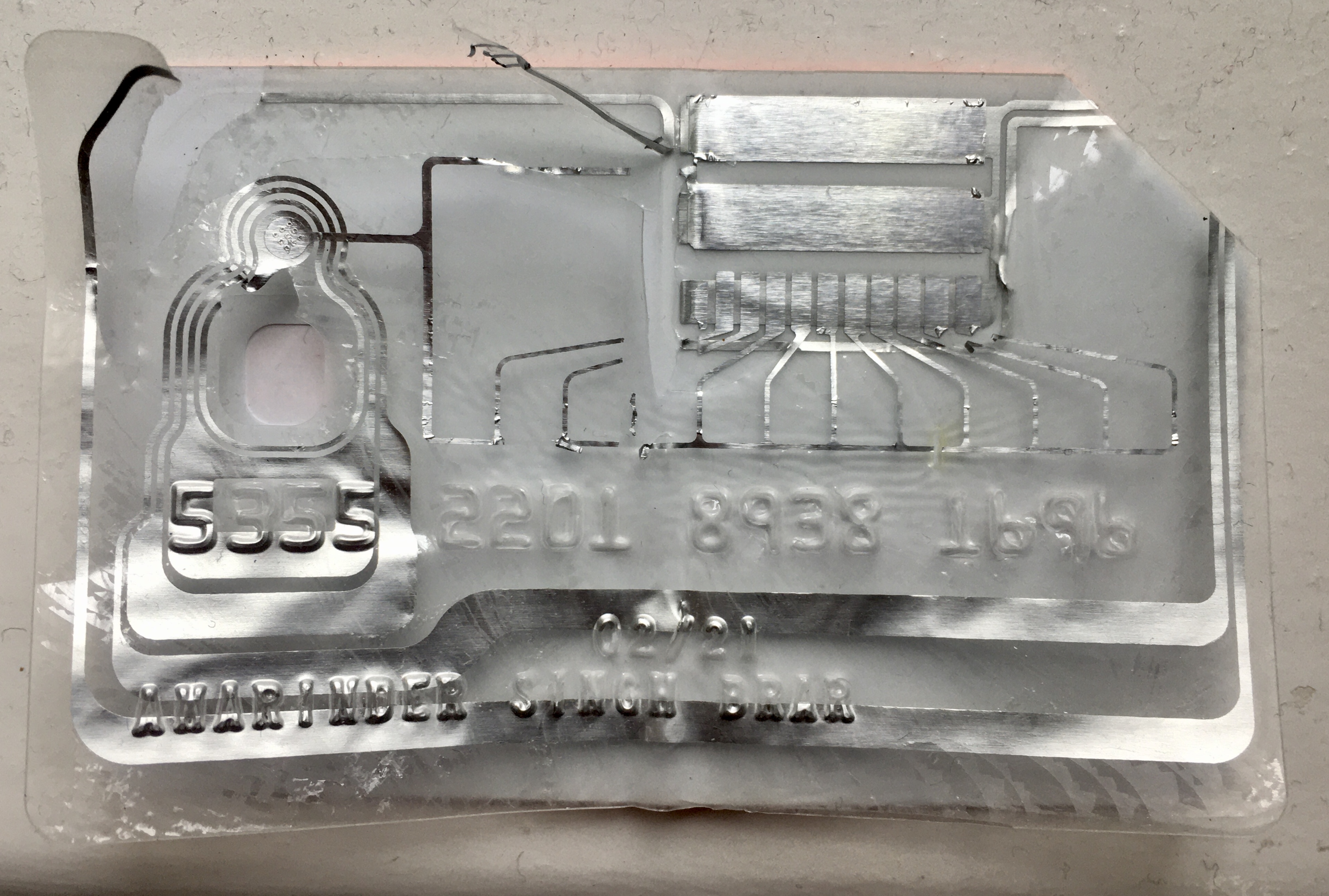
A contactless card cut open to reveal the RF antenna coiled around the chip. Photograph: contactless card showing its RF antenna
Image Credits: Wikimedia Commons
The route from terminal to your bank
The terminal sends the token and the one-time cryptogram on a much longer journey than the 4 cm hop that started it. It goes first to the merchant's payment provider and acquirer, the bank that handles card payments for the shop. The acquirer routes the request to the card network, in a diagram Visa publishes describing its own Token Service.
At the network, the critical swap happens. Visa describes it plainly: the network validates the token, exchanges it for the real PAN using the Token Vault, and forwards the real account details to the issuing bank, your bank, for authorisation. The issuer's answer then flows back along the same path, with the token re-attached on the return leg so the merchant only ever handles the stand-in.
The whole round trip is fast. A phone paying by NFC typically finishes in 1 to 2 seconds, and card-industry voices say the handshake between terminal and issuer can complete in a fraction of a second. Jack Jania, vice president of product management at CPI Card Group, described the moment to creditcards.com:
"This is one of my cards, and this is one of my clients' transactions. It's a handshake between the point-of-sale terminal and the card issuer. All of this magic happens in literally 300 milliseconds."
Why the bank gets the final say
Only your bank can approve the payment, because only your bank knows your balance, your credit limit, and the fraud patterns on your account. The network and the acquirer are couriers; the issuer is the judge.
When the request arrives, the bank verifies the cryptogram to confirm the card is genuine, then runs risk checks. It looks at the amount, the merchant, the location, and your recent history. If the token was reported compromised, the bank can revoke it without reissuing your physical card, which is one of the quiet advantages of tokenisation over the old magnetic stripe.
If everything checks out, the bank sends an approval back down the chain and the terminal shows the green tick. If not, the decline travels the same route, and the shop sees only a declined token, not your account. Settlement, the actual movement of money between banks, happens later, usually in overnight batches.
This is general educational information, not financial advice.
How big contactless has become
The tap became the default way to pay in Britain long before most shoppers noticed the shift. UK Finance reported 13.1 billion contactless payments in 2021 alone, a volume of about 415 transactions every second, worth GBP 165.9 billion in total. That figure was 46 percent higher than in 2020.
Limits helped the habit along. The United Kingdom raised its contactless cap from GBP 45 to GBP 100 on 15 October 2021, and the effect showed up quickly in the data. After the rise, the average contactless spend climbed from GBP 11.86 in September 2021 to GBP 15.30 in December, according to UK Finance card-spending data.
Lee Hopley, director of economic insight and research at UK Finance, said the numbers told a clear story: "These figures show the continued popularity of contactless payments, as well as the fact people are making higher value payments. From October last year the new GBP 100 limit was rolled out and it gives customers greater choice about how they pay for things like their weekly shop or a tank of fuel."
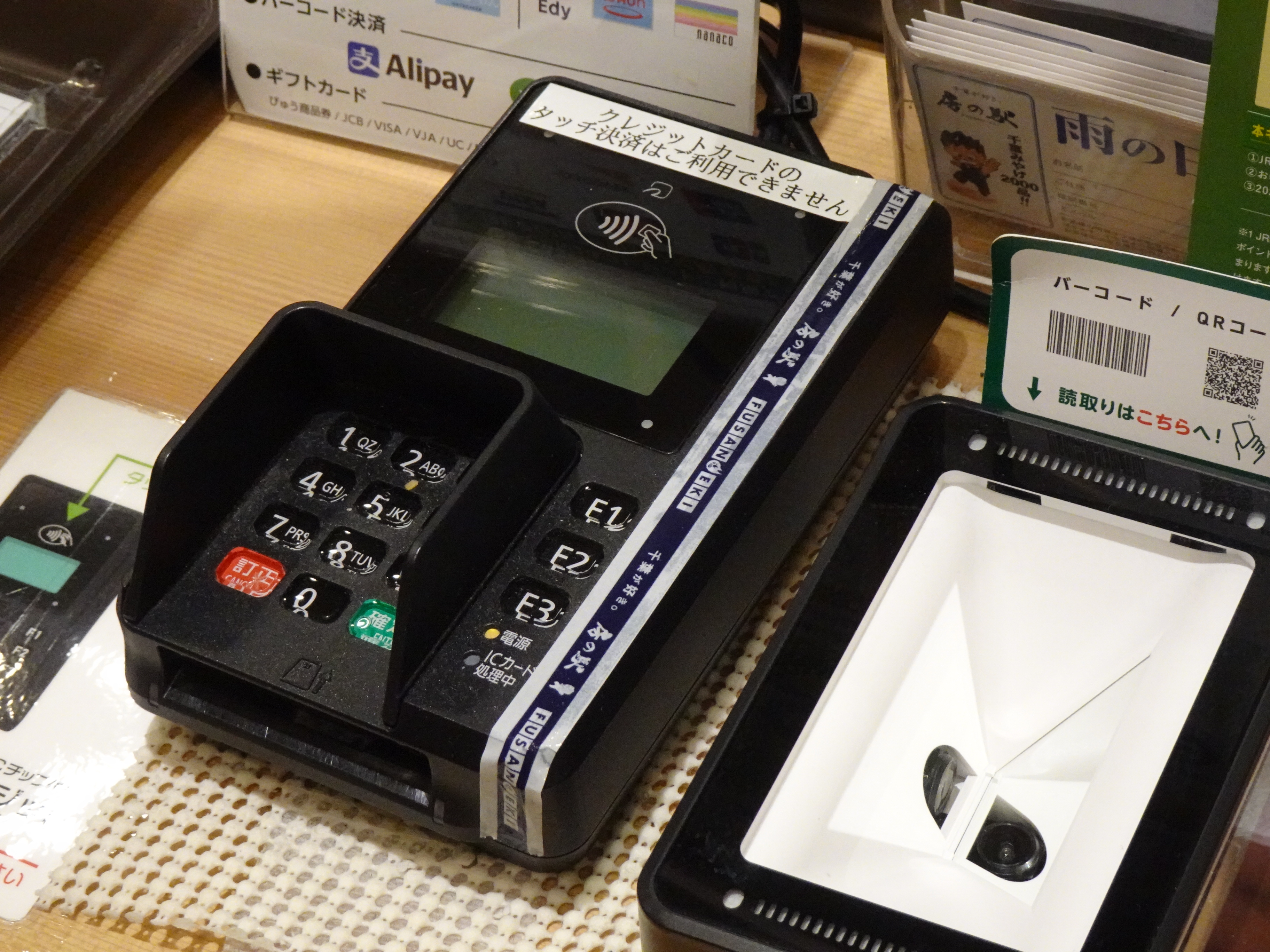
A shopper paying by card at a point-of-sale terminal. Photograph: cashless card payment at a terminal
Image Credits: Wikimedia Commons
Frequently asked questions
Does the merchant ever see my real card number?
With a phone or watch, no. The merchant's systems receive the token, and the swap back to your real card number happens at the card network, among trusted parties only. EMVCo's specification describes the token as a "surrogate value that replaces the PAN in the payment ecosystem."
Do I need the internet on my phone to tap and pay?
Not at the moment of the tap. The token and cryptogram are stored on the device and exchanged with the terminal over the NFC radio link. The online part of the journey happens on the wired side, between the terminal, the acquirer, the network, and your bank.
Why do some taps ask for a PIN?
Limits and risk rules trigger step-up checks. A tap above the contactless cap, or a pattern that looks unusual to the issuer, prompts the terminal to ask for the PIN. Phones sometimes skip this because the fingerprint or face scan counts as verification on the device itself.
What happens if I accidentally tap twice?
Two taps can produce two separate authorisations, since each tap carries its own cryptogram. In practice, terminals and acquirers run duplicate detection on back-to-back identical amounts. Check your statement before disputing; many duplicates are caught and voided automatically.
The contactless payment symbol used on cards and terminals. Photograph: contactless payment symbol
Image Credits: Wikimedia Commons
The bottom line
A contactless tap sends a token and a one-time code over a 4 cm radio link, the terminal forwards them through the merchant's bank to the card network, the network swaps the token for your real card number, and your bank approves or declines in about a second. Your real card number never meets the shop's till.
If you want to use the system with more confidence, open your banking app and review which devices hold active tokens for your cards. Removing an old phone or watch from the wallet revokes its tokens, so a lost device cannot keep tapping even if someone gets past your lock screen.
Tags: contactless payments, payment tokenization, NFC
Rive News is a research desk that writes plain-language explainers from primary sources. It covers how everyday financial systems work.
Related
- How employee stock options actually vest (another money-system explainer, this time on how equity becomes yours over time).
- Why your phone battery drains faster when you travel abroad (if you rely on your phone wallet overseas, battery habits matter more than you think).
- What happens when a job offer's expiry deadline passes (a look at how deadlines shape financial decisions on both sides).
Get one plain-language money explainer in your inbox every morning. Subscribe to the Rive News newsletter.
Rive News publishes educational explainers. Articles are checked against primary sources and never contain paid placements.
Related stories

How your APR is divided by 365 to get daily interest
Lenders divide your APR by 365 for a daily rate, then apply it to your average daily balance. This guide walks through every step

What is the difference between APR and effective annual rate?
APR ignores compounding inside the year; the effective annual rate includes it. A 12.99% APR card really costs 13.80% a year. Worked

APY vs interest rate: what compounding does to your money
APY includes compounding; the interest rate does not. A 5% rate compounded monthly is really 5.12% APY. Here is how the math works and what