
Why do lenders ask for two years of tax returns?
Key takeaways
- Mortgage lenders ask for two years of tax returns because underwriting rules from Fannie Mae, Freddie Mac, and the FHA treat it as the standard proof of stable income.
- Two full years let underwriters spot trends: steady or rising income qualifies cleanly, while declining income gets averaged down or penalized.
- Lenders qualify you on taxable income after deductions, not gross pay, so heavy write-offs can shrink your approved loan amount.
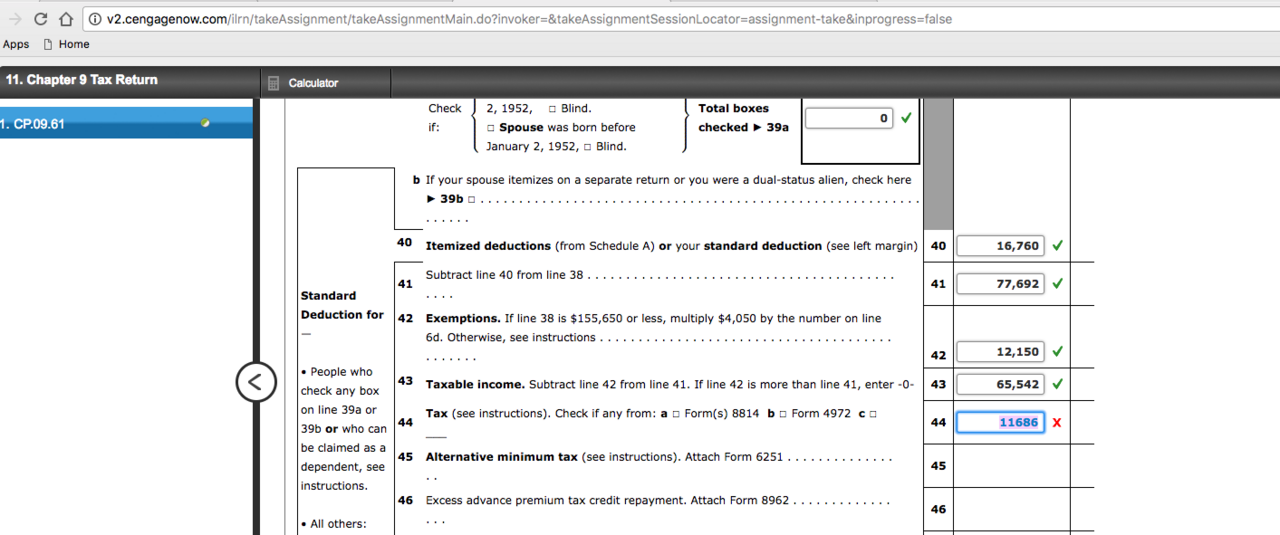
Why do lenders ask for two years of tax returns? Because a tax return is the only document that shows what you actually earned, kept, and reported to the IRS over time, and mortgage lending is built on history rather than promises.
This article explains the underwriting logic behind the request, including what lenders hunt for on your returns, why one year is never enough, and how the rule affects self-employed borrowers the most.
What lenders are actually looking for
A pay stub tells a lender what you earned last month. A tax return tells a lender whether your income is stable year over year, which matters enormously for a 30-year commitment.
According to underwriting guidance cited by LegalClarity, most mainstream mortgage programs require the two most recent years of federal tax returns. That standard applies to conventional loans backed by Fannie Mae and Freddie Mac as well as government-insured FHA, VA, and USDA loans.
Underwriters scan the returns for three things. First, income stability: has the amount stayed consistent or followed an upward trend across both years?
Second, hidden liabilities: rental properties, business losses, and debts that never appeared on the loan application but show up on the schedules. Third, true cash flow: what remains after deductions, which sets the debt-to-income ratio.
Tax returns also expose deductions that shrink your real spending power. If you report heavy business expenses, depreciation write-offs, or other deductions, your taxable income may sit far below your gross pay. LegalClarity illustrates this with a borrower earning $120,000 gross but reporting $75,000 on the return: the lender qualifies the borrower on the lower number.

Why one year is never enough
One year of income proves you had a good year. Two years prove you have a pattern.
The two-year window gives underwriters enough data to spot trends that a single snapshot hides. A steady or rising income over 24 months is straightforward to approve. A declining trend raises questions, and the underwriter will average the two years or use the lower figure when calculating how much you can borrow.
That averaging process is why borrowers sometimes qualify for less than they expected even when their most recent year looked strong. If you earned $150,000 last year but $90,000 the year before, your qualifying income lands near $120,000, not $150,000.
The FHA goes further on declines. Under the FHA Single Family Housing Policy Handbook, if a borrower's income has declined by more than 20 percent over the analysis period, the lender must downgrade the file to manual underwriting, according to HUD Mortgagee Letter 2022-09 cited by LegalClarity. Manual underwriting means deeper scrutiny, not automatic approval.
The self-employment double standard
Salaried borrowers provide returns mainly to confirm what their W-2s already show. Self-employed borrowers carry a heavier documentation burden because their income fluctuates in ways a pay stub cannot capture.
The standard requirement is two years of personal and business federal tax returns. For partnerships, that means Form 1065 plus the individual Schedule K-1. For S-corporations, it is Form 1120-S with its K-1.
Anyone with a 25 percent or greater ownership stake in a business is treated as self-employed under Fannie Mae rules, even if that person also receives a W-2 from the business. That ownership threshold triggers the requirement for business tax returns on top of personal ones.
There is one small mercy in the math. Underwriters add back non-cash expenses such as depreciation, depletion, and amortization to self-employment income. These represent paper reductions in taxable income that cost the borrower no actual cash, so the resulting cash-flow figure can exceed the taxable income shown on the return.
The compliance chain behind the request
The two-year ask is not a personal lender's whim. Fannie Mae and Freddie Mac set the underwriting rules that most lenders follow for conventional mortgages, and lenders follow those guidelines because doing so lets them sell the loan on the secondary market.
Selling mortgages on the secondary market keeps interest rates lower than they would be if each lender had to hold every loan on its own books. So the documentation standard that feels like bureaucracy is part of the machinery that keeps your rate competitive.
Sammamish Mortgage frames the request as serving three purposes: documenting every source of income (including rental, dividend, alimony, or child support income that never appears on a W-2), averaging self-employment earnings, and satisfying underwriting guidelines that make the loan sellable. Stated-income or bank-statement loan products exist that skip tax returns, but they typically carry higher rates.
Lenders also verify what you hand over. Borrowers sign IRS Form 4506-C, which authorizes the lender to pull tax transcripts directly from the IRS. If you have unfiled tax returns, the verification comes back showing no return on file, and most lenders will not approve the loan at all.
How to prepare your returns before you apply
Start by filing on time and keeping both years complete. Filing an extension can delay mortgage approval because lenders typically require filed returns, not extensions.
Next, understand the trade-off of deductions. Aggressive write-offs save you money at tax time but reduce the income figure a lender uses.
If a home purchase is on the horizon, some borrowers deliberately claim fewer deductions in the qualifying years. Run the numbers with a tax professional before doing this, since the extra tax cost has to be worth the larger approval.
Finally, gather the business paperwork early if you are self-employed. Two years of personal returns plus business returns, K-1s, and year-to-date profit-and-loss statements take time to assemble. Providing documentation as soon as it is requested keeps underwriting moving and avoids closing delays.
Frequently asked questions
Do all lenders require two years of tax returns?
No. Conventional, FHA, VA, and USDA loans follow the two-year standard, but some borrowers with strong financial profiles can qualify with one year, and bank-statement loan products skip tax returns entirely in exchange for higher rates.
What if I have not filed last year's taxes yet?
Most lenders require filed returns. An unfiled year shows up on the 4506-C transcript check as no return on file, which is a red flag underwriters cannot overlook.
Do lenders use my gross income or my taxable income?
They use the income shown on your tax returns after deductions. Heavy write-offs lower your qualifying income, which is why a $120,000 salary can translate into a $75,000 qualifying figure.
Can declining income disqualify me?
Not automatically, but it hurts. Underwriters average the two years or use the lower figure, and FHA loans with declines over 20 percent get downgraded to manual underwriting.
The bottom line
Lenders ask for two years of tax returns because two years reveal stability, catch hidden liabilities, and satisfy the Fannie Mae and FHA rules that make your loan sellable and your rate affordable. Treat your returns as a two-year resume for your money: keep them filed, understand the deduction trade-off, and assemble self-employment paperwork early.
This article is an educational explainer only and is not tax, legal, or financial advice. For decisions about your own mortgage or tax situation, consult a licensed mortgage professional or tax advisor.
Latest in Personal Finance
- How a home equity line of credit differs from a home equity loan
- Why the minimum payment is a debt trap
- Why your savings account rate keeps changing
Subscribe to the Rive News newsletter for one practical finance explainer every week.
Related stories

How your APR is divided by 365 to get daily interest
Lenders divide your APR by 365 for a daily rate, then apply it to your average daily balance. This guide walks through every step

What is the difference between APR and effective annual rate?
APR ignores compounding inside the year; the effective annual rate includes it. A 12.99% APR card really costs 13.80% a year. Worked

APY vs interest rate: what compounding does to your money
APY includes compounding; the interest rate does not. A 5% rate compounded monthly is really 5.12% APY. Here is how the math works and what