
Why do savings account interest rates keep changing?
Key takeaways
- Savings rates track the Federal Reserve's federal funds rate, which the FOMC reviews at eight scheduled meetings a year.
- When the Fed cuts, banks earn less on loans and typically cut what they pay savers. When it hikes, APYs climb.
- Banks move at different speeds and set their own rates, so shopping around still matters even in a falling-rate environment.
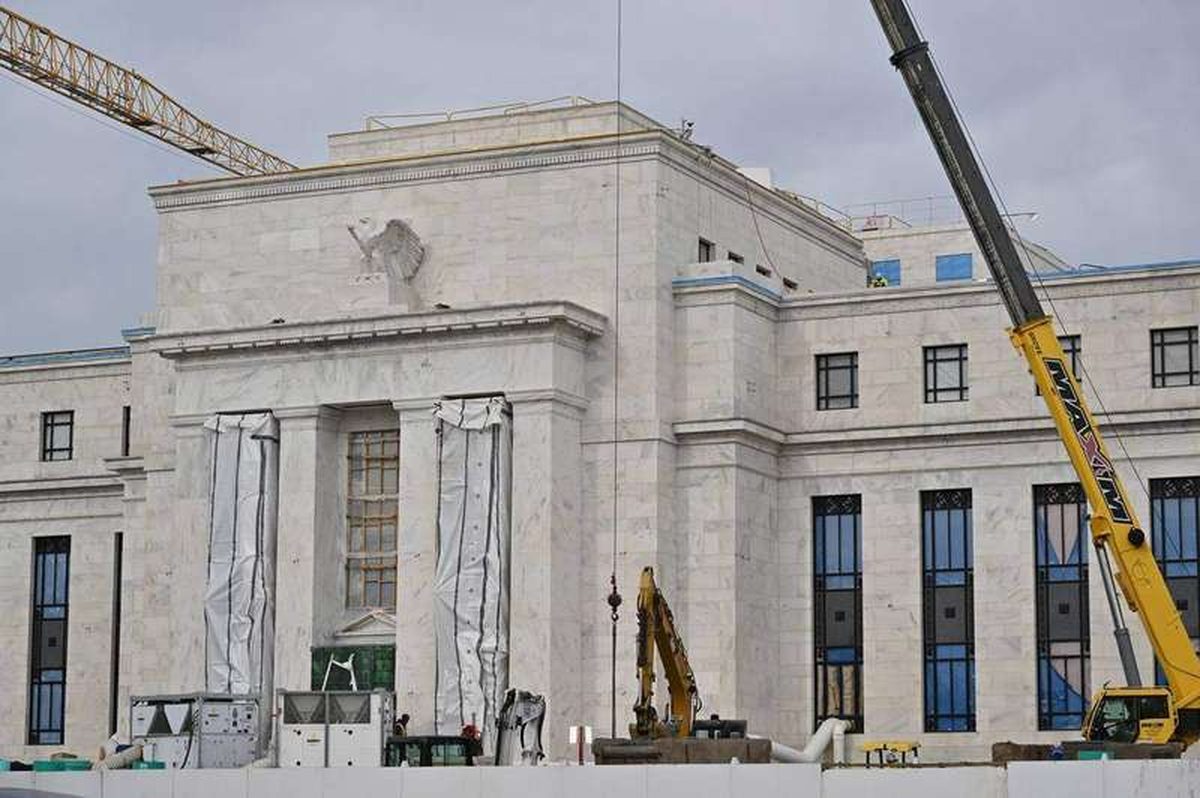
The Federal Reserve's rate-setting committee meets eight times a year, and its decisions steer savings rates across the country. Photograph: G. Edward Johnson/Wikimedia Commons
Image Credits: Wikimedia Commons
Your savings account pays you rent for your money. The bank lends your deposits to borrowers, earns interest on those loans, and passes a slice back to you as APY.
That slice is not fixed. Most savings accounts carry variable rates, which means the bank can change the number whenever it wants, with no notice required.
This article explains what sets your savings rate, how Federal Reserve decisions move it, why banks do not all change rates together, why online banks usually pay more, and what to do when your rate drops.
This article is for general information only, not financial advice.
What sets your savings rate?
Two forces set the number on your statement: the economy-wide cost of money, and your bank's own business decisions. The first does most of the work.
The economy-wide anchor is the federal funds rate. That is the rate banks charge each other for overnight loans, and the Federal Reserve sets a target for it. As the Motley Fool explains, nearly every consumer rate, from mortgages to savings accounts, relates back to that benchmark.
Here is the chain. Banks use deposits to fund loans. When the federal funds rate is high, loans earn more, and banks can afford to pay savers more to attract deposits.
When the rate is low, loan income shrinks, and the rate banks offer savers shrinks with it.
Your bank then adjusts that baseline for its own needs. A bank hungry for deposits raises its rate above competitors. A bank with more deposits than it can lend keeps its rate low.
That is why two banks can pay wildly different APYs in the same week.
How the Federal Reserve moves savings rates
The Federal Open Market Committee, the Fed's rate-setting body, meets eight times a year to assess the economy and decide whether to change the benchmark rate, according to Experian.
The logic runs in two directions. If inflation is running hot, the committee may raise rates to make borrowing more expensive and cool spending. If the economy is sluggish, it may cut rates to encourage borrowing and spending.
Savings APYs follow those moves. When the Fed cut its rate to near zero during the COVID-19 pandemic, savings rates collapsed alongside it. When the Fed later raised rates to fight inflation, high-yield savings APYs climbed back up.
The pass-through is not instant. Analysts at Clear Focus Hedging describe a lag effect that can hang around for up to six months after a rate change. Banks reprice loans and deposits on their own schedules, so your APY may not move the week the Fed acts.
Expect a roughly proportional move. If the Fed cuts by a quarter point, a similar APY drop on a high-yield account is the normal outcome, Clear Focus Hedging notes. The direction is near-certain. The exact timing is not.
Why banks don't all change rates together
There is no rule forcing banks to follow the Fed in lockstep. Each bank can raise or lower savings rates whenever it pleases, the Motley Fool points out. That freedom is why the market looks so uneven.
Big brick-and-mortar banks often pay next to nothing. They hold enormous deposit bases and dense branch networks, so they do not need to bid hard for your money. Their savings rates can sit near zero even when the Fed's benchmark is several percent.
Online banks play a different game. With no branches to fund, their overhead is lower, and they use high APYs as their main customer magnet. As of mid-2026 reporting by Motley Fool Money, top online banks were paying more than 10 times the national average savings rate, which sat at just 0.37%.
That gap is the practical takeaway. The Fed sets the weather, but your choice of bank decides how much of it reaches you.

Banks lend your deposits to borrowers and pass a slice of the interest back to you as APY. Photograph: Santoman/Wikimedia Commons
Image Credits: Wikimedia Commons
Why online banks usually pay more
It comes down to cost structure and strategy. A traditional bank pays for thousands of branches, ATMs, and tellers. An online bank skips most of that and can redirect the savings into higher deposit rates.
Competition does the rest. Online banks have no foot traffic, so a headline APY is their storefront. Clear Focus Hedging notes that challenger and online-only banks can normally afford better rates than traditional banks because they are small and carry little overhead.
This also explains the lag advantage. After a Fed cut, some online banks hold their high rates for months to keep winning customers. That window is when comparison shopping pays off most.
None of this means online banks are charities. Their rates still fall when the Fed cuts deeply enough. They just start from higher and move later.
What to do when your rate drops
First, check whether the drop is yours alone or everyone's. If the Fed just cut and every bank trimmed APYs, switching banks buys you little. If your bank cut while competitors held steady, your bank is telling you something.
Second, compare the market before you move money. Rate tables from bank-comparison sites update frequently, and the spread between the best and average accounts is often several percentage points. Moving an emergency fund from 0.37% to 4% is real money.
Third, consider locking part of your cash. Certificates of deposit let you fix a rate for a set term, which shields that portion from further cuts. The trade-off is limited access before maturity.
Finally, keep perspective on timing. Rate cycles turn. The same mechanism that cut your APY will raise it when the Fed starts hiking again.
Chasing every tenth of a point usually costs more in hassle than it earns.
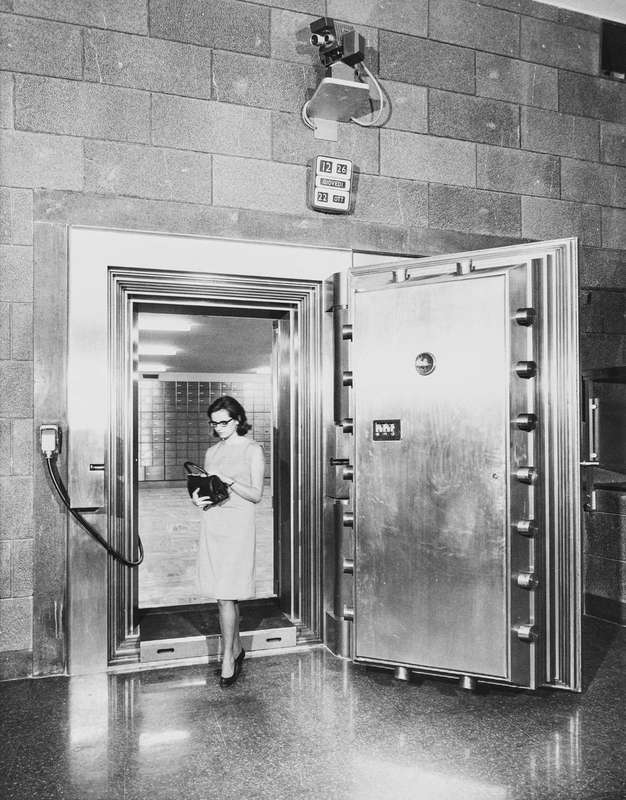
The gap between the best and average savings rates is often several percentage points, so comparing pays. Photograph: Aldo Moisio/Wikimedia Commons
Image Credits: Wikimedia Commons
Frequently asked questions
How often can my bank change my savings rate?
As often as it wants. Savings accounts carry variable rates, and banks can change them without notice, Experian notes. In practice, changes cluster around Fed decisions rather than arriving randomly.
Does the Fed set my savings account rate directly?
No. The Fed sets the federal funds rate target, and banks respond to it. Your bank chooses its own APY based on that benchmark plus its funding needs and competitive strategy.
Why is my bank's rate so much lower than the Fed's rate?
Your bank keeps a spread between what it earns on loans and what it pays you. Big banks with captive deposit bases keep that spread wide. The Fed's rate is a benchmark for bank-to-bank lending, not a promise to savers.
Will my rate go back up if the Fed raises rates?
Generally yes. When the federal funds rate rises, banks earn more on lending and typically raise deposit rates to compete for funds. The rise usually lags the Fed's move by weeks or months.
The bottom line
Savings rates change because the price of money changes. The Fed's benchmark steers the whole market, banks adjust at their own pace, and your choice of bank decides how much of the move reaches you.
If your rate dropped, compare it against the current market before assuming the worst. The gap between the best and average accounts is usually bigger than any single Fed move.
---
About the author: Rive News is a research desk covering personal finance with explainers built from public sources. This article is for general information only, not financial advice.
Latest in Finance
- High-Yield Savings Account: What It Is, How It Works, and Who It Fits
- APY vs interest rate: what compounding does to your money
- How your APR is divided by 365 to get daily interest
- How Does a Credit Card Grace Period Actually Work?
Subscribe for weekly finance explainers grounded in public sources.
Found an error? Corrections are welcome at the Rive News desk and are logged with the publish date.
© 2026 Rive News. All rights reserved.
Related stories

How your APR is divided by 365 to get daily interest
Lenders divide your APR by 365 for a daily rate, then apply it to your average daily balance. This guide walks through every step

What is the difference between APR and effective annual rate?
APR ignores compounding inside the year; the effective annual rate includes it. A 12.99% APR card really costs 13.80% a year. Worked

APY vs interest rate: what compounding does to your money
APY includes compounding; the interest rate does not. A 5% rate compounded monthly is really 5.12% APY. Here is how the math works and what