
Why do mortgage rates differ from the federal funds rate?
Key takeaways
- The federal funds rate is an overnight target for bank-to-bank lending, not a mortgage rate.
- Thirty-year fixed mortgages track the 10-year Treasury yield far more closely than the Fed's rate.
- A mortgage-backed security spread, lender costs, and your credit profile set the rest of your quote.
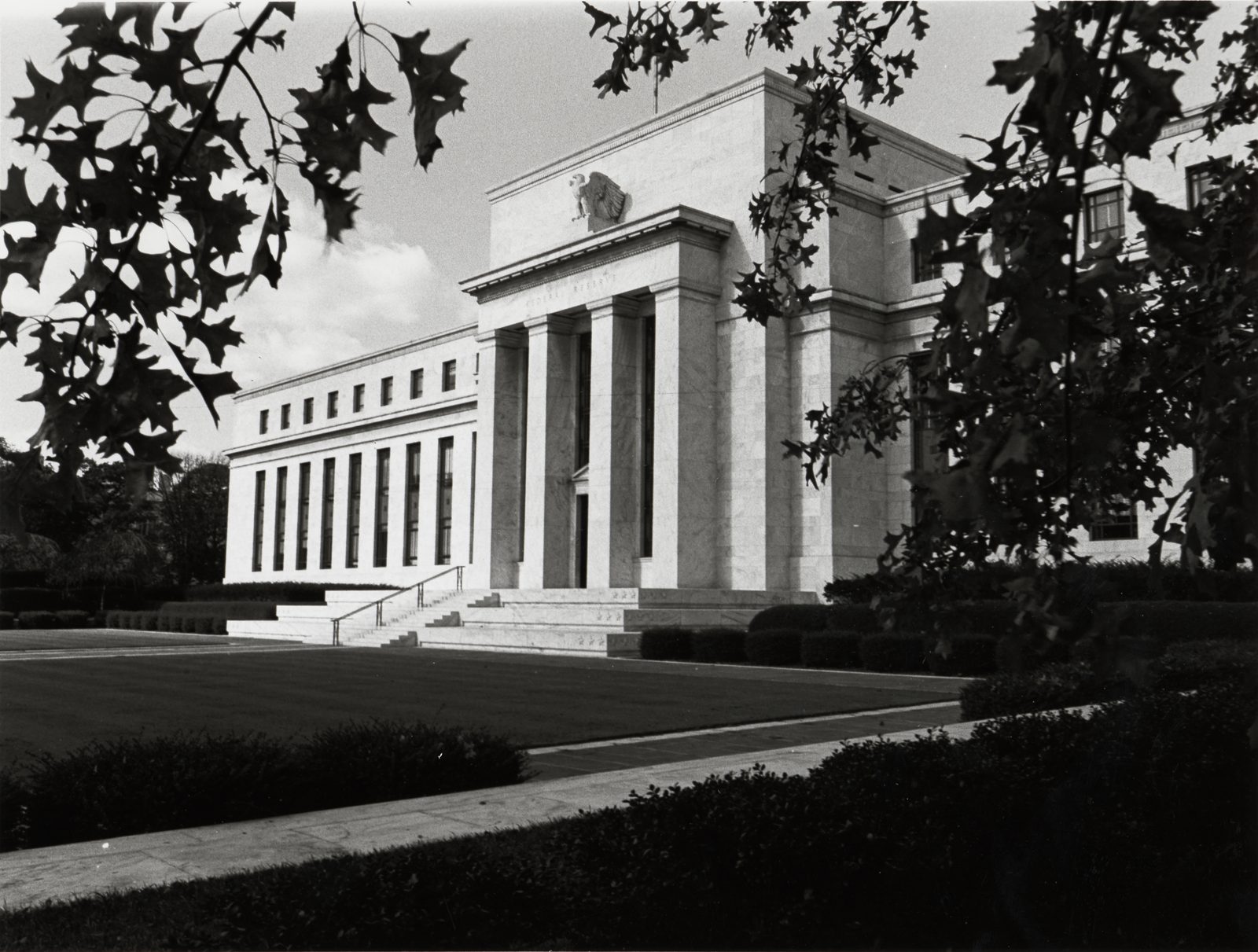
The federal funds rate is the target rate banks charge each other for overnight loans of reserves. It is the Federal Reserve's main policy lever, and it shapes short-term borrowing costs across the economy.
A 30-year fixed mortgage is a different product with a different clock. It is a decades-long loan, and its rate comes from long-term bond markets, not from the overnight market.
This article explains why mortgage rates differ from the federal funds rate, including what each rate measures, why the 10-year Treasury yield matters more, how mortgage-backed securities add a spread, and what borrowers can watch instead.
What the federal funds rate actually measures
The federal funds rate is the interest rate at which banks lend balances to each other overnight. The Federal Open Market Committee sets a target range for that rate as part of the Federal Reserve's monetary policy.
When the Fed adjusts the rate, its goal is to either stimulate activity by lowering rates or cool inflation by raising them. That overnight target feeds into short-term products first, such as credit cards and variable-rate loans.
The committee meets eight times a year on a published schedule, roughly every six weeks. Four of those meetings include updated economic projections, which tend to produce more rate volatility than meetings without them.
On June 17, 2026, the committee held the target range at 3.50 percent to 3.75 percent, according to Fellowship Home Loans. The Fed cited a labor market that had cooled gradually and inflation readings still running above its 2 percent target.
A hold, a cut, or a hike in that range is real news. It is still not a mortgage rate, and treating it as one is where most confusion starts.
Why the 10-year Treasury yield matters more
Thirty-year fixed mortgage rates track the 10-year Treasury yield much more closely than they track the federal funds rate. The reason is time horizon. Investors who buy mortgage-backed securities are pricing an expected return over many years, not the cost of borrowing for one night.
The 10-year yield itself reflects the market's running average expectation of overnight rates, plus an inflation premium, plus a term premium. It moves every minute of every trading day as investors react to new data.
Inflation expectations are a big part of that movement. Inflation erodes the real return lenders earn on fixed-rate mortgage payments, so when investors expect more inflation, they demand higher returns on long-term loans.
That is why mortgage rates can rise even when the Fed lowers its rate. If the bond market expects inflation or other risks to push yields up, lenders adjust mortgage rates to match, whatever the overnight target did.

The bond market also reacts to tone, not just decisions. A hold accompanied by hawkish projections can push longer-dated Treasury yields up, and mortgage rates climb with them. A dovish set of projections can do the opposite.
How mortgage-backed securities add a spread
Most lenders do not keep the mortgages they originate. They sell them to investors in the form of mortgage-backed securities, which are pools of mortgages bundled together. Investors who buy those securities receive the mortgage payments in return.
The prices and yields of those securities shape the rates lenders offer next. When demand for mortgage-backed securities is high, lenders can sell loans more easily and may offer lower rates. When demand drops, lenders may need to raise rates to attract buyers.
Mortgage-backed securities trade at a spread above the 10-year Treasury yield. That spread has averaged roughly 1.7 to 2.0 percentage points historically, according to Fellowship Home Loans, but it widened well above that range during the 2022 to 2024 stretch.
One reason for the spread is prepayment risk. Borrowers refinance and pay off the security early when rates drop, which cuts an investor's return short. Investors charge for that risk.
Lenders then add their own margin on top to cover origination cost and profit. Your personal quote also reflects your credit profile, loan type, loan-to-value ratio, lock period, and any points you choose to pay.
That stack explains why two borrowers can get different rates on the same day from the same lender. A borrower with a 780 credit score and 20 percent down will see a different rate than a borrower with a 680 score and 5 percent down.
Why the two rates can move in opposite directions
Bond markets are forward-looking, and they usually price in an expected Fed move well before it is announced. By the time a cut arrives, most of the expected change is already reflected in long-term yields.
The actual rate move after an announcement can be small, zero, or even in the opposite direction. What matters is what the Fed signals about future policy, not just the headline decision.
A Fed hold can come with hawkish or dovish projections, and the bond market reaction can push rates either way over the following days. The spread between the announcement and the press conference often produces more rate movement than the decision itself.
Your personal quote can move even when the market does not. A change in your credit score, debt-to-income ratio, loan amount, or lock window can shift your rate on a quiet day for Fed policy.
Rates can also move several times within a single trading day. If bond markets sell off sharply in the morning, lenders may issue a reprice notice and pull better pricing back. If bonds rally in the afternoon, pricing may improve by close.
What borrowers can watch instead
The 10-year Treasury yield is the single best near-term indicator of 30-year fixed mortgage rate direction. When it rises 25 basis points over a week, the average 30-year fixed rate tends to rise roughly the same amount.
Three data releases deserve attention alongside it. The Consumer Price Index release shows whether inflation is heating or cooling.
The monthly jobs report shows how the labor market is holding up. The weekly Freddie Mac Primary Mortgage Market Survey gives a national average for comparison.
None of these will tell you exactly where your personal quote will land. Together, they show the direction of pressure on mortgage rates over the next several weeks.
Survey averages can also feel disconnected from the quote you receive. They reflect last week's pricing on a specific borrower profile, while your quote reflects today's bond market and your specific file. Both can be accurate at the same time.
If you are comparing loan offers, it also helps to understand the other costs that sit beside the rate, such as private mortgage insurance on a low down payment loan. A slightly higher rate with no insurance cost can beat a lower rate with a monthly premium attached.
Frequently asked questions
Does a Fed rate cut lower my mortgage rate?
Not directly, and not always. The federal funds rate is an overnight target, while your 30-year fixed rate is priced off long-term bond yields that already include market expectations about future Fed moves.
Why are mortgage rates higher than the Fed funds rate?
Mortgages are 30-year loans, and the Fed funds rate is an overnight target. Lenders need compensation for inflation risk, prepayment risk, default risk, and servicing cost over a much longer horizon, and that difference shows up as the spread.
Why did my rate quote change even though the Fed did not move?
Several factors can move your personal quote. The 10-year Treasury yield moved during the day, the mortgage-backed security spread shifted, or your credit score, debt-to-income ratio, loan amount, or lock window changed.
How often does the Fed meet?
The Federal Open Market Committee meets eight times a year on a published schedule, roughly every six weeks. Meetings that include updated economic projections tend to produce more rate volatility.
If the Fed held rates, should I wait to lock?
Waiting to lock is a directional bet on bond markets, not on the Fed itself. If your closing window is tight, the cost of being wrong on a directional bet is usually higher than the cost of locking at the current quote.
The bottom line
Mortgage rates differ from the federal funds rate because they are priced in different markets for different time horizons. The Fed sets an overnight target, while your mortgage rate comes from long-term bond yields, a mortgage-backed security spread, lender costs, and your own credit profile.
Watch the 10-year Treasury yield, inflation data, and your own loan details instead of waiting on Fed headlines alone. This article is for general information, not financial advice.
Tags: mortgages, federal funds rate, Treasury yields, home buying
Latest in Finance
- What Is PMI on a Mortgage and How Does It Work?
- Why Store Credit Cards Have Such High APRs
- How Cashback Apps Make Money If They Pay You
Subscribe for one plain-English money explainer each week.
Related stories

How your APR is divided by 365 to get daily interest
Lenders divide your APR by 365 for a daily rate, then apply it to your average daily balance. This guide walks through every step

What is the difference between APR and effective annual rate?
APR ignores compounding inside the year; the effective annual rate includes it. A 12.99% APR card really costs 13.80% a year. Worked

APY vs interest rate: what compounding does to your money
APY includes compounding; the interest rate does not. A 5% rate compounded monthly is really 5.12% APY. Here is how the math works and what