
How Do Municipal Bonds End Up Tax Free? Rules, Limits, and Math
Key takeaways
- Municipal bond interest is excluded from gross income under Section 103 of the Internal Revenue Code.
- The break helps most in high tax brackets; it does not cover capital gains or private-activity bond interest under AMT.
- Compare bonds with tax-equivalent yield: tax-exempt yield divided by one minus your marginal tax rate.
Municipal bonds end up tax free because the tax code says so in plain language. Section 103 of the Internal Revenue Code states that gross income does not include interest on any state or local bond. When you lend money to a city, county, state, or school district, the interest paid back to you never enters your taxable income.
This makes municipal bonds, or munis, unusual. Corporate bond interest is taxed. Bank account interest is taxed.
But the interest on a qualifying muni simply is not income in the eyes of the IRS. This article explains where the rule comes from, why it exists, who gains most from it, and where the fine print shrinks the benefit.
This is an explainer, not investment advice. Tax rules interact with your whole return, so talk to a qualified tax professional before making decisions.
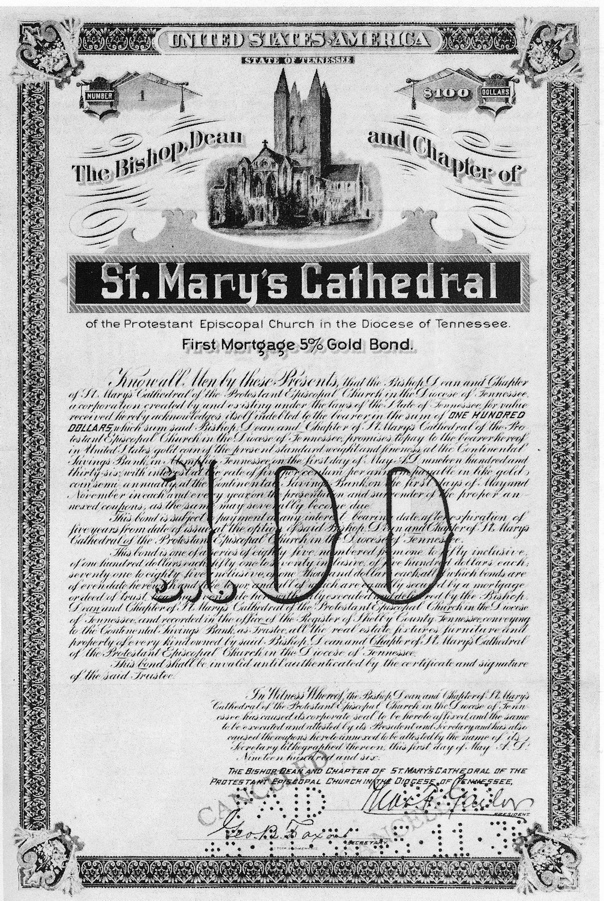
Where the tax break comes from
The exemption lives in one line of federal law. Section 103 of the United States Code says gross income does not include interest on any state or local bond. That covers bonds issued by states, cities, counties, school districts, and public utilities.
The rule covers both main kinds of municipal bonds. General obligation bonds are backed by the issuing government's taxing power.
Revenue bonds are backed by income from a specific project, such as a toll road or a water system. Both qualify for the federal exemption when issued correctly.
The exemption only covers interest payments. If you sell a muni on the secondary market for more than you paid, the profit is a capital gain and it is fully taxable. The principal you invested was already after-tax money, so there is no double taxation issue there.
Even though the interest is tax free, you still have to report it. The IRS requires you to enter total tax-exempt interest on Form 1040, line 2a. Your broker will send a Form 1099-INT showing tax-exempt interest in box 8 for any amount of $10 or more.
Why Congress left this interest alone
The historical rationale is intergovernmental tax immunity. The federal government generally does not tax the borrowing power of state and local governments. Each level of government stays out of the other's wallet.
In practice, the exemption works as a subsidy. Because investors owe no federal tax on the interest, they accept lower coupon rates and still come out ahead. States and cities can therefore borrow money more cheaply, which keeps infrastructure projects like schools, highways, and water systems affordable for taxpayers.
This is why muni coupons look low next to corporate bonds. A 4% tax-free yield can deliver the same after-tax return as roughly 6.35% from a taxable bond for someone in the top 37% federal bracket. The government pays less interest, and the investor keeps every dollar of it.
Most munis pay a fixed interest rate twice a year, and maturities typically range from one to 30 years, according to the Municipal Securities Rulemaking Board. Governments spread project costs over decades instead of raising taxes suddenly.
Who benefits most from the exemption
The higher your tax bracket, the more the exemption is worth. The math is simple: a tax-free dollar of interest is worth more when you would have lost a bigger slice of a taxable dollar to tax.
Take a muni yielding 3.5% in 2026. For an investor in the top 37% federal bracket, that equals roughly 5.6% on a taxable bond. The same bond is worth much less to someone in the 12% bracket. This is why municipal bonds are most popular with higher-income investors.
The exemption also dodges the 3.8% net investment income tax that applies to certain high earners. Because muni interest never enters gross income, it does not count as net investment income and escapes the surtax entirely, per IRS guidance on the topic.
State taxes add another layer. Most states exempt muni interest only when you live in the state that issued the bond.
Buy your home state's bonds and you may pay no federal, state, or local tax on the interest. That is the "triple tax free" pitch you hear from brokers.
Puerto Rico bonds are the famous exception. Under federal law, interest on bonds issued by the government of Puerto Rico is exempt from state and local taxes regardless of where the bondholder lives.
That makes them triple tax free for residents of all 50 states, not just Puerto Rico. Guam, the US Virgin Islands, and American Samoa have similar provisions.
What the exemption does not cover
The first limit is capital gains. Sell a muni for more than you paid and the gain is taxed like any investment profit.
For 2026, long-term gains on bonds held longer than one year are taxed at 0%, 15%, or 20% depending on income. Short-term gains are taxed at ordinary rates.
The second limit is the alternative minimum tax. Interest from certain private activity bonds counts as a tax preference item under the AMT. These are bonds that fund projects mainly benefiting a private entity, such as a stadium, an industrial park, or a student loan program.
For investors subject to the AMT, the tax-free status of that interest is effectively wiped out. Standard muni interest from general obligation and revenue bonds is not an AMT preference item.
For 2026, the AMT exemption is $90,100 for single filers and $140,200 for married couples filing jointly. The AMT itself applies at 26% and 28% rates above those exemptions.
Third, buying munis at a discount can turn part of your gain into ordinary income. Under the de minimis rule, a bond bought close enough to face value gets capital gains treatment. Buy it cheaply enough and the discount is taxed as ordinary income at maturity instead.
Fourth, the exemption has hard disqualifiers. Interest loses its tax-free status if the bond is a non-qualified private activity bond, an arbitrage bond where the issuer reinvests proceeds in higher-yielding taxable securities, or a bond that fails registration and other issuance requirements.
Fifth, tax-free interest can still raise other taxes. Federal law requires you to include tax-exempt interest in modified adjusted gross income, the figure the IRS uses to decide how much of your Social Security benefits is taxable. The interest itself is not taxed, but it can push more of your Social Security into the taxable zone.
Finally, you cannot deduct interest on debt used to buy tax-exempt bonds. Section 265 of the code blocks that move, so borrowing to load up on munis gains you nothing on the tax side.
How to compare tax-free and taxable yields
Investors compare munis with taxable bonds using tax-equivalent yield. The formula is: tax-exempt yield divided by (1 minus your marginal tax rate). It answers the question: what would a taxable bond have to pay to leave me with the same amount?
A 3.5% muni for a 37% bracket investor equals 3.5 divided by 0.63, or about 5.56%. At a 24% bracket, the same bond equals 3.5 divided by 0.76, or about 4.6%. The gap between those two numbers explains why the same muni looks great to one investor and dull to another.
State taxes matter in the comparison too. If your home state exempts its own bonds and taxes out-of-state bonds, add your state rate into the math. That is why investors in high-tax states often prefer their own state's issues.
Tax-loss harvesting with munis needs care. Losses on muni bonds are deductible as capital losses, but the wash sale rule applies. If you sell a muni at a loss and buy a substantially identical bond within 30 days before or after, you cannot deduct the loss.
Understanding how compounding works helps here too, since reinvested muni coupons can quietly compound over a 30-year maturity. And the same daily interest math that applies to credit cards works in reverse for bonds you hold.
Are municipal bonds completely tax free?
No. The federal exemption covers the interest payments only. Capital gains from selling, some private activity bond interest under the AMT, and the indirect effect on Social Security taxation can all create real tax bills.
Do I still have to report tax-free interest?
Yes. Total tax-exempt interest goes on Form 1040, line 2a every year. Your broker reports it to you and the IRS on Form 1099-INT, box 8, for amounts of $10 or more.
Why are Puerto Rico bonds special?
Federal law makes Puerto Rico bond interest exempt from state and local taxes in every state. They are the only major muni category that is triple tax free for investors nationwide, not just for residents of the issuing territory.
Can municipal bond interest trigger the AMT?
Standard muni interest cannot. Interest from private activity bonds that fund primarily private projects is a tax preference item under the AMT and can trigger the alternative minimum tax for affected investors.
Should I buy munis if I am in a low tax bracket?
Probably not for the tax benefit. The exemption is worth less at lower brackets, so taxable bonds, or even high-yield savings accounts, may beat a muni on an after-tax basis. Run the tax-equivalent yield math first.
The bottom line
Municipal bonds end up tax free because Section 103 of the tax code excludes state and local bond interest from gross income. The rule lets governments borrow cheaply and lets high-bracket investors keep every dollar of interest.
The benefit has real limits, though: capital gains are taxable, some bonds trigger AMT, and the math favors higher brackets. Compare any muni with a taxable alternative using tax-equivalent yield before you buy.
Latest in Finance
- How APR Divided by 365 Explains Your Daily Interest
- APY vs Interest Rate: What Compounding Really Changes
- High-Yield Savings Accounts Explained
- Compound Interest in a Savings Account
Get one plain-English money explainer in your inbox every morning. Subscribe for free.
Image Credits: Wikimedia Commons / St. Mary's Cathedral; Wikimedia Commons / Auckland Museum; Wikimedia Commons
Related stories

How your APR is divided by 365 to get daily interest
Lenders divide your APR by 365 for a daily rate, then apply it to your average daily balance. This guide walks through every step

What is the difference between APR and effective annual rate?
APR ignores compounding inside the year; the effective annual rate includes it. A 12.99% APR card really costs 13.80% a year. Worked

APY vs interest rate: what compounding does to your money
APY includes compounding; the interest rate does not. A 5% rate compounded monthly is really 5.12% APY. Here is how the math works and what