
Why Do Athletes Get Cramps Despite Drinking Water?
Key takeaways
- Cramps are not simply a sign of dehydration. A 2021 study found athletes who drank only plain water were more prone to cramps than those who drank electrolyte water.
- Plain water dilutes the body's electrolytes without replacing the minerals lost in sweat, which can make muscles more likely to seize.
- For long or sweaty sessions, fluids containing electrolytes appear to offer better cramp protection than water alone.

Cyclists competing in a road race, an endurance sport where around 60 percent of athletes report muscle cramps. Photograph: Fukumoto/Wikimedia Commons
Image Credits: Wikimedia Commons
A muscle cramp is a sudden, involuntary tightening of a muscle that refuses to let go. It is painful, often arrives mid-competition, and it strikes people who seem to be doing everything right. Plenty of athletes drink water steadily through training and still end up clutching a calf on the track.
The reason is that water alone addresses only half of what sweat takes away. This article explains why cramps strike even well-hydrated athletes, including what a muscle cramp is, the electrolyte explanation, the role water itself can play, and what the evidence says you can do.
What is a muscle cramp?
A muscle cramp is an involuntary, sustained contraction of a muscle or group of muscles. It usually hits the legs, most often the calves, hamstrings, or quadriceps. The contraction can last seconds or minutes, and the soreness can linger for hours.
Exercise-associated cramps are remarkably common. Research summarized from a 2021 Edith Cowan University study puts the numbers at around 39 percent of marathon runners, 52 percent of rugby players, and 60 percent of cyclists. These are athletes who train seriously and hydrate carefully, yet cramps still find them.
Doctors distinguish cramps from muscle strains and other injuries. A cramp is a signaling problem, not a tear.
The muscle is being told to contract and not being told to stop. That distinction matters, because it points to the nerves and the chemical environment around them.
The electrolyte explanation
Electrolytes are electrically charged minerals, including sodium, potassium, chloride, and magnesium, that circulate in blood and tissue fluid. Nerves and muscles rely on them to send and receive signals. When the balance shifts, the signaling gets noisy.
Sweat is the main way athletes lose electrolytes during exercise. Sweat is mostly water, but it carries a meaningful amount of sodium and other minerals out through the skin. The longer and harder you go, especially in heat, the more minerals leave with it.
Here is the part most athletes miss. Replacing only the water does not replace the minerals.
The body's remaining electrolytes end up diluted in a larger volume of water. Professor Ken Nosaka of Edith Cowan University's School of Medical and Health Sciences, who led the 2021 study, put it plainly: "Many people think dehydration causes muscle cramps and will drink pure water while exercising to prevent cramping," he said.
The study, published in the Journal of the International Society of Sports Nutrition, tested this directly. Ten men ran on a downhill treadmill in a 35-degree Celsius room for 40 to 60 minutes, losing 1.5 to 2 percent of their body weight through sweat. In one condition they drank plain water during and after the run; in the other they drank water containing electrolytes.
The researchers then induced cramps in the calves using electrical stimulation. The lower the stimulation frequency needed to trigger a cramp, the more cramp-prone the muscle.
When participants had drunk the electrolyte solution, the threshold rose, meaning their muscles were harder to push into cramp. When they had drunk plain water, the threshold fell.
How water itself can make cramps more likely
The finding flips the usual advice. According to Nosaka, athletes who drink only plain water before and after exercise could be making themselves more prone to cramps, because pure water dilutes the electrolyte concentration in the body without replacing what sweat removed.
This is not a new idea. A review by sports scientist Ron Maughan, published through the Gatorade Sports Science Institute, traces it back nearly a century.
An anonymous 1923 account described cramps in laborers as a form of "water poisoning of the muscles," brought on by great chloride losses through sweating combined with excessive drinking of water. The language is old, but the mechanism is the one the ECU study confirmed.
There is also a fatigue component. Maughan's review notes that cramps tend to cluster in the second half of long efforts and in athletes who are less well conditioned. Tired muscles appear to mismanage the signals from the spinal cord, and the altered electrolyte environment may lower the threshold at which that mismanagement becomes a full cramp.
The practical picture is therefore threefold. Sweat removes electrolytes.
Plain water replaces the fluid but dilutes what minerals remain. And fatigued muscles in that diluted environment are the most likely to seize.
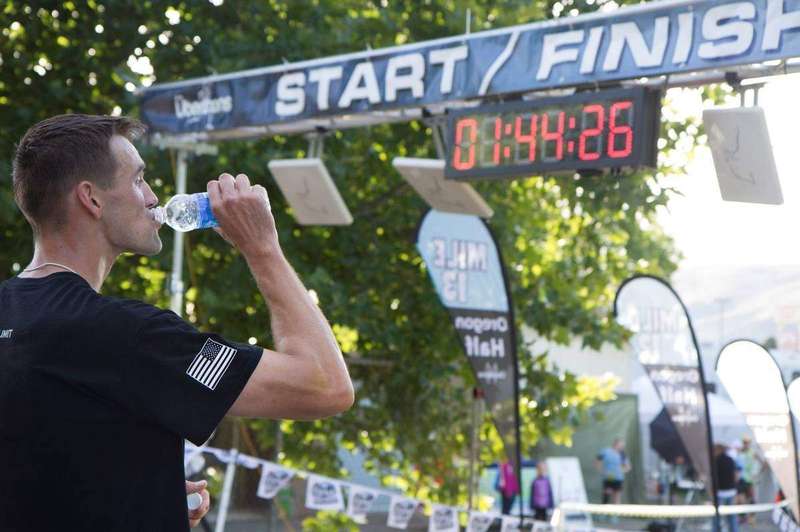
Runners taking on an annual race. Drinking water helps, but long efforts also demand electrolyte replacement. Photograph: Staff Sgt.
Mark Miranda/Wikimedia Commons
Image Credits: Wikimedia Commons.
What the evidence says you can do
The most direct lesson from the research is to match the fluid to the effort. For short, easy sessions in cool weather, water is fine.
For long sessions, hard efforts, or hot conditions where you are sweating heavily, a drink that contains electrolytes is the better choice. Sports drinks, oral rehydration solutions, and even lightly salted foods can all do the job.
Pacing also matters. Gulping large volumes of plain water in a short time maximizes the dilution effect. Drinking steadily, in amounts roughly matching your sweat loss, is gentler on the body's chemistry.
Conditioning helps too. Because cramps cluster in tired muscles late in events, training that prepares you for the specific demands of the event reduces risk. Well-trained muscles simply handle the signaling load better.
Dietary shortcuts deserve skepticism. Bananas and magnesium pills are popular folk remedies, but the evidence behind them for exercise cramps is thin. The ECU findings point at the drink in your bottle, not the fruit in your bag.
Frequently asked questions
Are muscle cramps a sign of dehydration?
Not necessarily. Dehydration and cramps often travel together, but the ECU research found that plain water drinkers were more cramp-prone than electrolyte drinkers. A lack of electrolytes, rather than a lack of water, appears to be the bigger driver in many cases.
Can drinking too much water cause cramps?
In the sense studied by researchers, yes. Drinking large amounts of plain water dilutes the body's electrolyte concentration, which the 2021 ECU study linked to greater cramp susceptibility. Normal drinking during exercise is not the concern; it is large volumes of mineral-free water during heavy sweating.
Do sports drinks actually prevent cramps?
The evidence points in that direction. In the ECU trial, participants who drank an electrolyte-containing water solution during and after exercise had a higher cramp threshold than when they drank plain water. No single product is proven, but electrolyte replacement beat plain water head to head.
When should I see a doctor about cramps?
Occasional exercise cramps are usually harmless. It is a good idea to see a doctor if cramps are frequent, severe, happen at rest, or do not respond to stretching and rest. Those patterns can signal an underlying condition worth checking.
Outlook
The old story was simple: cramps mean you are dehydrated, so drink more water. The newer evidence adds a chapter. Water without electrolytes can dilute the very minerals your muscles need to relax, which is why the most careful water drinkers still cramp.
The practical takeaway is equally simple. Match your drink to your sweat.
For long, hot, or hard efforts, choose fluids with electrolytes, pace your drinking, and train for the demands of your event. If cramps keep showing up despite that, talk to a doctor or a sports medicine professional.
This article is for general information only and is not medical advice. If you have a medical condition or take medication that affects fluid or electrolyte balance, speak with a qualified health professional before changing how you hydrate.
Tags: muscle cramps, hydration, electrolytes, sports science, athlete health
Rive News is the research desk behind this explainer series, covering health, science, and everyday questions with sourced reporting.
Subscribe for one evidence-based explainer in your inbox every morning.
Related stories

ADHD linked to fourfold dementia risk in Pitt study of 187,000 adults
Adults with ADHD face four times the risk of dementia, a University of Pittsburgh study of 187,000 adults published in JAMA Psychiatry

Do bananas actually prevent muscle cramps?
A medium banana has 422 mg of potassium, but the evidence says it cannot stop cramps. Here is what the research shows, and what actually

What is the difference between a cramp and a spasm?
A spasm is any involuntary muscle contraction; a cramp is a sustained, painful one. Learn how they differ, what causes each, and when