
How to Get a Baby to Sleep Through the Night
Key takeaways
- For babies, sleeping through the night means one stretch of at least 6 uninterrupted hours, and most babies reach it near 6 months.
- A calm, repeatable bedtime routine plus a dark, cool room does more for long nights than any single trick.
- Safe sleep stays non-negotiable: alone, on the back, in a crib, with room-sharing but no bed-sharing.
This article is for general information, not medical advice. Talk to your pediatrician about your baby's sleep, feeding, and health.
Parents who dread sleep training often feel stuck between two bad choices: endless night wakings or a method that feels too harsh. A third path exists.
It leans on biology, routine, and timing rather than on battles. It works more slowly than strict methods, but it asks less of everyone in the house.
This article explains what sleeping through the night means at each age, how gentle routines build longer stretches, how to handle night wakings without a fight, and which safe-sleep rules always apply.
What sleeping through the night really means
For babies, sleeping through the night does not mean 12 unbroken hours. It means one stretch of at least 6 uninterrupted hours, according to the Sleep Foundation. A baby can wake briefly and settle again inside that stretch and still count as sleeping through.
Most babies reach that milestone near 6 months, though timing varies widely. In one study cited by the Sleep Foundation, about 38% of 6-month-olds were not sleeping through the night, and that share fell below 28% by 12 months.
A baby who misses the milestone is not behind. Sleep consolidation is a developmental process, not a report card.
A long-term study in Pediatrics, the journal of the American Academy of Pediatrics, found the fastest consolidation in the first 4 months. Half of the infants in that study met a midnight-to-5-am criterion by 3 months, and half met a family-congruent 10-pm-to-6-am criterion by 5 months.
The study tracked 75 infants with parent diaries across the first year. Its message is steady: nights lengthen on their own schedule, and parents can support that schedule rather than force it.
Sleep need also shifts with age. The American Academy of Pediatrics endorses 12 to 16 hours of total sleep per 24 hours, including naps, for infants 4 to 12 months old.
Newborns need more and sleep in shorter bursts. Expecting a 2-month-old to sleep like a 9-month-old sets everyone up for frustration.
Why babies wake at night
Night waking has causes, and most of them are normal. Hunger tops the list in the early months. A small stomach empties fast, and night feeds are part of the deal until the baby can go longer between feeds.
Sleep cycles are the second cause. Babies cycle through light and deep sleep more often than adults. At the end of a light phase, a baby may stir, fuss, or cry out.
A baby who can link cycles without full help drifts back down. A baby who always falls asleep with heavy help needs that help again at each stirring.
Discomfort is the third cause. A wet diaper, a stuffy nose, a room that is too warm, or a too-tight swaddle can all break sleep. Teething gets blamed often, but pain that clearly disturbs sleep deserves a pediatrician visit, not a guess.
Development is the fourth. Rolling, sitting, standing, and separation awareness all arrive on their own timetables. Each can disturb sleep for a stretch.
These regressions pass. The routine that survives them is worth more than any quick fix tried during them.
The gentle routine that builds longer nights

A bedtime routine is a short, repeatable sequence that tells the baby sleep is coming. Keep it to 20 to 30 minutes.
Keep the order the same every night. Keep the last steps calm and dim.
A simple sequence works well. Bath, diaper and pajamas, a short book or song, a final feed, then into the crib drowsy but awake. The phrase "drowsy but awake" matters.
A baby put down already asleep never learns to fall asleep in the crib. A baby put down drowsy gets a chance to finish the job there.
Timing matters as much as sequence. Watch for sleepy cues: eye rubbing, yawning, looking away, fussing. An overtired baby fights sleep harder than a well-timed one.
If the baby turns hyper and wired, the window was missed. Move bedtime earlier the next night by 15 to 30 minutes.
Daytime feeds and naps shape the night too. A baby who naps well and feeds well during the day has less reason to wake at night.
Long late naps can push bedtime later, so cap the last nap and protect a gap of 2 to 3 hours before bed. A consistent wake time each morning anchors the whole day, even when the night was rough.
The sleep environment: dark, cool, and bare
The room should be dark, cool, and quiet. Darkness signals the body that night has come. A dim night light is fine for feeds, but a bright lamp works against sleep.
Cool air helps too. A room near 18 to 20 C suits most babies in light sleepwear.
White noise can help in a noisy home. Keep the volume low, about as loud as a soft shower, and place the machine away from the crib. A steady low hum masks door slams and traffic better than silence punctuated by noise.
The crib itself should stay bare. The safe-sleep ABCs are simple: Alone, on the Back, in a Crib.
A baby sleeps safest alone in a crib, on the back, on a firm flat mattress with only a fitted sheet. No blankets, pillows, bumpers, or toys belong in the crib before 12 months.
Room-sharing without bed-sharing is the recommended setup for at least the first 6 months. The baby sleeps in the same room as the parents, in a separate crib or bassinet.
Sharing a bed raises the risk of suffocation and is not recommended. The American Academy of Pediatrics also advises placing babies on their backs for every sleep, including naps, for the full first year.
Handling night wakings without a battle
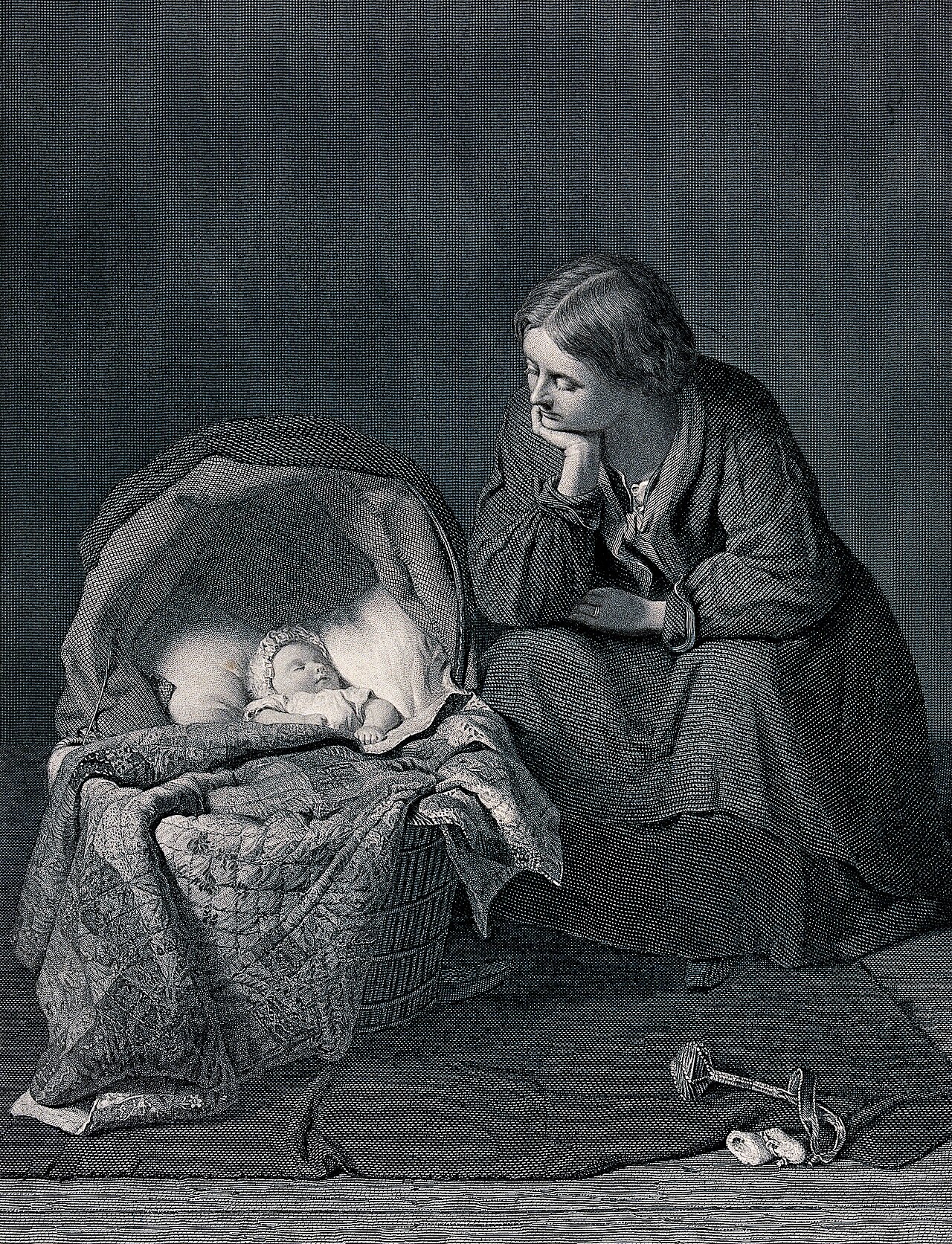
Night wakings will still happen. The gentle response has a clear order: pause, check, soothe, feed if needed, and repeat.
Pause first. Many babies fuss for a minute or two between sleep cycles and settle on their own.
Rushing in at the first sound can wake a baby who was about to drift back down. Give a brief pause, then respond if the crying builds.
Check the basics. A quick look covers the common causes: wet diaper, cold hands, a stuck blanket, a too-warm room.
Fix what is wrong and keep the lights low. Night checks are maintenance, not playtime.
Soothe in the crib when you can. A hand on the chest, a quiet shush, or a gentle pat often settles a baby who is stirring rather than truly awake.
Picking up is fine when the baby needs it. The goal is to lower the help gradually over days and weeks, not to withdraw it all in one night.
Feed when hunger is the cause. A baby who is genuinely hungry should eat. Over weeks, as the baby grows, some night feeds drop away on their own.
A pediatrician can advise on when night weaning fits your baby. Forcing it early usually backfires into more crying, not more sleep.
Stay boring at night. Low light, quiet voice, no games, no screens.
The baby should learn that nights are dull and days are interesting. That contrast is one of the strongest sleep teachers available.
What to do when progress stalls
First, check the schedule. A baby who naps too late or stays up too long before bed will fight the night.
Move bedtime earlier for three nights and watch. Small timing shifts often fix what feels like a sleep problem.
Second, check the sleep associations. If the baby falls asleep only while feeding, rocking, or being walked, the baby will want the same help at each waking. Move the feed earlier in the routine so it no longer ends at sleep.
Shorten the rocking by a minute or two each night. Gradual fading works: reduce the help a little at a time and let the baby take over the last step.
Third, check for illness or discomfort. Ear pain, reflux, a cold, or a new tooth can break a good pattern.
If the baby seems unwell, is feeding poorly, or has a fever, call the pediatrician. Sleep advice never replaces medical care.
Fourth, protect the parents. Broken nights wear down anyone. Trade shifts with a partner when possible.
One parent takes the first half of the night, the other takes the second. Even one protected stretch of 4 to 5 hours of sleep changes how the next day feels.
Asking family for a daytime nap shift is not failure. It is logistics.
FAQ
When can I expect my baby to sleep through the night?
Most babies manage a 6-hour stretch near 6 months, but the range is wide. Some manage it near 3 months, and more than a quarter still do not at 12 months. Both ends of that range are normal.
Does dropping night feeds help babies sleep longer?
Only when the baby is ready. A hungry baby wakes to eat, and refusing feeds does not teach longer sleep.
As growth and daytime intake rise, many babies drop night feeds on their own. Check timing with your pediatrician.
Is it safe to use a blanket in the crib?
No blankets, pillows, bumpers, or toys belong in the crib before 12 months. A sleep sack is the safer option for warmth. Keep the mattress firm and flat with only a fitted sheet.
Do I need to sleep train to get longer nights?
No. Gentle routines, consistent timing, and gradual fading of sleep help can build longer stretches without a strict training method. Progress is slower, but many families find the trade worthwhile.
The bottom line
Longer nights come from biology plus routine, not from battles. Set a steady wake time, run the same calm bedtime sequence, put the baby down drowsy but awake, and keep the room dark, cool, and bare.
Respond to wakings with a pause, a check, and the least help that works. Nights will lengthen on the baby's schedule, and the routine you build now will carry the family through the next regression.
Tags: baby sleep, parenting, bedtime routine, infant sleep
Latest in Parenting
- How to respond when toddlers throw tantrums
- When do babies start talking, and what is normal
- How to build a bedtime routine kids actually follow
Subscribe for one practical parenting guide in your inbox each week.
Related stories

Why babies cry more in the evening: the witching hour explained
The witching hour is the fussy evening stretch most newborns hit daily. Why overtiredness, cluster feeding, and overstimulation stack up

When Do Babies Start Sleeping Through the Night by Month?
Most babies sleep through the night between 3 and 6 months, with regressions at 4 and 8 to 10 months. See the month-by-month table

Why Your Baby Wakes Up the Second You Put Them Down
Newborns wake when put down as the startle reflex, light sleep, and lost warmth hit at once. It is normal and peaks early, fading