
How airport security scanners see inside your bags
Key takeaways
- Since 2002, the TSA has relied on computed tomography (CT) X-ray scanners for carry-on screening.
- CT scanners gather hundreds of X-ray pictures with a spinning camera and build 3D images rotatable on three axes.
- Color coding reveals material types: orange for organics, blue or green for metals, black for dense objects.
- Last year the TSA screened more than 2 billion carry-on bags and 494 million checked bags.

What bag scanners actually do
An airport bag scanner does not open your luggage. It sends X-rays through it and measures what comes out the other side.
X-rays are like light in that they are electromagnetic waves, but they are more energetic, so they can penetrate many materials, as HowStuffWorks explains. Different materials absorb X-rays at different rates, so the pattern of X-rays that survives the trip reveals both the shapes and the materials inside the bag.
The scale is enormous. According to the TSA, last year the agency screened more than 2 billion carry-on bags and 494 million checked bags, Popular Science reports. Every one of those bags passed through an imaging system that had to decide, in seconds, whether its contents were safe.
This article explains how traditional X-ray scanners work, what the color codes on the screen mean, how CT scanners changed the game, what officers actually look for, and how bag scanners differ from body scanners.
How traditional X-ray scanners work
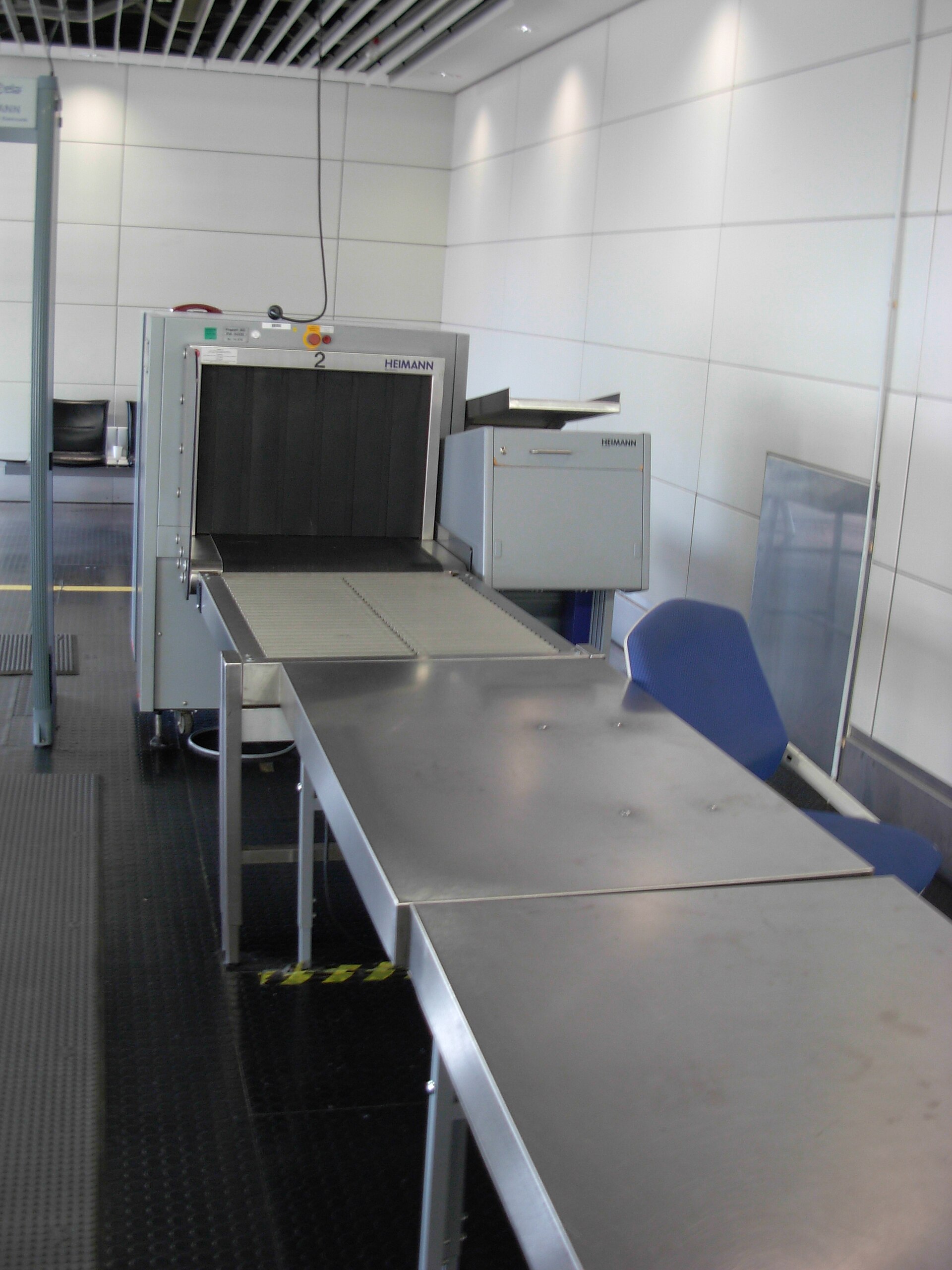
When you place your carry-on on the conveyor belt, it passes through a lead-lined tunnel. An X-ray tube on one side of the machine fires X-rays through the bag, and detectors on the opposite side capture what passes through.
The machines used in airports are usually based on a dual-energy X-ray system, with a single X-ray source sending out X-rays typically in the range of 140 to 160 kilovolt peak (KVP), according to HowStuffWorks. KVP refers to the amount of penetration an X-ray makes: the higher the KVP, the further the X-ray penetrates.
The clever part is the dual-energy design. After the X-rays pass through your bag, they hit a detector, then pass through a filter that blocks out the lower-energy X-rays, and the remaining high-energy X-rays hit a second detector.
A computer circuit compares the pick-ups of the two detectors to better represent low-energy objects, such as most organic materials. BBC Science Focus describes the same setup: by comparing the two detectors' outputs, the machine constructs an image showing not just the position of objects, but also roughly what they are made of and their density.
What the colors on the screen mean
The squiggly multicolored display the officer watches is not a photograph. It is a material map. Items are colored based on the range of X-ray energy that passes through them, which corresponds to the atomic makeup of the material.
The standard color coding works like this, according to BBC Science Focus and OrganizerTone:
- Orange indicates organic materials: food, paper, leather, clothing, and some explosives.
- Blue or green indicates inorganic materials such as metals and glass.
- Black indicates dense objects that X-rays cannot penetrate.
The denser the material, the darker the color on the display. Officers are trained to spot the characteristic shapes of weapons, prohibited items, and the components of explosive devices within this color-coded picture.
A dense black shape with sharp edges inside an orange mass of clothing gets a second look. If you want fewer surprises at the checkpoint, knowing how early to arrive for international flights helps too, since a flagged bag means a manual search.
How CT scanners changed everything
Since 2002, when the TSA leveled up in the wake of September 11, virtually all agents have relied on Computed Tomography (CT) systems, Popular Science reports. "CT is a proven and highly effective screening technology that is widely used in the medical field," says a TSA spokesperson.
A TSA CT X-ray scanner sends low doses of X-rays through your luggage, which pass through the different materials at different rates. So the scanner can tell if there are metals, liquids, or even organic materials in there.
The real advance is geometric. According to a TSA spokesperson, CT technology applies sophisticated algorithms to create three-dimensional images, gathering hundreds of pictures with an X-ray camera spinning around the items.
Officers can rotate those images 360 degrees on three axes, which allows more detailed visual analysis and threat detection without opening the bag, the spokesperson said.
That 3D view is why airports with CT scanners increasingly let you keep laptops in your carry-on. The officer can digitally rotate the image and look at the bag's contents from any angle, essentially unpacking your bag on screen.
Some newer CT models can even tell whether the liquids in your luggage contain explosives, though those are not widely available yet. That is the technology that may one day let travelers fly with normal-sized shampoo again.
What officers actually look for
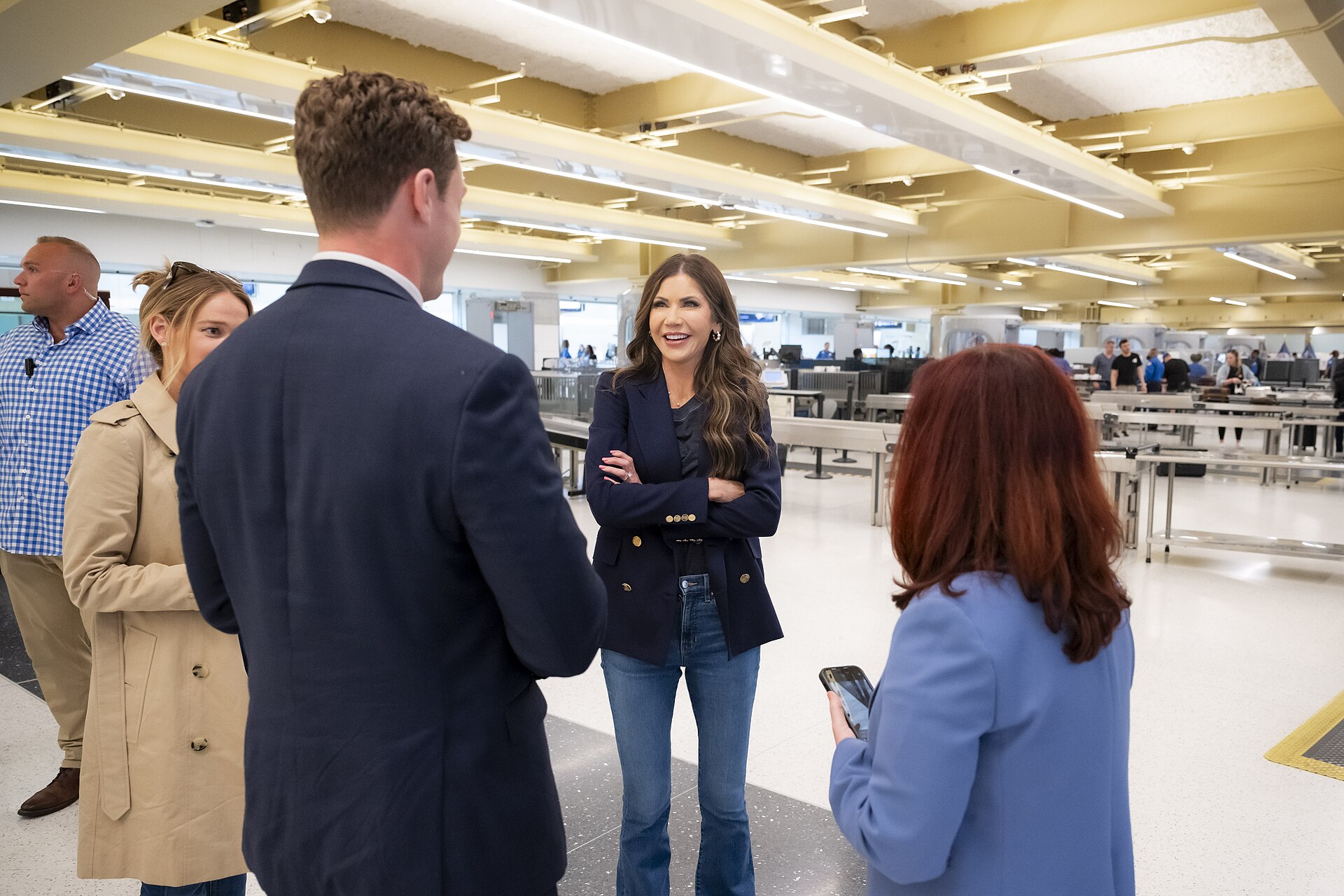
Officers are hunting for shapes and densities that match threats. A TSA spokesperson told Popular Science that officers encounter everything from fireworks and replica grenades to snakes and literal kitchen sinks, with knives, martial arts items, and large tools among the most common finds.
Passengers have tried hiding a vape in a tube of toothpaste, smuggling a knife in a loaf of bread, and stashing narcotics in hair scrunchies.
Prohibited items add up fast. "Prohibited items brought to checkpoints add up to hundreds of pounds a year at smaller airports to as much as 2,000 pounds or a ton per month at the largest airports," says a TSA spokesperson.
If something looks suspicious, the bag gets a manual inspection. Most of the time this is routine.
Agents do not actually confiscate most prohibited items, Popular Science notes. Unless the item is dangerous or illegal, you can usually hand it to a friend or family member who is not boarding, or go back to the ticket counter and put it in checked luggage. Understanding what happens when a flight is overbooked or how travel insurance claims work can round out your airport knowledge just as usefully.
Bag scanners versus body scanners
The machines that look inside your bags are different from the ones that scan your body. Bag scanners use X-rays, a form of ionizing radiation, at doses the TSA describes as low and safe for luggage. Body scanners use millimeter-wave technology, which relies on non-ionizing electromagnetic waves that reflect off the body and any concealed items, creating a 3D image for analysis, according to ShunHotel's security guide.
In practical terms: the X-ray tunnel on the conveyor belt sees your bag, and the standing booth you step into sees you. Neither machine is doing the other's job.
One more myth to clear up: airport X-ray scanners use much lower radiation levels than medical X-rays, and they are designed for belongings, not people. They will not erase your phone or damage your laptop. Film photographers should note one exception: high-speed film (ISO 800 or higher) can be fogged by X-rays, and hand inspection is the safer option there.
Frequently asked questions
Can airport scanners see through everything in my bag?
Nearly everything, but very dense objects show up as black because X-rays cannot penetrate them. A blacked-out region is itself suspicious and usually triggers a manual search.
Why do some airports let you keep laptops in your bag?
Those lanes use CT scanners, which build rotatable 3D images. The officer can digitally separate the laptop from the items around it, so the separate laptop bin is unnecessary.
Do the colors on the screen show actual colors of my belongings?
No. The colors are a material map: orange for organic materials, blue or green for metals and inorganics, black for dense objects. The denser the material, the darker the display.
Can the scanner tell what my liquids are?
Newer CT models can analyze whether liquids contain explosives, according to the TSA. This capability is not yet widely deployed, which is why the 3-1-1 liquids rule still applies at most checkpoints.
Will the scanner damage my electronics or film?
Electronics are safe at these low X-ray doses. High-speed photographic film (ISO 800 or higher) can be damaged, so request a hand inspection for film.
The bottom line
Airport scanners see inside your bags by firing X-rays through them and reading what survives. Dual-energy detectors sort materials by how they absorb radiation, color-coding organics orange, metals blue or green, and dense objects black.
Since 2002, CT scanners have added the third dimension, letting officers rotate a 3D image of your bag on three axes without opening it. The result is a system that screens billions of bags a year and catches everything from knives in bread loaves to vapes in toothpaste tubes. Pack with the color map in mind, and the checkpoint gets a lot less mysterious.
Related stories

The 3-1-1 liquids rule for planes: what each number means
TSA's 3-1-1 rule limits carry-on liquids to 3.4-ounce containers in one quart bag. Where the 2006 rule came from, what counts, and how

Why Is Airplane Food So Bland at Altitude?
A 2010 Fraunhofer study found altitude cuts sweet and salty perception by up to 30 percent. Low humidity, cabin pressure, and noise all

Carry-on size limits: why airlines each set their own
Airlines set their own carry-on limits because the FAA only requires each carrier to have a policy, not one global size. Why 22 x 14 x