
Why do flights get delayed, and what announcements really mean?
Key takeaways
- Weather causes most delays, and it does not need to be at your airport: a storm hundreds of miles away ripples across the network.
- "Ground stop," "EDCT time," and "crew timeout" each point to a different cause, and knowing which one tells you how long the wait will be.
- Track your incoming aircraft: a plane stuck somewhere else is the earliest and most reliable warning your flight will slip.
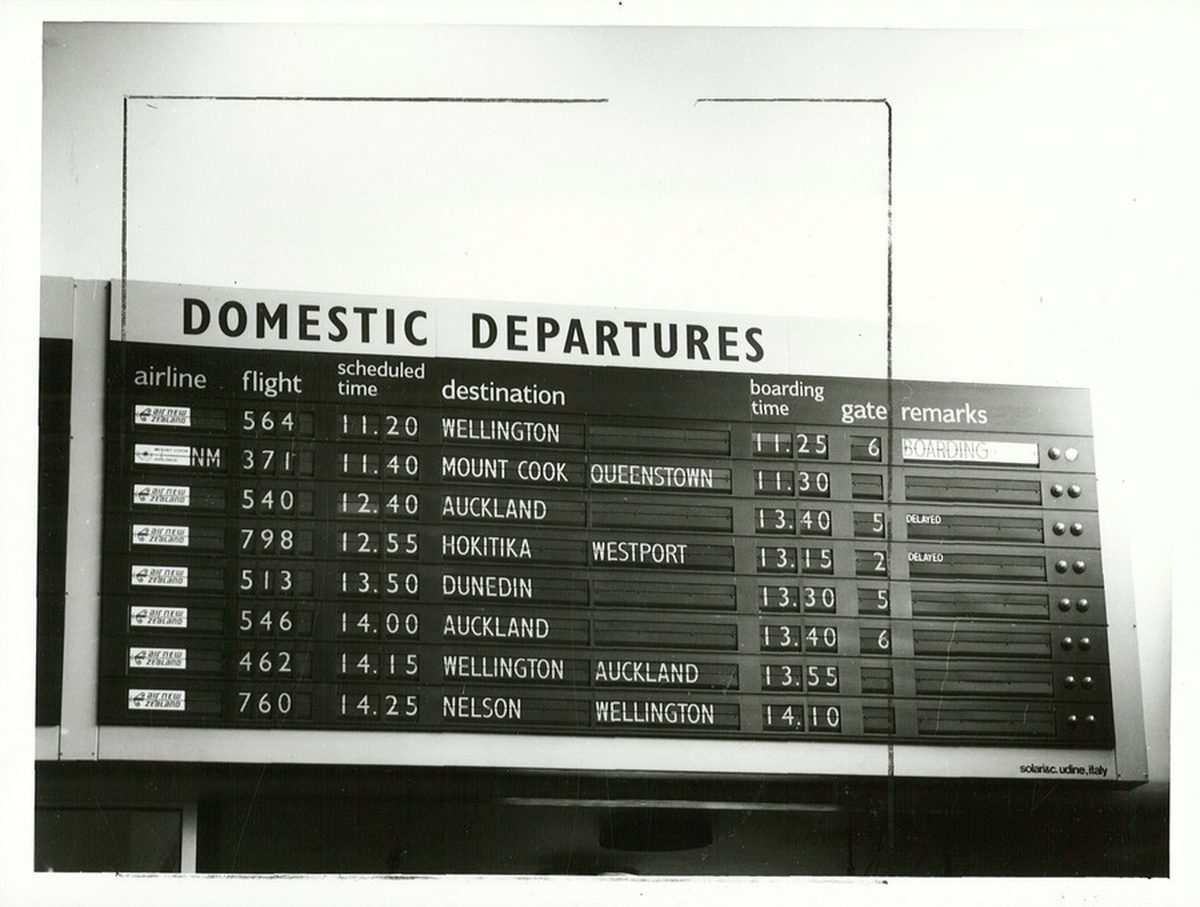
The gate agent picks up the microphone. Your flight is delayed. The reason given sounds like it was translated from another language: "air traffic control flow control," "we're waiting on the inbound," "a ground stop at the destination."
These phrases are not euphemisms. Each one names a specific link in the chain that moves airplanes, and each one carries different information about how long you will wait. Once you know the vocabulary, the announcements start to make sense.
This article explains why flights get delayed, including the most common causes, what the standard announcements actually mean, and how to read the warning signs before the airline tells you.
The causes behind most delays
Weather is the single biggest disruptor in American aviation. It is responsible for over 70 percent of flight delays in the National Airspace System, according to reporting that cites the system's own data.
The key detail is that the weather does not need to be where you are. A thunderstorm over the Midwest can delay flights on the East Coast hours later, because aircraft and crews get pushed off schedule and the disruption ripples outward. Always check weather along your whole route, not just at your departure airport.
Late-arriving aircraft is the next major cause. Airplanes fly several legs a day, so if your plane's previous flight ran late, yours starts late too. This is why tracking where your aircraft is coming from often reveals a delay before the airline announces it: if the incoming plane is still sitting on a tarmac two states away, your departure is about to slip.
Mechanical issues cause a smaller but real share. An aircraft with a maintenance problem cannot fly until it is fixed or swapped, and swaps are limited by where spare planes are parked. Crew scheduling problems compound everything, because crews have strict legal duty limits and a delay early in their day can make them illegal to fly your leg.
What "ground stop" and "flow control" mean
A ground stop is an air traffic control procedure that requires aircraft to remain on the ground. When it targets one airport, it halts departures destined for that airport at their point of origin.
Picture it this way: if a storm is about to hit Phoenix, the FAA does not stop planes leaving Phoenix. It stops planes in Denver, Dallas, and Los Angeles from taking off for Phoenix. Your plane waits safely at its origin instead of stacking up in the destination's airspace.
Ground stops last anywhere from 15 minutes to several days, though most run one to three hours. They trigger for weather, equipment failures, runway problems, or staffing shortages. A September 2026 equipment failure at the FAA's Philadelphia radar facility shows the scale: ground stops hit Newark, Philadelphia, JFK, and LaGuardia, more than 600 flights at Newark and Philadelphia alone were delayed, and Flightradar24 measured average delays of 112 minutes at Newark. Departures were averaging two hours and four minutes late.
A ground delay program is the softer version. Instead of freezing departures, the FAA assigns each flight a controlled departure time, an "EDCT" (expect-departure-clearance time), to space out arrivals. When the pilot says "we have an EDCT time," it means air traffic control has slotted your flight into a managed queue, usually because the destination's arrival rate is reduced.
Decoding the gate announcements
"We're waiting on the inbound aircraft." Your plane has not arrived yet. Check your flight number's previous leg on a tracking site; if the inbound is still airborne or parked elsewhere, the announced delay time is a guess that will likely grow.
"Air traffic control has issued a ground stop." Nothing is moving toward your destination right now. This is the announcement where the wait is genuinely out of the airline's hands, and the delay can stretch or vanish depending on the FAA lifting the order.
"We're waiting for a crew." The pilots or flight attendants are coming off another flight that ran late, or a crew member timed out on legal duty limits. Crew timeouts are hard stops: regulators set maximum duty hours, and no announcement can override them. Expect a longer delay or a cancellation while the airline finds fresh crew.
"We need to de-ice / there's a maintenance issue." These are the most honest announcements and also the least predictable. De-icing has a queue and a sequence. Maintenance can be a 20-minute fix or an aircraft swap, and the gate agent usually knows less than the pilots do.
"Due to weather" with no detail. Airlines say this because weather is often the true cause, but it is also the cause that excuses them from compensation obligations in many jurisdictions. If the sky above you is clear, the weather is probably somewhere else on the route or at the destination.
How to see a delay before it is announced
Start with the incoming aircraft. Search your flight number on a tracking site and find where the plane is coming from. A late inbound is the most reliable early signal in commercial aviation.
Check the FAA's air traffic advisories for your region. Ground delay programs and ground stops are public orders, and they often appear in aviation tracking tools well before airlines update their passengers.
Watch the whole route's weather, not just your city's. A storm at your destination or along the flight path delays you just as surely as one overhead.
Know your rights in advance. Compensation rules differ by country and by cause: in the US, the Department of Transportation requires compensation for involuntary bumping but not for weather delays. In the EU, regulation EC 261 can pay cash for long delays unless the cause was extraordinary, like weather. Reading the rules during a delay is too late to use them well.
FAQ
Why does the airline say "weather" when the sky is clear?
The weather causing the delay is usually at the destination, along the route, or at the airport your plane is coming from. Clear skies at your gate tell you nothing about conditions elsewhere.
What is the difference between a ground stop and a ground delay?
A ground stop halts departures bound for an airport entirely. A ground delay program lets them depart but assigns each a controlled time to manage the arrival flow. Stops are stricter and shorter; delays are softer and longer.
Can the airline do anything about an air traffic control delay?
No. ATC orders come from the FAA or the equivalent authority, and airlines must comply. This is why these delays rarely qualify for compensation: the airline did not cause them.
How long do ground stops usually last?
Most run one to three hours, though they can last from 15 minutes to several days depending on the cause. Equipment problems get fixed; storms have to pass.
The bottom line
Flight delays are rarely one thing. They are weather, late aircraft, crew limits, and air traffic control orders stacking on top of each other. The announcements sound vague until you learn the vocabulary, and then they tell you exactly where your plane is stuck. Track the inbound aircraft, read the FAA advisories, and you will usually know before the gate agent picks up the microphone.
Rive News is the research desk behind this article. We explain how everyday systems work, using published sources and documented guidance rather than guesswork.
Subscribe to the Rive News newsletter for one practical travel explainer every week.
Rive News publishes explainers that pass its internal QA: no invented facts, no fake bylines, named sources for every key claim. Corrections are logged with timestamps, never made silently.
Related stories

The 3-1-1 liquids rule for planes: what each number means
TSA's 3-1-1 rule limits carry-on liquids to 3.4-ounce containers in one quart bag. Where the 2006 rule came from, what counts, and how to pa

Why Is Airplane Food So Bland at Altitude?
A 2010 Fraunhofer study found altitude cuts sweet and salty perception by up to 30 percent. Low humidity, cabin pressure, and noise all dull

Carry-on size limits: why airlines each set their own
Airlines set their own carry-on limits because the FAA only requires each carrier to have a policy, not one global size. Why 22 x 14 x 9 inc