
How do pilots land in fog they cannot see through?
Key takeaways
- Pilots land in fog by following the Instrument Landing System. These are radio beams that show the plane's exact position relative to the runway.
- Higher categories allow lower decision heights. CAT IIIB permits landing with runway visibility as low as 50 metres.
- The autopilot often flies the landing itself. Pilots monitor every second and are ready to take over.
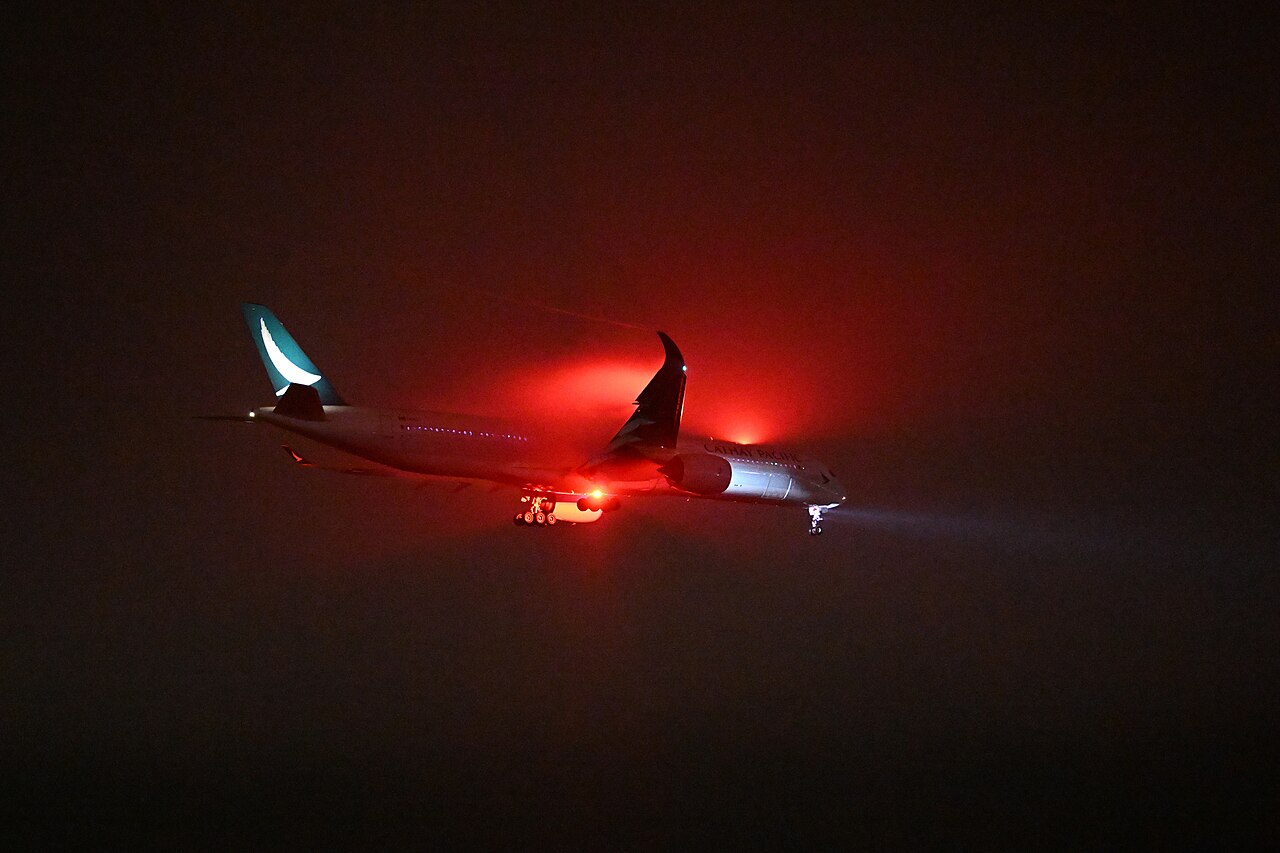
From the cabin, a fog landing looks like nothing at all. Gray outside the window, a long wait, then the thump of the wheels. The runway appears only seconds before touchdown.
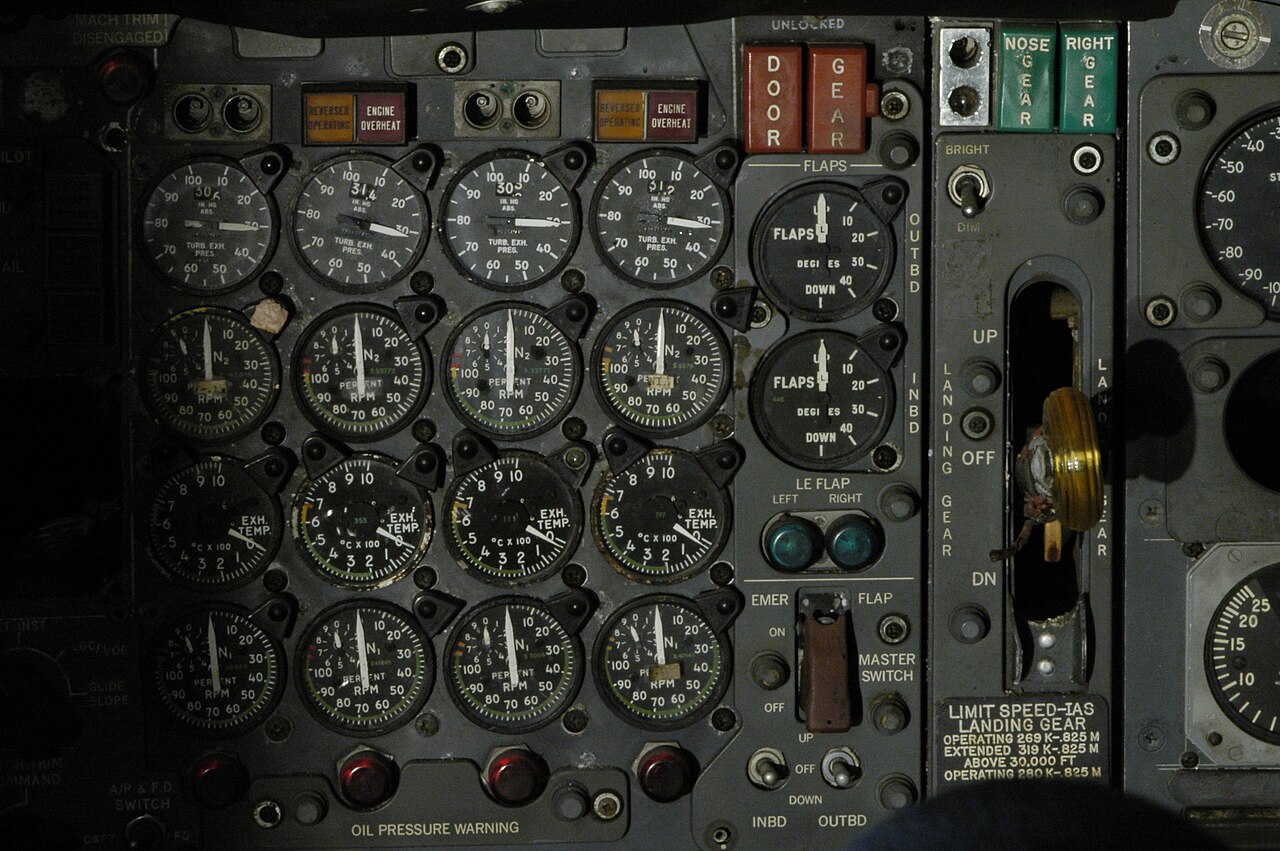
From the flight deck, it is one of the most precise maneuvers in aviation. The pilots are not guessing. They are following radio beams measured in fractions of a degree. Sometimes they let the autopilot fly the final seconds while they watch every instrument.
This article explains how pilots land in fog. It covers what the Instrument Landing System is, how the landing categories differ, what autoland does, and why fog still disrupts flights even at equipped airports.
The radio beams that replace the runway
The Instrument Landing System, or ILS, is a ground-based radio navigation system. It guides aircraft during approach and landing. It provides two essential streams of information. Together they replace everything the pilot cannot see.
Lateral guidance comes from the localizer. Its antennas sit at the far end of the runway. They transmit two narrow radio beams, one slightly left of the centerline and one slightly right. Where the beams intersect marks the exact centerline. The aircraft's instruments show the pilot precisely how far left or right of the runway the plane is.
Vertical guidance comes from the glideslope. Its antennas sit near the runway's midpoint. They transmit two more beams, one slightly above the ideal descent path and one slightly below. Their intersection marks the correct descent angle. At any moment, the pilot knows instantly whether the aircraft is too high or too low.
In dense fog, the ILS becomes the pilot's eyes. It delivers continuous, precise information about horizontal and vertical position all the way down. In advanced systems, automated call-outs count down the distance to touchdown with prompts for flaps and brakes.
Decision height: how low before you must see
Every instrument approach has a decision height. That is the altitude at which the pilot must see the runway or go around. The categories define how low that height goes. Each step down requires better equipment, better training, and better runway gear.
In a CAT I approach, pilots follow the instruments down to about 200 feet. Then they need to see the runway to continue. CAT II takes them to 100 feet. CAT IIIA allows approaches with a decision height below 100 feet and runway visibility down to 200 metres.
CAT IIIB goes further. Decision heights below 50 feet and runway visual range below 200 metres, but not below 50 metres. Delhi's airport is equipped with CAT IIIB on its runways. It can keep landing aircraft when visibility drops to 50 metres, about half a football field.
CAT IIIC is the theoretical limit. True zero visibility, no decision height at all. Airports such as New York's JFK and London's Heathrow are equipped for the most advanced operations. Full zero-visibility commercial operations remain rare.
The first commercial landing in real CAT IIIA conditions happened in 1969. An Air Inter Caravelle flew from Lyon to Paris and landed on instruments alone. The technology is more than half a century old. It has only become more precise since.
Autoland: when the plane lands itself
In the lowest visibility, the autopilot often flies the final approach and touchdown. This is autoland. It is not the pilots being passive. It is a deliberate procedure with strict rules.
During a CAT III autoland, the autopilot controls alignment, descent rate, and the flare just before touchdown. It then keeps the aircraft tracking the runway centerline during rollout. The pilots monitor every parameter, hands near the controls, ready to take over the instant anything looks wrong.
Three things must line up for a low-visibility landing to happen at all. The aircraft must be certified for the category. The pilots must be trained and current for it. The runway and its ground equipment must be certified too. If any one element falls short, the flight waits, diverts, or cancels.
That triple requirement explains a puzzle passengers notice every winter. Delhi has CAT IIIB runways, yet fog still delays and cancels flights there. The reason is that not every aircraft and not every crew is certified for the category in force. Fog also slows departures and ground movement. The technology keeps the airport functional. It does not eliminate disruption.
What the pilots are actually doing
The work starts long before the fog. Dispatchers and crews check the forecast visibility against the airport's available categories and the aircraft's certification. If the numbers do not line up, the flight carries extra fuel for a possible diversion.
On approach, the crew briefs the low-visibility procedure. They agree on who watches what, when the autopilot engages, and the exact call-outs. One pilot typically monitors the instruments. The other looks outside for the first visual references, the approach lights or runway markings that confirm the instruments.
If the runway does not appear by decision height, there is no debate. The crew executes a missed approach. They climb away, and either try again or divert to the alternate airport. Going around is a routine, practiced maneuver, not an emergency.
Installing the ground equipment is a serious investment. Setting up CAT IIIB at an airport can cost up to ₹10 crore initially, with maintenance running around ₹50 lakh per month, according to The Quint's reporting cited by the Hindustan Times. Six Indian airports are certified for CAT III operations. They include Delhi, Lucknow, Jaipur, Amritsar, Bengaluru, and Kolkata.
FAQ
Can planes land in zero visibility?
Technically yes, with CAT IIIC equipment and autoland, but such operations are rare. Most commercial low-visibility landings happen in CAT IIIA or IIIB conditions. Pilots still need minimal visual references near touchdown.
Why do flights still get delayed if the airport has CAT III?
Because all three elements must be certified: the aircraft, the crew, and the runway. Non-certified flights must wait or divert. Fog also slows departures and taxiing. That chokes the airport's capacity even when landings continue.
Is autoland the same as the plane flying itself?
No. Autoland handles the final approach, touchdown, and rollout under strict procedures. But the pilots configure it, monitor it continuously, and can override it at any moment. It is automation with humans in full command.
How do pilots practice fog landings?
In full-motion simulators, where they fly hundreds of low-visibility approaches to stay certified. Certification lapses if they do not practice regularly. That is another reason some crews cannot fly the lowest categories.
The bottom line
Pilots land in fog they cannot see through by trusting instruments more than eyes. Radio beams mark the runway's position. Decision heights define how low they can go. The autopilot can finish the job while they monitor. The system is built on redundancy, and its first rule is the simplest one in aviation. If you cannot see the runway where you must, you go around and try again.
Rive News is the research desk behind this article. We explain how everyday systems work, using published sources and documented guidance rather than guesswork.
Subscribe to the Rive News newsletter for one practical travel explainer every week.
Rive News publishes explainers that pass its internal QA: no invented facts, no fake bylines, named sources for every key claim. Corrections are logged with timestamps, never made silently.
Related stories

The 3-1-1 liquids rule for planes: what each number means
TSA's 3-1-1 rule limits carry-on liquids to 3.4-ounce containers in one quart bag. Where the 2006 rule came from, what counts, and how to pa

Why Is Airplane Food So Bland at Altitude?
A 2010 Fraunhofer study found altitude cuts sweet and salty perception by up to 30 percent. Low humidity, cabin pressure, and noise all dull

Carry-on size limits: why airlines each set their own
Airlines set their own carry-on limits because the FAA only requires each carrier to have a policy, not one global size. Why 22 x 14 x 9 inc