
Why interviews include take-home assignments and where the line is
By Rive News / Research desk | Rive News / Published October 24, 2026 at 9:00 AM PKT
Key takeaways
- Companies adopted take-home assignments because work samples predict job performance far better than whiteboard puzzles or polished conversation.
- The practice drifted from 90-minute exercises into multi-day unpaid projects, which is where the "free labor" criticism bites.
- A fair take-home is short, hypothetical, and clearly bounded; candidates can push back on scope, ask for pay, or walk away.

[People attending a hiring and career support event.] Photograph: U.S. Air Force photo by Senior Airman Vaughn Weber
Image Credits: Wikimedia Commons
If you have applied for a job in the last few years, you have probably been handed homework. A coding project, a mock marketing plan, a sample deck, a strategy memo.
Employers call it a skills assessment. Candidates increasingly call it something else: unpaid labor.
Both descriptions contain truth. Take-home assignments did not spread because companies suddenly wanted free work.
They spread because the interviews they replaced were terrible at predicting who would actually do the job well. Then the format grew, the hours ballooned, and a legitimate evaluation tool turned into a genuine grievance.
This article explains why companies started using take-homes, what the data says about their predictive power, how scope creep broke the bargain, where experts draw the ethical line, and how candidates can respond when an assignment crosses it.
The problem take-homes were meant to solve
Traditional interviews are noisy. A candidate can be charming in conversation and lost at the actual work, or brilliant at the work and terrible at performing under a whiteboard's glare. Hiring managers needed a signal closer to the job itself, and a take-home project delivers exactly that: evidence of how someone approaches real tasks, on their own time, with their own tools.
The numbers behind this shift are striking. RezMyCV cites Triplebyte's 2024 hiring data showing that take-home scores correlated 0.41 with on-the-job performance, compared with 0.12 for whiteboard scores. In other words, the homework was more than three times as predictive as the live puzzle.
That gap explains the adoption wave. From the employer's chair, a short project looked like the fairest, most job-relevant filter available.
It also helped candidates who interview poorly but work well, giving them a chance to show skill without stage fright. The original design was a 90-minute exercise, not a weekend project.
How a 90-minute exercise became a 40-hour project
Scope creep did the damage. RezMyCV reports that what started as a short exercise stretched into 4-hour solo builds, then 12-hour MVPs, then full deployments with documentation. Citing Stack Overflow's 2025 survey, it puts the aggregate time across one engineer applying to six companies at more than 40 hours, with 72 percent of submissions generating zero feedback.
The HackerRank 2025 report found that 58 percent of candidates describe take-home weeks as the most stressful part of the job search. For a senior freelancer billing $120 an hour, a 40-hour take-home binge represents roughly $4,800 of unpaid effort, as RezMyCV calculates. Unlike freelance work, these projects rarely come with NDAs, so companies can absorb the candidate's architecture, naming, and product thinking without hiring them.
This is the "free labor" critique in its strongest form. It is not that all take-homes are exploitation. It is that the unbounded ones convert the hiring funnel into a source of free consulting, and the candidates with the least spare time pay the highest price.
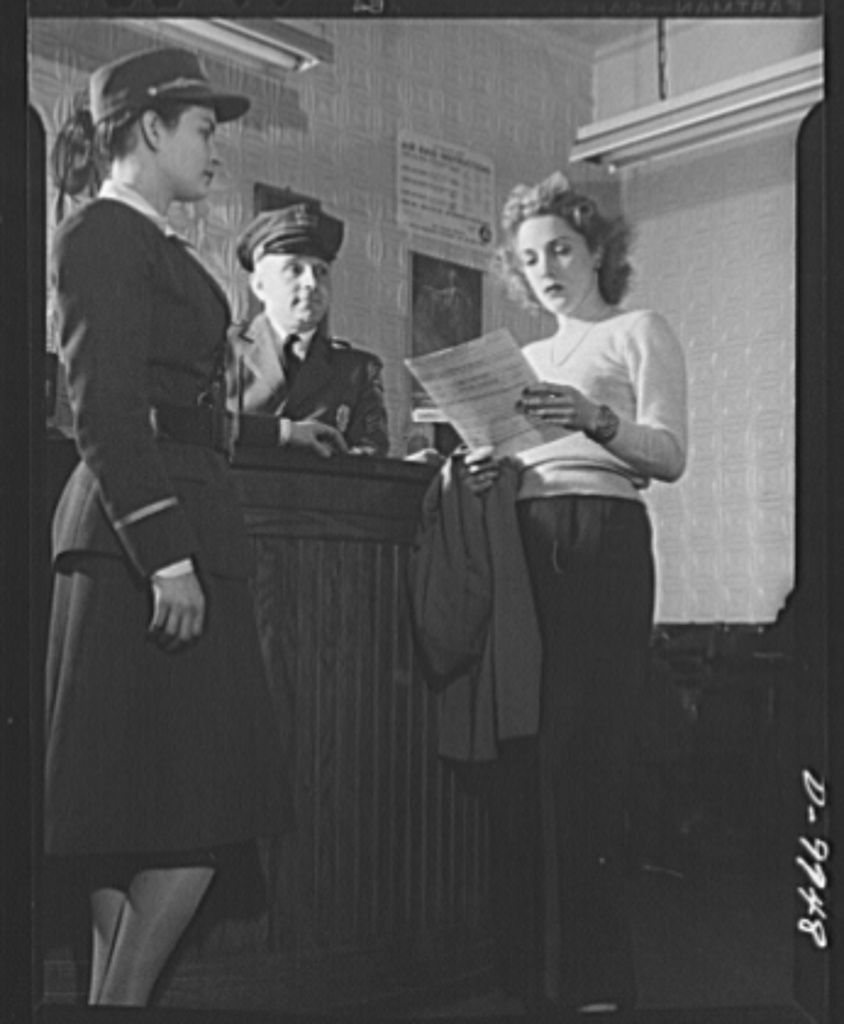
[A woman looking over a job application form at a desk in the 1940s.] Photograph: Ann Rosener
Image Credits: Wikimedia Commons
Where experts draw the ethical line
InHerSight asked technical recruiter and job search strategist Stephanie Heath and talent acquisition expert Dana Hundley to weigh in on the ethics of unpaid assignments, publishing the exchange in April 2024. Both agreed that take-homes can be done ethically, but that the time commitment and the use of the work decide the matter.
"An assignment can be valuable to the interview process if it's demonstrating a skill set or experience that's absolutely needed for the role," said Hundley. "What I have an issue with, and where we get into unethical territory, is when companies are asking for an egregious amount of time spent on unpaid assignments, and when they're asking for original work without very clear boundaries on how that work will be used."
Heath added a practical test: if the employer is working with a dataset the company could actually use, the exercise is unethical. Ethical assignments use hypothetical or unrelated data so the company can watch the candidate problem-solve without harvesting usable output. A small assignment taking a few hours is reasonable, both experts suggested; a project consuming a full week is not.
Hundley offered a gut check for hiring managers too: "If the assignment is going to take longer than what someone would take to interview either in person or on the phone, then you need to rethink it. It should just feel like another step in the interview process."
The hidden cost to companies themselves
The irony is that bloated take-homes hurt the employers who assign them. Candidates with three competing offers will not donate 40 free hours to one prospect.
The strongest candidates quietly drop out, leaving the company to choose from people with the least optionality. The filter selects for desperation, not talent.
There is also a fairness problem. Unpaid assignments assume equal access to time, computers, fast internet, and software, which marginalized candidates often lack, Hundley and Heath note.
Caregivers, part-time workers, and people already employed full-time cannot compete on hours with someone who has a free week. The result can be a less diverse pipeline and, eventually, a weaker team.
Stories of outright idea theft sharpen the anger. B2B Daily documented a case in which a candidate's creative strategy, submitted in April, became the foundation of a corporate campaign in May. Even when theft is not the intent, the absence of clear boundaries around how the work will be used feeds the suspicion.
How to respond when an assignment crosses the line
Candidates are not powerless, and pushing back professionally rarely burns bridges. The experts' advice converges on a few moves:
- Ask about scope before starting. Hundley recommends direct questions: What is the company trying to learn? How long should this take? How has this work been used before? Vague answers are information.
- Propose a bounded alternative. Offer to walk through a past project you were paid for, or to do a short live exercise instead. Heath notes that roughly 30 percent of people even complete the assignments they are sent, so recruiters are used to negotiation.
- Request compensation for large asks. Hundley says it is acceptable to name a rate when the project is far outside interview scope: "This project is a lot of extra work beyond the scope of the interview process, would you consider compensation for this work?" A company's answer reveals its values.
- Decline cleanly. A short message explaining that the time commitment does not work, while restating interest in the role, keeps the door open. Ghosting is the one move both experts advise against.
One job seeker, Jonathan Hurwitz, went viral in 2024 for a TikTok showing his polite refusal of a free-work request, telling viewers, "If we don't start pushing back and sending emails like this, the free work is sadly going to continue." Whether or not every candidate follows his lead, the pressure is clearly building toward reform.
What fair alternatives look like
Companies that want the signal without the backlash have options. Portfolio walkthroughs let candidates present work they were already paid for.
Live paired exercises, where a developer shares a screen with the hiring manager, compress the evaluation into an hour of dialogue. Structured behavioral interviews that probe past accomplishments can replace original-work assignments entirely.
Hundley argues the live format is better for both sides: "Even if you tell someone to not spend more than 30 minutes on something, people will overcommit their time if they're left to their own devices to make sure it's perfect. Do it live and have a dialogue." Character references and work samples from prior roles fill the remaining gaps without asking anyone to labor for free.
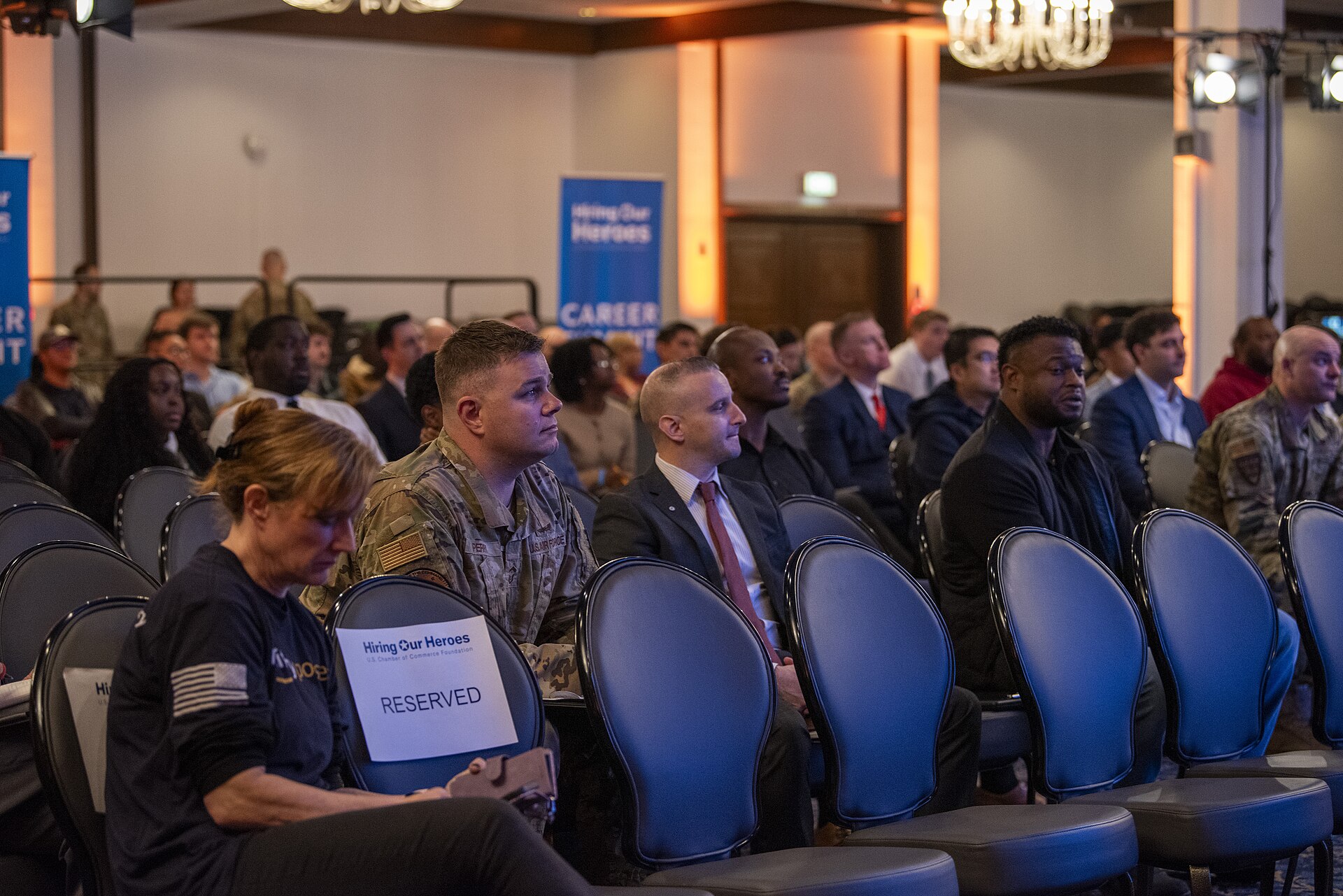
[Attendees at a career transition and hiring support event.] Photograph: U.S. Air Force photo by Senior Airman Vaughn Weber
Image Credits: Wikimedia Commons
Frequently asked questions
Are take-home assignments legal?
Generally yes, when they are genuine assessments. They cross legal and ethical lines when they produce usable work the company keeps, especially without clear consent or compensation. Rules vary by jurisdiction, so treat this as a red flag to evaluate, not a lawsuit to file.
How long should a take-home assignment take?
Most experts suggest a few hours at most. Anything approaching a full work week is widely considered excessive. If no time estimate is given, ask for one before you begin.
Should I refuse an assignment I think is exploitative?
You can decline, negotiate scope, or request pay. Weigh the role's value against your time and principles. A polite, specific refusal preserves the relationship better than silence.
Do take-homes actually lead to better hires?
The available data says well-designed ones do. Triplebyte's 2024 figures showed take-home scores correlating 0.41 with job performance versus 0.12 for whiteboard tests. The problem is not the format but the uncontrolled growth of its demands.
The bottom line
Interviews include take-home assignments because work samples predict performance better than interviews alone. The format earned its place, then lost goodwill through scope creep that turned evaluation into unpaid labor.
The healthy version is short, hypothetical, and bounded. When it is not, candidates can ask questions, propose alternatives, request pay, or walk away, and companies that listen will keep the candidates worth hiring.
Topics: job interviews, hiring, take-home assignments, career advice
Rive News is an independent research desk that explains how everyday systems work, from banking rails to household science. Articles cite public sources and link to the lab's related explainers.
Related
- How to prepare for a behavioral interview step by step
- What should you wear to a job interview in 2026?
- How to build a professional network without feeling fake
- How to negotiate remote work at the offer stage
Get one clear explainer like this in your inbox every morning. Subscribe to the Rive News newsletter.
Standards: every claim links to a named source; corrections are published promptly and never made silently.
Related stories
How to Ask for a Raise With Data, Not Emotions
Ask for a raise with market data and documented results, not emotions. Research your rate from BLS wage tables, build an evidence file, run

How to Explain a Career Gap on Your Resume Honestly
A career gap is not a red flag if you explain it honestly: give a reason, show what you did, and point forward. Recruiters reveal the exact

How to Switch Careers at 30 With No Experience in the Field
A career change at 30 means repackaging a decade of transferable skills, not starting over. Map your skills, earn one certification,