
How to prepare questions to ask at the end of an interview
By Rive News / Research desk | Rive News / Published October 27, 2026 at 9:00 AM PKT
Key takeaways
- Prepare four or five questions in advance, then ask only the two or three that still fit the conversation.
- Specific questions reference a project, priority or detail the interviewer actually mentioned.
- Never say you have no questions, since that reads as disengagement even when the interview covered everything.
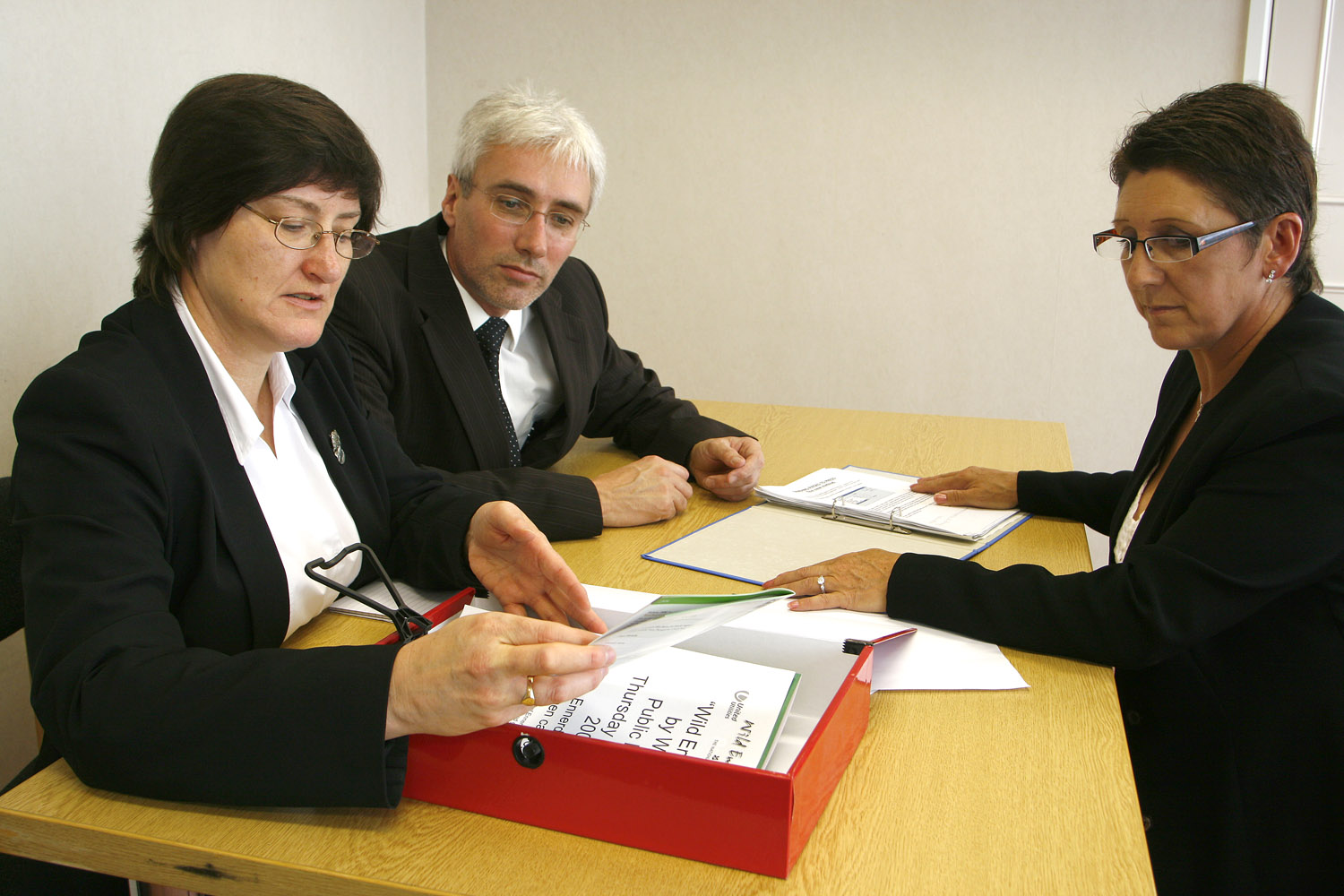
[Two people sit across a table in a job interview, the moment when the candidate gets to ask questions.] Photograph: Wikimedia Commons contributor
Image Credits: Wikimedia Commons
Questions to ask at the end of an interview are the part of the meeting you control completely. The interviewer has spent the session testing your fit, and the closing minutes hand the direction of the conversation to you.
Good closing questions do two things at once. They show that you were listening and thinking about the actual work, and they surface information you need to decide whether you want the job at all.
This article explains why closing questions matter, how to research questions before the interview, how to write questions that sound specific, how to choose which ones to ask, and what to avoid asking.
Why closing questions matter
Interviewers remember the ending. Erascend notes that the last few minutes are what interviewers tend to remember when they write up feedback, and a sharp closing question can lift a middling interview while a forgettable one can flatten a strong one.
The questions also act as evidence. A question tied to something the interviewer said proves you were tracking the conversation, while a generic question could have been asked at any company and proves nothing at all.
Thompson Rivers University's career guide puts it simply: have at least three good questions ready, ask open-ended ones that invite detail, and ask questions you genuinely want answered. The point is not to perform curiosity, it is to learn something real.
How to research questions before the interview
Start with the job description and look for tension in it. Erascend suggests watching for phrases that pull against each other, such as "build from scratch" next to "maintain existing systems," because that tension is where the real job lives.
Then check what has changed at the company recently. A launch, a leadership change, a funding round or a reorganisation in the last six months almost always reshapes the role, and asking how it changes the team's focus shows you did homework beyond the posting.
Map your questions to the people you will meet. A hiring manager can answer questions about priorities and success, a recruiter is better for process and timing, and a future peer can tell you how decisions really get made.
Indeed's advice runs in the same direction: prepare a list of 10 to 15 questions before the interview, then select the three most relevant based on what was actually discussed. The long list is raw material, not a script.
How to write questions that sound specific
The simplest test for a closing question is whether it could be asked word for word at a different company. Erascend states the test directly: "If you could ask the same question word for word at a different company, it's generic."
Anchor each question to something concrete: a timeframe, a project, a metric, or a detail from the conversation. Instead of asking what success looks like, ask what the person in the role will have done a year from now that would make the hiring manager thrilled with the hire.
Instead of asking about the biggest challenges, reference the specific challenge the interviewer mentioned and ask whether it is the first thing the new person owns. That kind of question proves listening in a way no generic question can.
Keep a notes column during the interview itself. When the interviewer mentions a project, a pain point or a goal, jot it down, because your best closing question often comes from those notes rather than from your prepared list.

[A candidate reviews her notes before an interview, a habit that produces sharper closing questions.] Photograph: Wikimedia Commons contributor
Image Credits: Wikimedia Commons
How to choose which questions to ask
Prepare more than you will ask. Erascend recommends having four or five ready, since some will get answered during the conversation, and asking one that was already covered is worse than asking a generic one.
For a 30 to 45 minute interview, two or three questions is the right range. If the interviewer has only five minutes left, ask your single best question and offer to send the rest by email.
If a prepared question does get answered, say so and build on it. A line like "You already covered most of what I wanted to ask about the roadmap, and the one thing I am still curious about is..." shows you were tracking the conversation the whole time.
End with a question about next steps, but frame it as a request for process detail rather than a verdict on your chances. Asking what the rest of the process looks like, and whether there is anything you could send that would make the decision easier, gets you the same information without putting the interviewer on the spot.
What to avoid asking
Salary, benefits and time off are fair questions, but an early round is usually the wrong place for them unless the interviewer raises the topic. The recruiter or the offer stage is the right place, and leading with them can make it look like you are only asking about yourself.
Skip anything answered on the company website. Asking how many people work there, or what the company does, reads as a lack of preparation rather than curiosity.
Avoid gotcha questions too. Asking why the last person quit can be reframed as asking whether the role is new or a backfill, which often produces the same answer delivered more honestly.
Above all, never answer the closing question with "No, I think you covered everything." Even when it is true, it reads as disengagement, and there is always one more thing worth knowing about a job you might take.

[A video interview in progress, where the same preparation rules apply as in person.] Photograph: Wikimedia Commons contributor
Image Credits: Wikimedia Commons
Frequently asked questions
How many questions should I prepare?
Prepare four or five, and expect to ask two or three. Some will be answered during the interview, and having spares means you are never left with nothing when the interviewer turns the conversation over to you.
Is it okay to read my questions from notes?
Yes, and interviewers generally take it as a sign of preparation rather than weakness. Thompson Rivers University's guide explicitly says to write questions out and bring them, so the interviewer can see how well prepared you are.
What if the interviewer already answered everything?
Acknowledge it and build on one answer with a follow-up. Saying "You covered the roadmap, and I am curious about one part of it" keeps the conversation alive and proves you listened.
Should I ask about salary in the first interview?
Usually not, unless the interviewer raises it or the process explicitly invites it. Role expectations and fit are safer ground early on, and compensation fits naturally at the recruiter or offer stage.
The bottom line
Preparing closing questions is really preparing to listen: research the role, draft specific questions, and let the live conversation decide which ones you ask. Two or three sharp questions beat a long list of generic ones every time.
Before your next interview, write four or five questions anchored to real details, bring them with you, and ask the ones that still matter after the conversation. That closing is often the part interviewers remember.
Tags: interviews, job search, interview questions, career advice
Rive News's research desk covers everyday motoring, home and work topics from published sources and official guidance.
Related
- How to prepare for a behavioral interview step by step
- How to answer tell me about yourself in an interview
- How to ask about salary range before the first interview
- How to prepare for a video interview at home
Subscribe to Rive News for one practical explainer in your inbox each morning.
Rive News publishes research-based explainers and corrects errors promptly when readers point them out.
Related stories
How to Ask for a Raise With Data, Not Emotions
Ask for a raise with market data and documented results, not emotions. Research your rate from BLS wage tables, build an evidence file, run

How to Explain a Career Gap on Your Resume Honestly
A career gap is not a red flag if you explain it honestly: give a reason, show what you did, and point forward. Recruiters reveal the exact

How to Switch Careers at 30 With No Experience in the Field
A career change at 30 means repackaging a decade of transferable skills, not starting over. Map your skills, earn one certification,