
Why Do Recruiters Ask Salary History Where It Is Illegal?
Key takeaways
- Roughly 21 states and territories ban or restrict salary history questions, most taking effect between 2017 and 2024.
- Recruiters still ask because of outdated scripts, exemptions, ignorance of local rules, and the ease of outsourcing.
- Every state allows questions about salary expectations, which is legal and often more useful to both sides.
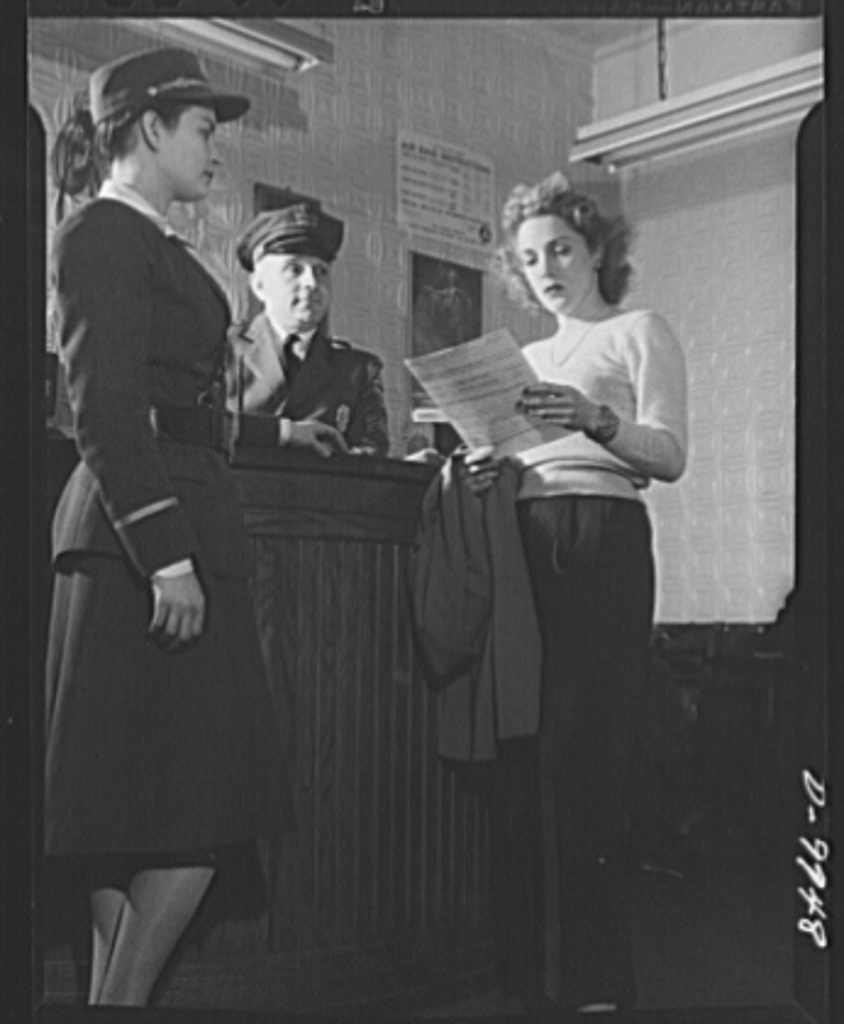
A woman looks over a job application blank in 1942. Screening questions about pay have a long history, and so do the laws limiting them. Photograph: U.S. Farm Security Administration
Image Credits: Wikimedia Commons / U.S. Farm Security Administration
A salary history ban is a law that stops employers from asking job applicants what they earned at previous jobs Roughly 21 states and territories plus Washington D C
, Puerto Rico, and more than 20 cities and counties now have some version of one, with most taking effect between 2017 and 2024. Yet candidates in these places still get asked the question
This article explains why recruiters keep asking where it is illegal, what the laws actually cover, and how to handle the question when it lands in your interview.
Why the question existed in the first place
Recruiters asked about salary history for a straightforward business reason: it was a cheap screening tool. A past salary number let a hiring manager quickly judge whether a candidate was "too expensive" or, at the other end, so low-paid that the manager assumed poor qualifications or inexperience.
It also gave the employer a floor for negotiations. If they knew you made $70,000, they could offer $78,000 and look generous, even if the job's real budget was $95,000.
The problem is that this shortcut bakes in old pay gaps. If women and minority workers were underpaid at their last job, anchoring the new offer to the old salary carries the gap forward. That carryover effect is exactly what salary history bans were designed to break.
The laws aim to force employers to price the job, not the candidate.
So why does the question survive? The answers are less about malice and more about inertia, confusion, and structural gaps in how hiring works.
The five real reasons it keeps happening
First, outdated interview scripts Many companies never updated their screening templates after the bans took effect A recruiter reading from a 2016 checklist asks "What is your current salary
" without knowing the question became illegal in their state in 2019.
Hiring moves fast, and compliance training often lags behind.
Second, recruiters may not know which rules apply. The bans vary wildly by jurisdiction.
Some cover all private employers; others cover only state agencies, as in Pennsylvania and North Carolina. A recruiter hiring across state lines may apply the strictest rules they know, the loosest ones, or none at all.
Multi-state employers operating in dozens of jurisdictions face genuinely tricky compliance, and individual recruiters are not lawyers.
Third, exemptions create gray areas. Several states let employers confirm salary history after extending an offer, or when the applicant volunteers the information first.
Delaware allows verification of salary history after extending an offer. Massachusetts permits confirmation if the applicant volunteers it or after an offer.
A recruiter who hears "I was making $90,000" in casual conversation may treat that as a voluntary disclosure and start asking follow-ups, even if the law draws a narrower line.
Fourth, third parties complicate enforcement. Staffing agencies and contract recruiters sometimes ask salary history questions that the hiring company itself would not ask. Here is the thing: in most of these laws, the ban extends to the employer's agents.
As LegalClarity notes, third-party recruiters, staffing agencies, and background check companies cannot ask about your salary history on the employer's behalf, and an employer cannot get around the law by outsourcing the question. But the extra layer still creates deniability and confusion.
Fifth, some recruiters ask because nobody stops them. Enforcement of salary history bans is mostly complaint-driven. If no applicant reports the violation, nothing happens.
Candidates rarely complain mid-process because they fear losing the opportunity. That weak feedback loop lets the practice continue quietly.

A job interview in the 1940s. Interview questions evolve slowly, which is one reason banned questions keep resurfacing. Photograph: U.S. Farm Security Administration
What the bans actually cover
The details differ by state, but the common features are worth knowing. In states with bans covering all employers, such as California, Colorado, Connecticut, and New York, asking a candidate for salary history during hiring is illegal.
California's law, Labor Code section 432.3, effective January 1, 2018, goes further: employers cannot seek salary history information or use it to determine pay, even if they already have the information or the applicant volunteers it. Employers with 15 or more employees must also include pay scales in job postings and provide the pay scale to any applicant who asks.
Colorado, effective January 1, 2021, bars employers from asking about salary history or relying on it if they learn it, and prohibits discriminating or retaliating against candidates who do not disclose. Connecticut, effective January 1, 2019, bans asking unless the applicant voluntarily discloses. Local bans fill gaps where no statewide law exists: Kansas City, Missouri; Cincinnati and Columbus, Ohio; and New York City all have ordinances covering private employers.
Retaliation is separately prohibited in most of these laws. An employer cannot reject your application, rescind an offer, or otherwise punish you for refusing to answer salary history questions. Nevada's law specifically prohibits discrimination or retaliation against applicants who decline to disclose wage history.
One universal carve-out: every state allows employers to ask about your salary expectations. That question focuses on the future, what you want to earn going forward, not the past. It does not violate any salary history ban, and it is the question you should steer the conversation toward.
How to handle the question when it comes
If a recruiter asks about your salary history in a state with a ban, you have options. The simplest is a polite redirect.
Say you are focusing on the posted range for the role and ask where you would land in it. This answers the underlying concern, your cost, without disclosing the number they cannot legally request.
You can also name the law directly, though tone matters. "I believe that question isn't permitted under our state's pay history law, but I'm happy to share my salary expectations" is firm without being hostile. Most recruiters who asked out of habit will back off immediately.
Do not lie about your past salary. If the number comes out later through a background check or reference, a lie looks far worse than a low number ever would. And remember that in some states, such as California, even a voluntary disclosure cannot be used to set your pay, so volunteering the number rarely helps you.
If the questioning persists or feels retaliatory, document it. Note who asked, when, and the exact wording.
State labor agencies and the EEOC accept complaints about these violations. You do not have to file one to benefit from the law, but a paper trail gives you options.
Frequently asked questions
Is there a federal salary history ban?
No. There is currently no federal salary history ban. The laws exist at the state and local level, which is why coverage and details vary so much by location.
Can a recruiter ask what I want to earn?
Yes. Every state allows questions about salary expectations, meaning what you want to earn in the new role. The bans cover past pay, not future expectations.
What if I volunteer my salary history myself?
It depends on the state. In California, the employer still cannot use voluntarily disclosed history to set your pay.
In states like Massachusetts and Delaware, employers may confirm history after an offer or when volunteered. When in doubt, keep the conversation on expectations.
Does the ban apply to internal transfers?
Generally no. Salary history bans protect external candidates. For internal applicants seeking a promotion or transfer, the company already knows their pay, and the bans do not cover that situation.
The bottom line
Recruiters ask about salary history where it is illegal mostly because of old habits, patchwork laws, and weak enforcement, not because of a grand strategy. The bans are real and growing, covering 21 states and territories plus dozens of cities, and they give you the right to redirect the conversation to salary expectations. Know your state's rule, keep your answer future-focused, and never let a banned question set your price.
Latest in Career & Jobs
- Do recruiters really look at your resume for 6 seconds - what the research actually says.
- How to make your LinkedIn profile attract recruiters - profile tweaks that get inbound interest.
- How to negotiate remote work at the offer stage - get flexibility before you sign.
- Transferable skills examples by industry - translate your experience for a new field.
Subscribe for one clear career explainer every weekday morning.
Related stories

How to Ask for a Raise With Data, Not Emotions
Ask for a raise with market data and documented results, not emotions. Research your rate from BLS wage tables, build an evidence file, run

How to Explain a Career Gap on Your Resume Honestly
A career gap is not a red flag if you explain it honestly: give a reason, show what you did, and point forward. Recruiters reveal the exact

How to Switch Careers at 30 With No Experience in the Field
A career change at 30 means repackaging a decade of transferable skills, not starting over. Map your skills, earn one certification,