
How Does Exercise Improve Memory and Learning? The Science
Key takeaways
- A single 20-minute workout can trigger memory-related brain waves that travel from the hippocampus to learning centers.
- A year of regular walking increased hippocampus volume by about 2% in older adults, alongside better spatial memory.
- Exercise seems to help most when it happens before learning, giving the brain a short recovery window first.
This article is for general information, not medical advice.
Exercise improves memory and learning through measurable changes in the brain. It increases blood flow, triggers the release of growth factors, and strengthens the neural circuits that encode and retrieve information. Researchers have documented these effects in studies ranging from a single bike ride to a year-long walking program.
This article explains how exercise changes the brain, what a single workout does, what regular exercise does over time, why timing matters, and how much exercise the research points to.

How exercise changes the brain
The hippocampus is the brain structure most involved in forming memories. Exercise acts on it through several routes at once. Physical activity increases blood flow to the brain, stimulates the release of brain-derived neurotrophic factor (BDNF), a molecule involved in learning and memory, and encourages the growth of new neural connections.
A landmark trial reported by ScienceDaily followed 120 sedentary older adults without dementia. One group walked around a track for 40 minutes a day, three days a week, for a full year. The other group did stretching and toning exercises.
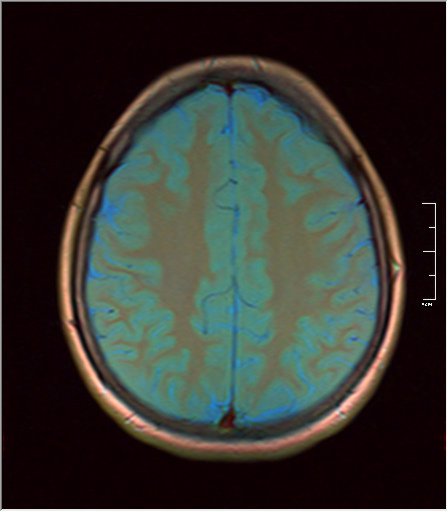
Brain scans showed the walking group's left and right hippocampus grew by 2.12% and 1.97% respectively. The stretching group's hippocampus shrank by 1.40% and 1.43%.
The walkers also scored better on spatial memory tests, with size gains tracking higher BDNF levels. The researchers, from the University of Pittsburgh, University of Illinois, Rice University, and Ohio State University, described it as the first study of its kind in older adults already experiencing hippocampal shrinkage.
What a single workout does
You do not need a year of training to see an effect. A 2026 study led by the University of Iowa found that one exercise session rapidly changes the brain's memory rhythms in humans.
The team recruited 14 patients at University of Iowa Health Care Medical Center, aged 17 to 50, who had electrodes implanted for epilepsy monitoring. After a brief warmup, participants rode a stationary bike for 20 minutes. Researchers recorded brain activity before and after using intracranial electroencephalography.
The recordings showed a burst of high-frequency brain waves called ripples, starting in the hippocampus and connecting with cortical regions involved in learning and recall. Neuroscientists had documented these ripples in rodents, but this was the first direct confirmation in people.
Michelle Voss, professor of psychological and brain sciences at Iowa and the study's corresponding author, said the patterns matched what healthy adults show on noninvasive brain scans, suggesting a general human brain response to exercise rather than something specific to epilepsy. The study, "Exercise enhances hippocampal-cortical ripple interactions in the human brain," was published March 9, 2026, in the journal Brain Communications.
What regular exercise does over time
Single sessions create ripples. Sustained training reshapes the hardware. The one-year walking trial above is the clearest human evidence: the hippocampus does not just work better after exercise, it physically grows.
A 20-week moderate-intensity program covered by Harvard Health adds another layer. Participants did not just remember more; they got better at flexibly recombining what they had learned and applying it to new situations.
In one test, people who exercised could spot associations between seemingly unrelated images, such as a fish and a baby, based on earlier feedback. That kind of generalization depends on the medial temporal lobe, the same region that falters early in Alzheimer's disease.
Interestingly, the Harvard-covered trial found no exercise-related improvements in BMI, physical fitness, or aerobic capacity during the 20 weeks. The cognitive gains appeared even without obvious physical transformation, which suggests the brain effects are not just a side effect of getting fitter.
Why timing matters
A systematic review of single-workout studies, published in Translational Sports Medicine, found that a bout of aerobic exercise followed by a brief recovery before studying improves attention, concentration, learning, and long-term memory in young adults.
The review offers practical guidance. Sessions from a few minutes to an hour showed benefits, at moderate to high intensity.
One recommended protocol was a 5-minute warmup, 20 minutes of moderate cycling, and a 5-minute cooldown. A short recovery of about 5 minutes after exercise appeared favorable for memory, though the evidence on planning ability was mixed.
One caution from the same review: exercise immediately after learning, during the consolidation phase, showed less favorable effects. The sweet spot seems to be exercising before you study, then giving your brain a few minutes to settle before you open the book. That timing insight pairs naturally with spaced study sessions, where effort during recall is what builds durable memory.
How much exercise is enough?
The research does not point to a single magic dose, but a pattern emerges across studies. For acute benefits, 20 minutes of moderate aerobic activity, such as brisk cycling, is enough to change brain activity. For structural change, the one-year trial used 40 minutes of walking, three days a week.
The type matters less than the consistency. The Iowa study used a stationary bike, and the year-long trial used walking.
Animal research has combined aerobic and resistance work with similar memory benefits. What the studies share is regularity: brains respond to repeated bouts, not heroic one-offs.
None of this replaces sleep, and it does not replace actual studying. Exercise primes the machinery. The learning still has to happen through effortful practice, such as retrieval-based flashcard work or teaching the material to someone else.

Frequently asked questions
Does exercise help you study better the same day?
Evidence suggests yes, with the right timing. A systematic review found that aerobic exercise before encoding, followed by a brief recovery, improves attention, concentration, and long-term memory in young adults. Exercising right after learning appears less helpful.
What type of exercise is best for memory?
Most human studies use aerobic exercise: walking, cycling, or running. The one-year hippocampus trial used walking 40 minutes, three days a week. Resistance training shows benefits in animal studies, but the strongest human evidence is for aerobic activity.
Can exercise prevent memory loss with aging?
Exercise is associated with slower age-related hippocampal shrinkage and better spatial memory in older adults, as the 120-person walking trial showed. It is not a proven prevention for dementia, and anyone concerned about memory changes should talk to a clinician.
How quickly do the brain benefits appear?
Neural changes can appear after a single 20-minute session, as the Iowa ripple study demonstrated. Structural growth of the hippocampus took a year of regular walking in the older-adult trial. Cognitive benefits likely build on a spectrum between those two points.
Does the effect work for children and students?
The single-workout review focused on young adults and found benefits for attention and memory. Research on school-age children points in the same direction, though study designs vary. A short bout of activity before focused study time is a low-cost experiment for any learner.
The bottom line
Exercise improves memory and learning through real, measurable brain changes: memory-related ripples after a single workout, stronger flexible thinking after 20 weeks, and a measurably larger hippocampus after a year of walking.
The practical formula is simple: move aerobically for about 20 to 40 minutes, rest a few minutes, then study. Do it regularly, and the benefits compound.
Tags: exercise, memory, learning, brain health
Latest in Education
- What is desirable difficulty in learning?
- How do flashcards work best: recognition vs recall?
- Why does teaching someone else help you learn?
- Why do study playlists help some people and distract others?
Subscribe for one practical learning science guide every weekday morning.
Related stories

Why Do I Blank Out During Tests Despite Studying: Test Anxiety and Retrieval Failure
Blanking out in exams is retrieval failure, not missing knowledge. Anxiety drains working memory; rereading builds false confidence. Here

How to Study for Exams Without Burning Out
Sleep 7-8 hours, study in 25-50 minute blocks, and exercise daily. The science-backed way to study for exams without burning out, and what

Why Do I Forget What I Just Read? Science Has an Answer
You forget what you just read because of the forgetting curve, mapped by Ebbinghaus in 1885. Science explains why memory fades fast and how